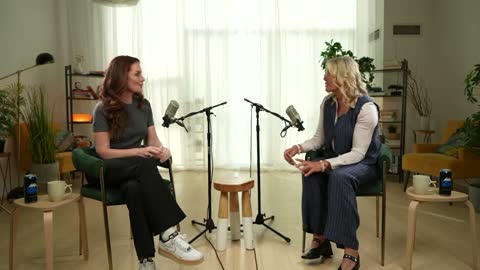
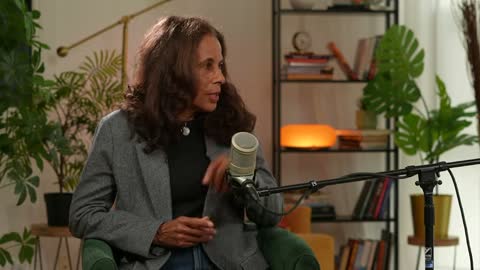
Amanda Lindhout: What Came After
Amanda Lindhout came home from 460 days held hostage in Somalia. The years that followed, she says, were often harder than captivity.
“My presence is in the here and now and the goodness of this life that I’ve created around me.”
Transcript
Speaker names are being checked and will appear here soon.
00:00 Meet Amanda Lindhout
Welcome to Inflection Time. I'm Silken Laumann. Every life has turning points, those moments that change everything. In this podcast, I sit down with remarkable people to explore the challenges, choices, and unexpected events that shape who we are. From heartbreak to triumph, fear to clarity, these are the stories that remind us that growth isn't linear and meaning is often found in the moments we least expect. Inflection Time, uncovering the moments that make us.
In this episode, I sit down with Amanda Lindhout, journalist, humanitarian, and author of A House in the Sky. After surviving 460 days of captivity in Somalia, Amanda has become a voice of resilience and transformation. Her journey is extraordinary. But what's even more powerful is how she's turned this pain into purpose through her foundation, her writing, and her work helping others reclaim their own stories.
Amanda spoke about the power of reflection and her four pillars, gratitude, presence, purpose, and connection. And what struck me most was her honesty about how hard it was to be alone with herself and how much strength it took to meet the silence with compassion.
Her story reminded me that healing doesn't come from escaping our pain. It comes from learning how to sit with it and choose who we want to become on the other side. This is Inflection Time, uncovering the moments that make us. Thank you for joining me.
Amanda Lindhout, we are together across the country today. You're in Nelson, British Columbia. And I've been to Nelson. It's a great little town. I remember it being very artsy. And I'm in Toronto.
So it's really nice to see you. I'm very excited for the time we're going to have together. We have some things in common. And I thought we'd start there. And you're spending a lot of time these days on the road, speaking about your experiences, speaking about resilience. What it's been like to be traveling.
02:27 On the road with her daughter, Lyra
I know you have a little girl recently born, 17 months. Yeah. Yeah. Yeah. My daughter, Lyra, who comes everywhere with me. So, you know, it's a bit of an entourage that I have going around me.
Do you have that packable, like, do you have the packable bed and everything? Because I remember that when traveling with baby, you got your stroller, you got your packable bed, you got your car seat. Oh, I've got all the things. I've got all the things. Yeah, it's no joke. And then, of course, I travel with someone else to help me with my daughter when I'm on stage and speaking and doing rehearsals.
But thankfully, she gets it from me. She gets it very honestly. She travels very well. And she really seems to enjoy it. She likes being on planes and interacting with people and meeting new people. So it's actually been a lot of fun in many ways.
It's really energizing because I've been to, you know, when you're, as you know, when you're doing a lot of public speaking, you revisit a lot of the same cities. You know, you're in and out of Toronto and Vancouver and Ottawa. Now with my daughter, I find I'm getting out of the hotel room and I'm going and exploring these places that, you know, maybe I thought I knew because I've been there many times. But I'm really seeing them in a new way now with my daughter. Yeah. No, I traveled with my kids when they were really little.
It's a great way to make good travelers out of them. So, you know, you are known to Canadians. You became a recognizable name in Canada. There's something pretty terrible that happened to you being kidnapped in Somalia. I think you were held for like 460 days, was it? Wow.
Almost kind of mind-boggling for anybody entertaining. And, you know, we're going to get into some of that story now. But that's sort of where your story, your public story started. And as you said, you're, you know, traveling a lot these days. You're sharing your story. But I was reading your book in preparation for today.
So, it's a really good book. And I have to say, before I picked it up and started reading it, I thought, oh, this is going to be a tough read. You know, I really felt like it was going to be hard to make it through because, you know, having a sense of what you might have gone through. But I actually found the book very inspiring and in some ways quite uplifting. Because, first of all, it's beautifully written. It, you know, starts off with your love of travel and, you know, how you got there.
And I think he spent about a third of the book talking about that. So, it was a really nice entry point to understanding who you were as a person.
05:15 Red Deer, welfare and National Geographic
And I wonder if you could actually start there because, you know, the book starts, you know, in your early 20s. And I have kids that are in their sort of mid-20s. And I have a daughter that actually kind of reminds me of you in a way because she's very adventurous. You know, she drove across the United States by herself when she was 20 years old. She's been traveling for the last year, is always looking for adventure. And, like, the mindset when you're 23 or so is just so different, the mindset when you're 30.
And I really kind of came across in the book. So, can you tell me about, like, what kind of got you interested in traveling and then how that kind of segued into a whole different career path? Yeah, definitely. And thank you for all those nice words about the book. I think the book surprises people in some ways because they expect it's, like, a ripped-from-the-headline story. And then what you discover is it's really essentially a coming-of-age memoir.
And that whole first bit is about how I launched myself out into the world from very unlikely beginnings. Because I grew up in Red Deer, Alberta. My mom was a cashier at our neighborhood grocery store. We were literally on welfare. So, traveling was not something that my family did at all. Like, we didn't even go camping.
We didn't have money for that. Yep. But I always dreamed of the world. The world came to me. I write about it in the book through National Geographic magazines. I had an uncle.
My uncle Tony was kind of like the wealthy uncle. And he had a subscription to Nat Geo. And so, when we would go over to Uncle Tony's house and he'd have them on his coffee table, I'd look through them. And the idea of this bigger world out there that was so different than Red Deer, it just spoke to me from such a young age. And from well before I could even read the articles and the stories attached to the images. And so, I grew up not necessarily knowing what I wanted to do as a career.
That wasn't super clear to me. But what was very clear was that I was going to see the world. People would ask me, you know, what do you want to be when you grow up? And I'd say, I'm going to travel to every country in the world. Wow. And I mean, I think National Geographic.
I mean, I'm older than you. And, you know, when I was growing up, there wasn't internet. You know, we didn't have all of those other sources that you could go. So, National Geographic, when it arrived or you found it in the dentist's office or whatever it was, it was like, it was literally like opening up a book, a magazine about a whole world that you hadn't even thought about.
You know, was, how old are you?
I'm 44. Yeah, so, you know, you're growing up, you were in the world of the World Wide Web, you know, the web, all these things. So, your information about the world would have come from National Geographic or Encyclopedia. It was just a very different time. So, I can really, I could see how that happened. But then, you know, the fact that you said, I want to travel to every country in the world, that's pretty inspiring.
And I started doing it. I, because I didn't know what I wanted to do, I sort of found my way and found some ways to cobble money together through waitressing. This was also just a whole other era when I think people had a little bit more money in their pockets. And I, after graduating high school, moved to Calgary from Red Deer. You know, I wanted to experience the big city. And I ended up working in a nightclub and discovering really quickly how much money you could make.
There was lots of oil money in Calgary at the time. Yeah. And that enabled me to start traveling to the parts of the world that you'd expect, you know, a young person to go to with a backpack, like Southeast Asia. Places that were pretty safe. There's like a well-beaten track that people do. And of course, when you travel, you go to hostels, you meet other young travelers.
So a lot of the time, probably like the next destination, and this is what I found with my kids who've done some traveling, is the next destination comes from a conversation with an Australian person, you know. Yeah. Yeah. I had more time than I had money. So I would just make the plans as I went and did that for a number of years. And I started.
Okay. But after year one, were your parents concerned? You know, because most people go, they travel for a year. They get it out of their system. Amanda, you just kept going. So like, what were your parents saying at this point?
Yeah, I think definitely my mom was worried. You know, my parents don't have this background in traveling, too. So I was discovering that the world is, that exploring the world, I was discovering that people have a lot more in common than they do differences and that it's actually quite easy to do. But for my parents back home, my mom in particular, who hasn't really traveled much, she's imagining that it's very difficult and that, you know, maybe people aren't opening up their hearts and homes to me in the way that they were. So she was definitely very concerned about it. But also it was undeniable that I had really tapped into something that that was a vital part of my being.
Traveling just enlivened me in every way. And I would come back from one trip immediately planning the next trip and really planning, thoroughly planning. Again, this is pre-internet or pre-internet being just widely available. And so it was like library trips and lots of research and planning would go into every one of these trips. And yeah, my mom was like, I'll read it. Sorry to interrupt, but like after that first year of travel, you know, because I think a lot of young people, they do go traveling and they want to see the world.
They want to open up. And it's a wonderful thing because it changes one's perspective of the world. And like you said, you know, having been an athlete myself for so many years and traveled around the world in some ways as an athlete, because we didn't go to a lot of countries. We had to look to a lot of European countries.
It's very different to continue with it. So it was feeding something inside you. Can you articulate what that was? What were you getting from it? What kept you interested? Um, hmm.
Well, perhaps it's just part of my intrinsic nature that maybe most people aren't wired like that. They would have been satisfied after one trip. But truly, there is a part of me that travel is just part of the fabric of who I am. Like I need to travel to be the fullest expression of myself. That it remains true to this day. Yeah.
Yeah.
12:42 A hard childhood and the pull to get away
And there's probably another piece of this too, which, you know, if you read my book, you know a little bit about it. I don't get into it too much. But I also had a difficult childhood. I mentioned that my family was very poor. My mother also had an abusive alcoholic boyfriend that we lived most of my childhood with. So in hindsight now, I can look back on my early travels and see there was a piece about escaping and being able to be out in the world and be whoever I wanted to be.
Mm-hmm. Where I wasn't maybe held down by my past or the idea of my past or what others knew of my past. I could be a version of myself that was unencumbered by all of that history. Yeah. And I can see that clearly now. Maybe that I was unaware of it though at the time.
Yeah. I think that that is something that's very relatable. Not everybody goes to East Africa or Asia. But I think, I know myself, I put a lot of distance between home and where I lived as a young adult. And yes, absolutely, reflecting back, it was I wanted to define my own life separate from what I had grown up with. And I wanted to be empowered by not physically being in the same space, not being part of that family dynamic, I guess, in some ways.
So you really, you separated yourself by going to the other end of the earth. I separated myself from going to the other side of Canada. And I actually think that's not uncommon for us to have to get away in order to really become who we want to be. We need that distance from family. You just need a little bit more than others. And it sounds like there was some trauma in your past that you had to move away from and become the person you were going to be.
Yeah.
14:55 Becoming a freelance journalist
The thing was with your travel, and this came out in the book, I mean, it increasingly did become more dangerous. You went to Afghanistan. You went to countries where conflict was either happening or was right around the corner. So, and that was because you were starting to pursue a journalism career. And it sounded like, I don't want to say randomly, but that was really part of how you were paying to continue traveling while you were traveling. Yeah.
Well, I was meeting others on my travels who were working journalists, who were living a similar lifestyle. Like they were, they loved to be out in the world. And the way that they did that was they worked as journalists and they sold stories. A lot of them were freelancers. And that was really appealing to me. It wasn't super random in that the things that I had always loved and that I studied in high school related to writing and research and photography.
And so, this was a skill set that I already had and then was inspired by others that I was meeting on the road. And again, the world was, it's like, it's hard to overstate the fact that the world was such a different place back then than it is now. In that you could just, I don't know, there were, there were, there were others like me who were just doing it in this way and media itself, the media landscape was so different back then. And I was relentless in my determination to try to make it contacting editors and the people that I needed to be connected to, to sell either stories or photos and was making little bits of money as I went along. I probably had more ambition than I did skill at that time. But, you know, I kind of look back on that younger version of myself and I think, wow, I, I had a lot of belief in myself and, you know, it did ultimately lead me into a pretty dangerous situation.
But I have some, you know, respect for the determination that young Amanda had to try to make something of herself. Absolutely. And I actually wasn't aware of that history of the love for writing that you had before, because I certainly know what that's like, right? To have that desire to express and to be able to, you know, tell your story or to tell stories. And you are a storyteller. So, and it's, I guess what I kind of got from the book and also listening to you speak, it was like, it was almost like, yes, you had this ambition, you have ambition, right? And you're following that and it's exciting and it's interesting. And I just think when we're young too, you know, a lot of us, you, you kind of know the only way you're going to get ahead is put yourself out there and take risks and, you know, chase your dream, however that looks.
And it just sounds like that's what you were doing. And then as you know, time went on and I can see how this happens, you know, you're getting into sort of increasingly potentially dangerous situations. And like you said, you're, you're 23, you had a lot of courage, not only just to go into these countries, but to, to, to be chasing journalism, to not be with the big, you know, CBC or CTV and, and, and be in these countries like without the security teams and, you know, without your big Land Rover. Um, I mean, I, I, I was also amazed and, and kind of impressed with your tenacity and your determination to keep doing it. Yeah, thanks.
18:47 Why danger felt familiar
I mean, it's, um, it's, it's, uh, it's not just black and white because definitely there's, there was all also folded up in the ambition, um, and the determination, a certain amount of recklessness. And then that extra piece that definitely has come so much clearer as I've gotten older, that the trauma from my childhood informed a lot of decisions that I made as an adult. So I think because I grew up in an abusive home, um, I was drawn into situations like many people, for example, many people love to travel and experience the world, but very few people want to go particularly to places like, um, Afghanistan, Iraq, parts of Africa where there's war. In hindsight, why was I drawn particularly to these places? It does link back to my trauma history. Perhaps I wasn't valuing my own life in the way that, um, I should have because of my trauma history.
I was drawn to, um, dangerous situations because that was familiar to me. It's familiar to me. I grew up in a home where there were right. My, my body was full of adrenaline and cortisol all the time. That was very familiar to me. As an Olympic athlete and the founder of Unsinkable mental health charity, I know the power of a supportive community in reaching your physical and mental fitness goals.
That's why I love GoodLife Fitness. It's more than a gym. It's a place where you can really thrive and find connection. As a special thanks for joining today. You can experience it yourself with an exclusive seven day pass to any GoodLife Fitness location across Canada. Visit the link in this podcast description for access.
All of my podcast guests have shared the importance of physical activity in their lives. Together, let's build a healthier and happier Canada. Yeah. Yeah. And I, I mean, there's just no way in our twenties that we can have that knowledge or, or perspective. We just kind of are who we are and, you know, we take the risks or we, whatever it is.
I mean, I, I can look back at my rowing career and really recognize like a lot of my drive and my ability to push myself to absolutely banana levels. You know, a lot of that also came from childhood trauma and this hyper vigilance that I developed just waiting, you know, for something to happen in, in the family home. And yeah, the cortisol, the adrenaline, all of those things that you get used to. So what did I do? You know, I pursued a high level sport at the very, very highest level where there's plenty of adrenaline and you're always producing cortisol and you're always not in a life death situation, but you're in a high pressure situation every single day. And that becomes your normal. And for me, it was only like much later in my life that I started to go like, I actually don't think this is that normal. And, and it's definitely not healthy. And I don't want to be this way with my kids.
That was my real thing was like, however I became this person, I don't want to have that level of cortisol and stress moving forward as a mom. That was kind of my moment to really start to deal with things, but you obviously had to deal with trauma.
22:11 Healing two traumas at once
I mean, I went, I kind of wonder if anyway, I'm getting kind of ahead of myself, but I think that's okay. If the trauma, you know, post your kidnapping experience that then started to link back, like as you healed the one, you start to dig a little deeper and you're like, oh, this is actually about some other things too. Oh my goodness. Yes, that definitely happened. And, um, what a gift that was because like many people, I don't know that I ever would have necessarily, you know, gone back to really try to unpack all the childhood stuff. You know, I may have just kept trucking on with my life, but because I had such a, another monster sized trauma to deal with being kidnapped for 460 days, as I unpacked that I saw that there was so much underneath, underneath that. When I really started to be with myself to understand like what, how, why did I go to Somalia in the first place? Um, and began to unpack that then inevitably everything from my childhood started coming up. And so the processing of the adult trauma also gave me the opportunity to really dive into and to heal, um, the wounds from my childhood. So I'm so grateful for that opportunity. I don't know that it otherwise would have happened.
23:35 Three days in Mogadishu
Yeah. Yeah. It's like, you're not grateful for what happened, but you're grateful for the fact that those two started to link up. Can you tell me in your own words, you know, what happened? You know, some of our listeners won't know your story. I didn't know much about your story before reading your book. So we know you were kidnapped in Somalia. You, you were there for 460 days. Um, you endured, you know, uh, so much, um, tell, tell us about that experience, maybe a little bit of how it happened and then a little bit about, um, how you survived it. Yeah. Um, well, I was at that time as we've already sort of set it up. I was working as a freelance journalist, a war correspondent. I was living in Iraq and I went to Somalia for what I thought was going to be one week. I went with an Australian, uh, photographer that, uh, was also an ex-play print. Yeah. Yeah. Yeah. Yeah. Um, mostly to cut down costs because we had higher security and the whole thing and it's, it's quite expensive.
And so. And Nigel totally went like last minute too, right? It was kind of a, almost a spur of the moment thing for him. Yeah. Yeah. Yeah. It was, I was in my living room in Baghdad. He was working, he's Australian, but he was working in Scotland and we're emailing back and forth. And we just decided I had been planning to go to Somalia and he decided I'm going to come with you. I said, great. Uh, let's meet in Kenya for this one week work trip. Um, and we, we flew into the capital city Mogadishu and immediately I know this is different. This is different than the other war zones that I had been to. What made it different was the complete anarchy. So Somalia hasn't had, um, an effective central government for decades. And so there's this palpable sense of lawlessness that, that I hadn't experienced even in places like Afghanistan and Iraq. Mm-hmm . This was, this was new, um, as, as we're driving to our hotel. And we, again, we did have some armed security guys with us. We had, um, what's called a fixer in the journalism world.
There was a local Somali guy who worked with journalists to organize all of this. Yeah. So there was some sense that it was organized and you had security, even though, you know. Yeah. He's with us. Mm-hmm . Mm-hmm . And so we're driving to the hotel and we're passing pickup trucks full of teenage boys with guns. Mm-hmm . I mean, it was, it was unnerving, but. Mm-hmm . Mm-hmm .
At that time in my life, the way that I was sort of doing my life was you just, you just did it anyways. Like, you know, here I am, I'm, I'm, it'll be scared. This is different, different than I imagined it to be. Mm-hmm . Mm-hmm . . But I'm there, so what's the thing to do? It's not to leave, it's to do what I came to do. Right? So that's, that was my mindset at the time. And it was on our- Well, yeah, I mean, you know, you've got a truck of kids with guns. And I mean, I've been to Africa many, many times. And I mean, that is not an uncommon sight. Maybe like a truck's a bit much, but like, you know, I've been pulled over by a 15-year-old at gunpoint.
You know, not, not that he's intending to shoot us necessarily, but they're checking the car, checking, you know, what's going on. So I wondered if that was part of your mindset too. It's like, oh, I guess this is what's going on here. And, you know. It, yeah, I had some familiarity with what you're describing. This was another level of that, though. I mean, I, I, I could sense immediately that this was a really dangerous place. And I, I just sort of knew that in my bones, in that intuitive way that we can just know something. And even in hindsight, almost like a premonition of, of like, I should, like something might happen here. But I had gotten so used to overriding my worries and my, I just went ahead anyway. And it didn't take long for that fateful day to happen. It was our third day in the country. Yes.
And Nigel and I, we went out in the morning with all the security guys. There was probably like six of them. I'm trying to remember the number. There were, it wasn't like one person. We had a group of guys. We had a driver. We had my fixer with us who spoke English. She was there to help with the interviews. We were leaving the capital city that day to go to internally displaced people's camp. And it was on that drive, we're driving along a highway road, that I was lost in my thoughts. I was listening to music in headphones. And then I noticed our vehicle was slowing down. And I look up to see why. And that's when I realized what was happening, that just up ahead, there were men with guns running out across the road, forcing our vehicle to stop. And then they surrounded the vehicle and our doors were opened and we were initially pulled out and they sort of ransacked the vehicle. I'm thinking, okay, maybe this is a robbery. Yeah, like take the camera. Hoping.
Yeah, like take the camera. Robbery. Our security guys were left behind. And then one of these guys takes the wheel. And we drove off literally off the road through the desert. No one was saying anything to us. I'm still hoping. You're in shock. It's like, yeah. As simple as like, this is still some kind of robbery. Yeah.
And yeah, I was definitely in shock. And it didn't take long to understand what was happening because they brought us to our house. One of the leaders showed up. And he just told us, we are going to be demanding a ransom for you. And he got our family's phone numbers. And a few hours later, Nigel and I were in this like compound, this house that's hidden behind these high concrete walls. And they've let us sit outside. And one of them was listening to the BBC radio, which is in the Somali language. But they're listening to it. And all of a sudden, I hear my name and Nigel's name and, and we became very real. So does your kidnapping. Yeah. So like the kidnapping had become public news and they're announcing it on the BBC. And in that moment, it just, everything just landed like we are hostages. Yeah.
Yeah. Yeah. This isn't going to go away tomorrow. Like they're going to let us go. This is a misunderstanding or something like we are hostages.
30:45 Adapting from the first day
I mean, you know, listening to your story, I'm just trying to, you just imagine. Yeah, yeah, yeah. How do you deal with that moment? And in your book, you know, what struck me is your ability to adapt. Yeah. It's, it's like, almost like this happened and immediately you were going to, what am I going to do about it? Yeah, it kind of amazes me looking back on it, to be honest, how, you know, practical I became in that context. I really was strategizing almost immediately. And it was a long experience, right? 15 and a half months. And so obviously the strategies evolved and changed over time. After that first day, conditions became really bad, really fast. Eventually my colleague Nigel and I were separated after a failed escape attempt. And I was held by myself for a really long time in a pitch black room with chains on my ankles. So at the lowest point, I was unable to move my body. I couldn't sit up. I couldn't lie on my back. I was in a dark room for 24 hours a day.
Right. And what I needed to do to survive at that point was very different than it was five months before the day that I was kidnapped. Mm-hmm. And that's when it became, you know, moment to moment. I really didn't know if I was going to survive. Yeah. And the mindset became, well, everything, everything, everything becomes about how you can frame it to yourself. Yeah. And so...
Yeah. And so... In the beginning, sorry, I mean, you know, in the beginning, you and Nigel were close, well, first of all, you were in the same cell at first. So you at least were in it with somebody. And it seems like you got to practical thinking pretty quickly. And Nigel took a little while longer. Mm-hmm. And you had kind of this optimism, like really believing you were going to get out of this. Like you said, immediately strategizing, immediately thinking. I mean, it's a mindset, right? And that the two of you would get through the days by telling stories, by learning about each other, by noticing every little nuance of your kidnappers' voice. Of your kidnappers' movement. It was like everything was... Because your world had become so small, everything that was happening was so big. Like, oh, you know, because there were quite a few of them too, right? Like, it wasn't like there was just one person kidnapping you. It was these young men coming in and out all the time and changing and, you know, trying to figure out who was in charge. And all of that stuff was going through your mind. And then you had that, the failed escape.
I just, I wanted to say, yeah, that there was, there was about 12 of them and they were almost all teenagers. We learned little things about them through those 460 days. Even though they didn't speak English or barely any English, we still, like, it's amazing how much you can learn about people. And the youngest of them was 14. So, some of, I mean, that's barely more than a child. Mm-hmm.
34:53 Alone with her own mind
And yes, it did get progressively worse. And initially, there was a huge amount of comfort from being with my colleague, from being with Nigel. And after that failed escape attempt, when we were separated, initially, that was one of the hardest things was being alone with myself. Mm-hmm. And I had never, like, probably like most people, really ever been alone with myself for a prolonged amount of time where I didn't, I mean, I didn't have a TV to watch or anything to listen to or books to read. I'm in a dark room just alone with my own mind. And that took a lot of getting used to. You never, you never gave up, first of all. You also seem to be able to, like, almost like tackle, like, to not control your mind, but be able to discipline your mind.
In order to get through the days, to create routines, to, you know, find a piece of newspaper and get, like, super excited about this one piece of stimulation. And that's where, I guess, what really struck me about the book is that your ability to adapt and just say, okay, this is my situation now. And, you know, you were really making the best. You were starting to try to get to know your captors. You know, you're trying that angle, too. I mean, at one point, you converted to Islam, hoping that would build connection between you and the captors, and that might change the way they saw you. So, like, your mind was thinking all the time, and then you had this escape. And it seems to me, at least in the book, when was that escape? How many months into your ordeal was this?
Five months. Okay. Because after that, things really got bad. Yeah, yeah. There was definitely that line with our kidnappers. There was, like, it was bad enough before that failed escape. Yeah, bad and badder. And then there was, like, the aftermath, the consequence for that, that came afterwards for the next year. And that went on for a long time. As you said, in a black room.
Mm-hmm.
37:30 Guilt, and what her family went through
While this is all happening, the kidnappers are also talking to both your parents. And you're hearing bits and pieces of this, right? And like you've said, your parents are not affluent. They're asking for, I don't know, two million bucks for the two of you or something, or maybe each, right? Yeah, the number changed all the time. It was many millions of dollars, though, that our families didn't have. Yeah. Yeah. And your mom's giving them this message that, you know, we can't, the Canadian government, like, it's just all these layers. And you're hearing bits and pieces. And like, how did you feel about your, like, did you even have the mental energy or, you know, to think about what your parents must have been going through? Oh, yeah. Yeah, of course. And that was really its own kind of torment, really. Because I felt so guilty that my decisions had this, I could only imagine what the impact was on them. But of course, I knew that they were suffering enormously from the decisions that I made. And so that, that was truly one of the most difficult parts, was imagining what they were going through on the other side. I felt so guilty, so guilty. And it took, I really am free of that feeling now, because I had, I have chosen to work on that a lot on the other side, forgiving myself and finding my way with those feelings of regret.
Mm-hmm. But at the time, it was, it could be almost crippling. Mm-hmm.
39:13 Coming home to complex PTSD
Okay, you, you got through that. And you were, you know, a deal was made, with your kidnappers. And you, you know, the kidnapping end, ended almost as like, unexpectedly as it began. And then you come back to Canada, and obviously, you know, you're there's that reintegration. And I wonder, for you, there's a whole bunch of things I'm wondering. Like, obviously, people immediately go, how do you get over that? I mean, it's like, how do you get over something like that? And, you know, I know something about getting over trauma, but nothing like this. And the way that you got through the incident also seems like a lot of like almost the way you got through the trauma. Like, it was like determination. And you just were so determined that this part of your life that had become the part that everybody began to know about actually wasn't going to define your entire life. Did you make that decision consciously? Yes. Yes, yes, I did. And it's so multi-layered that, that, that, that piece of the aftermath. So yes, I survived and came home and was immediately, of course, diagnosed with complex post-traumatic stress disorder. And in the years that followed, I often felt like those years were harder than my time in captivity. So there, there, it's like the two really extremely difficult things that have happened to me in my life were the captivity itself. And then the years immediately following that and navigating this diagnosis of CPTSD, which was severe.
And, and, and, and it really, it took me many, many years to really find my way with that condition. Years that were so dark and so difficult. And it is true what you said, that many of the things that this, the, the techniques, the skills, the strategies that had served me well in captivity, continued to serve me in my recovery. You know, one of the, you know, one of the, you spoke about my optimism after being kidnapped and, and, and, and yeah, that is an intrinsic part, I think, of who I am as a person. And it was in captivity and, and it was in captivity and, and, and, and, and, and, and, and what is still beautiful that I can remember about my life and myself. And that was very much a choice because that didn't come easily, certainly not in chains in a pitch black room. Does it become easy to look around and say like, what do I have to be grateful for?
But I did. I kind of wonder like if it caught you by surprise, like, you know, the, the kidnapping's over, you're back home. You, I mean, wow, like I'm back in Canada, I'm safe, like life can go forward. And then no, you've got post-traumatic complex, post-traumatic stress, which of course you would like, but like you wouldn't have been thinking about that when you were in captivity and you come home and it must be so much relief. And then all of a sudden you're not feeling happy and you're having bad dreams and all of these things start happening. And you think like, no, I was supposed to have gone through the worst of it, like, you know, a million times over now I'm safe.
What's going on? Yeah, that is so true. It very much was like that.
And those memories are stored in your body too. I mean, I think that's what people don't understand about PTSD is that like you can intellectually understand what's happened and you can have made peace in some way with what has happened. But the trauma is still in your body. And, you know, we spoke at the very beginning of our conversation around, you know, childhood trauma. And, I mean, when you're growing up, you don't think about it as trauma. It's just like, this is my sample size.
It's my family. This is what happens in my family. And it's only later where you're like, wow, if that was happening to like a six-year-old kid down the street, I'd be like, oh, no, that's actually abuse. But, you know, put it in the context of what's happening you two in the moment. And what strikes me about your story and listening to you today is that, yes, you went through this terrible, terrible thing. You know, unimaginable for most of us.
But you just said like the second part of that trauma happened in the two years after. And you're already worn down. You're already, you know, you've already spent 460 days. And now you've got two years more of it. Yeah. Oh, and more two years.
Yeah, yeah. Because you talk about how it's ongoing, right? Yeah, years.
It was really difficult. And, you know, one of the most challenging aspects of that, and I'm sure anyone with a mental health condition can relate to this, is that it's difficult enough on your own. But another layer that makes it just almost unbearable is that no one else can understand it. So people would think, well, you're free now. Like, now is the time for a celebration, not for staying at home and being unwell and laying in bed. They simply couldn't understand, of course they couldn't, that the world that I had dreamed of rejoining again was now such an activating place for my nervous system.
As you mentioned, the physiology of that condition. It's not just that I need to change my thoughts so that I can go operate in the world. It's like, it's the trauma was imprinted in my physiology. And that I had dreamed of all the things I was going to do. And the truth was that I was almost bedridden for a number of years. Wow.
Because there was just, yeah, I was really unwell. And then you have all this, you know, interest in your story and pressure to tell your story. You're probably not ready to tell your story. I'm excited to share that Ventum Financial, a sponsor of Inflection Time, has launched their new podcast called Relevant. At Ventum, they believe that sharing someone's story is a privilege, and Relevant brings those stories to life. It's where leaders, creators, change makers share ideas, shaping business, culture, and the world, one conversation at a time.
I'll be joining Relevant for an episode to talk about resilience, optimism, strength, and how these qualities help us grow through change. I hope you enjoy that episode. Check out Relevant by Ventum Financial, where people are discovered.
46:59 Former hostages and the limits she keeps
I work in the mental health space, as you probably know. I started an organization called Unsinkable.
We work with young people that are experiencing, you know, mental health challenges. We talk a lot about mental fitness.
When you're experiencing trauma, when you're experiencing really difficult mental health challenges, I think you do feel alone. I mean, you were really alone in that, like, very few people experience this. But I think there is an isolating aspect to, you know, any mental health crises. And I wonder if you, did you have the opportunity to reach out to any other people that had severe complex PTSD, even if it wasn't the same way? Yeah, I did. Yeah, I did.
And continue to. When you get kidnapped and you've survived that, you become part of this club no one really wants to be part of, where there's outreach that happens and connection that happens. And there were conversations with other former hostages that were helpful to me, for sure. And there is this thing that can happen, too, where you get stuck in talking about the traumas again and again and again. And then that stimulates the trauma to keep it alive. Mm-hmm.
You cross that line and you're still doing that. And what you're doing is you're keeping yourself stuck in the trauma. Yeah. And it's not working for your healing. And so, you know, I have been more, I have more boundaries around that now than I did years ago when I didn't really understand that. And so, I am, you know, I make myself available.
When someone is kidnapped anywhere in the world, inevitably you really do. It's an interesting thing. You become part of this group and emails are shared and passed around. So, I have been in contact with many, many people who've had that experience. And I like to offer support and help within this boundary that I've now created for myself just to keep myself healthy.
That's, yeah, that's really good. And I'm happy to hear that. And, you know, it seems like you've dealt with this all in a very healthy way and it hasn't been easy. As you said, when you've had, when you've been kidnapped, when you've had this kind of depth of trauma, it's a lifelong dance that you're playing, you know, that you're involved in.
50:23 Silken’s near-death experience
And I had a near-death experience in February. I was hiking on a trail, a very remote trail in New Zealand, and I was stung by a bee and maybe a wasp. I didn't wait to see. And I had had a suspected anaphylactic shock a few years before that. I was carrying an EpiPen in abundance of caution and on the insistence of my husband. And I went into anaphylactic shock right away.
I lost consciousness for about 20 minutes and we were out of cell range.
When I regained consciousness, I knew right away I was going to have a second reaction.
And I felt this desperation to get out and get help. And, you know, anybody who's had allergic reactions have had to use an EpiPen know that, you know, immediately after using EpiPen, you can have a heart attack when you use EpiPen. It'll save your life, but it is unbelievable what it does to your system, including, like, raising your heart. Your whole entire being goes into this emergency response. I was on the side of the path about an hour and a half into this ordeal trying to get out of the trail. And I was laying there and looking at the leaves while I was lying down this path just trying to get some energy.
And I remember thinking, wow, you know, I didn't think it was going to end this way. Like, this is so surprising, you know? And all these, like, really wild thoughts are going through my head. And then I'm looking at these leaves and the bottom of the trees and I just was flooded with gratefulness. Like, I thought, what an amazing life, you know? It's been so much fun.
And I had this kind of, well, I guess it was a near-death experience where it was that that part was actually beautiful. Mm-hmm. And then I had a second reaction. And I was very lucky. The volunteer rescue team had just kind of popped through the bushes moments before I had my second reaction, which would definitely have killed me.
So, what's interesting about this whole experience for me has been what's happened afterwards, you know, which has been so unexpected. Sometimes I have these moments of the most intense joy of, like, I'm alive. And that, wow, look at the way that the sun is going down behind the mountains and how everything is black. And it's like everything is in Technicolor and loud and beautiful. And then I have these moments of, like, dread, right, where I really know that life ends.
And I know that all of this is rolled into PTSD for me, which I am beginning to work through. And I wondered, in your experience, which was so, so different than mine, it's just that experience of realizing and recognizing that, like, for me it was like, well, if help doesn't come in the next 20 minutes, I'm going to die. You know, there's not, you know, I might die. It's, no, I will be dead. So I hope that somebody comes. With you, this was, like, ongoing for so long.
And I just wonder if, as you've emerged and you've dealt with the very worst of the PTSD, if you do have moments, like I'm describing, where, like, there's such a deep recognition of the preciousness of life.
54:19 What she carried out of the dark room
Well, thank you so much for sharing that. That really lands with me because, yes, I can relate. I would say my truth is that I am actually, after all these years, I can say this, that I am grateful for the things that have happened to me because I think I am able to experience life and the beauty of the world, as you were just describing, in a way that I am able to experience life and the beauty of the world, as you were just experiencing life and the beauty of the world, as you were just experiencing life and the beauty of the world. Of how quickly you can lose it. Of the value of family and my mother and the connection there.
And that is the most profound gift that I could receive in my life, really and truly, is that. And I have got that. I got that out of that dark room. And so, you know, many, many years have passed now since that. And since the darkest day is with the PTSD, I am very healthy now. In fact, PTSD is not part of my life anymore.
I don't have to take any medications for it. I don't have a need for ongoing therapy related to what happened to me. And I really live in this, with this intention and this perspective to be very present in the goodness and the beauty of the world around me. And it's such a gift that came out of that. That's a beautiful way of expressing it. And, yeah, it's like, you can't go, oh, I'm glad that happened because, you know, look who I became today.
That's not what it's about. It's about, you know, this happened. And that allowed me to find this new perspective. People have often asked me, you know, back to my accident in 1992. Oh, was it kind of good in a way that it happened because then you became famous and all these things. And I'm like, no, it's like, it's never good to lose a chunk of your leg and, you know, limp your way through life.
No, that's actually really hard. But it brought out something in me. I recognize something in myself that has been a very powerful part of who I've become. That resilience, which I'm sure you've recognized inside yourself. Like, you know, when you know that you can get through the worst of what life has to offer, and you can not only get through it, you can heal from it,
and you can move on to have this gorgeous life that, you know, is so imperfect because it's, you know, it's the journey of being a human. But you're really feeling it. And I feel like I've had so much living in my life from having children, having a child with autism, having gone through a divorce, having had my accident, you know, having this near-death experience. And my husband also had a near-death experience. And I just look at all of these things and I think, what a wild, what a wild journey. But grateful, grateful for all of it because, like, how would you have become who you are?
Right? Like, I don't know. And I just think a lot of people go through life and they're half asleep. They are not thinking about, you know, the fact that life actually ends. They're not necessarily thinking about, like, how, let's just stop for a minute, you know? Let's just stop and go, like, I have these dogs, this little dog, this Cavoodle and this Golden Retriever, and they bring me a lot of joy. And sometimes I'll just, I'll be outside and they're, you know, chasing each other and doing dog things.
And I just want to stop and I'm like, I'm not going to rush. I'm just going to play with the dogs. And it just feels like such a luxury in some ways because I never used to live that way. But also, this is what living is. It's playing with your dogs. It's, you know, sitting across from a friend.
It's doing this, you know, where we have this kind of conversation. We've never met before, but I really feel that connection with you as we share very different experiences. But have come to a place of appreciation of the beauty of being alive and the depth of the experience of living.
59:35 Living in the here and now
So, I think one of the last questions that I have, maybe not the last, but a lot of athletes, athletes are defined by a moment. You know, they're defined by winning the World Series, go Blue Jays, you know, whatever it is.
They scored a goal and it captures the imagination of the country. You know, they got through an accident like I did and won an Olympic bronze medal. And you're almost frozen in time, right? In other people's minds. So, you're the woman who was kidnapped for, you know, 460-odd days in Somalia. But you have become a different person.
You know, you have changed and evolved. And I just wonder if you ever feel confined by other people's memory or experience of who you are and how you push against that. I never think about that, actually. I really don't. I don't really think about too much about how other people think of me or remember me. I'm just so involved in living my life.
You know, as you were just so beautifully articulating, you know, the moments with the dogs. Like, that's what life is about. You know, I'm a mom now to my 17-month-old. I've got two dogs, too, and a husband. And my life is so full and so wonderful. I really don't think too much about how other people might see me or remember my story.
I think when people have the opportunity to meet me, like, at a speaking engagement or at the grocery store, the person that they meet is someone perhaps different than they have. Perhaps different than they would have imagined me if they've only ever read, you know, the broad strokes, the headlines about my life. I try very, very hard. It's one of the things that I speak about on stage. It's one of the pillars of resilience as I've experienced it is presence, is being fully present in the here and now, which means that in my day to day, people might be surprised to know I don't even think about what happened to me in Somalia unless I'm preparing for a keynote or having a conversation like this with you today. It's just not where I'm at in my life anymore.
My presence is in the here and now and the goodness of this life that I've created around me. I mean, I think that's probably a description of true healing. You know, you went through all of that and, you know, processed it all and it's been such a difficult journey, but here you are and it's part of the fabric of what's made you who you are today. But you're no longer living it and thinking you're fully in what your life is today as a mom, as a speaker and all the other wonderful things that you do. So, thank you so much for being here today and, you know, for sharing your story, which, you know, I never take for granted when somebody shares their story. Because to share a story, well, you got to go there and you got to feel some of the feels that, you know, of what you experienced.
And so, I really respect that you took the time and opened your heart to us and expressed that journey, but also very much the journey of healing and the optimism and the joy you have for life today. Oh, thank you so much. The conversations like this, I really feel are so important. Like this kind of connection, this human connection is one of the great gifts in life. Agreed. And so, it is a gift to me today to be connected to you in this way and to share this conversation. Thank you. Well, I love doing it.
I'm so glad to have a platform at Inflection Time to have these conversations. And hopefully, as people are listening, they'll draw some wisdom and maybe transfer that to their own experiences in life. So, thanks so much. Oh, you're welcome. Thank you. Thank you for joining us on Inflection Time. We hope you enjoyed the episode and we'd love for you to follow us by subscribing and sharing our podcast on Apple, Spotify, and YouTube.
Inflection Time is an Archer & Co production sponsored by GoodLife Fitness and Ventum Financial. A special thank you to our incredible in-kind partners, Carter Wiley and Tallboy Water. Executive producers and directors, Michelle Archer and Phil Kluba. Producer, Christine Bays. Creative development, Sarah Carter. I'm grateful for Smythe for helping me look good. Thank you for listening.
Key takeaways
- A world in National Geographic. Growing up on welfare in Red Deer, Amanda found the wider world in her uncle’s National Geographic magazines. When people asked what she wanted to be, she said she would travel to every country.
- Danger felt like home. Looking back, she sees that growing up in an abusive home drew her toward war zones. Adrenaline and fear were familiar, and she had learned to override her own worries.
- Freedom was not the finish. She came home and was diagnosed with complex PTSD. For years she was almost bedridden, while people expected a celebration and could not see that the trauma lived in her body.
- Support, with limits. She still answers when other former hostages reach out. She also learned that telling the story again and again can keep a trauma alive, so she keeps boundaries around it now.
- Present in this life. She rarely thinks about Somalia now unless she is preparing a keynote. What she carried out of the dark room is a sense of how precious life is, and her attention stays on the life she has built.
Amanda Lindhout
Journalist, author of A House in the Sky and resilience speaker
Amanda Lindhout is a Canadian journalist, author and speaker from Red Deer, Alberta. In 2008, while freelancing as a journalist, she was kidnapped in Somalia and held for 460 days. Her memoir A House in the Sky, written with Sara Corbett, became a New York Times bestseller, and in 2010 she founded the Global Enrichment Foundation to create opportunities for women in Somalia. She speaks on resilience, drawing on the Four Quadrants of Resilience framework she developed while rebuilding her life.
- Speakers Spotlight: speaker profile, 500+ keynotes in 34 countries
- National Speakers Bureau: speaker profile
- Global Enrichment Foundation, founded 2010
- Official bio
-
A House in the Sky
A Memoir
Written with journalist Sara Corbett, her account of her years of travel and reporting, her 460 days held captive in Somalia, and the forgiveness and resilience that followed. A New York Times bestseller and winner of the 2014 CBC Bookie Award for Best Canadian Nonfiction.
Get the book
Resources 11
Research and sources behind what was said in this conversation.
- Relationship of Childhood Abuse and Household Dysfunction to Many of the Leading Causes of Death in Adults: The Adverse Childhood Experiences (ACE) Study (Felitti et al., 1998) American Journal of Preventive Medicine The landmark study linking childhood abuse and household dysfunction to health in adult life, the link Amanda draws between her childhood and the risks she took.
- Somalia travel advice Government of Canada Canada advises against all travel to Somalia and lists journalists and humanitarian workers among those at very high risk of kidnapping.
- Somalia Committee to Protect Journalists Reporting on press freedom and the risks journalists face in Somalia, where Amanda was working as a freelancer.
- Evidence for proposed ICD-11 PTSD and complex PTSD: a latent profile analysis (Cloitre et al., 2013) European Journal of Psychotraumatology Research behind complex PTSD as its own diagnosis: PTSD symptoms plus lasting problems with emotions, self-concept and relationships.
- The Body Keeps the Score (Bessel van der Kolk) Penguin Random House A widely read book on how trauma is held in the body, close to what Silken and Amanda describe. Neither of them names it.
- Hostage International Hostage International An international charity supporting families and former hostages, the kind of network Amanda describes joining after her release.
- Unsinkable weareunsinkable.com The youth mental health charity Silken founded, which she tells Amanda about.
- Counting Blessings Versus Burdens (Emmons and McCullough, 2003) Journal of Personality and Social Psychology The classic study of gratitude and well-being, close to Amanda’s choice to look for what she could still be grateful for.
- The Posttraumatic Growth Inventory: Measuring the Positive Legacy of Trauma (Tedeschi and Calhoun, 1996) Journal of Traumatic Stress The founding measure of posttraumatic growth, including a deeper appreciation of life, which Amanda describes after all these years.
- About Amanda Lindhout amandalindhout.com Amanda’s own account of the Four Quadrants of Resilience, the framework she developed while rebuilding her life and speaks about on stage.
- A Wandering Mind Is an Unhappy Mind (Killingsworth and Gilbert, 2010) Science People were less happy when their minds wandered from what they were doing, research that fits presence as one of Amanda’s pillars.
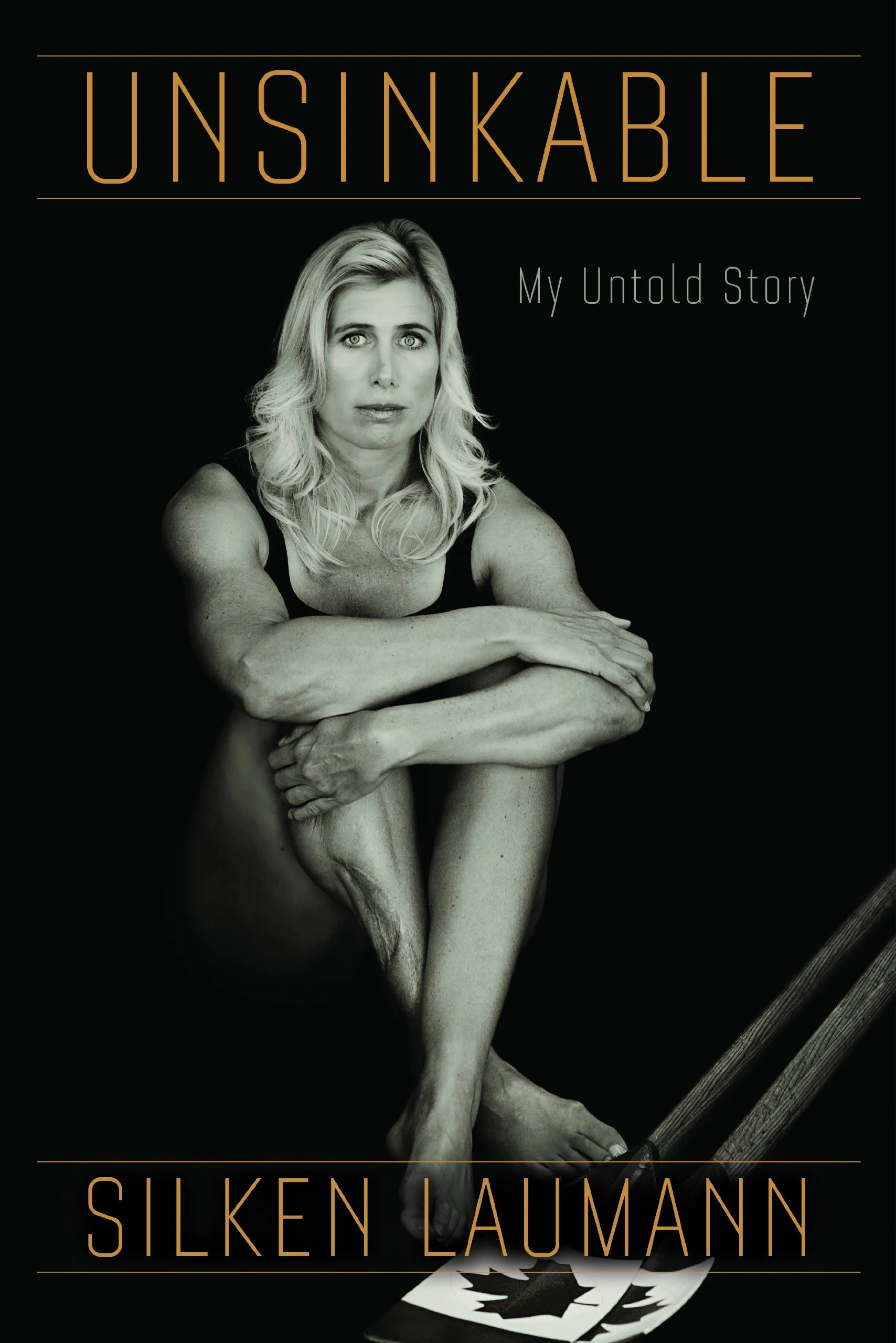
Silken Laumann
Olympic medallist, bestselling author of Unsinkable, and host of the Inflection Time podcast. Keynote speaker on resilience, and founder of the Unsinkable mental health platform.
This episode is supported by GoodLife Fitness and Ventum Financial .
One story, once a week, from someone who has been through it.
A short letter about a moment that changed someone’s life, what it taught them, and a question you might carry into your own week. No course launches, no countdown timers.