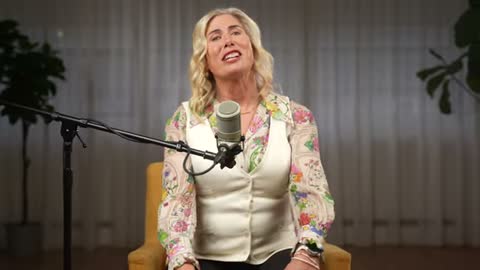
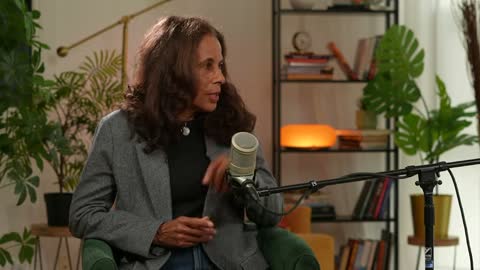
Dr. Robyne Hanley-Dafoe: You Can Do Hard Things
She was 16 and had held her licence for a week when her car went through the ice. Trapped inside, she remembered what her mother always told her.
“I don’t feel guilty when I take care of myself. I feel guilty when I yell at my kids when I haven’t taken care of myself.”
Transcript
Speaker names are being checked and will appear here soon.
00:00 Meet Dr. Robyne Hanley-Dafoe
Welcome to Inflection Time. I'm Silken Laumann. Every life has turning points, those moments that change everything. In this podcast, I sit down with remarkable people to explore the challenges, choices, and unexpected events that shape who we are. From heartbreak to triumph, fear to clarity, these are the stories that remind us that growth isn't linear and meaning is often found in the moments we least expect. Inflection Time, uncovering the moments that make us.
Dr. Robyne Hanley-Dafoe is a resilience expert, which means she studies how people get through things and how they kind of respond to life's worst situations. And she's an expert in this, firstly, because she did experience one of the worst situations you can imagine, when her car veered off the highway into a frozen lake and she was caught upside down in her car trying to escape. This is a conversation about anxiety, about resiliency. It's about how to find your full capacity when facing obstacles. I hope you enjoy this episode. Dr. Robyne Hanley-Dafoe, you're a resiliency expert and you've come today to talk to us in person. I so appreciate you being here. Thank you for having me. Yeah, you came in from Peterborough.
Peterborough is where I get to call home, yes. Yeah, it's beautiful. My husband has a cottage on Stony Lake. It's a beautiful part of the course. Yeah, exactly. So anytime I drive up to Peterborough, of course, I think about the cottage, but also we used to have a race called Head of the Trent. Head of the Trent. Yes.
Yeah, and it is still... It's very windy, very long. Yeah, and it still happens every fall. HOKO is a really big deal at Trent University, who hosts it every year. And do you teach at Trent University? So I was at Trent for many years. Actually, my undergrad at Trent came back and was an instructor at Trent. And I moved on a few years ago from that work to focus on the work that I get to work on right now.
Which is resiliency, the science of resiliency. That's right. It's such a cool topic. I mean, I don't really remember resiliency being a big topic or something that people talked about very much, but it seems like it's a word, particularly since COVID, that has been bantered around. What does resiliency mean? Yeah, I love that question. You're absolutely right. It has a kind of an interesting history,
but people started talking about it more in mainstream recently, as you said. And I look at resiliency a wee bit different because I'm a behaviorist. So I look at what are the behaviors, the habits, the routines that people put into practice that allow them to show up even when it's hard. So looking about comeback practices, bounce back rates, both physiologically, but also psychologically, even emotionally, to figure out how people can show up and be their best. Okay. That makes sense to me. I mean, to me, in my mind, resiliency is your ability to go through life's hard stuff, you know, the things that will happen to all of us.
And I think when you're younger, it's easier to think that, you know, your life is one way, right? And as you go through life, you realize that actually everything is up and down. Absolutely. And there's these things that come out of nowhere. You had something come out of nowhere when you were very young, 16 years old.
03:43 Struggling in school and dropping out at 16
Yeah. Can you tell me a little bit about that? Yeah, absolutely. And once again, you're absolutely right. So often we think of our trajectory in a very linear fashion, right? And I think our parents and our family systems really set us up on course that we hope we have very linear transactions.
But sometimes even with the best laid plans, things go off the rails. Things go not as planned. And for me, I grew up in a really healthy, vibrant home, lots of support. It really more than any kid could hope for. But I still ended up getting off track and really struggled in adolescence and was in a season where I really struggled academically. Like school was not a place for me.
And if we kind of think about education as a wee bit of factory learning, I did not fit in the mold of what a student was supposed to look like. And I often talk about this, Silken, that folks who need the most help, we ask for it in all of the wrong ways. And how I was asking for help took the form of addictions. It took the form of being in the kind of with a less than ideal crowd. And I found myself in great… I'm sorry, I'm just going to jump in because…
Please do. I love what you just said. We look for it in all the wrong places, right? Yes. Because the behavior is telling the parents or the teachers that something's amiss. That's right.
That new direction is needed. And yet, those are the kids that we often give up on. Those are the kids that we often pigeonhole as the troubled kids. Absolutely. And what I'm hearing from you is those are the kids that actually need our attention, that need our patience or a different kind of input. Yes, you're absolutely correct.
And so, again, at the time, I didn't have language for the experience, but I was able to find people who also weren't having positive experiences in school. So, I ended up dropping out of high school at grade 10. It was very hard on my family because, again, that wasn't the type of family system. That wasn't something we did in our family yet for me. It got to the point where the stress was so relentless that I just couldn't keep up. I couldn't keep showing up in school.
And my family made some pretty substantive changes to really find ways of getting me support. And we were in this really amazing season of a comeback, right? So, we identified where I was struggling in school. We identified where I needed to kind of have some changes and looking at things differently.
06:00 A new licence, a snowstorm, and the ice
And at the same time in that season, I also happened to get my driver's license, which was actually this, like, wonderful thing. It was like, absolutely. I was getting back on track, doing the things that normal 16-year-olds do. Was it 365? And it was, absolutely. It was, yeah.
365, a good G1. That's right. So, I was in that place where I had just got that second phase of the license where I can drive by myself. And it was just, I had that license for a week. And I was driving home in this new community where my family had moved. And a snowstorm rolled in.
And I didn't really know how to drive very well in the snow. And the vehicle ended up sliding off the road. I went down an embankment. And my vehicle crashed through the ice. And my vehicle sank in the Otonabee River with me trapped inside. So, within seconds, this fridge of cold water comes, like, rushing through the floorboards.
And I'm drowning entombed in a car. Holy crap. Yeah. It's a scenario, well, I've certainly thought about it. What would I do if a car drove off the road? What would I reach for to brand the windshield?
This is actually happening. You're 16 years old. And you just got your driver's license. Brand new driver. Absolutely. And in that moment, I recall that I wasn't actually feeling afraid.
I noticed that I was feeling pretty angry that I was in the situation. Because I was really mindful about what that would do to my mom. And I was okay with my experience. But I wasn't okay with what that would do to my mom. And I recall thinking about my mother in that moment. And something she always would say to me when I was growing up was that Robyne can do hard things.
When I would say, Mom, this is super tricky or this is hard. She's like, take your time. Robyne can do hard things. Figure it out. And I share in the first book where I talk about this openly that it was very much like an emotional echo. It was just like a feeling where if, you know, in this scenario, she would be the one to tell me, figure it out.
You can do hard things. And I couldn't get the seatbelt off because the mechanism had locked with the impact as it's supposed to. And are you upside down at this point? So, interestingly, the vehicle was actually turning in the current. So, the vehicle hadn't hit the bottom yet. So, the vehicle...
Like, it's turning this way? It's like underneath. It's like swirling in the water. It was quite... It's part of the Trent Severn. So, it's a very...
I'm just like, my heart is racing. Yeah. It was a moment for sure. But interestingly, when I just took a moment just to like kind of think through like just the next right step. I can't figure all of this out. Like, what's just one thing that I can focus on?
And it was getting out of that seatbelt. And I couldn't open the car door because the water pressure actually had started to like crush this vehicle. And I'll tell you, the sound of metal crushing underwater with you tripped inside, that is scary. But what it allowed me to do is just take my fingertips. And I was able to dig at where the window met the door. I was able to pull on the window hard enough to pull it off its track and slide it down the door and I was able to swim out the window.
So, yeah. And I know that just like the calmness that you displayed and that, you know, the one step at a time. And what a, you know, what a great analogy for life, right? Yeah. Just one step at a time. And it's interesting that you evoked your mother's voice.
09:16 Silken’s near-death wasp sting
I had a near-death experience just over a year ago being stung by a wasp for a bee in a remote area and getting an anaphylactic shock reaction, which I had not had before. I was carrying an EpiPen because I'd had a suspected reaction. Wow. And it is funny how like the brain, I don't know if everybody's like this. Yeah. There's like a calmness that I felt.
Yes. And then sort of, okay, somebody go run to get cell reception. Somebody else get the EpiPen out. Yeah. Just very like, I'm like, wow. Yeah.
You know, I scream when I see a spider. Yes. Yes. How can I be so calm in that story? But when you talked about your mom, it really, it helped me remember that when I was dying. Yes.
Because I came very close and I was having this near-death experience, I kept thinking about my husband and how he wouldn't be able to handle it. Like I couldn't do this to him. Yes. And that he would blame himself. And it was like the thing, I felt like it was a thing that brought me back. Yes.
Probably should have been my kids, but I was like, you know, he had just overcome an injury. He, you know, it was really interesting how even in this most intense of times in the car, you're going to drown. You know, you're like, you must be freezing. Like all of these things are happening physiologically. Yes. But you're just trying to like, what do I do next?
What do I do next? Yes. And I think, and then you were saved.
10:51 Joseph Todd, the stranger who pulled her off the ice
You were saved by a gentleman. Joseph was in there. Yeah, that's good to remember. Yeah. Yeah. And that was quite remarkable because.
You were saved. But it's funny, I'm kind of reluctant to use that word because you saved yourself. And then somebody assisted you through that last stage. That's right. Getting off the ice. Yeah, absolutely.
So two threads to share there. One, what you described in your experience. I do believe that aperture just shuts down, right? The aperture in terms of what we're focusing on is literally like what's next, right? And so, you know, I think usually as we kind of are living our lives, the aperture is very open. And we're taking in lots of information, lots of different things.
But in those key moments, we actually do know from a physiological perspective, it becomes just this needle nose figuring out what's the next right move in those moments. So we have this amazing survival mechanism that allows us to find a way through. And in my particular scenario, that evening, I was able to get out of the vehicle. I was able to get to the surface, which in itself was quite significant in the sense that I didn't even know which direction to swim. That's right. That's right.
And I was able to exhale, follow the direction of the bubbles, and was able to make it to the water surface. And then that night, there was a gentleman, as he said, named Joseph. Joseph Todd. Just a random guy in his 30s driving home from shift work. And he just happened to have seen my car tracks in the snow, Silken. And he drove along the side of that road, pulled over his pickup truck, grabbed wood and a chain from the bed of his truck, and used that wood to support his body.
Anyway, he crawled out onto the ice. And he's doing the same thing you were doing. Yeah. Which was just one thing at a time. What can I do? I've got a chain.
Like, there's not a manual for how to save somebody. 100%. Just figuring out how to go. Absolutely. And he was actually awarded the Governor General's Award for his bravery for risking his life to save a civilian, which was quite significant. And I do recall waking up in the hospital, and my mother was there, and she asked me how I did it.
Like, how the doctors were so curious. Everyone wanted to know. And I very much shared with my mom, it's very much because you told me I can do hard things. And I recall her leaning in and telling me that's not quite what she ever had in mind when she used to tell me that as a child, but was glad it worked in my favor. So, it's remarkable. And it's really kind of hard things.
It's interesting because I think we kind of can have two parts of ourselves.
13:10 Courage and self-doubt can coexist
You know, the part that doubts, the part that has nursery, the part that maybe doesn't take every risk that is available to us. And then there's this other part, which is like when things really come down, push comes to shove. Yes. That ability to keep going, that ability to find a way out. And, you know, I get asked this a lot because, you know, when I had an accident way back, like 35 years ago, a rowing accident that really kind of captured the country's attention. Yeah.
That collision. Yeah, I remember. I had a boat. Yes. I had like 200, you know, my lower right leg was basically shredded. And after that, you know, because 10 weeks later, I won Olympic bronze medal.
Yes, you did. I have to repeat this because there's some young listeners. Oh, I love that. Yeah, exactly. But, you know, and so people would say, oh, you must not be afraid of anything or you have so much courage. And I do think there's a contextual nature sometimes of courage, which is, you know, it shows up when you have to.
Of course it does. You know, and I think in my everyday life, yes, I'm courageous, but I also have a lot of self-doubt. Of course. And those two things can live together. Yeah. And I think that's important for especially young people to understand when you talk about resiliency.
That's right. And even anxiety, you know, you can be very anxious, but you can still make yourself do the things that you're afraid of. Yeah. Tell me a little bit about what you've learned over the last more than a decade, right? Yes. Yes.
Studying resiliency. Yes. You know, how people are able to come back from adversity. Yeah. So, and I love that question. And one of the things that's quite kind of significant is, first, I think the kind of biggest misconception that I learned about was that nobody really wants to be resilient, right?
We don't want to be in those situations that require resiliency, whether it be, you know, a diagnosis, a prognosis, an injury. Like, nobody wants to be in these scenarios. And when I met with teams and groups and organizations all around the world, what was really kind of came top of mind was people weren't resilient for resiliency's sake. They would save me things. Well, this doesn't, like, don't you have to become resilient to do challenges, right? Exactly.
Through adversity. So, it's like, oh, I want to be resilient, so I want a whole bunch of hard things to happen. Yeah. Nobody wishes for that. Yeah. Okay.
Yeah. You're absolutely right. And what we would hear so often, especially from people who had demonstrated resiliency, like, they were able to overcome. They were able to find a through line was that they would say things like, I was resilient, Robyne, because life didn't give me another choice. So, I was faced with this thing, and I had to find a way through. And what we discovered in our research was that there were some key areas.
And we learned, I can just tell you just briefly, that, like, a sense of belonging, that you have to be providing or protecting someone. We can be appreciably more resilient when we are looking after other people than we are. So, whether that be the mama who's willing to work three jobs to be able to support her kids or, you know, that person who figures out a way to do that because they know they're, they don't want to leave their husband in that predicament or whatever it is. That we see that there is this calling that it's around protecting and providing that are instrumental. We have to look after our home teams. It is absolutely crucial.
And even when I'm working with, you know, large organizations and businesses, and I often say, if you're in a position where you have to pick between your work or your family, whatever you define your family system to be, always pick your family. Like, we're replaceable in all these jobs. Yeah. But there are a few sacred roles and relationships that we're not replaceable in. And interestingly, home team matters. Yeah.
Yeah. That's interesting. I'm excited to share that Ventum Financial, a sponsor of Inflection Time, has launched their new podcast called Relevant. At Ventum, they believe that sharing someone's story is a privilege, and Relevant brings those stories to life. It's where leaders, creators, changemakers share ideas, shaping business, culture, and the world, one conversation at a time. I'll be joining Relevant for an episode to talk about resilience, optimism, strength, and how these qualities help us grow through change.
I hope you enjoy that episode. Check out Relevant by Ventum Financial, where people are discovered. Is that because that was the case in your situation, in that moment you were remembering your mom?
17:43 From struggling student to doctorate
Yes. And it kind of changed the whole course of your life, too. Absolutely. Yes. I mean, how does... I shouldn't have asked this, because I know this of myself, my husband, so many people, that you can go from struggling in school.
Yes. And I think there's a message young people really have to hear. You know, and often the system just isn't built for you. Not at all. And so you have to find a way to either find a system or a way of learning that is built for you. That's right.
And that's what you do. I mean, you got your PhD, obviously. Yes. You're now a doctor, right? Yes. Yeah.
Absolutely. Western as well, right? So a little shout out to our Western folks. But what was interesting is, like, any recovery, it's never linear, right?
18:24 ADHD and learning differences in girls
So even in that season when you're rebuilding, and for me, you know, I finished high school with, like, correspondence and, like, started to kind of get myself back into it and realizing at the time we weren't diagnosing young women with ADHD and learning disabilities. So we just know that I was broken because I didn't fit into that kind of factory model of teaching. But once I figured out my way through, it actually, school became pretty easy, right? It actually became, when I had the right strategies, the right supports, the right goals, all of a sudden you realize that there is a way that I could show up in this learning that makes sense for me. And, yeah, so I was able. Part of that, being able to study.
Like, for me, I struggled. Both my husband and I, Patch, who at Sounds Good Life Fitness, became one of Canada's most successful entrepreneurs. He failed grade two. Yeah. I failed grade three. You know?
Yes. And so it's easy to absorb the idea that you're not intelligent when you fail. For sure. Or maybe just you're struggling in school. I don't think they fail people quite as often as they used to.
So you started to find things you're super interested in, which I know for ADHD or ADD, that's really important because I have ADT, right? Yes. You get locked into things. Absolutely. And once you're excited, it's like you're a rock star in it. Yes.
A hundred percent. But then everything else, you know? Yes. Yeah. That's lying. I always say you're either really bad at things or you're really good at things.
A hundred percent. You know, in between. Yes. Oh, for sure. Yeah. That's why I tell folks that I'm so useful as your call a friend in trivia because I just know the most random things about the most random different pieces of information because I just, I love learning and just pick up different things.
And so, yeah, and you, it's one of those things where whenever we do go all in, we are all in, whatever it looks like. Yeah, exactly. It's not that we're like, oh, we're going to do a race. It's like, no, we're going to sign up for like an all. Yeah, we're going to do a marathon, right? Like, absolutely.
Right. So we tend to go, we operate in the extremes, but again, there are so many gifts that come with that. And that's one of the things I spend a lot of time with talking to families and community members and even educators that understanding that with different ways of learning, it unlocks different ways of understanding. And when we can help people channel how they take in information, what they get fired up about, what they can put some of that, those goals towards. It's really remarkable what we can do, what we can figure out. Yeah, there's sort of a narrative, I think, that is a beginning to change, but really needs to change, right?
So, so many young people with learning differences and adults too, right? Yes. They may have absorbed the narrative that they're not smart, you know, and usually you can overcome that in some way in your adulthood. But also looking at the benefits, like the good things about being not neurotypical. A hundred percent. Like, you know, the super focus or the higher creativity or maybe greater listening skills.
Yeah. You know, I have the ability to really focus on the conversation that I can. Now, I'm going to forget the details. Of course. Right? Yes.
But when I'm in that moment. Yeah, you're present. Right? Yeah. And I think we just talk so much about, oh, that person has ADD, so they need this support and that support, rather than they have brilliant, beautiful mind that's different. Right.
And we need to learn how to reach that person or support that person. And my kids, too, you know, they have ADD. And I remember my daughter's grade three teacher say to me, your daughter is not compliant. Wow. And I just sort of paused for a beat and said, well, I'm not trying to raise a compliant child. Yeah.
Good for you. Yeah. How good is being compliant? Yeah. In your life. You know, where's that going to get you, right?
Yeah. Really great in accounting, but very few other roles, right? In that sense of, like, following the rules works in certain places and spaces, but it's not for everybody. And we don't need a whole world of people that are just in that one particular lane. Yeah. Yeah.
Yes. You see, you know, today, YouTube, you know, our social channels make learning about neurodiversity, learning about emotional regulation. Yes. You know, it's much more accessible now. Good and bad, right? Because you probably get a lot of misinformation, too.
Yes. So as we're talking, not just at resiliency, but kind of greater overall wellness, mental health.
22:52 Self-care isn’t selfish, it’s science
And in my language, I tend to think of that everybody has mental health. Yes, we all do. Yes. Yeah. That everybody has mental health. And some people, and sometimes you have mental illness.
That's right. But we all have to really think in terms of when am I investing in my mental health and resiliency and, you know, wellness. Something that I was reading really stood out. You said that self-care isn't just, you know, something that you do because it feels good. It's science. It is.
So what do you mean by that? Yeah. Well, I often say that self-care is, it's not selfish. It's actually science. It's part of how we take care of ourselves. And where it kind of came a while ago, I was being interviewed and somebody asked me like, oh, you know, what's your morning routine, Robyne?
We were talking about, you know, self-stewardship and whatnot. And I shared and, and it, again, it was, it's very basic. Like, this is not this, you know, very, you know, a tricky schedule. It's like something that works when I'm traveling. Like, it's a very easy morning routine that I have. And the interviewer said to me like, wow, don't you feel bad?
Like doing that first thing in the morning, like when you have kids and a partner and all that. And I, and I said, no, I don't feel guilty. Female interviewer. There you go. Yeah. Yeah, 100%.
And I said, I don't feel guilty when I take care of myself. I feel guilty when I yell at my kids when I haven't taken care of myself. Good. So for me, it's a matter of if I am in a position where I'm really under-resourced and I'm not patient with people that I care deeply about, and I don't react or respond in a way that I'm proud of, that's when I feel bad because I know better. Like, I know better. I know the things that Robyne has to do to be able to have just a wee bit more spaciousness for relationships in my personal life.
So that's when I feel guilty. And one of the things that I. You do let it out. Oh, yeah. People we love the most. 100%.
Yeah, absolutely. And we talk about that, especially when I work with, you know, families where it's like, you know, we joke about the idea that, like, the school gets, like, the best of our kids. And, like, we get the rest of the kid at home. But I think as grownups, we can do that to our family, where our colleagues, our clients, our organizations, they get the best of us. And our family get the leftovers unless we're intentional. Unless we actually put practices in place so that way we're able.
And it's not about balance. To me, it's about this kind of life with work integration. So that way we're setting ourselves up with the habits, routines, and rituals that allow us to be present and to really show up in both of those roles. So give me your little morning routine. Okay. So my morning routine, again, it's nothing fancy.
But I get outside absolutely as soon as I wake up. Something that I know for me, even if it's cloudy, cold, rainy, doesn't matter where I am, it's also something within my control with how often I travel. You live in Peter. Yeah, I live in Peter. So it's quite lovely. But I get outdoors.
And the thing that's really important to me is getting in movement before I even look at any form of digital technology. And then people are like, well, how do you do that with your alarm? It's like, I literally have an alarm that was $5 that has a battery in it. I don't use my cell phone as an alarm. So I can start my day. I go outside.
I always kind of forge for coffee, especially if I'm on the road. If I'm at home, I make my coffee. And if I'm at home, I'm walking the dogs. We have three dogs. I'm walking the dogs. If I'm on the road, I'm walking myself.
Right? I take myself out for a walk. But I get 30 minutes of just movement before I even open myself to the world. And I know that that makes such a huge difference. And I miss it if I miss a day. Yeah.
I mean, it's so simple. But you're right that the interviewer who said, don't you feel selfish? Like, I don't think guys would feel selfish. No. What I notice in marriage is that my husband always takes what he needs to be at his best. And it's different now that the kids are grown.
It can be hard because you've got your dad to call and you've got his kids to call. You know, whatever you have going on. And I started this routine probably 20 years ago where before I even get out of bed, I go through a list of 27 things. You know, it's a division of the matter. Yes. That I'm grateful for.
It's beautiful. And it's just such a simple, you know, it takes like three minutes. Yes. And I'm starting to do it now before I go to bed. And it's this way of, I mean, being grateful, I think it's the highest energetic vibration. It is.
Absolutely. Gratitude is powerful. Physiologically, emotionally, spiritually, gratitude is absolutely a game changer.
27:21 Building a foundation of resilience
So what things are important? What things are important, not only to being resilient, but in kind of, you know, being the best version that you had, you know, but like being fully who you are, being in as powerful a state. I mean, I think of like when you can move regularly beyond fear and beyond anxiety and beyond like this nonstop tension in your body, you release. Yes. The largeness of who you are, the energetic. That's right.
And you're not forcing the energy out. It's just coming from your deepest. Absolutely. But what are the things you need to do and think about in order to get there? Yeah, I love that question. So again, there's kind of two different ways to think about it.
So when we think about building a foundation of resiliency, what we saw in our research was this idea about, you know, that sense of belonging. Also how we cultivate and foster our perspective. So what you just described about like this whole body experience of aliveness, like that's a perspective. It's this head and heart alignment, which is so beautiful. So fostering and facilitating that. And how do you foster and facilitate?
Yeah. So it's interesting because perspective grows in relation to our lived experience. Yeah. So the more experiences have, that's right. Absolutely. Yeah, for sure.
And I still remember, you know, Ava coming home and saying to you one day, she's just like, you know, when she was little and she's like, I just had the worst day of my life. And in that moment, I paused and I was just like, wow, darling, I wish this is actually the worst day of your life. But I know in my heart, it's not going to be right. But in this moment, I said to Ava, like, again, I believe she was about 11. I said, Ava, I believe you. Because her, what she knows, her perspective is this feels real.
This does feel like the worst day. And I said, you know, afterwards we were chatting about and somebody asked me, like, why would you say you believe her if you know it's not like there's going to be worse days? And I said, because I believe her feeling. It doesn't mean I say it's accurate or not. Exactly. And so our perspective is, you know, it's something that we have to, you know, I think challenge, but also learn.
And we work within it. We also learned in our research that a practice of acceptance makes a big difference. Understanding what's within our control and what's outside of our control. Like accepting the situation as this is not something I can change. So I need to just find a place where I can be okay with it. 100%.
Find some personal power. Yeah. People get very stuck in asking the, like, why questions. Why did this happen to me? Why am I in this situation? Or, you know, why did you have that collision right before the Olympics?
Like all these why. Like why. And the reality, I think, in our time that there's going to be questions that we don't have answers to. And we can put our energy or focus there. Or instead, we can say, this is the environment. It's not good or bad.
It's not a moral issue. What am I going to do with it? What I'm going to make of it? Where do I go? Who should I ask questions to? Who should I talk to?
And I think when we start to shift that, instead of asking, like, why has this happened to me? To who could I speak to? Who could I ask for help? What can I let go of? Well, that's huge, right? Like the idea that you have to, you don't have to do everything alone.
That's right. And I think as a single scholar, just the way I grew up, you know, I tend to think about doing things alone. Of course. And not reaching out for help. Help is so powerful. That's why it's called help.
That's right. Helps you. Yes, absolutely. And yet somehow, you know, sometimes we're just conditioned, you're right, in this Western world to be so independent to our detriment, right? You're right. And people can look at asking for help as a weakness.
That's actually kind of like, well, it's very powerful. I was struggling, I mean, still sort of struggling to get my book. I'm working on a book right now that really talks about fear and overcoming obstacles. And, you know, my life since coming out with my first book on single mole. And anyhow, I've been stuck. I'm kind of stuck.
And finally, I was like, well, who, where's my higher power here? Yes. Where's my higher power? Yes. Oh, it's my friend Christine who's going to help me write my sell sheet. That's right.
It's my friend Laura who works at a publishing company. Right. Who are those people that can get me out of that? Yeah. And I think younger people particularly really struggle with the idea they get stuck. For sure.
Like you said, asking themselves, why is this happening today? Yeah. Right. Well, I mean, why were you born in Canada? Why were you born? Exactly.
They could go bananas with that. That's right. Yeah. And you're saying part of that question. Acknowledge it and be like, I noticed that I'm really stuck trying to figure out this. That's an unanswerable right now.
And I think at best case, I think an analogy I often use is that most of us would love to operate like with perfect knowledge. And one of the things I talk a lot to my three kids who are young adults now is that there's at best, we're not playing chess, we're playing poker. Like you have a few pieces of key information. You don't have all of that information.
And I appreciate it feels so much better if you knew all of the rules, all of the outcomes. And that's what these paralyze. A hundred percent. It's like, it would be great if we had all that, but we don't. So with the cards that you're dealt, what's the best play? What's your best play?
And if you just did a play that wasn't your blessed play, how do you recover? Well, I was going to say, I think that really feeds into self-forgiveness too. Of course it does. And I find this especially with parents who know that they've made some mistakes in raising their kids. And then they kind of absorb this guilt, which actually makes them less effective as a parent
towards then they're coming from a place of fear and guilt. That's right. Right. So knowing that we are imperfect. I love that, you know, you don't have a perfect knowledge. You just don't have it.
Yes. Yeah. And even like, so my youngest, he's exploring some pretty amazing opportunities of a sport and he's had a lot of tremendous success with basketball. And, you know, we, we always talk about this idea about like, again, the variables that are within your control.
Right. So you, you know, you happen to be 6'6", right? You're not 6'10", right? So what's within your control is a shooting guard at 6'6", right? And, and his kind of philosophy is 6'6". No, no.
No. Yeah. Well, depends on the, depends on your play. But, but, you know, there's limitations to what he has physical. Like those are like, he's not getting any taller. He's turning like, he's 18.
It's not likely going to get a 6'6". Only 6'6", right? And of course I'm thinking that's going to serve you very well, but you know, of course they want to be 6'10". I get that. But recognizing, okay, what is within your control?
Well, you know what? Explosiveness, right? Like you just don't let yourself get at work ever, right? Like there are things that you can invest in an energy. And when we are coming from a place of what I can do versus what I cannot do, there's just so much more free flowing energy that it can be unlocked when we're in possibility.
Yeah. So a lot of what you're talking about is reframing.
34:06 Getting unstuck through hope
Mm-hmm. And what would you, what would you sort of advise? For somebody who is sort of stuck in their life and maybe, you know, has gotten into like a victim mentality, you're not seeing the possibilities. I mean, how do we move out of that when, when we are stuck? Yeah.
I really appreciate how you're asking that question, even the language, because the, the, as I was telling you, we have this foundational theory of resiliency, but one of the factors that we see that makes the biggest impact on what you're describing is actually the variable of hope, choosing to live hope filled. And I think there's this tendency, especially now at this state of the world, that it feels a little bit scary to get our hopes up, to even imagine a way through, imagine something
in a different possibility. And when we cultivate hope practices, what we actually see is it actually shifts and changes people energetically, but also psychologically in terms of how they use their resources. And again, helping people really cultivate practices that allow them to live hope filled is how we get people unstuck. And it's pretty like, essentially what we're trying to do with folks is it's asking them
to be as a colleague, Dr. James Rose called it, it's like being heroically hope filled. Like it is brave to get your hopes up right now when the future is so uncertain and there's so many wobbly things that are outside of our control, but showing up each and every day to say, how do I show up above my line? So I'm open to possibility that I'm willing to fail. I'm willing to allow this to be this opportunity for growth, learning this next evolution.
It's pretty powerful. So hope is the variable. As an Olympic athlete and the founder of Unsinkable Mental Health Charity, I know the power of a supportive community in reaching your physical and mental fitness goals. That's why I love Good Life Fitness. It's more than a gym.
It's a place where you can really thrive and find connection. As a special thanks for joining today, you can experience it yourself with an exclusive seven-day pass to any Good Life Fitness location across Canada. Visit the link in this podcast description for access. All of my podcast guests have shared the importance of physical activity in their lives. Together, let's build a healthier and happier Canada.
You know, when I think about fostering hope in this kind of environment where, you know, it seems like the world has gone bananas. We got some very destructive leader to the south of us. There's so much happening geopolitically. Yes. And, you know, that's a lot of heaviness.
And I think about controlling your algorithm almost. Absolutely. What are you exposing yourself to? You talked about getting outside in the morning. Yes. And, you know, when I was growing up, you got the newspaper.
Of course. You might listen to CBC radio. Yeah. So, what you were inputting into yourself was kind of like a few times a day, maybe. Yes. Maybe, maybe.
Maybe. And the rest was what you were experiencing in your lives. Right now, we've got that toppled the other way, right? Where I look at a lot of my self-practices as outputting. You know, outputting what is inside me and I need to process it so I need to write it out or I have to scream it out or I have to, you know, climb a mountain to get rid of whatever
energy is building up inside me. And what I see to my kids is that, you know, you've got to be in control of what you're consuming. Yes. So, yes, there's a lot of crap out there. And if you live it 24-7.
It's terrifying. It's terrifying, right? And it's not that you need to put blinders on so much as kind of balance how much of that you're absorbing. Our services. It does.
And ultimately, if you talk about hope. That's right. And, you know, I come back to some times in my life, even as a child, you know, I lived in a family that was very volatile and not safe. Yes. And in order to sort of survive, I created hopeful ideas inside myself.
Like, I'm going to become an Olympic athlete. Yes, you are. I'm going to become a writer. Yes, I did. You know, I'm going to help kids in Africa. I did.
If you're right to play. I mean, I had this whole list of things that took me outside of my reality. That's right. And brought my attention to sort of future dreams, right? So, how do you dream today? I mean, I think it's about looking at the now.
So, the world's a terrible place, but is your friend a terrible person? You know, did that, you know, 35-year-old that pulled you out of the river was, isn't that an act of... Yeah, herosim? Yeah, you're absolutely right. Yes, yes.
And, but what we hear about is the big, broad stroke. That's right. Out the world going to hell in the handbasket. 100%. Really, there's a few terrible people making a lot of bad things happen. Yes.
And I feel like, you know, not to get too political, but it's also about the vast majority of good people, of people who would, you know, pull a cat out of the water. Yes. A perzy out of the water. Yeah. That they're the population that maybe we need to stand up a little bit more in our personal
power and say, this is actually important. We're going to start talking about positive things and all the good people around us. That's right. Yes. Because that actually helps our resiliency too. You're 100% accurate.
39:51 Finishing the stress cycle
And there's so many different threads there. And one of them being our nervous system was not designed to take in this amount of negative information. As you said, we used to, from an evolutionary perspective, we would have gotten pieces and parts even many, many weeks, months after things had happened. We'd never been this kind of aware of what was going on.
So we're hearing this narrative of uncertainty, about fear, and about horrible injustices. And we get all of a sudden this kind of mentality that it's everywhere. It's omnipresent. And if we ignore it, we're not informed or we're not caring. You're turning a blind eye. You're turning a blind eye.
And so for that perspective, our nervous system wasn't meant to be activated the way it is. And what I really loved and what you described in terms of like your writing or you're yelling it out or you're moving it through is that we're having our stress cycle activated, right? So it's kind of like the starting gun going off in the race, like, boom, like get your attention.
So that's the headline. But we're not actually crossing any finish lines with it. So it's like, I just saw something. I read it. I got scared. I'm overwhelmed.
And now I'm just going to go read something else that makes me scared and overwhelmed. So I'm not going to do anything. And so the invitation I especially share with folks in my practice is when you notice you're activated, like just take a breath, figure out how do you finish the stress cycle? How do you then be like, wow, okay, I just got this hit of, you know, we know that that cortisol just had a spike.
So maybe it is writing it out. Maybe it is actually pushing away from your desk, standing up, rolling your shoulders, activate your body system. Or maybe it is leaning into a trusted friend or a colleague where you can feel safe to say, hey, I feel a little bit wobbly about this. And what we see is that when we finish the stress cycle, we land the plane, so to speak,
or cross the finish line, then we're much more well-resourced to navigate what other things come our way. But when we're constantly in the state of opening the tabs but not closing them is what's really leading actually we see right now in practice. It's really leaning to burnout. And as Dr. Charles Figley wrote about, he called it compassion fatigue, that we lose the capacity
to care. And that's what I see happening right now is that people are... You can't care about everything. You can't care about everything. And then you care about nothing. Yeah.
And pick one thing. Like, I have a charity that's focused on the power of personal story to move people along their journeys, their mental health journey specifically. But, you know, it's really about, like, sharing stories that help us connect to our common humanity but learn from each other, too, like we're doing today. You know, we're having a conversation.
I'm learning from you, hopefully. I'm learning, too. Yeah, absolutely. Absolutely. Yeah. One of the things that you said, not so much in our conversation here, but I saw it on
42:27 Making a mosaic from the broken pieces
one of your channels, was about the broken pieces of who we are, right? And I thought about how we can look back at our life and maybe sometimes our mistakes and some things, even now today, that aren't working optimally, really, like you said, are broken pieces, right? Yeah. And we can get stuck in the story of how broken we are and, you know, oh, I have ADD and I'm
so scattered and I never remember appointments and I need alarms or, you know, I had childhood trauma and I don't have the kind of relationship with my mother that I want. I never had a mother. Like, you can say so many things. Absolutely. And yet then, you know, when you get perspective, right, and it's like, and I became an Olympian
and a high achiever and I became a person who empowers others. Absolutely. And I wouldn't have become that person. Like, this is also part of the story. It is. And it's, you know, I think your expression was take the broken pieces and make something
beautiful. Yeah, mosaic of what you are meant to be. Absolutely. I just stole your words. No, I love it. I absolutely love it.
Silken can steal my words anytime. So just so you know, that is like a carré blanche on that. But how, especially like what you just described in terms of like a less than optimal childhood, how amazing it is that you've grown into a woman who would have protected that girl now. Imagine if you were just walking down the street and you happen to see little salt, like you would be a fierce warrior in that little person's life.
And the fact that we can grow into who we needed when we were little, I think is the most beautiful testament to what we get to do with all of those parts. And that's something that I have given myself so much, you know, just so much spaciousness around that I don't figure this stuff out. I don't have all the answers, but I also don't, I don't need them. I'm okay with recognizing there's pieces and parts that fit together.
And I want to ultimately be of service with those. That I also push back against that idea that, you know, when you hear it, I feel like it's something that's on the sign in people's kitchens where it says like everything happens for a reason or there's a silver lining in everything. I also think some things just are awful. Like some things are terrible.
And when we sit there looking for like, well, I have to make this particular thing into something where, you know, let's say, for example, if I did experience abuse, I have to be of service to people who are abused. It doesn't always have to be that way. We can find and co-create these big, bright futures that maybe are related or not. And it's okay.
It kind of puts responsibility on the person who's gone through something horrific, you know, death of a child, yet being, you know, sexually abused, whatever it is that you have to make a silver lining here. It's like, no. You don't. This is something that was horrific.
It is. And yet it has changed you in some ways to be acknowledging that it changed you. Yes. That you're not forcing that person to see the silver lining. Absolutely. That's a pretty different thing because, yes, you want that person to recover.
You want that person to find the resiliency, to not make it forever the dominant part of their narrative. We don't want to monumentalize trauma. Yeah. Where we create a monument around the trauma. Yeah.
That's actually a really good way to think about it. Yeah. And we acknowledge it. They're there, right? We know it's, and it's not that we're discounting it. We're just recognizing it's part of the story.
It doesn't have to be the whole story. So when do you, like, what's the difference, though, between shoving it down, you know, I think about the Shrek, better out than any. Yes. Like, you have a little donkey. Yes.
Don't, you know, stuff it inside you. But, you know, people do, right? They cope, and our parents did. I mean, of course, their parents did. It's like, you grew up in Europe during the Second World War. Yeah.
Every single one of them shoved it down because there wasn't therapy. Of course there did. Oh, we don't talk about it. Yes. So where's the balance, though, there? Not though, but of acknowledging and then moving forward.
Is that the process of understanding it? Like, is that the process of being empowered by understanding it? Yeah. There's so many different pieces, but one of them very much is that idea about that acceptance, where we recognize this happened, and what am I going to do with these parts? Right?
I can stay stuck, or, again, I can use these to co-create something. That can be of service. And, you know, people ask me all the time, like, you know, oh, am I spending too much time here, or am I doing this? It's like, the reality is we are our own experts, and we know when we're lying to ourselves. Like, we know when we are.
I look at it as this kind of notion, and a way that I use it with my kids is, like, we all have a line, and there's going to be things that we do that hold us above that line, which means we're in alignment. We're in our integrity. We're following our values, our character. And you'll notice there's no A pluses in certain grades above the line.
Like, it is literally those core competencies of, like, this is who we are as a family. And then there's things that we do that would be considered below the line. And so, you know, it's interesting where, you know, I remember the kids being so confused. They're like, you know, I, you know, it's not about the grades, mom, but like, oh, my goodness, if I, like, interrupted my sister, you get so cheesed. It's like, yeah, because your sister's voice needs to be at the table, too.
Right? And so, it's like, you're okay with this mom, but you're not okay with that. So, we established this line. You said that. It's just an amazing turn. Oh, you're kind.
It reminds me, like, you know, obviously, all of these things that you've learned, you are integrating into your life and trying them out. Yes. I was listening to an interview with Gabor Mate the other day. He's so gifted. He's really gifted, right?
He's so gifted. I've actually spoken at a conference he was at years and years ago. But, you know, he's talking about, you know, all the things he knows and, you know, kind of coaching this other guest. And then the guest asked him, well, how do you take care? How do you know when you're dysregulated?
And he said, when I yell at my loved ones. Yeah. You know, and he said, you know, I know all these things. I teach all these things. Sometimes I haven't fully integrated them. Fair.
Yeah. It's beautiful. Do you feel that sometimes, Lee? Yeah. I feel like I've gotten certain things right. Absolutely.
And I'm proud of that.
48:28 Raising siblings who have each other’s backs
And probably my brightest blessing is the fact that all three of our kiddos, they're best friends. And the fact that we created a system with especially being a mom who was like going to school and working and had all these different components that I recognize the health and the well-being of the family wasn't just my responsibility, that I needed the brothers and sisters to step up as well.
So, for example, if I'm on the road and, you know, I was going to miss, you know, a cheer competition for Ava, it would be like, okay, well, who is going to be able to go? Because there will always be somebody in the stands for you. And so, again, there was just this shared responsibility of certain parts that weren't adult, like I wasn't adulting the kids when they were younger, asking them to take on adult roles.
But you know what? If I can't make it to your brother's basketball game, but you're at the school, you're damn right, you're going to go be there and really loud in the front row. So he knows that he has a cheer, like he has people that got his back. So when certain elements, and that's what I think I did really well in terms of like kind of delegating some of the responsibility of siblinghood amongst the children, things
that I'm definitely still working on is just, again, just recognizing that everyone's lived experience and their emotional experiences is unique to them. And I, you know, that balance between being a rescuer versus a supporter, right? Like I, there's moments where I want to rescue them from certain situations and realize that just because I can doesn't mean I need to, and just learning my role as they age and they start to make choices as young adults about how I shift from being a mentor to a cheerleader.
So now my... Adult thing is interesting. It's so interesting. Yeah. They are technically adults. Yes.
And yet... Adults like... Need support. He sort of, I mean, hopefully, you know, we all survived in late teens on our... That's right. This next generation, so he has to need a little bit more support.
Yeah. Yeah. But not overdoing it. Yeah. Knowing when, you know, you're actually, you know, enabling... That's right.
You know, some behavior that you don't want to encourage. Absolutely. I recently, Hunter reached out and he asked me a question. So he's in his third year university and he reached out and he's like, I'm like, Hunter, do you think you can figure that out? He's like, Mom, I'm like a beginner adult.
You're like a pro-adult. So like, I need a pro-adult to help me figure this one out. I'm like, okay, frantic, you know, so, okay. You're a pro-adult. Yeah, I'm a pro-adult apparently, right? So it's, you know, same as they joke about, you know, when something's like a laptop purchase,
right? Like they have their little systems in which they understand and how they show up and just honoring their systems while also making sure that we're showing up in a way that, as you said, is setting them up for the future. Because part of the role and one of the greatest gifts my mother imparted to me because I lost
50:54 Losing her mother
my mother in a car accident. Sorry, like after the mother, my mother was alive during my car accident, but I lost her 13 years ago to a medical incident. And what was amazing is that when I lost her, it was the biggest hit because that was my support system in one space. She was the only one that I let take care of me.
She was the only one that I could rest around. She was the only one I felt safe around. And when I lost her, I realized very quickly that she'd been setting me up to do this by myself without her the whole time. Yeah. And she gifted me and imparted me a lot of wisdom, a lot of support, how to ask for help,
how to recognize when I've gone under that line, how do I get myself above the line. So part of what we do is it so that way our kids can do really well without us here. Yes. Sorry about the loss of your mom. Thank you. I never had that in either of my parents.
And what I learned as I was parenting was I had to be my own parent. Yes. Like it was just kind of realizing, oh, I hadn't had that unconditional love. I hadn't had that mothering. Mm-hmm. And how could I do that for myself?
That's right. How could I see that wise voice? That's right. For myself, how could I be that compassionate human for myself? That's right. And that was really powerful to understand that I actually, I mean, and some of it is
about showing up for yourself. That's right. You know, the way you would for your kids. Yeah. And we're always hardest on ourselves. Yes.
One kind of last question.
52:28 What gives you hope?
We've got some fun things after this question, but I just wondered, like, in this world that you're living in, your kids are getting older, it is really, it's unique times. It's not easy times. What gives you hope? I love that question. I see hope everywhere.
So I'll give you an example. I was on a flight from Vancouver to Toronto, and I sat down in the seat, and the gentleman kind of across the row from me, he gets on the plane, Silken, and he is wearing, like, a three-piece suit. And this is like a late flight at night, and he looked so distinguished, and it was an older gentleman, and there was an older woman next to him.
They weren't traveling together. And I noticed she also noticed this dapper gentleman. And it was funny, because she was like, oh, don't you look nice? I'm like, oh, she's shooting her shot, right? So I was like, good for you, sister, right? So I'm paying attention.
I was just an observer. And then she asked the gentleman, you know, why are you dressed up? Like, where are you going? And this gentleman said that he was flying to Toronto to see his daughter and meet his granddaughter for the first time, and he wanted to dress for the occasion. Silken, I am bawling at this point, like, ugly cry, like the big, patchy, ugly, snotty
cry. And I just look for hope all around me. I'm just open to it. And when I find these little moments of hope, I can't wait to share them with other people and tell other people about, like, oh, I saw this dude on the plane and this exchange, and I thought this old bird was shooting her shot, and then I learned this.
And I just tell hope for the stories. Yeah, it's taking something and noticing. Exactly. I spent, here's mine for this week at Leia's, is that I spent three days early last week in my dad's senior's residence. So he's a two-bedroom apartment, and I lived with him for three days and met a lot of the
older people. And, you know, when you walk into a senior's residence, it's very confronting. It is. Yes. Because everybody's old. Yes.
And you see what happens, right? What happens as you get older. Yeah. And I'm, you know, I turn 60, and it's like at this threshold moment where you realize, oh my gosh, I will become an old person at some point. Not now.
Fairly soon. Not now. And when I arrived, yeah, I saw old people. And then on the second day, I started playing cards with my dad. Like, he's just moved there. Yes.
New people. So I'm like, I saw these ladies playing cards. I'm like, oh, wandered over. What are you doing? We're playing King's Corner. I'm like, well, I haven't played that before.
Yeah. And so I brought my dad in, and we had played with an open hand. And there was a woman next to us who was a carer for the woman next to her. And she was just so generous and bubbly and genuine. Yes. And she brought this light.
This energy. This energy. To the entire realm. And I thought, yeah, that gives me hope. Yes. In a world, whatever her story was, she's arrived here.
Yes. And she's giving something every single day to everybody around. Yeah. That's the kind of thing that brings me hope. Absolutely. So the invitation is to notice it, right?
It doesn't have to be big Herculean type world things. It's just noticing the little things. Because one of the greatest things that I've learned in all of this work, you know, even again, 30 years after my car accident is the little things aren't that little after all. The little things actually add up to something pretty beautiful.
And that's informed your cool life philosophy. Absolutely. Happened when you were 16 years old. That's right. It's beautiful. Our conversation today has been really nourishing.
Thank you so much for driving all the way in. And being here in person, I really appreciate it. Well, thank you for being you. And I remember watching you in your Olympics. And oh my goodness, the fact that we get to come into this moment. I appreciate you so much.
So thank you. Thank you. Take care. Thanks.
Thank you for joining us on Inflection Time. We hope you enjoyed the episode. And we'd love for you to follow us by subscribing and sharing our podcast on Apple, Spotify, and YouTube. Inflection Time is an Archer & Co. production sponsored by Good Life Fitness. A special thank you to our incredible in-kind partners, Carter Wiley and Tall Boy Water.
Executive producers and directors, Michelle Archer and Phil Klooba. Producer, Christine Bays. Creative development, Sarah Carter. Thank you for listening.
Key takeaways
- Calm in the worst moment. Trapped in a sinking car at 16, Robyne noticed she wasn’t afraid. Her attention narrowed to one next step, the seatbelt, and then the one after it.
- A mother’s words underwater. Her mother used to say “Robyne can do hard things” about ordinary days. It was what she reached for in the river, and the answer she gave in hospital when everyone asked how she got out.
- Struggling is not broken. She left high school in grade 10, years before anyone was diagnosing ADHD in girls. With the right supports, school became easy, and she went on to a doctorate.
- Self-care without the guilt. Robyne doesn’t feel guilty about her morning walk. She feels guilty on the days she skipped it and was short with the people she loves.
- Not everything happens for a reason. Some things are just awful. A trauma can be part of the story without becoming the whole story, or a monument.
Dr. Robyne Hanley-Dafoe
Resilience researcher, educator and author
Dr. Robyne Hanley-Dafoe is a psychology and education behaviourist who studies resiliency, stress and hope. She left high school at 16, went on to a Doctor of Education from Western University, and taught psychology and education at Trent University in Peterborough, where she won two teaching awards. She writes the Everyday Resilience column for Psychology Today.
- Doctor of Education (EdD), Western University, 2018
- Taught psychology and education at Trent University
- Trent University teaching awards, 2015 and 2018
- I Hope So: a Globe and Mail bestseller. Her earlier books won Nautilus, IBPA Benjamin Franklin and Foreword INDIES awards
-
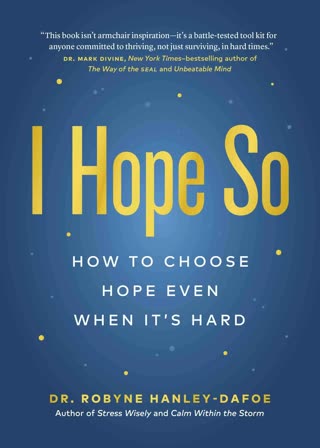
I Hope So
How to Choose Hope Even When It’s Hard
Hope as a practical skill, grounded in neuroscience, physiology and psychology rather than wishful thinking, with ways to practise it at home, at work and in community.
Get the book -
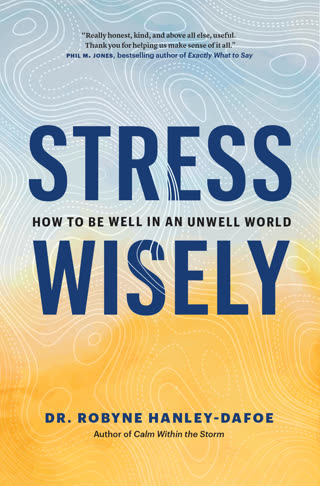
Stress Wisely
How to Be Well in an Unwell World
Where modern stress comes from, and how to live well alongside it instead of trying to avoid it, built around eight touchstones of wellness.
Get the book -
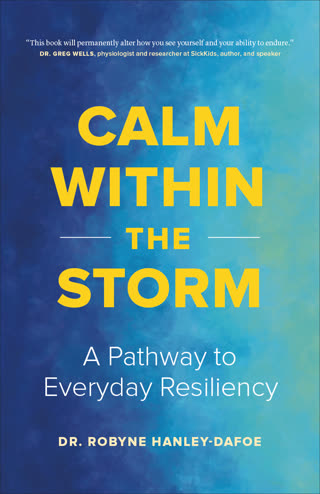
Calm Within the Storm
A Pathway to Everyday Resiliency
Resiliency is not about fighting harder or being tougher. A research-informed, everyday model for staying grounded through hard times, told through stories.
Get the book
Resources 16
Research and sources behind what was said in this conversation.
- Head of the Trent Regatta Peterborough Rowing Club The race Silken remembers rowing. The course runs along the Trent-Severn and the Otonabee and finishes at Trent University.
- Joseph P. Todd Carnegie Hero Fund Commission The record of the rescue: Robyne, 16, on the Otonabee River, and the boards and chain Joseph Todd used to reach her across the ice.
- Mr. Joseph Paul Todd, Medal of Bravery The Governor General of Canada The bravery award Robyne describes, for the rescue near Lakefield, Ontario, on 7 February 1996.
- A Review of ADHD in Women and Girls: Uncovering This Hidden Diagnosis (Quinn and Madhoo, 2014) The Primary Care Companion for CNS Disorders Why ADHD in girls is so often missed, as it was when Robyne was in school.
- The Positive Aspects of ADHD: A Qualitative Investigation of Successful Adults with ADHD (Sedgwick, Merwood and Asherson, 2019) ADHD Attention Deficit and Hyperactivity Disorders Hyperfocus, divergent thinking and energy: the strengths Silken and Robyne describe.
- What’s the difference between mental health and mental illness? Canadian Mental Health Association, BC Division Everyone has mental health; not everyone will have a mental illness.
- Self-Care Is Not a Reward You Need to Earn Psychology Today, Robyne Hanley-Dafoe Robyne’s own article on self-care as part of staying resourced, not an indulgence.
- Counting Blessings Versus Burdens (Emmons and McCullough, 2003) Journal of Personality and Social Psychology The classic study of a regular gratitude list and well-being, close to Silken’s morning practice.
- How the Practice of Acceptance Can Help You Get Unstuck Psychology Today, Robyne Hanley-Dafoe Robyne on acceptance: seeing what is in your control and what is not.
- Thinking in Bets (Annie Duke) Penguin Random House The same idea as “poker, not chess”: deciding with hidden information and luck. Robyne does not name the book.
- The Will and the Ways: An Individual-Differences Measure of Hope (Snyder et al., 1991) Journal of Personality and Social Psychology The founding paper of hope theory, the variable Robyne says gets people unstuck.
- Media’s Role in Broadcasting Acute Stress Following the Boston Marathon Bombings (Holman, Garfin and Silver, 2014) PNAS Hours of news coverage were linked to more acute stress than being there, which fits the point that our nervous systems were not built for constant bad news.
- Burnout: The Secret to Unlocking the Stress Cycle (Emily and Amelia Nagoski) Ballantine Books The book behind the idea of completing the stress cycle. Robyne does not name it.
- Compassion Fatigue: Psychotherapists’ Chronic Lack of Self Care (Figley, 2002) Journal of Clinical Psychology Dr. Charles Figley, whom Robyne names, on compassion fatigue as the cost of caring.
- Stress, Burnout, Compassion Fatigue, Oh My... Psychology Today, Robyne Hanley-Dafoe Robyne’s own article linking a stress cycle that never finishes to burnout and compassion fatigue.
- Dr. Gabor Maté drgabormate.com Silken recalls a Gabor Maté interview about noticing dysregulation when he snaps at loved ones. The interview itself is not identified.
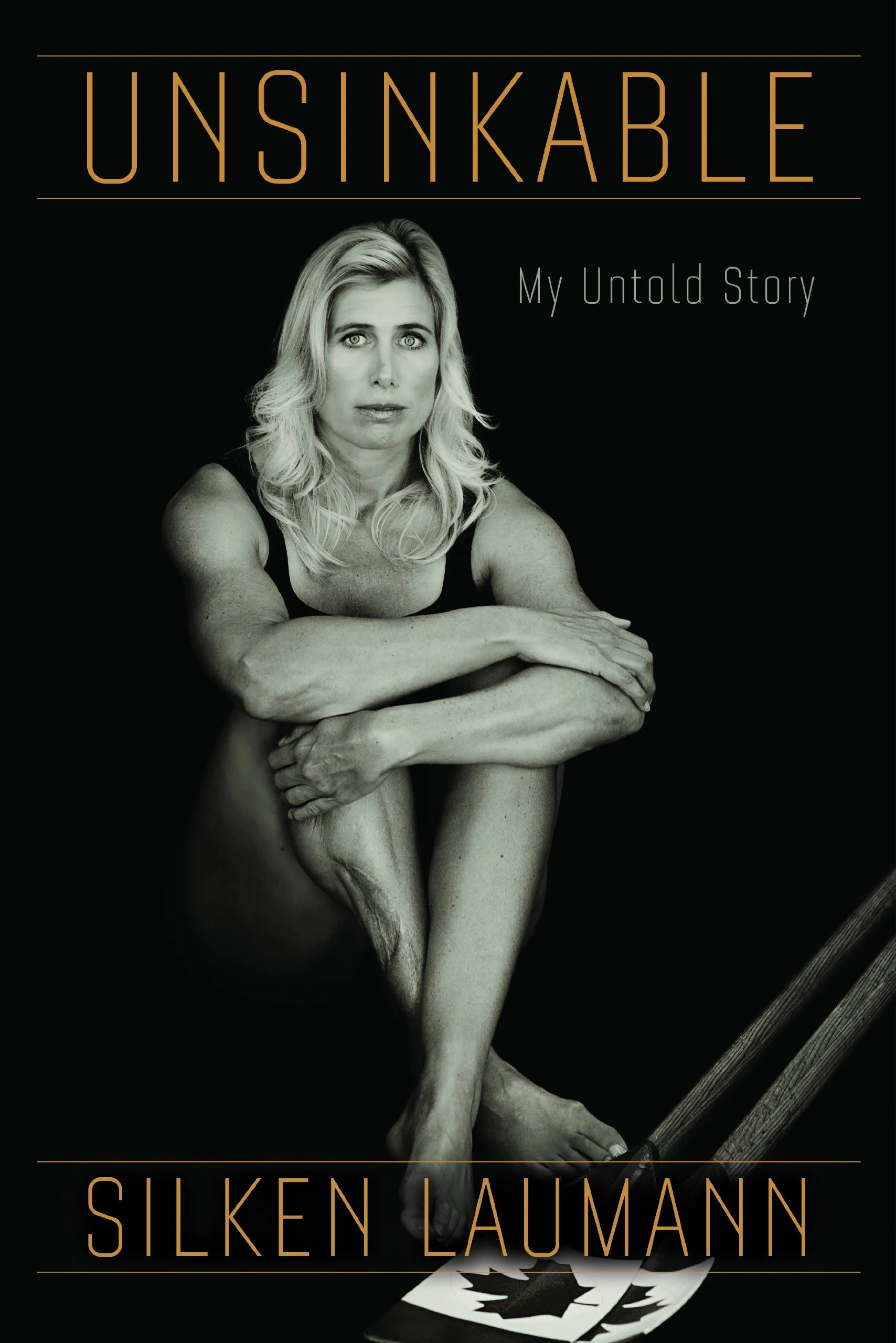
Silken Laumann
Olympic medallist, bestselling author of Unsinkable, and host of the Inflection Time podcast. Keynote speaker on resilience, and founder of the Unsinkable mental health platform.
This episode is supported by GoodLife Fitness and Ventum Financial .
One story, once a week, from someone who has been through it.
A short letter about a moment that changed someone’s life, what it taught them, and a question you might carry into your own week. No course launches, no countdown timers.