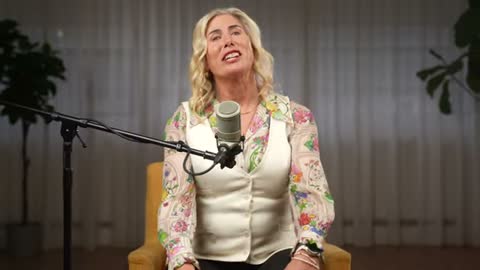
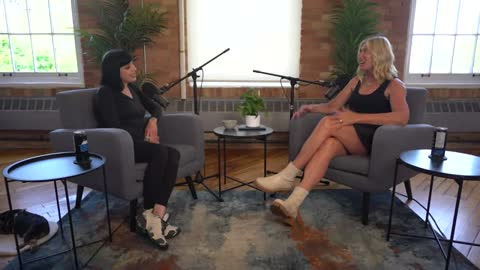
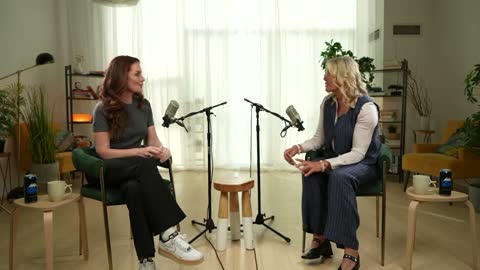
Lynn Keane: Give Sorrow Words
Seventeen years after her son Daniel died, Lynn Keane talks about the question that never fully closes, and the finish lines that brought her back to living.
“I feel that my perspective on grief today is not running away from it… and not running to it, but allowing it to be part of who I am.”
Transcript
Speaker names are being checked and will appear here soon.
00:00 Meet Lynn Keane
Welcome to Inflection Time. I'm Silken Laumann. Every life has turning points, those moments that change everything. In this podcast, I sit down with remarkable people to explore the challenges, choices, and unexpected events that shape who we are. From heartbreak to triumph, fear to clarity, these are the stories that remind us that growth isn't linear and meaning is often found in the moments we least expect.
Inflection Time, uncovering the moments that make us.
Today's conversation with Lynn Keane is raw and deeply emotional.
Lynn lost her son Daniel to suicide when he was only 23. But this conversation's not only about grief. It's about hope. It's about moving forward. It's about who we become through grieving and continuing to savor all that life has ahead of us.
I hope you enjoy listening to the conversation today. Lynn Keane, it is so wonderful to welcome you into our studio here at Inflection Time. Oh, Silken, thank you. This is just so good to see you and your team again. So I appreciate it. Well, we have a backstory.
So Lynn Keane is an activist in her own right. She's a writer. You do so many different things. Your most recent book has a beautiful title, Give Sorrow Words, about grieving and losing your son Daniel. You know, I haven't read the whole thing yet, the whole book yet.
But it's a beautiful insight into grief and its many faces.
02:05 Sharing Daniel’s story through Unsinkable
But we have the story of like, you were one of Unsinkable's first contributors. And that means a lot to me because our charity of Unsinkable, it focuses on personal narrative and the healing power of story.
You wrote your story about losing your son Daniel. Mm-hmm. I'm curious, you know, because now you have a little bit of time to have reflected on it, but I'm really curious about how that experience affected you. And, you know, was it helpful in your own internal process of healing? It was for so many reasons.
I remember seeing a note by you on Twitter. And you just had like a little brief thing about something you're working on in the mental health space. And I thought, I'm going to reach out to you. And right away, you were very open and just very encouraging. And we stayed in touch.
And I guess it was Christine that got connected with me down the road. And I just felt that I would feel there was such a comfort in sharing your broader message because you were focused on youth. And that's where I was. And you were also, the team was focused on prevention. Yeah.
And also what I, that was like, that was what I wanted to deal with. Let's talk about how we prevent. You know, we know we're going to deal with a lot of young people who are struggling. How do we support them where they're at? And I felt that you and your team were always about that. And I, so I felt like I was very safe.
And in all our interactions. What's important when you're struggling is that, you know, a lot of people are storying Kelly today, but it's not necessarily guided storytelling where you're making sure a person's ready to tell. And then like maybe helping them also like on the other side, different parts of the story that they maybe haven't yet been telling themselves.
But also the follow-up. I mean, I guess I certainly felt like, I guess the word is protected. I felt that there was enough follow-up that even though, yes, you're vulnerable and you're sharing yourself, you were also providing a platform for me to continue speaking out. And that was incredible. And so you allowed me to share the book and writings.
But the, I remember the video that we shot, it was for World Suicide Prevention Day.
04:22 The World Suicide Prevention Day video
Yeah. I was intense. Oh, beautiful. I mean, I look at that video today and I still cry. And, you know. So just explain the video just for a minute.
Okay. You're running. So I'm basically in a park by the water and it's a beautiful, I can't remember, spring, fall day. I'm running up a little hill and basically the voiceover is talking to Daniel before he passes. And I'm recognizing what I didn't know before he passed.
Now I had that understanding. I know you're hurt. I know you're suffering. Your family loves you.
We need you to stay. And so as I'm running, I'm feeling that, you know, these words are in my head. And so when I saw the production, I was just like, wow, that was just, it's exactly. Pure power. It was pure power. I couldn't have expressed it any way because from being a mom who was basically torn apart
to I was up and running and I was, I had understanding now I could talk to him in a way that I would, I could talk to other young people. And so it was just a really a seminal moment in my advocacy was that video. It was just, just being able to, you know, anyway, it was just something. Thank you. I don't think I've ever heard you talk about that.
But I remember thinking about like how brave, brave you were, but also kind of how inspiring that story was like. And I, and I think that's kind of interesting because often like we hear, oh, somebody wrote a story about, you know, a parent dying or their son dying and you lost your son to suicide, which I think there's an extra layer of grief there. And you think this is going to be a depressing story, but actually I find it's, it's sad,
but not depressing because of the strength of the human spirit and the possibility of healing, you know, in something that people think of, oh, well, that's the worst thing that could happen to you.
06:43 Writing letters to Daniel
Can you talk a little bit about why you wanted to write your story at the time that you did? Well, thank you for that. I, and I appreciate you reading about Daniel. It really is, I look back now, a meditation on a life and what a family endures in the face of trauma and losing your child. Well, we're not supposed to outlive our children, number one.
And Daniel was such a life force that I didn't have any other where, I didn't have any other place to go. And you're a writer. And I had, had, you know, I used to write scripts when I was doing documentary reporting for CBC Sports years ago. Yeah.
And for some reason I took that facility of writing and I just started writing a diary to him. So early days, you know, within five days we were sitting in front of a grief counselor who, you know, was very, you know, she certainly had certain steps that we should follow. And I was like, this is not the script I can take. Like, this is not my script.
And for this loss, I need to figure this out in a different way. So she worked with me and started providing other books, other stories for me to read. And then she said, I would suggest you write a story to Daniel. Start talking to him as if he's here. Yeah. And what you want to say to him.
And you can be angry. You can, you can tell him how much you love him, but just be yourself. And, and I hadn't looked at those diaries until 25. I hadn't gone back to them. But when I wrote them at the time, I... Because they're cathartic.
I mean, it was, it was the writing of them. Exactly. So that, that sort of, I call it facility, that skill came back to me and I thought, oh, okay, let me write an essay. And the Globe and Mail picked up the essay and I, and I had a lot of people back in the day respond to that. And I thought, one comment particularly stood out and it said, paraphrasing, your story is our story.
And thank you for sharing Daniel with us. And it made so much sense. Like, through our story, not only could we, you know, sort of unpack what grief looked like for a family, but we could start to figure out how we could provide hope to young people. Yeah. How could we get there before where we...
Because you had, you know, you had a lot of questions, right? Like, I mean, it must have been so many layers. I mean, one is just pure grief. You've, you've lost Daniel and you've lost this beautiful soul. He's, you know, not walking the earth anymore. And that, that just, the weight of that.
And then there's this next layer, which is, why did he die?
09:25 Searching for answers beyond “why”
You know, how did he come to that place? I mean, how significant was that piece in your grieving? I'll illustrate that. Very good question. Because that's exactly what my husband and I found ourselves doing, is walking in circles. Like, literally like a dog walks in circles when they're just about to pass.
It's this, like, this pacing the house, saying why. We would say, and then we finally said, we're never going to get the answers that we need to get. Yeah. Not that that helps, but it was like, we have to ask another question.
And... Oh, that's powerful. That led me to physicians and to psychiatrists. And a wonderful psychiatrist in Toronto gave me an hour. And he, I said, could I, through a friend connected me with him, he said, I'll give you an hour of my time, bring all your questions. About grief.
About, about suicide. Mm-hmm. Because I needed to understand the whys. Like, I needed to understand the, sort of the, the physiology around and the psychology around how would someone with so much hope, how could this be the, the, the end? Mm-hmm. Mm-hmm.
At, at 23. Mm-hmm. And so that led me to more research and just to understanding, sort of, like, the, the trajectory that could have been Daniel's. And that's what I set about to write. So his life. Okay.
And then, sort of, the seeds that we're building. And that was hoping. And some of that was, like, so, what I'm, what I'm understanding, Lynn, is you're going through this process. On the one hand, you're saying, we're, we're never going to know why. I mean, so we need to stop. Right.
Asking that specific question. But then you went and said, no, but I want to understand how the chemistry of suicide could work. And how, you know, a person, any person could come to this place of wanting to. And they're like, even when holding hope for other things. That's what I would, it was that. Yeah, absolutely.
Yeah. I mean, Daniel passed in April of 20, I can't even remember the days, 2009. And now, in March of 2009, him and I were communicating on the phone through texts and calls. And he said, mom, I am so excited about this summer. He had a summer business. And he said, I've got new clients.
Like, it. It's just hard to make sense of someone who is so forward thinking to then a matter of weeks later to have that outcome. I had to figure that out. Yeah. And I was the one in our family who, who had to figure that out. The girls went back to school eventually.
Bruce had to carry on. And I just, I had to sit in it. And because when, when we first met and you were actually part of the Road to Mental Health tour that Good Life sponsored. And that was like, I really loved that event, by the way. That was great. Yeah.
It was kind of, kind of our first public event at Unsinkable where we kind of realized how the power of personal narrative could be, first of all, transforming to somebody telling the story. Like, you know, I've certainly experienced that in my life, writing Unsinkable, right? You know, it can be incredibly liberating and also helps you come back to the story in a different way. Absolutely. Maybe gleaning strength, maybe recognizing how an experience can also be teaching you something while being really painful.
And at that time, you were quite involved in suicide prevention.
12:54 The warning signs that are easy to miss
And, you know, this book is also, you know, written with trying to help people get clues on how they might help someone who is depressed or who's having signs of struggling. Right. So what are the signs of struggling in your mind after all this research?
You know, something as simple as he was losing weight and his belt loop was hanging longer. So, like, I would comment, I said, like, you're losing weight. Like, what is that? Your belt loop is so tight now and it seems to be hanging down. It seemed like an odd thing, but it was losing weight, not sleeping, on his phone all through the night. Sort of outward, just like, they could be very random signs for any young person, to be honest.
Yeah. They weren't like flags to me.
He wasn't going to school. We didn't know that at the time. Because he's away at college. He's away at college, yeah. And we don't know this, but we could just, we could, when he would come home from college, even when he was attending, he'd come in with a high. Like, he was, like, ready to cook for us.
We were going to just have the weekend together. And it was just this high. And by Sunday afternoon, there was a drop. Yeah. Like, just like, he had nothing left. And, you know, my husband would take him back or I would take him back to school Sunday night or Monday morning.
And you drove away thinking, something's not right. I don't know what it is. It's so complex, right? Because that could, like you said, that could be describing so many young people at university, right? Who, it is a struggle to adapt. And kind of back to your earlier question, why?
I mean, these are good things for our listeners to hear in terms of potential signs. It could also be the signs of a lot of different things. So, you know, you and I have had this conversation before. At the end of the day, you don't always know. I mean, even if we think you know, you don't always know. Yeah. And I think one thing you said to me that really struck is, like, never stop talking.
You know, teenage boys, even boys in their 20s, right? That's a tall order. Because a lot of time when people are struggling, conversation is actually the hardest thing. Like, that connection, they shut the people that they love the most out. Yeah. And that, whereas Daniel was very emotive for a young man, but mostly he would deflect it. So it was, he was there to help somebody else or help you.
Or he'd say, Mom, don't, you know, don't bother going out on the run. Let's just have breakfast together. Like, he was very much to bring you in, but he wasn't necessarily willing to go. And probably, I can only imagine now the conflict inside. Like, where would he even start? But another behavior we saw more of, or learn more of after he had passed was, he was reckless.
And we didn't realize to the degree, but he would skateboard off ramps, like highway ramps. Like, his friends and him would do this. They were kind of uncharacteristic. Yeah. Just like at a, I mean, he always loved snowboarding, skateboarding, everything. But this was at another level. So he'd sort of lost that filter of, like, security and, you know, looking after himself.
And I think alcohol certainly played a role. I think, well, I know it played a role because he spoke to that in his note to us that he left. And he refers to, you know, drinking wasn't working anymore. And so if I could pass that on to somebody who sees that, that was huge. That we did not see it to the degree that it was happening. But there were small flags along the way.
Had we had the knowledge that we had today, could we have changed it? We certainly would have had an opportunity to try. So, yeah. And I'm so sorry. I've said this to you many times. And it's a loss that's always going to be there.
And I know other parents who've lost children. And, you know, you're permanently changed by the experience. The grief never goes away. It seems to change and evolve. And, but then, you know, when things come up in life again, you know, you're sort of revisiting. So just to kind of bring it back.
17:23 Will the “why” ever go away?
You said you went in circles. Your husband went in circles. Why, why, why? And I think all of us can relate to that. Even when it's not suicide. When somebody dies unexpectedly.
And in the hospital, there's so many ways that people pass that we don't have all the answers. So sudden heart attack. But they just had a heart checkup, right? And I agree that why is probably the most destructive question. Almost in any situation in terms of healing. It can really get in the way.
Because, like you said, there's no answer. Like there's no definitive answer, right? And, you know, but I wonder now, because, you know, it's been, it's been a few years. You've, you've, you've, you know, you've evolved. You've been doing a lot of things. Have, have you been able to stop asking that specific question?
And not that you make peace with it, but, you know, you have kind of resolved that you probably will never have the full answer. That is a really lovely question.
Because I think it deserves so much. It's such a weighted question. And I think I'll always return to that question. Okay. When I have time, when I'm with Daniel, while he doesn't walk the earth anymore, he's very present. And his energy still sort of like blindsides me.
So, and I'll talk to him. And I just like, like, I need you now. Why aren't you here?
Or help me now.
I resolved, I accept, what I can accept is his mom, is I couldn't save him.
Like, I don't know that that could ever go away. Because I don't, I never felt that, you know, people would say, oh, you mustn't feel guilt. Like, that never really crossed my mind about guilt. But I think people are just trying to be helpful. They're not always helpful. But they just, but I didn't feel guilt.
I just felt like, how did I, you're a mom, like, you're supposed to, you're supposed to go to the ends of the earth for your kids. And I would have. But when you don't have that ability to understand what you're looking at, you can't. So that is also the mission why I went to advocacy. But I don't think I've ever really, I don't know if I've really ever answered that question. I don't think about it as much anymore.
I don't, it's not top of mind. And I feel like after 17 years without him, if you think about it, he was 23 years, we're getting to a point where he'll be gone longer than he was here. I, I still see him. I, in my, you know, I still see him in dreams. I still feel his energy. But I feel like he's kind of with me on the journey.
And I'm okay with that. Because that's all I, that's what I've got. I'm excited to share that Ventum Financial, a sponsor of Inflection Time, has launched their new podcast called Relevant. At Ventum, they believe that sharing someone's story is a privilege. And Relevant brings those stories to life. It's where leaders, creators, changemakers share ideas, shaping business, culture, and the world.
One conversation at a time. I'll be joining Relevant for an episode to talk about resilience, optimism, strength, and how these qualities help us grow through change. I hope you enjoy that episode. Check out Relevant by Ventum Financial, where people are discovered. You know, hearing you talking, think about every parent I know. And not the guilt, but this feeling of we could have done more.
What did we miss? Not because our children died, but because maybe they went on a path that, you know, we didn't foresee or don't totally agree with or struggling with. Maybe they have addictions. Maybe, you know, they're having trouble adjusting to a working life. Like, there's all sorts of iterations of that where I think as a mother, as a parent, you think, I should have been able to solve that.
Like, I should have been able to raise him differently. Like, whatever way you go through in your head. And, like, this, what you're feeling just seems like it's just a, you know, bigger, broader version of that thing that we all do way too much as mothers, especially as parents, like, take responsibility, full responsibility. And it's not, right? You know, there's another human being involved.
And, you know, I now see you.
21:58 Training for a half Ironman after loss
I want to say one of the things that you did. Daniel kind of restarted your athletic career, didn't he? Because I think you were training for an Ironman or something, like, really big. When we first met. Yeah, I do remember because I was like, wow. You know, she never, because you'd never done one before, right?
No. No. No, I hadn't done a half. I hadn't, I had just dabbled in, like, sprint triathlons. Like, I was not a swimmer. Yeah.
And you were doing that for a couple reasons. Like, one, it must have been, to some extent, your mental health, like, to do something and to train and to, I know what that feels like, right? You know, when, I mean, still to this day, when I'm dysregulated, I have to get my heart rate up. I have to have some of that chemistry that exercise gives me to kind of, to come. And it can't be really easy exercise. It's got to be like, I got to run on the uphill three, two, four.
Yeah, whatever it is, right? And I think we kind of underestimate that in terms of emotional regulation, how important that really is.
It's interesting, like, a lot of our storytellers at Unsinkable talk about that, you know, I exercise, I go to the gym, I go swimming, I yell at the top of my lungs, right? And I don't think we give that piece how important movement really is to healing and to just self-regulation. Did you find that afterward? I found it, but I didn't know that. Do you know what I mean? What you're saying is all 100%.
You found yourself running and swimming? Cycling? I think I had run for 10 years before I lost Daniel. And I do, as a side and a side, I believe that capacity allowed me to deal, come through it. In other words, I was able to start running pretty quickly just for myself. Like, I was a walk, run, whatever it looked like.
I was, like, screaming as I was running. I was just out the door moving, power of movement. But in time, I thought to myself, if I could ever do something like that, it would be so outside of myself. Like, I've done marathons. And I, you know, but this is something that I wanted to do. And I talked to Daniel about doing it.
So there was a connection to his life and his mom doing something that was like, Mom, you're crazy. Yeah. And I had signed up two times to do the Muskoka Half Ironman. And I never got to it. Like, I bailed. Whatever good excuse came in the way.
Well, I think the excuse could easily be, like, an Ironman is a 4.2 kilometer swim. It's a 26-mile run. And it's, what is it, 180 or something? 180. That's a fault. Yeah.
So there's the reason right there. That's, you know, that's enough to stop most people in. But this was a half. So it's half. Oh, only half. Yeah.
But it was like something I'd never. But I trained with a lot of really strong women. And they were really encouraging. Like, I felt like such a rookie. But they kind of, you know, I just watched them. And I watched how the power on the bike was phenomenal.
I thought, you know, could I ever. And so I just started throwing myself into training and writing. And wouldn't you know it, in July, I guess July of 2015, I was in the water ready to start the race.
25:18 Race day: fear, grief and the finish line
And I was so scared. Like, I was like. But. You're kind of looking at where the safety boats are. Well. Hey, we're all pretty kayakers.
You're going to say we're everywhere. I've done a four-kilometer swim before. Oh. Yeah. And I know that my best strategy was. Oh, yeah.
If you start to panic. Yeah. Because, you know, what people just realize is, like, there's all these other people in the water. So it's not like you're just going on this nice four-kilometer. Yeah. You know, there's, like, hundreds of people all over there.
They're all cashing. It's like a washing machine. And I got panicky a couple times. And I just plowed on my back. Yes. That's what you.
It's like such a great strategy, you know. After a while, your nervous system just comes down. He keeps flowing. Well, I have done both. I have got on my back. And I have actually swam over to a boat.
But I've just treaded water. So I wouldn't DNF. Do not finish or did not finish. Anyway. Anyway, I, but I resolved, I swam in that waterway the week before. And it was, like, the waves were splashing.
And Bruce was in front of me in a kayak. He says, you can do this. You can do this. So I thought, I've swam in really hard conditions now in this course. Yeah. I'll be fine.
And it was, like, pristine water. The sun was out. I get in and probably, I don't know, 500, 600 meters in. It took me that long to calm down. Yeah. And I stayed to, I was, like, at the very end.
I stayed to the end. And I just got into the groove. And I got on the bike. And I got in the run. And I'll never forget.
I could see my family at the finish. And I saw Daniel.
And he, gosh, I shouldn't do that.
He, I had, both feet were off the ground. They had captured a picture of me crossing the finish line. I don't know, it was eight hours. It was a long race. Yeah. And I had done so many things in that day.
And one of them was fought my fears, fought with grief, thought about my son and my whole family, and thought about myself. And I did all that in eight hours. And I thought, damn. Like, I just thought, gosh, I, I, I just was so, um, it was, it was otherworldly. I just, I did, I crossed over that, what that finish line represented, moving into another realm. Yeah, you know, I, I'm getting this sort of full circle sense.
Like, this was a journey you started with the purpose of, you know, connecting with Daniel through something that was a shared experience for coping with you. You really said you were training and you were writing and then, yeah, like the actual event was this cathartic, but also like, it was like this range of emotions, like that. Almost everybody does, by the way, like when they do, uh, an event like that, it's so physically taxing. But then you had this other emotional level and that's just so beautiful that way he said, you know, your feet were off the ground and you could see Daniel there and like, what a, what a beautiful. We were all together. Yeah.
And I, you know, I've watched a lot of Ironman, Ironman fish and I, and I like to stay till the very end. Yes. Yeah. Because sometimes the most interesting stories actually come in the people that do it in 12 hours. A hundred percent. Yeah.
15 hours, you know, um, they, you know, they have this story. Of like overcoming cancer or do, yeah. Running for someone and they're slow. You know, they, they've like suffered out there. It's all about the finish. Just get, get under 17 hours.
28:49 Ironman Lake Placid and the power of movement
So I did Lake Placid in 2018. Okay. I was on a mission now. So I'd done a few. That was a start. That was a start.
And I said, okay, let's do this. And all along my family sort of, they said, if that's what you want, that's in your heart, we'll support you. So 2018, I, I did, I crossed the finish line and the very same, sorry, very similar, um, emotions came up for me. In fact, I remember I had two miles to go and I was my last hill of the day and it was dark. And I see my son or sorry, I see my son, saw him throughout the race, but I saw my oldest daughter and Bruce at the bottom of the hill and they were crying. And when I saw that, it was like, whoa.
So we're all crying and they said, hey, you got to go. And I ran up the last hill and to my daughter. I was putting a hill on me and it's like, really? This form of cruelty. Yeah. And you, you run into the Olympic oval from Lake Placid and that's very meaningful.
So, um, so, you know, yeah, it's sport and movement are so, uh, for me, we're, we're so, um, you know, pivotal in me coming back to living again and they continue to be, it's not over. Like that's, that is my life. And I think that just, I think that the evidence around movement, fitness, getting your heart rate up and mental health is there. Oh yeah. I think that it's sort of considered kind of a lightweight approach to wellness. And it's such a shame because it's like, oh, you know, medication, that's a heavyweight and psychiatry and that's a heavyweight thing.
Absolutely believe in both. And so is exercise. Exercise is, is kind of a fundamental thing. We live in this body. Right. And our, our, our, it's an operating system, right?
It's not like our brain and our emotions are separate from our body. Our chemistry, everything is affected by movement. And, you know, your experience is such a great example. I mean, this thing that's like inconceivably hard and, you know, that it was part of your, part of your healing. I'm kind of wondering, so, you know, you're moving through life, obviously you're writing books and you're still advocating.
31:00 What death teaches us about living
How does, how do you see grief differently now? Well, to me, I read a lot about death.
But we don't read enough about death. But, you know, I'm really, I'm really interested in death. And I'm really, I think there's a lot in death that we learn about living. Mm-hmm. And the impermanence of everything. Mm-hmm.
Right? And I, you know, everything from the Tibetan book of death and dying to, you know, Stephen Levine, some of these authors who've written great books. Well, that's a, he's a fabulous author. Yeah. And there's something called the Death Cafe, which just sounds like morbid, but like where people come and they, they talk because it's something we know is going to happen to all of us. And it's something in our culture everybody's afraid to talk about.
You know, like we see the stupidest things. Yeah. We just are not, we are not literate when it comes to death. And so what's an unhelpful thing?
32:08 What not to say to someone who’s grieving
What's an unhelpful thing when you're mourning that somebody could say to you or anybody? God doesn't give you more than you can take.
Yeah. Really? Yeah. Because it's on that way right now. That's just, I think I, unfortunately, well-meaning people and good friends would send things and certainly try to support. But in suicide specifically, and I think probably in suicide and murder are probably, they're sort of grouped early on, I learned that sort of grouped together in terms of traumatic loss.
Now, that's just one indicator. But the point being is that we don't know how to respond. So when you talk about we don't know how to respond to death stuff. I think, like, you know, today when I want to respond to somebody who has lost a parent or, you know, a child or, I sit there and think with it. Like, and I've experienced both. But I just, who are you?
Who is the person that's going through this right now? I really try to just think of that. Like, who is that person before this event? How do I, you know, say a few words that are like, or just say, like, I'm listening or something. I just, but you can't make it better. Something that shows them that you see them and you see that they're grieving versus how they should grieve.
Yeah. Like, I think. Because in a way, like, God doesn't give you anything more than you can handle. They're kind of telling you how you're going to grieve, right? Yeah. Like, it's like, you can be sad, but there's a reason for this.
Or another one was you've got to be strong for your girls.
Yeah. Again, I don't know who I am. You know, I don't know how to get out of bed. I need someone to fish me. Like, I, like, you are, you are so laid bare and vulnerable. But your question was, what has grief, what does grief look like for me now?
34:05 Grief today, and losing her dad
And I would say, there's a, I understand grief now. I understand it and I'm not, I don't, like, of course, I don't understand it to the degree, because each loss is going to be very unique. Mm-hmm. Because you really, you recently lost your father, actually this year. So it's pretty fresh. Yeah.
So that grief showed up differently for you, but was also connected to losing Daniel. Like, because grief kind of has these layers, doesn't it? It's, and up until April of 25, I wouldn't have known that. But being with dad for 11 months in hospital, watching from, like, this emergency situation where he was diagnosed with throat cancer to hope, hope that he can get radiation to loss of hope to become a rehab patient. And to then palliative. Going through all of those emotions day to day in 24 and 25, that is a roller coaster that I'd never been on.
And it wasn't until his actual day of death that I start, I think I say leaking grief throughout that year, but it wasn't until he actually passed, was that I connected, oh, this is, this is different. This was like loss in the way, because I could still go and see him, even though he wasn't the, you know, he wasn't the whole dad that I had known. Yeah. And he couldn't move and he, but he. And he had sort of time in a way, but then it's still. Yeah.
You know, my, my, my husband's mother died at 103. And we, we said, I thought, you know, we should have written something like, she died suddenly at 110. Yeah. Yeah. Yeah. Because they weren't ready.
Yeah. They weren't ready. Her three boys who like were in their 60s and 70s. Wow. Were not ready. Were not ready.
Yeah. So we're like, you know, this idea that, because that's what people say too. Oh, no, he lived a long life. He lived a long life. Yeah. Yeah.
But he was doing well till 90. Yeah. So. Yeah. Yeah. And it's still grief.
Like you're still grieving your dad. Oh, yeah. I mean, my dad and I had such a great bond in the sense that back in the day when I was running high school track, he'd show up just quietly and stand in the corner at the track. And he, you know, I'd see him after. And I, and his words were, I knew you could do it, kid.
Whereas I'm looking forward, like, way to go. But he was like quietly proud of me. And he always was. And I just, like, I'm different now because he's not, I don't have that bond in life. Mm-hmm. And so that part of me is, is missing, that, that part with my dad.
But I look at dad and I look at Daniel and I think they, they both are helping me to understand this world and this life that I'm living. And just to, as you say, an impermanence to the day, to our relationships. And so just live in the present when you have it. And when it comes time, when you have to, you can draw on that resilience because it's, it's, it's hard, but somehow it's there. Like somehow deep within a reservoir, we all have it. And it's brutal, but you can, you can find a way.
As an Olympic athlete and the founder of Unsinkable, a mental health charity, I know the power of a supportive community in reaching your physical and mental fitness goals. That's why I love Good Life Fitness. It's more than a gym. It's a place where you can really thrive and find connection. As a special thanks for joining today, you can experience it yourself with an exclusive seven-day pass to any Good Life Fitness location across Canada.
Visit the link in this podcast description for access. All of my podcast guests have shared the importance of physical activity in their lives. Together, let's build a healthier and happier Canada.
Yeah, I, I, I've just been reading, I think it's called Living in Bardot. And it's, um, it's a book about how in Tibetan culture, um, death is treated very differently. And it's very much, you know, confronting. It's, it's right there. Right. Um, there's a whole ritualization around, um, the, the journey of losing somebody and, um, helping them to the other side.
Right. Through your prayers, through, like, how you accept, um, their death. And it, it's just interesting that our Western culture, I mean, people won't even listen to things about grief and dying. And yet, every single one of us is going to experience it. So I love how you say, like, you're learning about living, um, with these losses. Because that's what we all have to do.
I mean, we all lose people that we love and the more comfort, comfortable we are, I think there's an opportunity to be learning. Not, not like the silver lining kind of learning, but it's like you're changed when you lose somebody close to you. Like it's, it's, it's the grief and the experience is changing you. And, and I'm curious, how do you think you've changed, um, by losing your son, um, when he was so young? And, and I guess more, more recently by losing your dad, what's changing inside you?
Um, there was a certain point, um, probably when I started to, to move more away from the death day of Daniel, I, I noticed that I was more, um, aware of other people's pain in a way I hadn't been before. So I always thought I, I thought I was a good friend. Um, but I don't think I was as deeply vulnerable and committed to friendships as I, it just, things touched me in a way differently after. It's like I lost a veneer of who I was. I couldn't go back.
I was very vulnerable. And that was a good thing. Awful that it had to happen that way, but I, I was stripped bare. So I saw, I felt other people's, um, sadness. And then most recently I've learned how to, um, care give in a way that I never thought I would. I didn't know that I could do that in a way or that I was with my dad, be called to support a dying parent.
I've heard of it. I've, you know, I've had friends that have gone through it, but until you're in it and like, you know, things like just because he couldn't, um, he couldn't take a lot of, he couldn't take food in. And so, you know, you'd swap his mouth and you do very discreet things with your loved one. And it became this, uh, this connection, this bond. And he was looking to me to do it. And it was just like this beautiful thing.
So I really feel that I had extra six months with my dad when he was still, you know, being able to communicate with us. But we got, got 11 months to learn how to, to care for somebody. I, I, you know, I totally get it. Um, I think I've shared with you, um, that, that my mom, all of her life has had an undiagnosed mental illness.
41:20 Caring for Silken’s mother: a moment of grace
She's severely mentally ill really. And hasn't, I mean, for the last five years, um, she's hardly left her home. Um, and in August, um, she had a stroke. And my sister and my brother and I went down to care for her to try to get her set up into a different kind of living situation. Which means basically pulling her out of her trailer where she had been. I mean, she was in the hospital at the time.
But like loosening that grip, our complete isolation. Right. Which none of us had permission to do before. Right. And because she was, had the wherewithal that she was still making her own decisions, however bad those decisions were. Right.
But, you know, here's, here's my mom. Who's, you know, objectively caused me so much pain. You know, and for quite a while, the only way I could live my life was to be separate from her. And she's in the hospital. She's very old. She's almost 90.
But she's still like this fierce person and pretty abusive person in the right situation. And she hadn't cut her toenails for years.
And she wouldn't let anybody touch her feet. And she was so scared. But she couldn't walk because her feet were so damaged from not walking and having. So finally, I found a way for her to trust me enough that I could touch her feet. That's huge. And deal with her toenails.
And it wasn't the most glamorous job in the world. But I saw this look of tenderness for a second. It was like this breakthrough. And I know that moment was real. And I think there's not many moments that I can think about my mom. And I can really remember that love and connection.
There was another one on the same trip. We went to move her into a new house in her senior's residence.
She'd never for years hadn't had a house because she wasn't willing to leave the trailer. And she was overwhelmed. I mean, she was my brother and sister and I. We just brought all the furniture. We bought everything on, you know, Facebook. Right.
We put it all together. We'd done it. It was a real team effort from all three of us. And she came in the door. She had a little bit of Alzheimer's. She got lots of mental illness.
Like all these things happening. She's overwhelmed with emotion. Coming into this beautiful home. And she's crying. And she's kind of like walking with me. And at one moment, she looked at me and she said, but I was not a good mother.
And I don't know if I ever thought I'd hear that from her.
And it was this moment for me of like, wow.
She has some self-awareness. And also, I said to her, but mom, that's why there's grace. It was incredibly healing for me.
And it couldn't have happened if I'd not been there. And be traveling these horrendous 21 days with her. Where I was pushed to the edge of exhaustion and emotional rollercoastering.
And I don't think we talk about those things often enough. Like, it is a privilege to care for someone. But it's hard. It's really hard. It's really hard. I need it all day.
But there's also these moments that are really transforming. And I feel like if she were to die tomorrow, I have that peace. Right. Right? Yeah. She said it.
She acknowledged it. And that's what I needed. I didn't know I needed it, but I did. And she was sitting with it. Yeah. I was like, that's when you're talking to me.
I feel like she was sitting with it. But that she had an opportunity to finally, also to say, like to say out loud. Yeah. And I kind of wonder whether it was healing for her to, especially to hear us say, because my brother was there too. And he's like, you know, mom.
And we started joking about it. Yeah. Mom, you were a terrible mother. You know, and sort of, you know, he's so funny. You know, he was able to say that. And she just sort of smacked him.
Right. Right. Right. But that's also a different relationship that often boys have with their mom than the girls. And she was definitely hardest on the girls. So, you know, again, this is like something we're so afraid of.
I just spent three days in a senior's residence with my dad. And, you know, you're again, confronting, right, all these older people. It's a part of life we don't want to think about. But I think I've noticed maybe this is a chapter of life as you get you're getting close to it, closer to it yourself. Right.
Like you start looking and go, OK, like I didn't really think about aging. And then and then sort of around 50, you start to panic a bit about aging and you got to get your wrestle that puppy down. And then just when you start to get at peace with aging, you're confronted by the loss. But yeah. Parents a lot of the time.
Right. This is like the the natural progression of life if it all works out well. Yeah. And then you're having to grapple with like, OK, I'm not I'm I'm a lot less worried about the wrinkles now. My runway is shorter.
I'm a lot less worried because I got bigger problems, you know. And yeah. And it's a beautiful I mean, I think if there's an embracing and I certainly embraced aging it eventually, like like going, you know, this is happening and I can distort myself. I can not accept. I can cling to what I was or I can brace who I'm becoming and not try to be what I was.
Because like in life, it's supposed to be a forward journey. Exactly. Yeah. Right. We're not supposed to be constant. I mean, going backwards maybe for the healing part to look at things.
Right. But ultimately, look at things to go forward.
47:31 A different kind of courage
Right. How are you going forward in your life? Not in a, you know, every day I'm a better person. I had a way. But like, what are you learning now at this stage in your life?
I go back a couple of years.
Bringing it back to a race. I tend to do that. But I went to Sacramento to do an Ironman, my second, and the race got canceled. And that's fine. They're kind of our calendar points, are they? Like our races.
It's like, and it was February of 2020. That's right. It was a rainy day. That's right. Long story short is I, we were in the Sacramento, greater Sacramento area. And it's the first time I really saw a homelessness on a level that I hadn't seen before.
And I saw this man walk across the street. So this was before the race got canceled. This was Saturday before the race on Sunday. So I'm, you know, race prep mode and I'm feeling good. And I'm watching this man with his worldly possessions walk across with a suitcase and a little grocery cart, trying to make it across the light, barely making it across the light.
And his stuff is all falling. Like you could just see it. The courage it took him to cross that light. And I just watched every step meant something to that man. And I remember, because there was homeless encampments everywhere. Even at the start of the race, they told us that that's their home.
And like, first of all, why are you having a race there? But I had this learning moment. It stuck with me. So the race got canceled. We got back home. And I started writing about that moment because it was a valuable lesson.
And that's courage. Us going to a race, we're privileged. That we get the opportunity to train, to fly on a plane, to get to a location, have a hotel. This man, his possessions are right there. And I just stopped to think about what's important. Like what?
So I wrote a piece called Radical Transformation. And it was like watching myself transform over these. By then it was probably 14 years of losing Daniel. I had changed. And in that moment, I had this like self-actualization where like I had changed, but my brain had caught up with that change. And I was like in it.
And I was aware that I was okay with that change. And I had more capacity.
I was okay with myself. You talk about aging. I was like, yeah, the wrinkles are coming, but I don't really, it's not a focus. I was proud of my body, what the mind and the body can still do. And so that's kind of what I try to lean into when I have these harder periods. Like it's like that transformation was about seeing yourself a different way.
But I also talked about the grieving process. And I talked about physical activity. And like, as you say, dysregulation. What do you do? Get your heart rate up. Zone three, zone four.
Like those are the things you know work. And it's also consistency. So for me, consistency, whether it's writing. That is the hardest thing. That is the hardest thing, right? Like the kids, the things we know that really regulate us.
And I mean, I think I'm more dysregulated than a lot of people. I have this huge amount of intensity. And then I also have, you know, times where my nervous system is so overstimulated, overwhelmed. So I've learned a lot of strategies. And yet, you know, I know I have to exercise every day. I know I need to meditate.
Well, I don't meditate. I do a meditative form of yoga that I do every single day. And, you know, I've been practicing yoga for 25 years. And it really has got that sort of like spiritual kind of deeper connection for me. But even knowing all these things, we let those things go because other things that other people want in our life often take precedent. Right.
And it's like I'm getting at 60-ish. I'm 61. I'm getting to the point where it's like, no, like I really have to stand up for myself and what I need. And I love what you said about, you know, who are you now? Like having that moment of self-actualization because, you know, in all the losses of aging and it's real, right? You know, things start to hurt.
You know, I've got arthritis in my hands and it does hurt. And, you know, there's so many things we don't talk about that can come, right? That wisdom, you know, but this sort of understanding that our time is finite, that we want to use our time, that the stripping away of things that just don't matter. They didn't matter when we were 20. Right. They maybe mattered in our minds, but they really weren't that important.
And I think in that moment where you saw that man, first of all, I mean, I'm kind of like extrapolating, but like you recognize now this is courage. So I had this other idea of courage and now this is really what I see. People used to call me courageous, still do call me courageous, but this is a different kind of courage. And it takes off forms for sure. Yeah. And in this stage of my life, it's about showing up authentically, being willing to keep transforming.
Like, I think a lot of people get to a point in their life and they're like, well, this is who I am. Right. I mean, I hear that all the time. This is who I am. And it's like, well, I mean, I think it's good to accept some things about yourself. Like I'm a little disorganized at times.
I forget things. That's probably something that may not change, but I'm kind of excited to keep evolving. I think a lot of people as they're aging can forget about that. Somebody said to me the other day that she was considering the idea of what she was retiring into.
And I'm like, what are you aging into? And I started to think about that. What do you want for that? Like, what is that? Because I think we're probably at a place, especially in the Western world, where maybe it's the first time we've thought about aging that way around the possibility of who we can still become. And also, for me, what I can still give.
That's huge. Yeah. Like, I don't have all the answers.
You don't have all the answers. None of us do. But we have imperfect truths. We have imperfect perspectives. But we do have that perspective. And I wondered, what is your perspective on grief today?
54:08 Lynn’s perspective on grief today
I feel that my perspective on grief today is not running away from it. It's, and not running to it, but allowing it to be part of who I am. Mm-hmm. That's beautiful.
It's part of who I am now, and it's okay. And you've given a lot. You've given a lot to others, you know, from what you've done with Unsinkable and sharing your story and doing this amazing video to your book, to the people that you're helping just by being you. So thank you for coming today. Oh, thank you for being you. So.
You're so welcome. It's been amazing. Yeah. It's so good. So good. I just, I feel like I'm back with a friend.
Thank you. And Lynn's book, Give Sorrow Words. It's a beautiful book. Download it for anybody who's, you know, grappling with sorrow. It's a wonderful read. So thank you.
Thank you.
Thank you for joining us on Inflection Time. We hope you enjoyed the episode, and we'd love for you to follow us by subscribing and sharing our podcast on Apple, Spotify, and YouTube. Inflection Time is an Archer and Co. production sponsored by Good Life Fitness. A special thank you to our incredible in-kind partners, Carter Wiley and Tall Boy Water, executive producers and directors, Michelle Archer and Phil Kloba, producer, Christine Bays, creative development, Sarah Carter.
Key takeaways
- The “why” may never close. Lynn and her husband paced the house asking why. In time they stopped needing the answer, but seventeen years on she still returns to the question, and it sits more quietly now.
- Small signs, easy to miss. Weight loss, sleepless nights, a high on weekends home from college and a drop by Sunday, reckless stunts, more drinking. On their own, each could describe a lot of young people.
- Writing as a way through. A grief counsellor suggested she write to Daniel as if he were there. Those letters led to an essay in the Globe and Mail, and later to her book.
- Movement brought her back. In the early days she ran, screaming, just to move. Years later she crossed a half Ironman finish line with both feet off the ground and felt Daniel there with her family.
- Seeing the person, not the script. “Be strong for your girls” told her how to grieve. What helps, she found, is noticing who the person is right now and letting them know you’re listening.
Lynn Keane
Author of Give Sorrow Words, speaker and suicide prevention advocate
Lynn Keane is an Ontario author, speaker and former broadcast journalist who works for suicide prevention and mental wellness. Her son Daniel died by suicide in 2009 at 23, and since then she has shared his story and what she learned about depression and suicide, including in her memoir Give Sorrow Words. A longtime marathoner, she finished her first half Ironman in 2015 and Ironman Lake Placid in 2018.
- TEDxYouth@Toronto talk on suicide prevention, 2015
- Toronto Life: her essay on Ironman Lake Placid after losing her son, 2022
- Canadian Running: Running through extreme grief, 2022
- HuffPost: A Letter to My Younger Self on Understanding Suicide, 2015
- Bell Let’s Talk ambassador and #SickNotWeak contributor
-

Give Sorrow Words
A memoir of the last months of Daniel’s life and her family’s grief after his death by suicide, drawing on research into adolescent depression and the warning signs she learned to see.
Get the book
Resources 14
Research and sources behind what was said in this conversation.
- Macbeth, Act 4, Scene 3 Folger Shakespeare Library Where her book’s title comes from: Malcolm tells the grieving Macduff to give sorrow words.
- Moving Forward After Suicide: Lynn Keane’s story Unsinkable The story Lynn shared as one of Unsinkable’s first storytellers.
- World Suicide Prevention Day International Association for Suicide Prevention The day, every 10 September, for which Lynn filmed her video with Unsinkable.
- Toolkit for people who have been impacted by a suicide loss Mental Health Commission of Canada A Canadian guide to grief after suicide, including the “why” questions, guilt and shock that often follow.
- Navigating Out of the Ocean of “Why”: A Qualitative Study of the Trajectory of Suicide Bereavement (Praetorius and Rivedal, 2020) Illness, Crisis & Loss Research on the “why” stage that survivors describe, close to Lynn and her husband pacing the house.
- I’m worried about someone else 9-8-8: Suicide Crisis Helpline The signs Lynn describes, from changes in sleep and eating to drinking more and pulling away, and what to do. Call or text 9-8-8.
- Risk factors, protective factors, and warning signs American Foundation for Suicide Prevention Warning signs including changes in sleep, isolating and increased use of alcohol.
- Suicide in Canada: Key statistics Public Health Agency of Canada Canada’s figures on suicide, including how rates differ for men, which Silken raises when she talks about young men not talking.
- Talking with teens about suicide CHEO How a parent can start the conversation. Lynn lists it among her own resources.
- Alcohol use and death by suicide: A meta-analysis of 33 studies (Isaacs et al., 2022) Suicide and Life-Threatening Behavior Alcohol use was associated with a 94% increase in the risk of death by suicide. Lynn says alcohol played a role for Daniel.
- IRONMAN Lake Placid IRONMAN The race Lynn finished in 2018, ending in the Olympic oval.
- Effectiveness of physical activity interventions for improving depression, anxiety and distress (Singh et al., 2023) British Journal of Sports Medicine An overview of 97 reviews finding that physical activity eases depression and anxiety, the evidence Silken points to.
- Death Cafe deathcafe.com The gatherings Silken describes, where people meet to talk about death.
- How to Talk to a Suicide Loss Survivor American Foundation for Suicide Prevention What helps and what to avoid saying, including the clichés Lynn and Silken name.
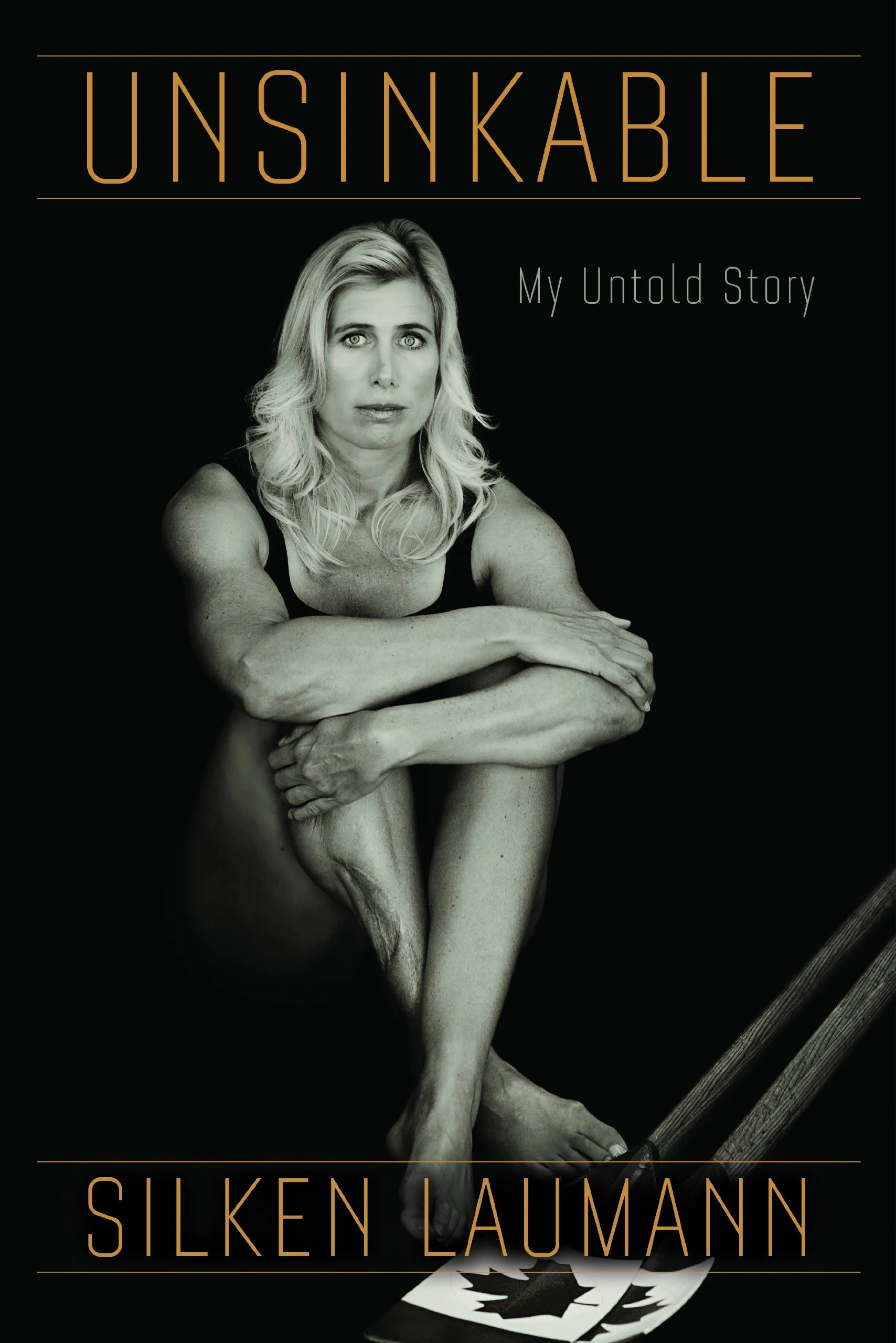
Silken Laumann
Olympic medallist, bestselling author of Unsinkable, and host of the Inflection Time podcast. Keynote speaker on resilience, and founder of the Unsinkable mental health platform.
This episode is supported by GoodLife Fitness and Ventum Financial .
One story, once a week, from someone who has been through it.
A short letter about a moment that changed someone’s life, what it taught them, and a question you might carry into your own week. No course launches, no countdown timers.