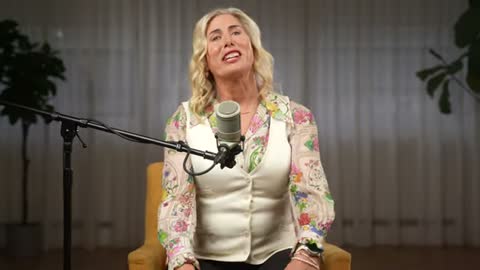
Colin Mochrie: The Shy Kid Who Got His First Laugh
He was a shy honour student headed for marine biology, until a friend dared him to try out for the school play and he heard his first laugh.
“It’s getting comfortable in the most uncomfortable situations where you’re totally outside your comfort zone.”
Transcript
Speaker names are being checked and will appear here soon.
00:00 Meet Colin Mochrie
So Colin Mochrie, we were just talking about being recognizable. You have such a recognizable face, but then you're like, you're saying, yeah, but you also look like everybody's uncle. Yeah, I do have a face that's very common. I do think, I feel like faces are being recycled because there are people I see, I go, oh, I think I know this person. I said, no, they have the same face of someone I knew in like gray skin. So you are actually, I mean, I'm tall. And so people, when I walk into your room, tend to look at me anyhow, because I'm like, you know, a few inches taller than most other women. And then they start putting it together. They're like, okay, then I open my mouth and I smile and it's kind of a dead giveaway. So what is it like being recognizable for you? I mean, it's been pretty good in that, you know, on Whose Line, we're not playing characters. So people feel they know us, even though my wife calls the guy on Whose Line the other, because it's an exaggerated version of me, one that is shameless and will do anything for a laugh. Yeah. Which is not.
So it's the essence of who you are, but amplified? Yeah. Okay. Exactly. And everyone, yeah, everyone does an amplified version of themselves. So people really know, they feel like they know who we are. So they feel very comfortable coming up and talking to us. So it's never weird. It's always complimentary and sometimes a little too familiar. Yeah, yeah. I totally know what you mean. And like, so you're saying you might not be this person in your living room because you're amping up your energy. You're probably amping up your creativity.
You're probably not. You're probably not. But being recognized in the grocery store or when you're with your children or, you know, when you were in a private space was an intrusion. There was a period when my daughter was about, I guess, 10 or 11, because I was touring a lot. It was touring with Brad Sherwood, which was on Whose Line. And he was also doing 21, 22 minutes at that point. So I was gone a lot. So when we were together and we'd go to show up and we'd go to show up and we'd go to shows or something and people would sort of quarter me, she felt that this was her time to be with her father. And it was being taken away from her. Yeah.
So that was tough. And then she got over it because I'd buy her stuff. Yeah. It's easy. Then she was fine.
03:34 The public guy, and a lesson from Drew Carey
Yeah. It's when you're with your kids. And did you ever feel like you had to put on kind of a persona or a layer of protection? Oh, yeah. There's a yeah. There's the public guy who, you know, for interviews or walking the red carpet or even with interactions with fans where I put on the fake knee. And genuine in some ways, because I do appreciate when people come up and, you know, it's hard to get mad at people who say, you know, I love your work. And it's like, well, thank you. Thank you for taking the time. And I learned that from Drew Carey when we were in Disneyland. He's a big Disney guy. And every year he would take all of us to Disney, our families. And we were having dinner. And every five minutes, somebody was coming up and asking for his autograph.
And he'd get up, you talk to him, you sign the autograph. He said, you know, at least the people that gave me a career. So I can't spend a couple of minutes just talking to him. Yeah. So I thought, yeah. I guess it depends a little, like, to the level. I remember attending an event with Wayne Gretzky. And, I mean, he just can't even swallow his food without somebody interrupting him.
And I got the sense that he almost recoiled from that attention, that it was really hard for his personality type to just kind of go with it. And also probably just the intensity and the level of fame. Like, it's one thing to be mildly recognizable. And it's another thing to be somebody's idol and hero and be constantly in a public life. I just, I think fame is really interesting and the layers of self that can develop. And certainly for me, like, I'd say after 92, I became well-known pretty instantly, like, from one moment to the next, walking down Queen Street in Toronto, where everybody I passed knew who I was. And I was like, what, what is going on?
And I think there was part of me that did recoil from it, like, who loved those moments of saying hello to somebody and learning about their life. But the intensity and the frequency of it made it hard for me to recharge and have quiet moments in between those very public moments. So I think we all kind of deal with it differently. And it changes also through our journeys and our careers.
06:09 Fame that arrived late
I mean, I was incredibly fortunate in that it all happened [unclear]. Yeah. So when I first started Whose Line, it was when it was still being filmed in Britain. So I would go over there for six weeks. We'd do the shows, which were shot on the weekends. So I had the week to do whatever you want.
And then be sort of like, maybe not the Beatles, but maybe the Bay City Rollers, where people knew who we were. And it was exciting. It was great. And then I come back to Canada where nothing was happening. So it never really got into my head. And then when we moved to America, I was 40.
So at that time, it was like, hey, if this works out, great. But I'm also used to things not working out. And I'll just roll with it. And when it did go well, it was like, oh, great. I'll write this for as long as it lasts. And who knows?
But in comedy and improv and in the business you've chosen, you've got to be pretty resilient. It's not ever a linear path, is it? No. No. Well, I...
07:21 A shy honour student’s first laugh
I mean, you were going to be... I read somewhere, and I disrelated this because this is what I went to university for our first year, was marine biology. I wanted to be... You want to be where you're ready? Yeah. Okay, so...
And then it went wrong somehow. Or right, or right. Or it went right. Because I was very shy. I was an honor student. I wanted to be a marine biologist.
And then a friend dared me to try out the school play. And I did. I got my first laugh. And I remember that laugh. And I remember that moment going, I want this now all the time. And so I got into theater and then just kept going for it.
And then improv. Also, that just came out of nowhere. Improv was not a thing when I was growing up. No one ever said, I'm going to be an improviser when I grew up. Yeah. There was no such thing.
08:11 Second City, Los Angeles and baby Kinley
But didn't you tour with Second City at some point? Yeah. Yeah. I was after Expo 86. But you were always already a little bit old. Like, were you in your 20s at that time?
It'd be... Quick math. Come on. Yeah. Almost. Just told me you were like a grade A student here.
57. Yeah. No. So, yeah. So I was 29. When I moved to Toronto, then I got hired by the woman who would later be my wife.
Ah, okay. Tough audition. Yeah. And, yeah. So I was with Second City touring for a while. And then I was on the main stage.
And then Deb and her writing partner sold a show to Imagine Television. So we went down to L.A.
He's there. And she is eight months pregnant when he found that. Then, then. Yes. It's just an insane path. It was during the Rodney King stuff.
O.J. Everybody was nearly tense. And we had this... I couldn't work because I didn't have any papers. So I was basically... Deb gave birth and went back to producing, acting, directing in 10 days.
So I was looking after Kinley, which was great. It was a really nice time bonding. And they're pretty easy at that point. Kind of. It's kind of the way around. And you can work.
So she went down for her career. And it was taking off. And, you know, I certainly resonate with working 10 days after you have a baby. I mean, when you're the breadwinner in the family, it's no maternity. I guess there's no maternity leave for improv or... No, there's nothing for improv people.
Yeah. Or actors or actresses. Yeah. It was just a different time. And then how did you then...
10:04 Auditioning for Whose Line
You were looking after Kinley. How did you take that next step in your career?
I was... There was a place down in Santa Monica where Second City alumni would have... Kind of work out. So it would be an improv show. So that kept me going that way. And so we go back.
Before we left, I had auditioned for Whose Line. They had come through... They were doing a cross North America audition tour. So I auditioned at 8 in the morning. Perfect time for money. Oh, yeah.
With our cast. They come to see the show. They love the show. So the entire cast. But we were... At that point, we worked together for a while.
So we did that thing you do in improv. Everybody was supportive of each other. So nobody stood out because we were committed to making good scenes. So we had moved down to LA. They came through again. But I was auditioning with people I didn't know.
So it was like, hey, screw you. Look at me. So that's a lesson that became... Yeah. Yeah.
11:08 Why improv, and never stand-up
Because improv is teamwork, isn't it? It is. Yeah. And was that something that you loved about it? The fact that... Oh, yeah.
Everybody played their role in these scenes and these skits that would unfold? Yeah. You know, there's... My thing is, if I'm going to die on stage, I'm going down with friends. And taking as many people as I can with me. I like a stand-up where, you know, it really is a them versus us sort of.
A feel. They're going... The audience goes, oh, okay, you're funny. Let's... I approve it. Show it.
With improv, they're giving us all our materials. So they have a vested interest in us doing well with what they suggest to me. So we have a little more leeway to suck before they turn on us.
And this has always been your love, like, versus stand-up comedy, which I think, oh, my God, I can't imagine anything more terrifying. Maybe sitting in the Olympics starting gates is, like, right out there with terrifying. But having to be funny by yourself has got to be terrifying. It's horrifying. I accidentally did it once.
I was just... I thought, no. Yeah, no. There was a reason I'm not supposed to do this. Yeah. This is it.
And you just kept doing it. So I was an athlete, as you know. And athletes have this pretty narrow window. You know, you talk about being successful, you know, when you were older and more mature. I mean, for most athletes who do succeed to become world champions, Olympic champions, it's all happening in your 20s, maybe, maybe your early 30s, and then it's over.
So you've got to change and you've got to grow and you've got to go in different directions and you've got to find out what your new passion is.
12:58 Hyprov and getting out of your own way
Your career has been different in that you have just kept building upon the foundation of what you've learned at Second City and, you know, your early days and now doing a two-man show called... Asking for Trouble. Asking for Trouble. And there's another one called Hyprov.
Oh, I know. I heard about the Hyprov. That one really... I asked you to hypnotize me. Just before you came in, I'm like, hey, Colin, can you hypnotize? He's looking at me.
I don't know how to do that. I just think that would be... And I love that you thought I had hypnotic power. I'd love to hypnotize you to see what happened. All sorts of shit could come out. But I mean, that's such a different idea.
And when you started that one, were you kind of skeptical about like... Oh, yeah. Hypnotizing complete strangers and then letting them do their thing? Oh, I was skeptical of so many things. Like all my hypnotic knowledge came from the Flintstones, I think, which was not right. Apparently.
Is there... There's a Flintstones. There's a Flintstones episode where I think Fred gets hypnotized. I think I think... And then he's walking. Or was he sleeping?
Yeah. Or was he hypnotized? Yeah. I love the Flintstones. So the people who are hypnotized, they're aware of the entire time. And it looks like they're sleeping on stage, but they're listening to everything.
They... The part of the brain that deals with self-criticism, the part that says you can't do this, you're going to be a fool of yourself, goes away. And so, you know, I've talked to people afterwards. I said, what's it like? And they said, I was incredibly relaxed.
And everything you said sounded like a good idea. So I did it. And I thought, well... That's kind of profound, right? It's great. Well, yeah.
It's interesting. This show kind of showed me like, oh, the things you can do when you get out of your own way. And I think back to problems I've had in my life. And it's all come out of me dealing with some kind of fear or stopping myself from putting myself out there and just doing it.
And that's what these hypnotized people do. And seeing them afterwards were... Some of them are just like very shy, introverted. But on stage, they become this powerhouse singing Broadway tunes. And it's incredible.
15:11 Freezing on his first Whose Line
Give me an example of a time you felt like your inner critic, your doubt got in your way. Okay.
It's improv, man. Let's go. Okay. My first... The first Whose Line I did. Okay.
So, I was brought over to England. I met the cast an hour before we did the show. And I sort of... I had seen the show on... It was on the Comedy Network at that point. So, I knew who they were.
And they were all lovely. But then I started to get into my... I don't know. I don't know all these people. And even though we speak the same language, we're kind of from two kind of different cultures. And while they get my references...
So, I ended up not doing anything. Really. I just pulled back from doing anything. And when I watch it, I go... You see it, right? You just see it.
It's like, why... There was a beautiful opportunity. That person just gave me a great gift. And I didn't take it. I was just... Yeah.
You're tight in your head. Yeah. I mean... It's so interesting how we get in our own way. And I find it very liberating to get older. You agree.
Because for me, getting older has come with a lot of freedom for a lot of different reasons. I mean, I think I've had time to do more inner work and understand myself and kind of how I might have been blocking myself. I also... That inner critic, which for me was very dominant in the early years, probably well into my 40s, has just gotten a lot quieter. And even when I hear her, I kind of go, okay, like, I think this is just a habit for me to doubt myself. I had this idea of this podcast several years ago.
And I had to move through fear and doubt to finally just start asking people, hey, you know, would you go on my podcast and think, what's the worst thing that can happen? Yeah. You know? And that is when I, you know, I'm 66 now. And, you know, when Asad Mecci, the hypnotist, came up and said, do you want to do this show? I thought, yeah.
I mean, really? So what is the worst that can happen? It doesn't work. It fails. I've been part of many failures. And part of my career and part of my life has been working with failure and learning how to use that to my advantage.
You're learning from it or somehow turning it into something that I can use. And some of the funniest things, you know, when you reflect back on are actually in the moment felt kind of tragic. Yeah. You know, some of the best stories I have are of the moments that were actually the hardest moments in my life. Yeah. But they're great.
But you just make them funny and I just make them sort of interesting. And there was, because we couldn't rehearse the show with the hypnotists, just before we went on for our very first show, I said, hey, Asad, if I ask them to do this, will they do it? And he goes, I don't know. Yeah. I went, what do you mean? So, yeah, they might and they might not.
They probably will. But some will be so hypnotized. It's almost like they're stowed in the way and everything is slow and sluggish. And then some people will just ignore you. And then some people will totally be there. And I thought, I should ask that.
Maybe. Before you agree to the show. But then we went out. There was also a freedom to that. Like, okay, I absolutely have no idea what's going to happen. And then what, so let's just write this and see what goes on.
18:55 Comfortable in the most uncomfortable place
But was that a show you could, I can't imagine that would be a show you could have done when you were 45 or 35. Like, did you have to get to a place of. Not caring. I don't want to say mastery because, you know, but like, were you really comfortable in what you knew and could, you could stand on the stage facing the unknown. Yeah. With those things, with your skills in your back pocket.
It's getting comfortable in the most uncomfortable situations where you're totally outside your comfort zone. That's where I, on stage, that's where I feel the most relaxed and the most on top of things. Because I know, I'll get out of this some. And if I don't, something else will happen later and you'll be fine. Indeed to be like super hyper presence. Yes.
Which has been, that's one of the great things about the show. I think it really made me a better improviser because I really have to focus on these people because I don't know them. You know, when I'm working with the Whose Line guys, even though we're improvising, I've worked with them for a long time. And I said, oh, I bet they're going to go this way in the scene. So you're almost anticipating that in your mind. Yeah.
But you can't anticipate anything in the city. No, with these people, it's just, I truly have to listen to them and go along with whatever they've set up. One of my favorite books is Margaret Laurence's The Stone Angel.
And Hagar, the main character, she goes through her life wanting to say things like, I love you. Like, I'm here for you. Like, let's do things differently. The whole book is like a dialogue of things that she couldn't say yes to, you know? And it really touched me and made me not want to live my life like that. I want to speak out loud.
I want to say and live now whatever's inside me. Yeah. Is there a book that you read that sticks out, not for the same reason, but, you know, that maybe shaped you or changed your perspective?
I'm trying to think. What would it have been? My earliest books were The Hardy Boys. I don't think they changed my outlook on life, although I did solve murders. There you go. There was a book by Woody Allen called Getting Even, I think.
It was a selection of short stories. I read that and I thought, oh, because at that point, I was just straight ahead into comedy. That was like my last year of high school. And his was very absurd at times and very, at times, very intellectual. And I found that fascinating because it was something different for me. And it led me into other, it led me into like Monty Python and then going back into like Robert Benchley and humorists from the olden days.
Because I don't think I can say olden days anymore, but I'm from the olden days. Yeah. Well, is there an element of humor that you think of as intellectual? Like on the stage, it doesn't necessarily, I mean, obviously, it's very smart to be thinking and to be able to respond and to have enough knowledge to be able to respond to all sorts of scenarios. Yeah. No, there are some, there's a group that does improvise Shakespeare and they do an improvised Jane Austen.
And it's very, I think of it as very intelligent just because of their vocabularies, which is out of this world. It's just, I mean, they are British. So I just feel they have a bit of an event. I always think people that are funner are actually pretty smart. Like it's not easy. Well, I could show you some dumb fun people.
Oh, really? Yeah, I work with them. Okay. And they're out here as our listeners today. There is. Because you'll be promoting the hell out of this.
So, you know. No, yeah. They're listening. Your friends are listening. So careful what you say. I think there is a curiosity that funny people have.
So everything, because everything is spotter for us, how people act, things in the news.
I think we're really students of life and we can see how horrible things could be funny. And a lot of those things you would never put on stage because they are horrible. And in your mind you go, that's really funny, but I will never use that. That's inside thought. That's just a thing to get me through this moment.
23:38 The pressure to always be funny
Yeah. As a comedian, well, I'll tell you, as an athlete, and I'm not an athlete anymore. I just spent a long time since I've been an athlete.
But people tend to see you as an athlete. They meet me and, oh, I remember 1992, like, which was over 30 years ago. And their image is very fixed of who I am. And since then, I've had kids. I've run two charities. I've dealt deeply into mental health.
I have a stepdaughter with autism. You know, we're launching this podcast. You know, there's so many things that have happened in my life. But you still get this sort of two-dimensional thing brought forward. And I just wondered, is that also true of being a comedian? Like, do you feel pressure to always be funny?
Oh, sure. Yeah, people are, I'm sure, disappointed until I put on my persona. Because I don't tell jokes. All my stuff is, you know, working with other people. So I try to be extra charming. But yeah.
How does that work? I'm pretty good at it. I'm pretty charming. But it's all about pushing. I mean, when you're charming or you're funny or whatever, like, you're pushing out your energy. It's like when I speak, I'm authentic.
I'm authentic in front of 500 people. And I can't be authentically down and tired, which I actually might be feeling that day. I need to be authentically entertaining in my own way. So you're, you know, I think that we're best when there's some authenticity and vulnerability to what we're doing. But you also are on a public stage. So they're, you know, back to kind of like the first thing we were talking about.
You know, there's also that projected self. Yep.
25:34 Kinley comes out, and a letter from a stranger
So now, do you find like as you are aging and you're reinventing yourself and you're trying different things, do you feel like you're able to bring more of yourself to your work? Oh, yeah. I think so.
For, well, here's an example. I guess my daughter is a trans woman. And when she came out, it was during the Trump inauguration. So I don't know if you knew this. There was a lot of negativity around in the social network area.
And we, she had just come out and we had told. This is Kinley. Kinley. We told our mothers. And they were both in their 80s at that point. And they both immediately, the successful and were incredibly supportive.
And I said, Kinley, do you mind if I tweet this out just as a positive thing to show that, you know, these are people from a generation who don't really understand what trans is, but accept it because they know who you are and they trust in you. And she went, fine. So I did. And I got an email from a trans man who runs an improv troupe in London, England and said, thank you.
I saw your tweet about your daughter. Congratulations.
Thank you for supporting. Can I just ask you that next time you're doing Whose Line, you keep an eye on the transphobic and homophobic jokes you do. And I was like, oh, yeah. And I wrote back and said, absolutely. And I said, do you mind? It was such a lovely letter.
Do you mind if I share this with other improv troops just to get it out there? And I have to say, in all the time, I've worked with a lot of groups around North America and I've never seen any kind of racism or homophobia or transphobia at all. But I just thought it'd be nice to open up the conversation. And I look back, there are times I look back on some of the stuff we've done on Whose Line and it's just covered in a cold sweat. And the only excuse, and it's not an excuse at all, is it came out of a place of total ignorance, of not realizing that joke I did just made fun of the entire segment of the population who are just living their life, wanting to be the people who they are, want all the things that we want. And so that became something I became super aware of, very sensitive to.
And there's still sometimes it slips out on Whose Line. We talk about it and at least you talk about it and it's a thing. We're being made aware of it. Yeah. I mean, there's so much harm in ignorance, isn't there? Yeah.
There's so many ways. I mean, as you know, because you've written so kindly about your experience and Deborah's experience with Kinley.
For Unsinkable. And thank you so much for that, sharing her story. It's really, really powerful for our readers. Because we do need examples, don't we, of people who have this experience so that we can understand it. So we don't inadvertently shut them down or negate their experience by not understanding. Yeah.
And so often we do that to each other. Like whether you're talking about mental health and somebody says, oh, that's just, you're just being crazy. Or you say somebody committed suicide, like they've committed a crime. It's one word. But they died by suicide. They were in so much pain that they died.
It's not a crime. And there are probably things that, you know, many of us do without recognizing it that shut transgender people out of the conversation or make them feel like they're not safe to share their experience. Yeah. Yeah.
The three of us had been incredibly close to our entire family unit. And she found it difficult telling us. She said, I was, she said, I knew you were going to be accepting. I knew all that, but I just, I'd never been so nervous talking to you about something. And she's talked to us about a lot of stuff. And so I found that, I mean, I, I found, I was glad that she was able to talk to friends and she had a support system that took our place, but also it was kind of sad that she didn't feel she could just come out and tell us.
I mean, I can relate to this experience a little bit because my beloved nephew is transgender. And I saw that experience for him and his family. And also, you know, for myself, having to switch a little bit from having a niece who I adored to a nephew. My first response was love and embracing. I didn't know everything about what it means. And trying to ride that line between being supportive and not asking the wrong questions, but also knowing that at the end of the day, it doesn't matter to me.
Like, this is, this is, I'm going to love you, whatever. But I also want to be here for your experience. And I think that sometimes we inadvertently ask questions that are intrusive of transgender people that can, again, really put up a barrier that doesn't need to be there. Like you said earlier, people are people. We all want the same things. We want to be happy.
We want to be accepted. We want to be seen for our talents and abilities. And yet, we always have to make all these separations. And yeah. And you know what? I truly don't care what other people are doing if they're not hurting me or other people.
I don't need to know about their sex lives. I don't need to know about whatever. All I need to know about is what they're willing to share with and what they're doing by examples. And I mean, she was great. When she came out, she gave us a bunch of YouTube videos, a lot of literature that we could look over. She really like, man, this.
It was almost a PowerPoint presentation. She was, what, 25 at this time? Yeah. She was not a teenager. She was 25. She went at her own pace and just made sure.
It was a gradual thing for her. It started, we were going to Japan. She said, you know, while we're in Japan, I'd like to experiment with maybe dressing in a more feminine way. One funny thing is they went away from them and her and the friends we were with went shopping and they all go to the dressing room and they came out with the same dress. No, it's a good taste and runs in the family. It's all good, right?
So I know that you speak and you were probably the first activist in this family by making that tweet. And I know Kinley has followed in your footsteps and speaks very openly about transgender rights and education and how important it is to be talking about it. And in a climate in the world that in some places are becoming increasingly closed and judgmental and scary, quite frankly, scary. It's more important than ever. What would you like us to know about this issue? My thing is, you know, like everything, educate yourself, read about it and talk to transgender people.
It's, you know, when Kinley came out, when we were going to tell the family, Deb's family is a very conservative, conservative. They vote conservative. They're very conservative people. And to a person, they all accept it. Kinley, without any question. Well, I'm sure there are questions, but they just accepted her because they knew who she was.
And that is my wish that you don't make judgments on anyone until you get to know them. Then you go, OK, this person's not for me or I really like I want to spend time with this person. Do that with everyone. The person first. Yeah. The person.
Gender, the sex. It really doesn't matter. And again, it doesn't impact your life in any way. There's nothing to do with it. And as you said, sometimes it's rethinking some pre-existing biases that might have crept into your language or your comedy or whatever it is.
34:50 Choosing to stay in Canada
And I wonder, you know, as you sort of look at your journey as a parent, as a comedian here in Canada, you've been very successful. You know, it's got to be very difficult to make a living, never mind thrive in any kind of entertainment here in Canada. But you've stayed in Canada. What was the impetus for that for you? Like, why did it matter to you?
I really love this country and I enjoyed being here. And I love the U.S. I have a lot of friends there, but it never felt like home. Even when we were living there, Deb was breaking down. Every time Neil Young came on the radio, she did not want to be there. And there was no reason for it, especially in L.A.
For the first time ever, I started to get caught up in that ugly side of the show business where I never really, I was always supportive of friends. But then I was getting, oh, when did they get that part?
Competitive, like negatively competitive. There was no way. First of all, I couldn't work there anyway. So again, it was a useless thing to bring up. But I started getting really tense and then I didn't like what that was doing to me. I never wanted to, I wanted this to be my job, not my lifestyle.
It was starting to become too much of my life. As opposed to the part I loved, being my wifey daughter.
Yeah. No, I, again, I think in my life as an athlete and as a mom and like, you know, I feel like my life has had these very distinctive chapters. And where there's been a lot of growth and the growth has often come for me through really tough circumstances. Like something I remember very vividly was the end of my marriage. My first marriage had a two and a four year old and I didn't see it coming. I always thought you'd have to be pretty tuned out to not see it coming, but I honestly didn't see it coming.
And it became the impetus for an enormous amount of personal development and growth. This thing that was so hard. And I now find myself looking back on it and going, oh my God, I'm so, first of all, you know, my kids look at me and they look at their dad and they're like, oh my God, I can't even believe you were married. Like you're so different. You have different values. You know, you're different people.
We're both Olympic rowers. That's kind of what we had in common. And we're, we're both kind to each other. We really cared for each other.
37:48 A week from homeless, and Bankrupt the Clown
I wonder if you have moments in your life that you can look and say, this was really, really hard, but also forced me in a new direction.
Yeah.
When we were in LA, the show Deb did, it did 65 episodes in Plum Ups. And then it was casted. So we decided we're going to stay down and see if anything has gone.
And then about four months into that, we realized it's not going to. And we were guested through. We were selling all of our CDs so we could get diapers and food for Kinley.
It was, it was, we were. Wow. It felt like we were a week away from being homeless. So we. Sorry. How old are we at this point?
So that would have been 90.
Shoot. And you had a little one. Yeah. That was terrifying. Yeah, it was, it was terrible. That's exactly what it was.
It was terrifying. It was like waking, waking up at three in the morning going, I don't know what to do. And it was, it was horrific. Deb and I found our relationship was becoming stronger because this was like the worst, this was the worst of for better and worse. At that point.
It was, there was no, nothing in the future that looked like it was going to save us. It was like. No safety net, man. In this moment. And yet we still had each other's back. We, we laughed a lot during that time, which looking back, we created a character called
Bankrupt the Clown that we, now is the name of our company. I kept us going. I don't know what, is that good to do? Bankrupt the Clown. I don't know what they seem to. And then we sold everything and moved back.
We moved in with Deb's parents. God bless them. Who are lovely people, not only incredibly supportive that they would bring us in, but never inserted themselves into, you know, raising how we should raise a child or that. We're just beautiful people. And we got back on our feet.
And from that time, I thought I'd never want this to happen again. So I'm going to push myself more because at that point I was fairly, you know, Deb's working. I'm looking after Kinley. That's going to be my job right now. And maybe something will happen later. We'll just see what happens.
Because I was enjoying being a. I have a little one. It's awesome. It was great. You just stare at them all day. And then that.
That moment was like, no, I have to sort of find myself more and making sure that I can support my family. And Deb. But that energy of never wanting to go there again, like knowing that, like, it might happen, right? Like, what life is, we all know, is like unpredictable.
And you could find yourself, we all could find ourselves destitute, I guess, one day. But just knowing that you've actually been there, you've felt that despair, you felt that vulnerability, you didn't only survive it, but like you got closer as a couple. It gives you strength, doesn't it? It does. Yeah.
Because it was hard because there were times where we were without hope, which I never thought we would, that would happen to us. And luckily it was short little bursts, but it was just enough to kind of infect you a little and want to make sure, no, I never want, I want to dart against this. Well, it's a good story to tell too, because I think a lot of people look at others, especially in this day of, you know, Instagram and scrolling and that perfect ideal life.
And I thought after 92, that was my obstacle, right? Okay. I've done and dusted. And then I think as I've grown and taken risks, I kind of realized, wow, like I've just had so many ups and downs and so many low points, but you gain a resilience and you gain a sort of belief that it's going to be okay.
I mean, I think that's what I've gained out of the toughest moments of my life. Yeah. Is this kind of unshakable belief that whatever life throws at me, it's going to be okay. And, you know, we have this charity, Unsinkable, we publish stories of resilience and courage and mental health stories as particular. And I listen to these stories.
I read these stories. And every time I read a story, I gain a little bit of a new perspective and new appreciation and new respect for how obstacles and hardships really are, first of all, a constant in life. Like the illusion is that life isn't hard. Life is hard. And a lot of stuff happens.
And some of it is really unfair and difficult, but that we also can nurture our own resilience. And that not even just like nurturing it. I think it's like we emerge from our struggles differently. Yeah. And Colin at 66, Silken at 60 something, almost 60, is different and stronger and more courageous.
43:32 Luck, Ryan Stiles and Deb
Do you feel that way about this part of your life? Yeah. I feel, you know, and let me just say, I've been incredibly fortunate in every part of my life, pretty much. And through not, I wish I could say, you know, I made my own luck. I didn't. In some cases I did, but first of all, having a friend like Ryan Stiles, he was the reason they brought me back on Whose Line?
And then they put me with him and we've worked together forever. So I relaxed and then that sort of took off. And then marrying Deb was probably the best thing I'd done where I was totally unaware of it until it happened to Pat. And she is one of those people, I was telling you earlier that six months into her marriage, she said, I thought you feel easier to change. And I mean, the person I am now, as opposed to the person she married, night and day, totally different. And she is a big part of that.
And she's also one of those people who, if there is a problem, we're fixing it right now. I tend to let things fester until I get really bad. She goes, no, we're nipping this in the bud. Choosing the right partner cannot be underrated in becoming fully who you can be in life and all that you can be in life when you have that support as a team. And I just want to say like humor. We have a, I have a stepdaughter, my husband's daughter has severe autism.
And humor has got us through so much over the years. Like we can laugh at the police coming and their expressions on their faces and like the sandwich that she grabbed from somebody's hand and, you know, the look kind of horror on their face. And we, we sit at night and sometimes we just laugh at things that are actually kind of tragic and sad. And I think, I just want to celebrate you for what you bring to people when you make them laugh. I can't imagine a time when we need it more, when we need to just like, oh my God, it just feels so good to laugh. And you've made a living of that.
It's awesome. Yeah. Again, I'd be very fortunate. They've been able, you know, who's lying? The show from England that showcased the one thing I do really well and gave me a career. And I, Brad and I've got all around the world, India and Australia and New Zealand.
And it's, I'm, I'm always in awe because I think how personal everybody's sense of humor is, you know, and to get a, a room full of people, the lack of the same thing always feels like a major, major win. Right. Yeah.
46:19 Advice to 13-year-old Colin
Major win. So what would you say, or you'd like to say to the 13 year old Colin who, you said you were shy, you were introverted, you were very good at school. What would you say to him with all that you have today? I would just say, use the fear to push ahead as opposed to feel at your back. I don't worry about it. Um, if, if this is what you want, if you have something you want to do, do it, don't hold back because, um, if you start failing because you're not putting yourself out there, then you, uh, end up not doing that.
You quit because you go, blah, blah, blah, but push yourself, learn from the failure, embrace the bombs, you say in, in front. So that's awesome. That's awesome. You've been absolutely a delight. And, uh, and you wore our socks. I did.
We have our unsinkable socks. Look at the show, show. And are they comfy? Very comfy. Yeah. My feet feel years younger.
Your feet feels, oh, I'm just good. That's going to be a good sales line for this sock, you know? And, and, and the back says, uh, unsinkable and you are unsinkable. Thanks for coming on the podcast. I really appreciate you. Thanks for tuning into inflection time.
I hope our conversation inspired you to think about inflection points in your own life. If you enjoyed our chat, be sure to subscribe, rate, and leave a review. It really helps. Remember, every challenge is an opportunity to grow. So keep embracing those turning points. Until next time, I'm Silken Laumann, and this is inflection time.
I'd like to thank my sponsor, Good Life Fitness, and Tall Boy Water. A big thank you to our incredible guests for sharing their stories with us. I'd also like to thank our fabulous production team, our executive producer, Michelle Archer, our producer, Phil Kluba, and our communications director, Christine Bays. Inflection time was created by Archer Co., acronym, and me.
As an Olympic athlete, it's not surprising. I love working out and I love going to the gym. Strength training is so important for bone health, for metabolism. And our partner is Good Life Fitness. They are offering a seven-day pass to all of our listeners. Visit our description to access your seven-day pass.
Key takeaways
- Out of his own way. Watching shy, hypnotized volunteers sing Broadway tunes on stage, Colin saw how many of his own problems came from fear of putting himself out there.
- The gift he didn’t take. On his first Whose Line, among people he had just met, he pulled back and did almost nothing. Watching it now, he sees a scene partner hand him a gift, and he let it go.
- Ignorance can still hurt. After Kinley came out, a trans improviser thanked Colin and asked him to watch the jokes on Whose Line. Looking back, he saw harm in old material that came from not knowing.
- The person comes first. Deb’s conservative family accepted Kinley because they knew who she was. His wish is that people get to know someone before they make a judgment.
- Laughing through the worst. In Los Angeles, selling their CDs to buy diapers and food, Colin and Deb still laughed. They invented Bankrupt the Clown, and the hard months made them a stronger couple.
Colin Mochrie
Improviser and actor, Whose Line Is It Anyway?
Colin Mochrie was born in Kilmarnock, Scotland, moved to Canada as a child and began doing improv in Vancouver after high school. He joined The Second City in Toronto in 1986 and became known around the world as a regular on Whose Line Is It Anyway?, in both its British and American versions, and was later a cast member of This Hour Has 22 Minutes. He tours with Brad Sherwood and with hypnotist Asad Mecci in Hyprov, and his first book, Not Quite the Classics, came out in 2013.
- The Canadian Encyclopedia: Colin Mochrie
- The Canadian Press: Colin Mochrie uses improv skills for debut book, 2013
- Global News: Colin Mochrie applies improv lessons to writing life, 2013
- Hyprov: live improv and hypnosis tour with Asad Mecci
- Colin and Brad: the From Whose Line Is It Anyway? tour
-
Not Quite the Classics
Twelve comic stories that keep the first and last lines of famous books and invent everything in between, built on the improv game First Line, Last Line.
Get the book
Resources 8
Research and sources behind what was said in this conversation.
- Colin Mochrie The Second City Colin is a Second City Mainstage alum who went on to the British Whose Line, then the American version with Drew Carey.
- Brain Activity and Functional Connectivity Associated with Hypnosis (Jiang et al., 2017) Cerebral Cortex A Stanford brain-imaging study: changes during hypnosis went with focused attention and a lack of self-consciousness, close to what Colin sees in Hyprov volunteers.
- Getting Even (Woody Allen) Penguin Random House The book Colin read in his last year of high school, which led him on to Monty Python and older humorists.
- How the rule of improv helped Colin Mochrie support transgender daughter CBC News, 2017 Colin and Kinley on her coming out, his tweet about her grandmothers’ acceptance, and how the improv rule of “yes, and” helped him.
- Suicide-safe language 9-8-8: Suicide Crisis Helpline Why “died by suicide” replaces “committed suicide”, the point Silken makes about words that shut people out.
- Mental Health of Transgender Children Who Are Supported in Their Identities (Olson et al., 2016) Pediatrics Transgender children supported in their identities had typical levels of depression and only slightly higher anxiety.
- Impacts of Strong Parental Support for Trans Youth (Trans PULSE, 2012) Trans PULSE Project Ontario research: trans youth with strong parental support reported higher life satisfaction and better mental health.
- Unsinkable weareunsinkable.com Silken’s charity, which publishes personal stories of resilience, courage and mental health.
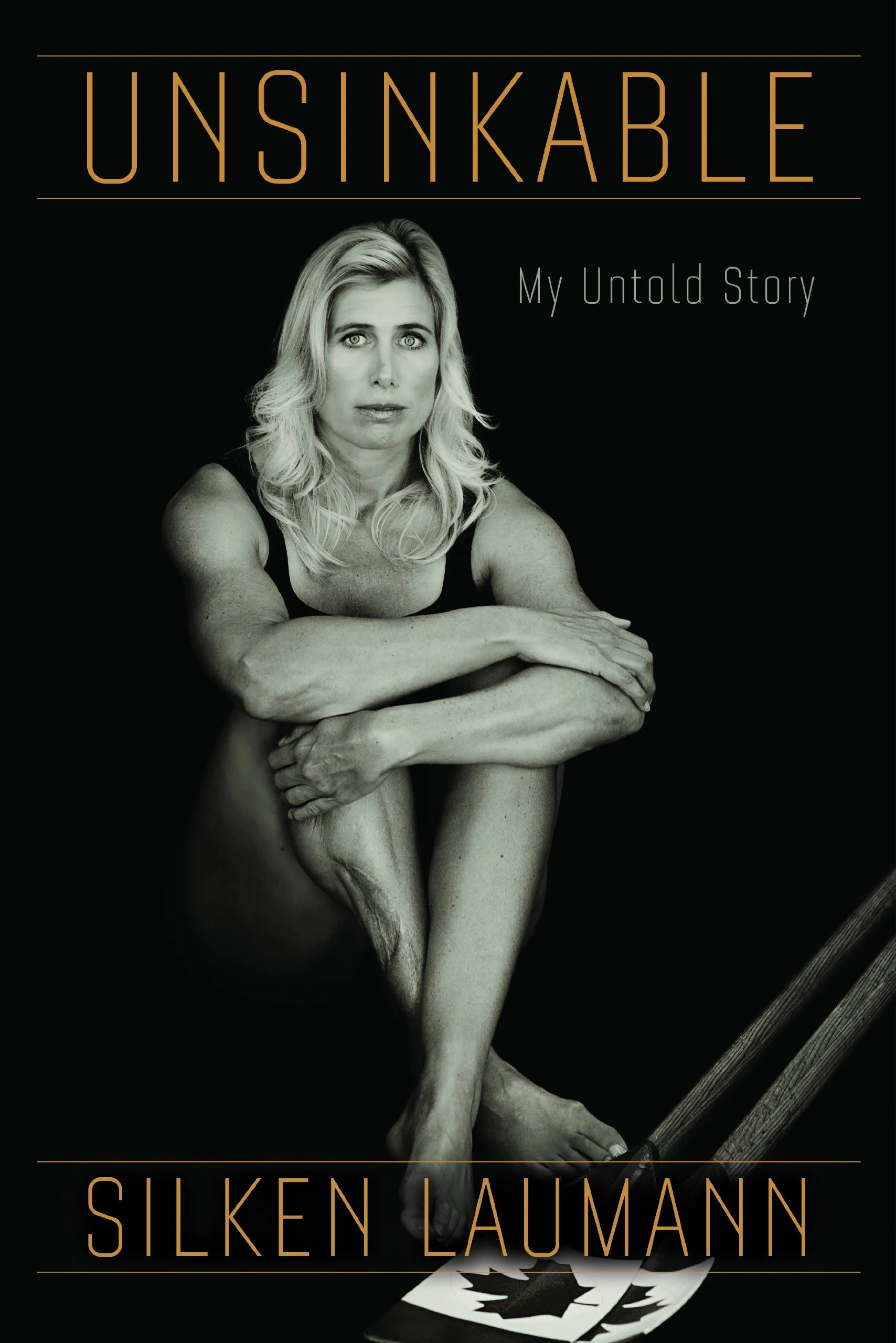
Silken Laumann
Olympic medallist, bestselling author of Unsinkable, and host of the Inflection Time podcast. Keynote speaker on resilience, and founder of the Unsinkable mental health platform.
This episode is supported by GoodLife Fitness and Tall Boy Water .
One story, once a week, from someone who has been through it.
A short letter about a moment that changed someone’s life, what it taught them, and a question you might carry into your own week. No course launches, no countdown timers.