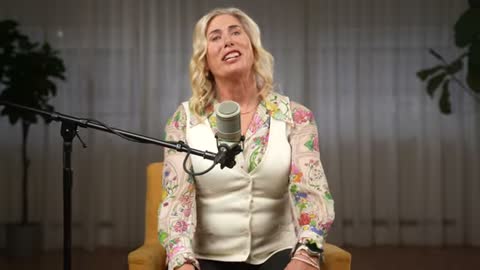
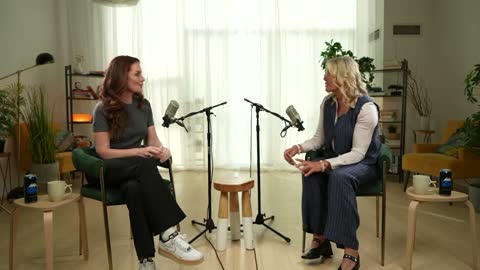
George Stroumboulopoulos: Presence, Ego, and Treating Life as an Investment
On moving day, George Stroumboulopoulos sits down with Silken and explains why he has never tied who he is to what he does.
“I’m confident in my ability to be fine, no matter what the outcome.”
Transcript
Speaker names are being checked and will appear here soon.
00:00 Meet George Stroumboulopoulos
Welcome to Inflection Time. I'm Silken Laumann. Every life has turning points, those moments that change everything. In this podcast, I sit down with remarkable people to explore the challenges, choices, and unexpected events that shape who we are. From heartbreak to triumph, fear to clarity, these are the stories that remind us that growth isn't linear and meaning is often found in the moments we least expect. Inflection Time, uncovering the moments that make us.
This next episode, I talk to George Stroumboulopoulos, or Strombo. He is an eight-time Gemini winner. There's always been some version of the Strombo show. Sometimes it's been on television, on radio, on podcasts. It's always been connected to music. And yet, that's probably where the similarities end, because he's really talking person to person and being led by his curiosity. So it's like he's genre-breaking. And very innovative, a courageous guy. I think you're going to love this interview on Inflection Time. Welcome, George Stroumboulopoulos. That's such a big mouthful. And now everybody knows you as Strombo, right? Maybe because I couldn't fully pronounce your name. Give me the full, accurate pronunciation of your beautiful last name.
Stroumboulopoulos. I couldn't spell it until I was in grade five, and some of my family had shortened their versions. And I think when I was registered for junior high, they had registered me by Strombo, Stroumboules. Stroumboulopoulos. And I said, nope. I went back to the original. Stroumboulopoulos. Yeah. It sounds actually like, it reminds me of Sesame Street. And wasn't there a character that- Snuffleupagus. Snuffleupagus. There we are. There's a reference. Yeah. And I am equally as absent in a lot of people's lives. So I was called that for more than one reason as a kid.
Oh God, tragically.
02:05 The surprise on Silken’s first interview about her book
I don't even know how to introduce you, honestly, George. You've had such a remarkable career. I mean, I've learned a little bit more about you. You and I have met before. And I think actually the last time that we met was on your show with CBC. And I had just released my book here, one of the first interviews. And I was a bit like a deer in headlights at that time, having this really deeply personal story. And what I remember about that day, first of all, how terrified I was to really be talking about my deeper story. You know, growing up with, you know, a mom who had a mental illness, you know, my own struggles with mental health. And like, I had all these things in my mind. And then I come out. And like, within the first minute, you had Nadia Comăneci on the screen. And you were, because you'd heard that she was my childhood hero. And I was like, I was like, it was probably a disappointing reaction to you because I couldn't, like, I couldn't process it. I'm a slow processor. I couldn't process it quite quickly enough. Like, I'm like, oh, I should like say something. I don't know what I said. I had no idea what I said because I was so focused on the anxiety of telling my story for the first time. So I want to start with a thank you. That was actually a really thoughtful and beautiful surprise for me. Thank you. You're a legend, but also you, never mind the legend stuff, that belongs to you. It's what you meant to other people, what you meant to so many Canadians, just people around the world who watched you.
I think that's a real gift to live a life where you can impact people that way. So when I do any interview, but specifically on that show, it's, you're trying to find a balance of letting the person feel very safe and then just destabilize a little bit. So they'll open up and say something. There's this clever dance you're trying to do. Okay. I can remember that destabilization piece, you know, because I'm a lot nearer to this. George, you've been doing this for so many years, but different things like you've actually been having such a beautiful evolution. I mean, you've always had, it seems like for decades now, you've had some version of the strombo show. It's always been you, but there have been all these different iterations, you know, one, you know, you're interviewing all of these famous musicians. I mean, you've obviously got like a deep passion for music and, and how music can move us and be a cultural reference and all these different elements of it. And then just, it's been really interesting doing a little bit of digging and just seeing the evolution in you as you've changed as a person.
Does that ring true for you? Like, do you, do you feel like you're able to, to, to show yourself more in, in what you're doing today than you were like 30 years ago?
04:51 Never staying in one lane
Yeah, I think it's an interesting question because I, I, I kind of go against what the best advice is. The best advice is always pick a lane and stay in the lane. And I've never really found that to be interesting. I don't do this for a living because it's a living. I do this for a living because it speaks to who I am and the kind of life I want to lead. I think ego is deadly. I think it's boring. I think it stops people in their tracks. And I think ego in many ways happens when you start to worry about what other people think about you. And also I'm, I'm not an insecure person. I'm not, I'm pretty confident, but not in that my, not in my ability to do things. I'm confident in my ability to be fine, no matter what the outcome. And I think that's the biggest difference. There's lots of stuff I don't know how to do lots of stuff that I'm bad at. And I do it anyway. Yeah. Because I just think it's more interesting and the, and the.
Yeah. I love that it's the, sorry, I just wanted that, you know, you're going to be fine. That's actually extremely powerful because not everybody's like that, as you know, and it, you know, fear, doubt, all those things can be so debilitating. I certainly had a lifetime of that. So I really know fear intimately. And, but I also know people like you, I'm married to somebody like you in terms of his confidence and his ability to know that it'll all work out.
06:21 A childhood of moving, and letting go of control
I think when I was young, I, I grew up in an environment that I had a really, my mother and my sister and I had an amazing relationship. So, so my home life in the home was pretty good eventually. You know, there's, it was complicated before that. But then when my family split up and it was just me and my mother and my sister, we were very young. Even my mother was a baby when, you know, when, when, when she had me. So we were very small, tight family. But the moment you step outside the door, whichever neighborhood you live in, you're processing a lot of fear all the time. So I think my fear receptors were firing all the time. And I lived in multiple neighborhoods. I lived in a cabin for part of my childhood where the roof wasn't properly affixed after my family split up. So my mother and sister and I would have to sleep with sheets over our heads so the bats wouldn't get stuck in our hair. Right. It was. So I think when you're, if you're young and you're processing a lot of highs and lows very quickly, I think you can go one of two ways. You can go in the direction of, I want safety, safety, safety, or you can go in the direction of, at least in my case, I don't care. Like everything's going to be fine because I can process everything. And I, and I, and I, and I think when you grow up and you don't have a lot in your control, I decided to, to not exert control where I could, but although partly I decided to eliminate the need for control, which allowed me to be so much more chill. And I, I, I'm really intense about work, but that's it.
I, I, I love to be alive and I'm so grateful to be alive. And so I never wanted to be, I never wanted anything to rob me of a moment here. Wow. I don't, you know what, I've never heard somebody describe the two opposite reactions to the same experience, right? Like one is that, you know, he's probably somebody like me went and tried to control many different elements of her life in order to feel, I guess I was trying to feel safe. I don't, I think I was trying to feel relevant.
I think I was trying to feel, um, like I mattered, but in any case it was that, you know, it, it was that control. You're, you went to it almost like a freeing, like, you know what, bring it on, bring, bring life on. And, you know, you know where I saw a little bit of that was, I should say this by the way, Silken, I am also not a champion, champion athlete Olympian. So your approach worked. It did.
08:55 The punch he didn’t flinch from
Well, I mean, that's the, that's the funny thing of all this, but you know what, I gotta tell you, I saw some of this, um, you're interviewing Jackie Chan. And I love Jackie Chan, I, the, the foreigner is one of my like favorite movies and, you know, he's like this underestimated older man. And then, you know, his daughter disappeared, his daughter dies and he turns into this like warrior and everybody's underestimating. But when he threw you a punch and, you know, just for fun, um, and he came within a centimeter of your face and you did not flinch. I remember thinking he has a very different nervous system than I do. My nervous system.
Holy shit. I would have been like, I would have like, I would have, you would have seen like the tiger lady coming out. I'm not kidding you. You literally didn't blink. So I actually 100% believe you. I have been punched enough.
I have been punched enough in my life. So I'm pretty good at assessing in a split second if the, if the fist is going to hit me. So I just kind of waited for the moment. Oh my goodness. Um, yeah, that was maybe just a sheer bravado that I did not earn, but I got lucky. You can't, you can't fake that kind of stuff.
I'm sorry that the proof is in the pudding. And, you know, just what you said about how, you know, these are, you know, those things made me an Olympic athlete, like controlling as much as I could and the environment and the pushing and all those things. Right. And our early experiences absolutely profoundly influence our, our path in life. Um, excuse me, but they also, you know, are open for change, right? Like we can also, like, I found like for me, the, being an athlete, these things were really useful, but I got to a place in my life where it's like, now I'm a mother, you know, now I'm constantly overstimulated by my children.
You know, and, and, and, and, you know, I have to learn how to multitask and I, I, I need to learn how to be like able to handle two things in my brain at one time. So I had to become a different person or not a different, but I had to have different skills to excel in that area. And that kind of drove me into understanding, you know, kind of what my path had been. Um, but, but, but having the upbringing that you had from what I remember from your book now becoming a mother. So every human being is the, I don't want to be like mine. I do want to be like mine.
I want to be somewhere in the middle, but also you're a high, high achiever and nobody is perfect at being a mom. So there, there is no Nadia Comăneci, you know, 10. So how did you process your ability to now adjust and realize that the, there is no finish line necessarily. Uh, when you spend a large part of your life getting towards one. You know, you've been spending your life having conversations with people and I want to dig into that a little bit because I think there's something quite profound about having that experience in, in, in terms of accelerating our learning. I mean, every time we talk to another human being, uh, we learn and when you're, when your life and your business is actually listening to people and having dialogue, I think it's like, it's like therapy, learning, education, you know, self-acceptance on steroids.
Like it's just, uh, it is such a rich place to be living. Um, for me, I think most, most mothers do observe, absorb this idea of perfection. And certainly when I was mothering, which was long enough that nobody talked about how wickedly hard it is to be a parent, uh, especially when it flies against what your nervous system is sort of set up to do, but also just like all the expectations that we have about, you know, being great. But I mean, I think that's true for a lot of areas of life. I mean, it's only been recently and I, and I can see this evolution in, in your, your interviewing, your work as well, that, that we have felt more comfortable to be open to our fallibility. Right.
To, to, to be open and vulnerable and it's a whole nother level of conversation happening now in, in the public sphere. I mean, not all the time, not enough, but it's encouraging to see it, see it happen.
13:11 Quitting drinking at 22 and interviewing NBA players
So I kind of wondered, like for you, when you go back to when you first started interviewing, like what for you drew you to that, that work? I didn't, to be honest with you, it was never like none of this career is, was ever the plan. It's not a thing I wanted to do for a living. It didn't occur to me to do it. I always knew that I was way too edgy to be on television, particularly in Canada. And in my brain, there was no place for me.
So I didn't actually think about any of this. What happened was through a various set of circumstances, I ended up in radio and I was NBA reporter because I was eager. I wanted to do whatever I could to keep learning. I had just quit drinking too. So I was trying to stay at work and not party. I was very young, but I quit everything I thought.
I got to clean up. So let me just go to work all the time. And how young were you at this point? How young were you? 22, 22 years old. And I, yeah, and I, and I, I had earned the break from that lifestyle.
I feel like I heard a great music producer one say, I didn't have a problem, but I used up my tickets and I feel like I used up my tickets. And so I started interviewing NBA players. That was the beginning of my career. And then some NHLers and then some major league baseball players. And the hardest person in the world to interview is a team sport athlete. Oh my God.
Yeah. We just talked about that earlier. Yeah. Yeah. How was the game? It was so difficult.
Yeah, totally. Because they're used to getting in trouble and they don't want to get in trouble. Um, and I was lucky that it was in the golden era of the NBA. So it was the Michael Jordan, Scottie Pippen. So my very first one-on-one interview in my career was me and Scottie Pippen. Oh, Jesus.
Just sitting down talking for 30 minutes and he was amazing. Yeah. And so I think. Wow. So what drew, when I started to get these opportunities, it was because I'm the same person before the interview as I am during the interview as I am after. So I think I just always am myself.
And that's hurt me in my career, which I don't care about. But it's helped me in my career too. So I think when I, I was able to disarm some athletes early. I mean, so can I had hair down to here. I had really long. I look like a land of more.
Oh, okay. Curly, curly hair. I have ringlets. Right. So, and I was just not your typical sports reporter by any means. Uh, and that is borne out to be true throughout most of my life.
Well, that worked well with Scottie Pippen though. You know, that worked probably. Yeah. Probably Scottie probably felt some affinity to you instantly then. Yeah. Yeah.
He did. I think that the players, the ones who gave me time looked at me like, oh, this isn't one of, this isn't whatever this guy is with a nose ring. I don't know who this guy is, but whatever he's doing here, fine. So I ended up just doing more and more. And then I got into a music radio station. I wasn't doing interviews.
15:56 The morning he thought he was getting fired
And then all of a sudden I thought I was getting fired one day because I was making fun of a band on an overnight radio show. And my boss called me and gave me an interview show that, that was, I was 24 years old. I had no idea that was coming. I honestly thought I was getting fired that morning. And he said, I think you can do this. And that was it.
I suddenly got into interviews. I think it's because I was living the lifestyle. I was, I love music and I love the story of us as human beings. So I just dove all the way in. It was such an interesting time. The first few interviews weren't great.
Yeah. I mean, it was such an interesting time. I interviewed Erica Ehm. In the first season of Inflection Time. And, you know, just going back to that time where, like, you didn't have to do formal training in a way. And, like, she was 22 years old and didn't know what she was doing.
And suddenly she was getting these opportunities to interview the big bands and, you know, be a VJ. And, like, it was just, like, anything was possible if you had the love and the experience. And you had a lot of courage. Like, you know, you just, you know, like, I'm going to go out there. I'm going to maybe fail, but I'm going to still do it. Like, that's what really struck me.
17:05 Not connecting who he is to what he does
Maybe this is the privilege of being a white presenting ethnic male. It never even occurred to me that courage would be required. I come from a pretty blue collar upbringing. And so you just go to work. So it never, it never, I've never placed any value on TV or radio as being anything other than what it is. So I didn't feel like I was accomplishing anything.
Most people don't believe me, but I don't feel like I've accomplished anything in my life anyway. I have no sense of accomplishment, no sense of, there's no pride in what I do. I don't have any of, I don't connect who I am to the work I do, except that I work hard and take whoever watches or listens to what I do. I take their time seriously, but that's it. And so I think I've never really been that nervous about this career, even in my early, early days. And that's probably why, like, when I got, I was in radio for about seven or eight years before I got the offer to go work at Much Music.
Denise Donlon, she wrote about this in her book, but when she first interviewed me to ask me, you know, to come work at Much, she asked me why I wanted to work there. And I said to her, I don't, what are you talking about? I didn't even think about working in television. So I think she liked that. Maybe it's one of the reasons why her and David Kynes gave me a shot. But it's interesting that you say that you don't, I mean, I, I'm glad I didn't introduce you as an eight time Gemini winner.
Like, I mean, you've been, you have been incredibly successful. And I mean, what I, what I'm hearing is that you have been focused on the process and like you're in whatever moment you're in with the person that you're speaking to. And, you know, with an opportunity that maybe looks interesting and you, and you want to chase, but you're not necessarily, I mean, athletes tend to not get too focused on the gold medals. They get focused on the performance. Right. And at the end of the day, it's funny.
Like, I mean, of course I remember that I won three Olympic medals, but like, I don't always remember that I won a world champion medal or they were, cause I was in that moment when I was racing and giving it all. And the accomplishment is so much less than the actual experience. Yeah. I'm in it for the craft. Like, I love the craft of this. I love, so I love the craft of trying to make shows and interview people and have conversations.
I love the craft of it, but I know it's, and it's different in your world because in yours, in your situation, you actually pulled it off in, in my world. The grace of so many others puts me in a position to do this. The only thing I can do is work really, really hard, maybe outwork everybody and then learn how to roll with the punches. But I require the grace of so many other people and so many breaks to, to be here. It's not like I can run faster or row faster. I don't know.
Maybe, yes. There's no, I definitely cannot. I've been moving. I can tell you, I cannot.
20:05 Will, determination and grace
But no, so I really think that I, I, I think a lot about when Gord Downie has that lyric, you know, armed with will and determination and grace too. And I think that's the secret to life for me, will, determination and grace. And I have been the recipient of it. I try to give it. And I think that's why, and I've never, I've never attached anything to my view of myself. I don't like the shape I'm in currently.
And so I can look at myself and go, you look terrible. But I don't connect that to self-loathing. Okay. Because it's a choice. I ate those chips. I know better.
Yeah. Right? A lot of chips and french fries. So you don't have this like inner dialogue that's, that's critical. At Ventum, what's really good for our advisors is that we have a really supportive platform. We have a heavy emphasis on entrepreneurship and ownership.
We're really here to build something, build something great, something amazing for advisors and clients. Ventum's definitely special in the way the different departments all work together collaboratively. There really is a sense of everyone on the same page and moving in the same direction together. Ventum has a culture that really encourages people to be their own. And we want to foster that ambition. We want to foster that through teamwork and collaboration.
We have a lot of unique people who have different skills and different personalities. But the goal is cohesive. We know where we're going. We're aligned. And everybody has each other's backs to get there. Ventum provides a lot of autonomy.
But it also provides the opportunity for growth. The industry today is shrinking that product shelf. Here at Ventum, we mean that flexibility for what's best for those clients. So the firm has always been here for me, whether it's through professional development or even just supporting me through my personal life. At Ventum, you can be a wealth manager and you can be a transactional advisor. And we welcome you.
Trust. Entrepreneurship. Service-oriented. Builders. This is Ventum.
22:08 The craft of the follow-up question
When you talk about working hard at your craft, what does that mean? Help me understand how you prepare to interview, you know, Maya Angelou or, you know, some of these big people that we all kind of go like, oh, I'd just be phenomenal to be in her presence. How do you prepare for something like that?
I try to understand as much as I can about their life. So you try to understand some of the key facts about their life and some of the facts and milestones that aren't so well known. But then what I do is I kind of, I sort of lose myself in the moment with them. The key to any interview in my mind is not really the question you ask. It's almost always in the follow-up question. And so if you live a life of openness and you live a life of curiosity, but not curiosity, but more investment, which is I think how I look at it, then, and you really pay attention to what they're saying.
And then you pay attention to the way they say it. So then you can tell if they mean what they're saying or not. Well, then you just have a conversation. And that's, to me, the craft. So the craft is trying to receive as much real-time information as possible, run it through all of my life experiences, but run it through the experiences I've learned from other people, and then read their body language to see if they're telling the truth or not. And then you start to chip away at the stone.
I used to think that every interview had to be the total interview, but I don't. I think it has to be a moment in time with that person, and that's what I strive for. So the craft is never losing the energy, never losing the discipline of research. Then it's a real discipline. Never losing sight of the goal, which is that it's not about the person I'm interviewing, and it's not about me. It's about the person who had a terrible day today and who took the streetcar home or the bus home, and things in their life are falling apart, and they're going to spend 15 minutes watching the thing you did.
They're the focus. And so I'm very conscientious about that stuff. But, of course, it's repetition and craft.
24:36 Motorcycle racing and the last few seconds
And, you know, I started in my late 30s. I decided to do motorcycle race, and I was doing track days. And my fastest time around a lap was a minute 17. Then I qualified for a race, and I raced, and my fastest lap time was a minute 3. So I shaved 14 seconds off my time. The person, the track, the lap record is something like 54 seconds.
So it was my first race. I was only 9 seconds off of the record. But here's the thing, Silken. There was no universe where I will ever get close to that, those final seconds. There's just no universe. And I think it's in those final seconds where you separate yourself from other people doing it.
It's the discipline and the fearlessness to ride really hard into the corner to get that extra hundredth or tenth of a second off your time. That's what I do on TV. I live right at the edge, sometimes way over the edge. That's what I do with my content. But you have to have so many reps and so much discipline to be able to do that. Wow.
Just the way you described it, it does remind me about how an athlete would prepare. Because at the Olympics, you're not thinking left hand before right hand, explode with your legs. Those are things maybe you have cues in your brains, but you're just racing. And it's the preparation over the hours and boring hours, like the research or whatever you say, that allows you to be present in the moment. So that's what I'm hearing. You can be totally with somebody that could be quite intimidating and just be listening and just be there.
And you're right, you do find those little entry points that most people don't. It's a beautiful thing that I've noticed about the way that you do this. And it's actually for somebody like me who's in a new space for me, it's really inspiring. It's a vibe, isn't it? Like to be in the company of strangers and then try to make it feel like you're not strangers without trying to make it seem like you're friends. Because then that can be ingratiating.
There's all these little things you have to do to kind of thread the needle. But, and I've had so many interviews that have been so terrible or boring. But when you get it right, when it works, when it works, you feel like, oh, thank God. Yeah. Because sometimes people that you think would be interesting are actually, they just can't bring themselves into the interview, right? Like they're like that hard nut that you can't crack.
Yeah. Or they're not ready or they're not ready.
27:06 “You’re not ready”: when a guest wants to perform
And this is what I learned too, is I would say to people who'd want to come on my show, I'd say to them, you're not ready. You're not ready. You're going to be too performative. You're not going to be here. I need you to be here. And if you're not going to be here, if this is going to be about what your publicist or your label or your manager or your agent wants or whatever, there's all, there are a lot of places you can go have a conversation.
I'm not the guy. I'm not the guy. I'm here for grown up stuff. Could you do that right from the beginning? Or could you do that once you had a reputation?
Yeah. I had to wait until, you know, I always wanted to, but I didn't, I didn't know. When I first started interviewing, I didn't know. I was, you know, being way too sweet all the time and I didn't know how to do it. And then as I started to learn it, I gained an understanding of, I think what my role would be in this line of work and the place, the space I wanted to hold. But as I got a little bit more established, then I was able to say that I was able to be, and I don't think this is a good fit.
Definitely. And like when you have a show that's got your name on it, it certainly does carry a little bit of weight. So the artist who walks into the room knows they're walking into a different experience. Yeah. So, but, but there were many, many artists who I wouldn't have on the show and they wouldn't come on my show because I just, I just wasn't going to have the conversation that they wanted. Yeah.
28:26 How purpose changes, and “give me some truth”
Yeah. How has your, you know, your purpose in your work changed as you have changed? I mean, like I, I'm 60 and I really noticed like the things that I'm attracted to have changed. And there's, you know, we were talking earlier about like when you're, when you're in your fifties, you start to worry about aging, right? Like more like, oh my gosh, you know, I've got laugh lines around my eyes or, you know, did my, did my knees used to be baggy? Cause I'm, I'm sort of thinking my knees are a little baggy right now, you know, like just all these things.
And, and, and then, you know, you kind of, I made peace with it. I'm like, you know what, this is, this is happening. So grateful to be alive. So grateful to have the physical abilities I still have. And then, and then you start thinking, oh my gosh, you know, you've crossed that threshold of 60. And I found myself asking, what is it that I still want to do?
You know, what, what is it that really feels like my calling as I am today? And as I move into this next chapter of my life, have you had those kinds of inflection points in your life? Like where, or, or recently?
I think so. I think, this is going to sound really cheesy, but, but it's true. I sort of live by the John Lennon lyric, just give me some truth. I think that is, that's it for me in that respect to this question.
And I have the ability currently, my brain chemistry is still on my side and I'm grateful for that. Who knows what happens in the future, but right now, and for most of my life, my brain chemistry has been on my side. And I don't have a lot of fear and I have a lot of love. So, if you're going to have a lot of love for people, and I have, I have this, I want to go to bed every night with my hands sore from cheering so many people on because I'm clapping. This is what I, and I actually view the world this way. And because I'm fearless for the most part, or, or reckless, depending on how you look at it, I, and this just happens to be my medium.
Like I can do this for a living. I can be comfortable on camera. Well, then I'm just going to keep doing that, keeping in mind that this is about us. This is about people. This is about, you know, not, I, it's, I get into debates with people and they try to interview sometimes, especially when they, they're political and they try to drag me into some debate as if I'm going to, I don't see it coming. But I think there are two kinds of people in this world.
Those who want things to be okay for them and theirs, and those who want things to be okay for everybody. And I'm in the everybody camp. There's lots of different ways to approach it. So, I'll fight hard for it. And my purpose has always been humanity. It's always been humanity.
And I didn't know that back then. But when I go back and listen to some of that early stuff, you know, short of, yeah, but also I was, I was an idiot too. Just some young kid trying to be a broadcaster doing overnight radio. But for sure, my values, like I have values more than I have positions. I think a lot of people have positions and a lot of people have values. My values are the same.
And I want them to continue to develop. And so, that's my, I don't necessarily think I have a purpose because I think if it wasn't me, it'd be somebody else. And there are lots of people doing this. But I think my role is to make it better than it was before in whatever way I can. Now, I have no change the world, save the world complex. People say that, oh, people want to save the world.
I always ask them, have you seen the world? What do you mean? What do you mean by save the world? Do you think this issue that is singularly important to you matters in Addis Ababa and Ethiopia right now? Because it doesn't. So, what do you mean?
People talk about these big, grandiose things because I think we were raised with this weird sense of the quest for excellence. Well, you had the famine. I mean, you and I are not too far apart in terms of decades. But, you know, we had the famine in Ethiopia. And, you know, it did. It said, save the children.
And I think that was kind of ingrained in our psyche that, like, there's us who have everything and then there's them. And the more that you travel, the more that you interview people, you realize, no, it's all of us, you know. They just geographically are separate from us or politically separate from us. And that connectedness, you know, every time you interview someone, especially someone who has the courage to be vulnerable and to be open and actually maybe really tell their real story, you actually are helping. Like, I know for myself, there's been times in my life and there continue to be times in my life where I, probably every day, where I listen to something and I'm either inspired or I'm encouraged or I stop feeling sorry for myself or I create more, like, you know, impetus to do something that's hard. Yeah.
And it sounds like, yeah, that actually is kind of the purpose without really thinking about it as being the purpose. Yeah. Yeah. I grew up listening to heavy metal and punk rock. And now as I got older, I evolved to like most genres. But when I was young, I'm talking 10, 11, 12, it was the Sex Pistols and Slayer and Metallica.
This is what I love. And then the Clash. And the Clash, specifically Joe Strummer, was a shining light for, it's not enough to be better. It's your responsibility as a person to be better for others. Mm-hmm. And I think that really baked into my head when I was an impressionable kid.
Mm-hmm. I'm so defiant about the power of music. Mm-hmm. But only when music decides to be powerful. Mm-hmm. Like, people say art matters, prove it.
Prove that it matters. The making of the thing isn't proof in itself that it matters. For it to matter, it has to move somebody into a different direction. Prove it. Mm-hmm. I hold myself to that standard.
And I think it's because I grew up listening to the Sex Pistols and the Clash and Crass and the evolution of the Beastie Boys from that first to that third record. And ultimately, the fourth, where you can chart a lot of young people's personality and social responsibility goals just by following those four records from Beastie Boys. And so, to me, reading Hunter S. Thompson and Jim Harrison when I was probably way too young to read it, learning about Kathy Acker blew my mind.
I got a book about Kathy Acker, this artist out of New York City. I got that book, I think, at a garage sale when I was 14 or something. I thought I was being rebellious, and I was. And I read it, and I just couldn't wrap my head around what this life was like. And so, I've always fed my brain and my heart with the kinds of people who are not perfect. You don't have to be perfect.
I don't hold anybody to that kind of purity test, but who pushed, who pushed. And that's what I really think is important in life for me. Most people, I think, haven't found their thing. That's what I've, you know, my experience interviewing people. There's still a lot of questions about how they feel about what they do. For me, it's nothing lovelier than catching a wave and riding it as long as you can with other people.
36:15 Punk rock in an evangelical home
When you're talking about music, and let me just try to understand that a little bit more deeply, George. So, music with purpose, music that can shift people. Can you either give me an example of that? Because I know for me, music can make me buoyant. It can make me angry. It can make me deeply sad for the earth.
It can make me, you know, what are you talking about?
So, I'm young. I'm rebellious. I don't know if rebellion is nature or nurture. But I'm clearly a problem as a child. And I was raised in a very, very evangelical Christian home. Okay.
Very, very religious, very conservative kind of home. And when you're raised from such a young age with the threat of hell all the time, which is, if anybody who's been raised in a, I don't mean a Catholic home. I mean a religious home. I know. I was a Pentacostal for a while. I know exactly what you're talking about.
Yeah. Yeah. So, that bakes into your head. And then, and then, and I cannot overstate this enough. When you hear Johnny Rotten from the Sex Pistols open a song saying, I am an antichrist. Yeah.
I am the anarchist. I don't. Your brain just goes, what? What? What?
And so, I went, wait a second. What? And I guess that rebellious spirit in me was bubbling, and I just needed something to kick open the windows. And that song kicked open the windows. Then I see Patti Smith covering a Van Morrison and Them song on, I saw, I didn't watch it live on SNL, but I saw it later. She looked like she was into Ramones, and she opens with Jesus died for somebody's sins, but not mine.
Your brain starts, and you see a woman like this on TV, which you didn't get to see many women like that on TV in that time. And I wasn't allowed to watch TV for most of my childhood. No, I'm sure there were some workarounds there.
Oh, yeah, for sure. For sure, for sure. And so, but then, so I've got all this kind of arty rage, young, angry boy, broken-y home kind of thing. It's not a broken home, because I had my mom and a sister, I got along so well. But, you know, complicated reality. And then, and then I hear the clash.
And now the clash are singing about things happening in the world. And, and there's, and they're looking at the audience and they're saying, this is what's happening. It's your job to do, to be better. Mm-hmm. Yeah. And then a band called Crass comes along.
They're lighting a fire. And you're like, wow. Big time. Yeah. Big time. And maybe, but now maybe they're pouring gasoline on this little fire that was already in there.
Mm-hmm. And, you know, there's a line. So, so if you listen to the first Beastie Boys record, lyrically, there's an awful lot to shake your head at. Mm-hmm. Which they'll admit. But look, we are 15 years old, 13 years old.
Mm-hmm. We're kids. You get to that next, that, that, that fourth record in this series I'm talking about, third record. And there's a lyric where MCA says, I want to say a little something that's long overdue. This disrespect to women has got to be through. I think he says to all my mothers and my sisters, my wives and my friends, I want to offer my love and respect to the end.
So that's in a rap, that's a rap verse. And when you're a kid and the band that blew the doors open for hip hop for you, for me it was Public Enemy and Beastie Boys.
Beastie Boys first. And then you get to that lyric. Yeah. Now you have to contend with, who am I now? Mm-hmm. And so I think what MCA and Beastie Boys did changed so many of us, like I had mentioned earlier, because lyrically, lyrically they were saying, we're different now.
Yeah. We grow. Yeah. And I'm a Gen X, so we're supposed to grow. Yeah. We're supposed to grow.
And it's just like, just listening to you, it's like this expansion of your world. And I remember, I remember that time in my life where, you know, your reality when you're younger is the four walls of your house. Really like your, you're, you know, whatever went on there is what's real. Then there's the school music and reading for me at least was, yeah, it's like, wow. The w the world is so much bigger. There's just huge.
And, and the, you, like you said, the lyrics also the music itself. I mean, you don't have to have words always to feel something, to, to feel your chest, you know, pressure in your chest or your chest opening. You know, it's, it's, it's, it's, it's, because yeah. I listen to some horrific music. Yeah. I listen to horrific music.
I listen to the kind of scary metal that is so gnarly. Okay. Yeah. Okay. It crushes your chest. So you don't have Aurora on your playlist.
It's so terrible. You know? I think. I do like Aurora. Yeah. But I do think you had Mumford and Sons because we were listening to Mumford and Sons on one of your playlists.
Yeah. I mean, they're pretty wholesome. Well, yeah, yeah. But I listened to a lot of Norwegian metal. I really do. Okay.
Swedish metal. So basically, it doesn't even have a genre. Well, but part of that is, you've listened to so much music and, you know, your knowledge, because I've got another friend of mine who's a, who's a bit of an audiophile. Is that what you call people who like really, I mean, you do it for a living, but yeah. Yeah. And he listens to like seriously weird music, you know, because all of the mainstream stuff, it's just saturated, you know?
And so he's got to go somewhere else with it. Yeah, totally.
Totally. I was, I've been unpacking, um, uh, at the new place and I put on some Hare Krishna, actual Hare Krishna music because it's apparently really good for concentration. And I had it on all day. It was amazing. What I don't like is anything too pop. I'm not into pop music.
I'm not into anything that feels like it's industry first. I like things. I sort of have to be careful how I say this because people misconstrued, but okay. The earth is round. We know that. Or it's, it's not.
Apparently not anymore. However. Yeah. Some people still think it was flat, George. They do. They do.
Yeah. But, but, but imagine there was a time when people really didn't know. And so they thought the earth was flat and there were people who set out to reach the edge of the earth. They didn't know back then. They didn't have access to all the information that we have today. But there was a time when they genuinely thought they were going to sail to the edge of the earth.
I want to listen to the kind of music and read the kinds of books and watch the kinds of films that you would find if you got to the edge of the earth. That's what I want. I want that kind of stuff. That kind of stuff doesn't cross over. Because I think when an artist isn't worrying about crossing over to the mainstream, I think they're truly free. I think they're truly free.
And I went to Topanga when I was 18 years old because I read that Neil Young did. And Neil Young, to me, is the freest of them all. He's the freest of them all in that space. And I feel like I would be reading Wade Davis books and listening to Neil Young as a kid in an effort to be free while still being a part of something. And I just have such a high standard for my artists to be able to do that. Good to know.
And it's actually beautiful the way that you've talked about music and the sort of the essence, the truth in it. I guess it's so easy to lose it when you're writing for mainstream. And obviously people have to make livings. As an Olympic athlete and the founder of Unsinkable Mental Health Charity, I know the power of a supportive community in reaching your physical and mental fitness goals. That's why I love Good Life Fitness. It's more than a gym.
It's a place where you can really thrive and find connection. As a special thanks for joining today, you can experience it yourself with an exclusive seven-day pass to any Good Life Fitness location across Canada. Visit the link in this podcast description for access. All of my podcast guests have shared the importance of physical activity in their lives. Together, let's build a healthier and happier Canada. I'm also hearing you, and maybe you've always been doing that, but I didn't hear it.
44:47 A Valentine’s Day video about grief
I was listening to your Valentine's Day message, and you were facing the camera and talking about, it's Valentine's Day. And you might be feeling this, you might be celebrating the fact you've met the man or woman of your dreams. You may be feeling despairing, you may be cynical about Valentine's Day. And it was very much, I'm talking to you if you're struggling today.
I hear you, like, let's just be in whatever feeling you're in. And that felt new to me in what you do. Is it, or have I just missed it before?
I've been doing that for a little while, but it's relatively new. It is. I don't want to do another show the way I used to do them. I don't want to. I don't watch those kinds of shows. I don't do them.
What I do like to do is tell stories that connect the dots between a bunch of different possibilities in your life. Because I think in there, not to sound too, because I don't have any sense of, I don't have no sense of illusion about what I'm doing here. But there's an element of emotional archaeology here, which is that the two of us, you and I, will dig up the bones of our stories and we'll sort of lay them out. You did that in your book. And then, with the person who's watching this, we can figure out what this animal is for them. And I think that, so that particular Valentine's video was, really, it was about grief.
It was about grief. And there was so much, I know that it's a hard day for people. And I just thought, why don't we connect the dots on grief and love? Because I think in this joy, if we can get to a place of, to grieve profoundly means you have loved profoundly, which is an unbelievable gift to have. And I think by building little pathways to each other, we can come to move forward as people. So that's why I started doing videos like that.
And then I drop in music references. And I also, because I'm a bit insane about it, I try to think, how many disparate reference points can I work into one video and still make it seem like they all belong? That's the craft in it for me, which is, can I connect this political situation to this social situation, to this loss of a pet, to this kind of vibe? Oh, and by the way, happy Valentine's Day. So I like the sport of that. And what do you mean by what do you say you don't want to do a show like you did before?
I was on, if not the first, one of the first, but I think it was the first internet radio station in Canada in 1995. So before anybody heard of me, I was doing this thing. I feel like I've waited my whole career for the technology to catch up to where I want to be. I want to remove as many artifices between myself and the person I'm speaking with. I want this to be one-on-one.
Ooh, you leaned in really close there.
I really thought you were closest. Yeah, you did. It actually did stay focused. Yeah, very impressive.
I'm trying. But I think it felt a raindrome. This is nice. So I find that most mainstream media, when I did Hockey Night in Canada, there are all kinds of things. Another thing you did. Oh, yeah, I hosted Hockey Night in Canada for two years, by the way.
You know, like the biggest sport in the entire country. You know, but you don't have, I'm not allowed to repeat your resume because it's too long.
Well, it's too long. Somebody interviewed me a while ago, and he said to me, your career makes no sense. And he's right. That's a compliment. But I think so. I think so.
So I feel like I would do stuff on TV. I have a show on a new doc that's running on CBC soon, CBC Gem. I narrate a Montreal Canadian show that's running on Crave right now. So I do that stuff. But the one-on-one thing, I love it on YouTube. I love it on Instagram and all the social medias.
And I try to break all the good advice rules. I don't do short form. I do long, long form stuff on purpose. I'm not playing the attention span game. I want to have real conversations. And I think that's what I really like about those videos.
I've been working on one about addiction and another one about loss. And I was thinking about one particular artist in this sense. And then I'll take that one artist, this little, kind of a little ember, and try to build something that will reach as many people as possible, but in a really unfiltered way. And I find most mainstream media, you can't do that. It's so quick, right? Like, I mean, television, oh my God.
I remember, you know, when you had, I mean, television has changed too, but where you're like, okay, I've got three minutes. I've got to get like all my little points like in my head. And then you go out there and like you're sweating because, you know, you have to be like so succinct. Go, go, go. And now we have this medium podcasting, which I love because it's what I've always wanted to do is have long conversations with people where you could, you know, you could do a little bit of bouncing back and forth. And it's funny that all the things you just mentioned, because it really, over the last few days, we've been recording and we had Caitlin Morrison, who's Matthew Perry's sister here the other day, talking about addictions.
And this morning we had a woman who'd lost her son to suicide, talking about grief and she'd written a book about grief and how, you know, it's so misunderstood and we all feel grief in all sorts of different ways. And it's not a linear path. And there's all of these things that you're right. It's connected, you know, because ultimately, you know, we're all living life in this human body. We're trying to figure it out as we go. And that, you know, message of encouragement, to me, it was a message of encouragement that you gave on Valentine's Day.
You know, yeah, bringing all these disparate things together in a way, but daring to see it differently, right? Like, just like you're thinking about it differently and you're, and I think it does move people. And I, I'm really- I hope so. And- Yeah.
Go ahead. Go ahead, sorry. Go ahead. Well, I just, it's really, I think you're uniquely qualified to do this because you've spoke to thousands of people. You've lived, you know, you have lived, like you said, you're not afraid, you know, you're fearless. And it, and you've been ahead of the curve in terms of, you know, technology, in terms that you've, the way you've thought about conversation.
So I'm excited for you.
Thank you. I appreciate you saying that. Thank you. It's really fun.
51:52 The people who poured the sidewalks
And the most interesting people in the world to me are the best ones are the ones who poured the sidewalks on Queen Street in Toronto. The sidewalk I've lived a billion times. We don't know the names of any of the construction workers who poured that concrete, but we've all benefited from them. And each panel, we've stepped, whatever that is, three feet further. That's, to me, where it's at. All we're doing, you and I, is, because we'll be gone whenever we're gone.
May you live to be a thousand, but most of us won't live to be a thousand, so I would, probably none of us. But we'll, what, which sidewalk brick did we, you know, pave for the next cat to come? And the ones who don't remember our name, it's fine. It's never about that. It's about moving it a little bit further. I remind myself all the time, we have skeletons.
We have skeletons. Whenever anything gets to be too much, I just remind myself, I'm a skeleton. This is insane. Modern life's insane, right? To be overly pressured by this, to be under the sum of these tech overlords that control all of our data and all of our access to anything. You can't do anything.
You can't even go buy a snack without entering your phone number. And so it's ridiculous how difficult a handful of companies have tried to make this experience. I'm trying to remind people, and maybe it's because of, I learned this from the punk rock bands and metal bands I listened to growing up, and the folk singers, hey, we can fight, but that doesn't mean we can't have fun. We can fight, but we can also have joy and excitement in the fight. And it's also a bit absurd life, so I don't mind bringing disparate points of view. I don't mind being a little absurd because life's absurd.
But I mean, here you are, you know, when you're talking about technology, you talk about like all these things, and here you are, as I speak to you, I mean, I can hear the birds in the background. I can hear these trees. And like, in a way, in these essays and these conversations, you're coming into actually what matters most. And it is that connection. It is, I hate saying it, but it's the moment.
Just over a year ago, I almost died because I was stung by a bee while hiking on a very isolated island in New Zealand. And I had anaphylactic shock reaction. Hadn't had a full anaphylactic shock reaction before. Had an EpiPen. Hadn't had a full anaphylactic shock reaction. But then I had a second reaction and I was, you know, honestly about 10 minutes from being dead.
Oh, that is so scary. It was super scary. My body was shutting down. So I was actually dying. And because I had anaphylactic shock is when your blood pressure drops so low that your organs start shutting down. And I, you know, I remember looking at the tree and, you know, seeing the light as everybody talks about it was real.
And when I was kind of in that state, the overwhelming feeling, and it's not even a, it's not the right word. The immersion and gratefulness. George, it was just, it was like visceral. I believe it. Everywhere.
And at the end of the day, like you said, is it, is it, is it, is it a stone on the sidewalk that has your name? No way. No way. You know, it's, it's like, yeah, like let's live this life and do what we can. And, and there's some joy in doing what we can. But it's breath by breath, experience by experience.
That is so scary. That is, what was your, what was your physical reaction and feeling two days later? Well, I was really sick. Like so, so, because they gave you massive doses of prednisone. Um, I actually had, um, almost like a psychological break because how much prednisone I had and then I, they dropped it too quickly. Um.
You disassociated? I was just getting there. I was just getting there. Wow. And like, I couldn't work my phone. You know, and there were no drugs involved except for prednisone.
You know, could not work. You, what you're basically describing not to be, yeah, not to be glib, but what you're describing, I've seen my friends go through this at Burning Man, but for very different reasons. Exactly. God, I'm so glad you're okay. Obviously. Yeah.
That's really scary. I have a lot of rattlesnakes around here and I was kind of secretly hoping that a bear would walk in the background because there's bears here as well. It'd be super impressive. For the shot. I thought it'd be really cool for the shot if a bear walked in or a coyote, but, or, but yeah, no, that's so scary. Wow.
Yeah. And it does, it does sort of, I don't want to say it's like, oh, everything changes. Like in a way, like you're still living your life. You're still stressed that you're late for, you know, your meeting or whatever. But there, there, there is a, a perspective and probably more than ever for me, yeah, a sense of like what I do and how I spend my time. I do want to be selective.
I want it to matter. And that's what I'm, think I'm seeing in your work. George is like, I think you're being more selective. You're having even more intention in, in what you're creating today. So I don't know if that's true or not. I didn't even know how to do it until now.
I didn't even know how to do it. I had to learn. I think I had to get older. You have to kind of figure out, you know, you have to figure out how to tap into different parts of your experience. I think that's the joy of being alive in many respects. And, and I'm not mad at what I don't know.
I look at it like an opportunity to learn a new thing. I don't really care what people, like I want people to like me, but I don't need them to like me. And I just, I want the people who cross my path to feel important to me because they are. And that's about it. And that's about it. So I, but I don't know how to say certain things.
I'm a much better communicator now than I used to be. Back down in the show days, I was just on this unbelievable pace. At this unbelievable pace. Yeah.
You don't get enough time to learn what to do with all the new information, but I'm making sure that I take time. It's part of the reason why I do, I have a place out here. So I can sit here and work on these videos where I'm not caught up in the insanity of. Like when you're going from one thing to the other, where's the time to like actually reflect? Because that's how you learn. It's not just by doing, it's by coming back and reflecting from those experiences and what you know.
And that's where, you know, the, the, the work that it gets really rich, right? When you have that moment to kind of go, what was that all about? And how did these dots actually connect? And that's what's coming forward today. So I know that you are moving. Um, I want to thank you so much for your time, George, you made me feel important.
And I wasn't the person you weren't even interviewing me. I was interviewing, I think we were going kind of going both ways, which is probably like impossible for you not to have that interview.
I'm grateful. I'm grateful for the, yeah, I haven't seen you in a long time. So it was really nice when I, when I, uh, when I got the note about this show, I was like, yeah, I totally want to do this. This is going to be really fun. And you've also, you've done a thing that most people can't do because the, you know, high performance athletes, but your level, you're at the top of the world. You, you're at the edge of the earth and, and it is in those millimeters.
And I think that in the milliseconds, and I think that's really incredible to like, I'm, I'm really good at observing the laws of nature and then suppressing my own. And so I can push as hard as I can forward because that's cool for me. I like to do it, but it's in those milliseconds and millimeters where I feel like I'm really living. And I, you know, you did it at the highest level. And because of your accomplishments, we got to feel better about ourselves. And as a country, I think that's a gift that you gave us.
So I'm grateful you're doing this and I'm so thrilled to be a part of it. Yeah. Yeah. Thank you, George. And I, yeah, I'm very grateful of those opportunities and, you know, having had that privilege really of competing at that level and being that good. And I have to say, I'm, I'm even really more proud of who I've become, you know, in the last 20 years and yeah, just, just the peace I've made with my own story and my own life.
And then, yeah, what I'm doing today feels I've allowed myself to become fully who I am and it's, it's incredibly rewarding. So thank you. That's wonderful. It was great to have you on it. And I will, I'm happy to come on your show. I wouldn't say anytime, but I'm happy to do it.
Thank you for joining us on Inflection Time. We hope you enjoyed the episode and we'd love for you to follow us by subscribing and sharing our podcast on Apple, Spotify, and YouTube. Inflection Time is an Archer & Co. production sponsored by Good Life Fitness. A special thank you to our incredible in-kind partners, Carter Wiley and Tall Boy Water. Executive producers and directors, Michelle Archer and Phil Kluba. Producer, Christine Bays.
Creative development, Sarah Carter. Thank you for listening.
Key takeaways
- Sure he’ll be fine. George doesn’t claim to be good at everything. What he trusts is that he will be fine whatever the outcome, so he does the things he might be bad at anyway.
- Letting go of control. A childhood of moving neighbourhoods, and nights in a cabin with sheets over their heads to keep the bats out, could have made him crave safety. Instead he stopped needing control.
- Not who he is. Most people don’t believe him, but he feels no sense of accomplishment. He doesn’t connect who he is to his work, only to working hard and taking the audience’s time seriously.
- The person on the streetcar. An interview isn’t about the guest or about him, he says. It’s about the person who had a terrible day, took the streetcar home, and is spending 15 minutes watching.
- Grief as proof of love. His Valentine’s Day video was about grief: to grieve profoundly means you have loved profoundly. He tries to build small pathways between people so they can move forward.
George Stroumboulopoulos
Broadcaster, interviewer and host of The Strombo Show
George Stroumboulopoulos is a Toronto broadcaster and interviewer who began in radio, hosted The NewMusic on MuchMusic and went on to host CBC's The Hour, later George Stroumboulopoulos Tonight, from 2005 to 2014. He later hosted Hockey Night in Canada and hosts The Strombo Show, his long-running music radio program. He was the first Canadian Goodwill Ambassador for the United Nations World Food Programme and was appointed a Member of the Order of Canada in 2023.
Resources 10
Research and sources behind what was said in this conversation.
- Nadia Comăneci Wikipedia Silken’s childhood hero, whom George brought on screen to surprise her. In Montreal in 1976 she became the first gymnast to score a perfect 10 at the Olympics.
- The costly pursuit of self-esteem (Crocker and Park, 2004) Psychological Bulletin When self-worth rides on success in an area of life, the short-term lift often costs more over time, the trap George avoids by not tying who he is to his work.
- Fearless as Possible (Under the Circumstances) (Denise Donlon) House of Anansi Press Denise Donlon’s memoir of her years at MuchMusic. George says she wrote in it about the interview that brought him there.
- Gord Downie Wikipedia The Tragically Hip singer whose lyric about will, determination and grace George calls the secret to life.
- Gimme Some Truth Wikipedia The John Lennon song George lives by.
- Brain correlates of music-evoked emotions (Koelsch, 2014) Nature Reviews Neuroscience Music changes activity in the brain structures that drive emotion, the power George and Silken describe.
- Gloria (Them song) Wikipedia Patti Smith’s 1975 version, which opens with the line that jolted George, a young man raised in an evangelical home.
- Sure Shot Wikipedia The Beastie Boys song from Ill Communication with MCA’s verse calling for respect for women, the turn George says changed so many of his generation.
- Anaphylaxis NHS What anaphylaxis is, including after an insect sting, and why an adrenaline auto-injector matters. Silken describes her own reaction to a bee sting in New Zealand.
- Psychiatric adverse effects of corticosteroids (Warrington and Bostwick, 2006) Mayo Clinic Proceedings Mood and thinking changes from steroids such as prednisone are common, and usually ease when the dose is lowered or stopped, close to what Silken went through.
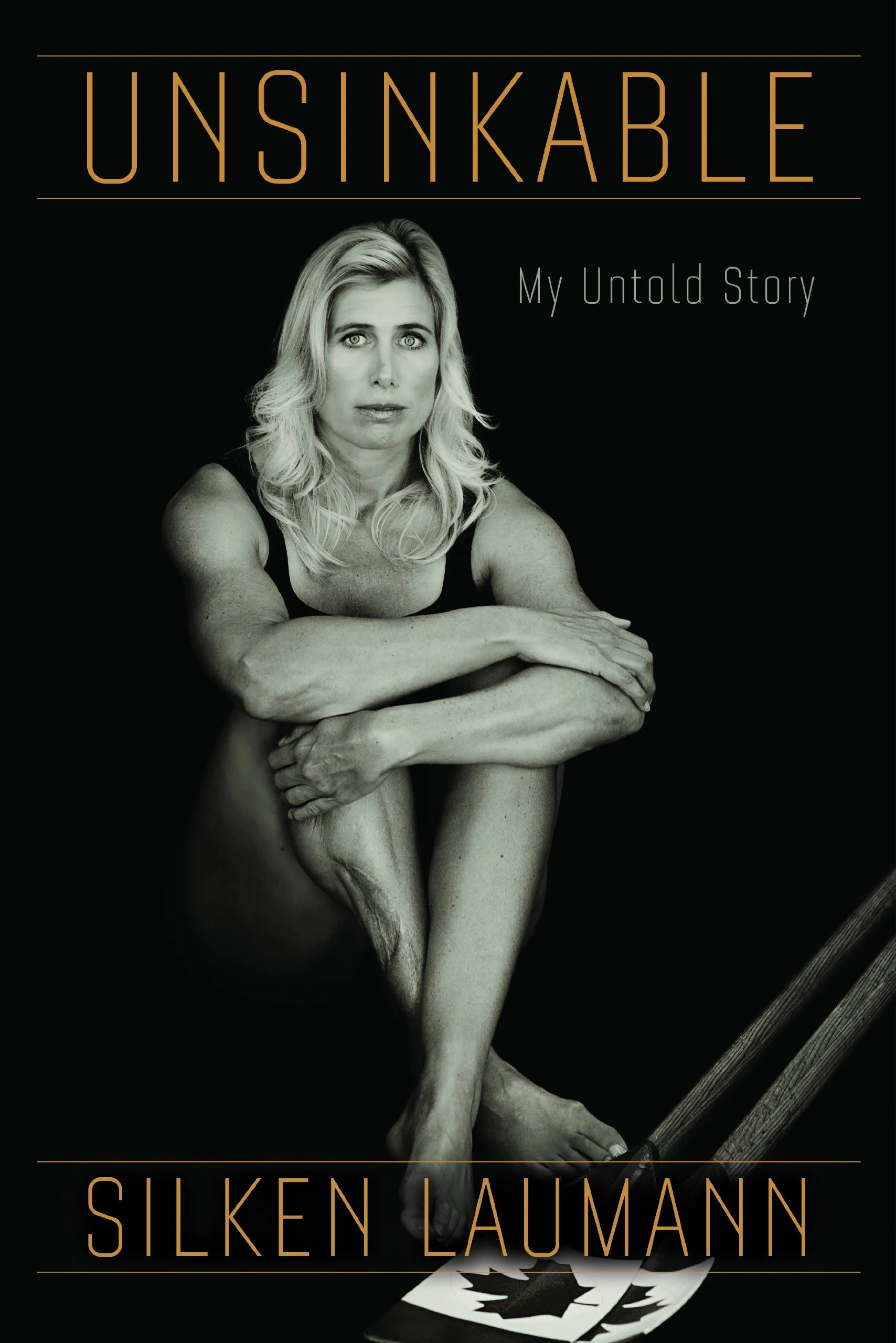
Silken Laumann
Olympic medallist, bestselling author of Unsinkable, and host of the Inflection Time podcast. Keynote speaker on resilience, and founder of the Unsinkable mental health platform.
This episode is supported by GoodLife Fitness and Ventum Financial .
One story, once a week, from someone who has been through it.
A short letter about a moment that changed someone’s life, what it taught them, and a question you might carry into your own week. No course launches, no countdown timers.