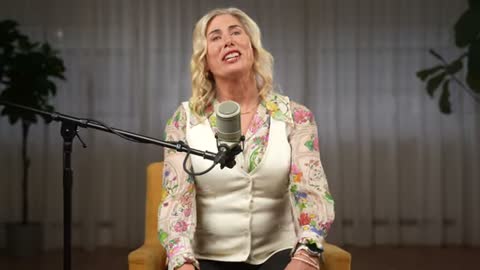
Erica Ehm: Sink or Swim on Live TV
She was 20, live on MuchMusic for hours a day with no script, and she sank a lot. She stayed because she loved the job.
“And I was in a situation where it was sink or swim. And I sank an awful lot, but I wouldn’t give up because I loved my job.”
Transcript
Speaker names are being checked and will appear here soon.
00:00 Meet Erica Ehm
Erica, welcome. It's so nice that you traversed across the province from your cottage to come here to Toronto and be here live because it's like, it's great to have people live. I would never miss this opportunity to have a sit down conversation with you. My God, come on. Well, thank you. And thank you for wearing complimentary colors. We got our blues going and, you know, I feel the same way. I mean, when I was growing up, MuchMusic, it was iconic. You know, I remember going down to Queen Street and seeing, you know, the young people and like the little box that you could talk into. And I never did that, by the way. And give your two cents worth about. On the corner.
Yeah, speaker's corner, right? Almost whatever you wanted to talk about, really. Did you bang on the windows when? No, I did not bang on the windows. I actually was interviewed in not MuchMusic studio, but that was the center for, was it City TV, right? That's right. And so, you know, I did many breakfast television and all that kind of stuff in there, but never MuchMusic. Somehow they didn't want me. They missed out. I missed out. But I mean, I think one of the things that really struck me, because of course I do try to do a little bit of reading before my guests come on, is how young you were.
Like, it's just this monumental thing that you became part of. And you were like 20. Yeah. So, so, wow. Yeah. And it's, it really struck me when I looked at my daughter and went, oh my God, you are the age that I started to go on television. And you're very young. You're just a kid. Right. So it really struck me. And I recently took my daughter to a screening of a documentary about MuchMusic that recently aired.
I know. Yes. And I saw. Sounds really exciting and interesting, like fun, but interesting. And yes, go ahead. And it was, you know, it was educational in many ways, but what it showed my daughter was who I was back in the day. And I mean, she always thought I was kind of interesting because I'm in the public eye and always have been. Yes. People used to stop me on the street her whole life and then go to my daughter, oh my God, do you know who your mom is? Right. And she would roll her eyes. I know you can relate to this and go, yes, I know who she is. But she realized she didn't. You know, of course not.
Once she saw that film and she went, mom, you're so cool. So I have, oh, you're cool. And she's 20 and she thinks you're cool. Like that is high praise. But I mean, in a way, like they can't know you that way when they're growing up. Right. Because you're their mom. And, you know, it's probably just a nuisance for our kids when we're recognized in the grocery store or in the pharmacy and people want to talk to us, right? Share people. My whole life have been sharing their personal stories, usually about what they overcome. And it's not like a 10 second conversation. And meanwhile, you know, my daughter's got to get to ballet or my son's got to get to soccer or they're hungry or whatever. And you Canadians are pretty polite, right? Like it never really felt intrusive. It was always for me. I always saw it as a privilege that I had had notoriety in this country. But for my kids, it must have been hard. And so for your, and I think the kids too, as they get older, I wrote my book 10 years ago called Unsinkable. And I shared in that book, my struggles with mental health. I shared my family story, my family origins, my mom and dad. And it was a, it was a tough book. It was pretty raw and revealing. And my kids' friends all read it. But I don't think my kids ever read the book. Still to this day.
Yeah, I think still to this day. I mean, I think now it's just because it's 10 years old and like it hasn't occurred to them. Probably when I die, they'll read it and be like, do you want them to read it? Yeah, I do want them to read it. And did you do an audiobook version of the book? Maybe that's what I got to do. Maybe I got to revisit that, right? So like for your daughter, now she thinks you're cool, which is awesome.
04:26 Learning live on air at 20
But you also must have had this flash of, wow, when I was 20 years old, I was under so much pressure. So what did that feel like for you? You're right. In fact, it has been extremely cathartic for me at this time in my life to have that film and to go back and look at the girl I was, I guess. And yes, the pressure that I was under. And I was tough. You were. I still am. But I was tough. What I weathered back then, I essentially learned how to be a broadcaster live in front of... By doing. Learn by doing. Yes. But everybody was watching me. Most people learn at school or in a job with a closed door and a boss managing them. Not me. It was, here's your job. 3, 2, 1, you're on. I didn't have directors. I didn't have producers. I didn't have writers. It was just me and the camera and the audience and my love of music.
Yeah. And I was in a situation where it was sink or swim. And I sank an awful lot, but I wouldn't give up because I loved my job. Yeah. It was an amazing opportunity. And I actually never even thought about giving up because I had the coolest job on the planet. I loved doing it. And screw them. If they didn't like what I was doing, it didn't matter because I still had the job. And eventually, I stuck with it. And, you know, there's the 10,000 hours rule that if you stick with something and work hard, you eventually become good at it. And it's always so funny. Now, everybody goes, oh my God, you were the best on air. You were basically it. You were the core of MuchMusic. I'm like, yeah, buddy, you have changed history in your mind. For that, I'm grateful. Yes. But that wasn't accurate. It became maybe the last five years. True. Yeah. The first five.
06:37 Finding her people through music
Once you'd mastered in there, but there was that learning curving, you were willing to go on it because you loved your job. You had a passion for it. But you also love music. When did that start, your love of music? I loved music. I loved music. I also love the culture of music. I like the community of music. I am, I guess you'd say, kind of an oddball. I'm unconventional. I'm not a traditional thinker. So I didn't fit into the regular mold. So those of us who are into music, mostly like punk and new wave music, we were alternative. Yeah. So the music represented us as thinkers. And I surrounded myself. I tried to find a community of like-minded people. I found them in the world of music. So I love music, but I love the culture and being part of a community even more.
07:29 Talking her way into a rock radio station
The outside the box thinking, the freedom. And how did you come to get the job? Well, it's a kind of a long story for someone who had such a young life, but I guess I could start with being 16, no, 17 years old and getting a job at the local rock radio station when I was still at school. Wow. I walked up to the program director at CHOM FM. I saw him when I organized a rally from my school down to the radio station to win a free concert for Max Webster. I can just date myself. No, no, you're not dating yourself. We're in the same area. And I was invited by the radio station because I was in charge of this crazy, rowdy group of people yelling, we want Max to come up and to be interviewed. So I was, I think, 16 or 17 at the time. So I got to know who the program director was. And I went to see the cars at the Montreal Forum and I spotted him. There he was, the music director at a concert.
So there's this thing in me, and you must have it as well, Silken, where you see an opportunity and you're almost irrational. You just have to go. Yeah. And so I remember the world got dark and I became laser focused on Rob Rade in this forum. And I walked up to him and I said, hi, Rob, I'm the girl from Marianopolis College. Can I have a job at Shom? And he looked around. He's like, I'm actually not working right now. Yeah. And I want to just listen to the cars here. So he said, if you want, call my assistant and set up an appointment. Well, he thought he'd get rid of me, but no way. The next day I called up and I did get an appointment. And so I said, can I have a job? And guess what he said? No. Correct.
Do you know why he said no? Probably you were too young. We probably didn't even have like a social insurance number. Well, that's true. But he said no, because you're still in school. So I can't give you a job. I said, but if you quit school, if you want to be my assistant and work for free, you can walk into the radio station anytime you want. You get to hang out with the rock stars. You get to hang out with the DJs. And I will teach you what I know. Do you want that? I was like, do I? So when I was, I can't remember if I was actually 16 or 17. I was working at CHOM FM already. Wow. And from there, you know, I started to like meet people in the music business. And then I started working at Sam the Record Man and A&A at the same time.
Yeah. And then I was managing bands and I just was obsessed. And then I started DJing in clubs and I hosted this little show called Muse of Video before there were videos. I love the word obsessed. I heard it from our guest we interviewed previously. And it's interesting because when we're young, I think to really achieve something extraordinary. And it's not necessarily a way of life that I would recommend for everybody. Right. Like, but if you are that kind of person and you have that vision, as I did, you know, as a 11 year old watching the Olympics and saying, I'm going to be an Olympic athlete, even though I didn't even have a sport. But it was like this vision was presented to me. And it got, I love that the fact that you talk about everything just going dark and you're like, I want this one thing. I want this. I was trying to be a laser there. Could you hear it?
11:12 Opportunity, relationships and showing up
You know, that laser focus and that sort of relentlessness. When we were talking earlier, you just said you were an opportunist. And I also really love that idea because we sort of think of opportunists more and more and maybe in a negative connotation. Like, oh, those are people that take advantage of other people. But what you're what I'm hearing you say is like you saw an opportunity and you had the courage to go for it. And a lot of young people today don't see that piece of it. Right. Where, you know, I have my kids and, you know, our kids are actually I'm a little heavy view, but there's not dissimilar in age. I've got 24, 25, 27 and 28. Mine are 20 and 23. OK, so, you know, I've heard my kids say, yeah, no, you're not allowed to drop off resumes anymore. You know, you're not allowed to call people. You know, everything's online. It's all through, you know, these job searching sites. But is there still a place? I mean, I think there is to just introducing yourself, showing up, being relentless, taking advantage of every little opportunity that you're given.
Listen, we're talking we were talking about that before we started this podcast. We were making fun of Phil. Phil, he's recording right now. Thanks, Hal. I'll direct you. You're back. Call out. He's turning really, really red. I could see how red he's going. But I love him because he is a modern day opportunist.
He's I mean, he's younger than both of us. Not a teenager, more sophisticated. But he is. I told him when I met him, I said, you are an amazing guy. You know why? He built a relationship with me. He calls me out of the blue just to chat. Yep. Just to chat, to build a connection with me. And guess what? If I'm going to hire someone who's going to be a technical director or a video director, who am I going to call? Only Phil.
Because I understand that he sees me. He likes me. He doesn't even have to like me, but he appears to like me. He lets me talk. And that to me is the secret of success is building relationships with people. Yeah, it is so important. And steady and being the one always to be the one who initiates the conversation. But were you thinking that like you're saying that now and it's so interesting, right? Because as we get older, we have all this knowledge and wisdom. No, I did.
We don't necessarily have it. But did you do when you were 20? I can show you in my life, every opportunity that I've had in my life, except being on this show, is something that I made happen. I called the person. And even when I was super famous, Silken, rarely did people reach out to me. It was me reaching out to people. So you personally, you have to be humble. You have to be modest. You have to be proactive. You have to have a core of confidence. And you also have to have that laser focus the rest of your life because life is a series of opportunities that you make happen.
You know, I hear you. And I am thinking back to the first real job I ever had, which was at Penguin Books. There was an ad in the paper for a program called Canada Reads. Okay. Amazing. Yeah. Amazing program. And the woman who was hiring wanted to have a program director with five years of marketing experience. I was newly graduated out of Western. I had no experience. I was, you know, 22 years old.
And I put my resume in, but I also called her and she's like, well, we have 220 resumes. And I'm like, can you pick up my resume? Well, no, literally like there's a process. You know, we got 220 resumes. I'm like, but I'm going to have got that. I want you to pick up my resume. And I kept at her. And so she picked up my resume. I was one of the last two finalists for the job. I didn't get the job. A few weeks later, she called me and said, okay, I can't have you. You have no experience. But my husband is the senior director at Penguin Books and they're looking for a junior marketing assistant.
Would you like to interview for it? So like an amazing story. Yeah. That is, that says everything. Where when you put yourself out or connect with someone like Phil does, like you do, like I do, you can't lose. Because even when somebody says no, if you're smart about it and you go, cool, why not?
Can I learn something from you? Or can I reach out in six months again? Or keep me in mind if something else comes up. If you build that relationship and you start planting seeds all over, something is going to grow.
16:17 Leaving MuchMusic to start again
Well, this is what I love about you. And, you know, the word that came up as I was reading a bit more about you and talking to Michelle Archer, who is a producer here today about you. And the word reinvention came up really, really strongly for me because, you know, in the 80s and the early 90s, you know, you were an icon at MuchMusic, as you haven't said because you're too modest, but you really were. And, you know, you were a top level journalist in a time where women weren't leading the way. So you were also a trailblazer for other women. You were young.
And then it all kind of ended. It kind of imploded, you know, but nobody saw it coming, really. The industry changed profoundly with the Internet and all the other platforms, YouTube, all the things that came up after that. You had to reinvent yourself. How hard was that?
I think it was hard. It was hard. I left. So I was. He missed the implosion. Yes, I was. They call me the goat. What does that stand for? It's like the greatest of all time. Oh, yeah. OK. I was. I didn't mean that. I meant. You are the original. OK, I'm the goat.
She's resilient like a goat. I'm an original gangster. Yeah, yeah. Thanks. And so I left after 10 years. So when I was 30, the ripe old age of 34, I left. But I wanted to leave because I was kind of done. I kind of had grown up and I wanted to try new things.
I worked at MuchMusic and City for 13 years. Fantastic. I learned incredible skills. But I was ready to be challenged in different ways. And so I did. I did a series of television shows. And then it all exploded.
18:15 The loneliness of new motherhood
Talk about reinvention. When I got married and I had kids and I went, WTF is going on. Yeah. And I don't know if this happened to you, but I am a type. I like to go and get things done. And babies, they're a pain in the ass.
They are on their own schedule. They don't listen to you. They cry. They want to sleep. And my brain went to sleep. I was dying when I had my son, Josh.
I love him. Love him. Yeah. But this being almost subservient to your child, which you... I would get rid of that. Almost.
Yeah. But I was... I mean, I loved him. So on one part of me was, I'm so happy to do that. You're so in. You're so here.
But you're kind of not too. I was depressed because I need adrenaline in my life and raising creativity and connection and stimulation. Yeah. Kids, you have to turn that off and you have to go slow and you have to sort of get on the floor and play Lego.
Yes. And follow their rhythm and be there for them, which I totally loved. But I thought, why is no one talking about how freaking hard it is? Why is no one talking about how lonely it is? Why is no one talking about the feeling of being an imposter as a mom? Like I was sure that I was the worst mom because my son would cry all the time.
I didn't know what to do. And I started to talk to other women. I realized, huh, there's something going on here. And then I went to an event where I was speaking about reinvention and getting what you want in life. And when I was on stage, I was saying, you know, it's interesting.
Since I had kids, I'm a persona non grata because I'm older, I'm fatter, I'm, you know, a mom. And as soon as you call someone a mom, it's like death sentence in the professional space. And I was in television too. Especially in television. Where it's adherence and youthfulness is valued in a way that maybe it's almost like
hypervalued. So I said on stage, it's too bad that, you know, that the media world has abandoned me because I'm actually really good at my job.
20:37 A crumpled business card and a show about moms
And someone put her hand up in the audience and said, I'm a TV producer. And in my mind, all I could think was, you're 12 years old. Yeah. Yeah. I went and spoke to her after because I'm an opportunist. And she gave me her business card, which was crunched up in her pocket with someone else's
phone number written on it. And she said, you should call me. Yeah. Well, I did. Yes. I called her.
Yes. So, and guess what? She really was. She really was a TV producer. He was with the Krummjerg. That producer.
Yeah. She was working for Simcha Iakovicci, who is a very well-known producer who I knew through my time at City TV. And he was looking for a new show. And I said, what about a show called Yummy Mummy, talking about the realities of motherhood? It's not a parenting show.
I'm not worried about the kids. The kids are fine. Those kids are okay. Who is helping the mom? Yeah. Who is speaking up on behalf of moms?
When you were, I remember those years so vividly. You started such an important conversation. Thank you. So, it was the loneliest time of my life. I had my first child very quickly following the Olympics. So, I went from being an Olympic athlete in 1996.
My sister had taken six years to get pregnant. I was 32 and I thought, I better get on it. And like, literally a week later, I was pregnant. And I just wasn't prepared. I mean, I was so in love with my son, William, who was born in June. And I competed in the Olympics the previous year.
So, you know, it was like, my God. Right? And but then I was so ambitious still. I still had so much ambition and so much that I still wanted to do. And, you know, I just think there wasn't any kind of talking about the shitty things that, you know, the lack of sleep and how it kind of makes you bananas and you can't think straight.
And the guilt. Nobody was talking about this guilt. So much guilt. Like, how can you work? Don't you love your son? First of all, I don't want a judgment back then.
We're going back 20 years now. And I still think women are so hard on other women. I believe that's changing. I see more networks for women. More women talking with some vulnerability about their experiences and their struggles. But back then, I hate to say that, but really it was back then.
It was kind of foreboding to talk about how you were struggling. And as we know, there is a relatively high percentage of moms who experience postpartum depression. Two percent. Nobody was talking about postpartum depression. That's why I started. Well, I did the TV show.
And after two years, the show was canceled. And I took the knowledge that I had going with. Well, you know, it was only. Can I just interject? It was only canceled because you were actually ahead of your time. Like, you were a good 10 years ahead of your time.
I was. You're right. Thank you.
23:51 A tiny website for mothers
So I started this little tiny website. Literally tiny. I built it myself. Well, and the internet, it was all a little newish at that time. It was 2006. Yeah.
So I used one of those pre-made templates. Yeah. And I started writing articles. I wrote 300 articles. So what was it? You know, I'm just kind of like.
So, I mean, I'm like this. I live my experiences. And then I need to describe them to others. And I need to find out, is there anybody else out there? Like, what is it for you? Is it like that for you?
Can we be best friends? Because everything you're talking about is making me kind of emotional. You're. Yeah. I have a desire. I have a need to create community.
I didn't realize it. But I did it with the music business. You did. And then I did it with motherhood. And I wanted women to know that they weren't alone. Because we all felt alone and ashamed.
Yeah. And I wanted to say those scary things out loud. So I wrote. And I was like, famous. Yeah. And yet I was struggling.
I wanted to say that. I wanted to give women permission to acknowledge that motherhood could suck at times. And we could struggle. And being famous is a bit of a double-edged sword. I mean, I still kind of cringe when I hear that word. I don't think of myself as famous.
I think of maybe well-known, you know, but famous, too big a word, you know. But there's also this sort of part when you are in the public eye that you feel lucky and privileged. And so when you struggle, it's harder to admit that you're struggling. I did help. But you, I mean, you were, you were like, if I'm struggling. I feel a responsibility, actually.
Yeah. So you just know that if you're struggling, other people must be struggling. That's what I knew. And I knew that on Much, when I worked at Much. I talked about really nerdy things often. I was a good girl.
And I was, I put the men in their place on camera. Because I knew it was important for me to be a role model like you were. Yeah, to have a boundary, show that boundary. Absolutely. Absolutely. And a lot of the women and some of the men remember that.
Hey, I remember when you did this. Or I remember when you did that. I was like, you know, F and A. Yes, I did.
26:11 What young women put up with, on air and off
Well, because in those days, I mean, I. No one rescued me. It was. No, there was no rescuing. And there was also like, there was. I was a runner when I was a young teenager.
And, you know, I want to say like 11, 12 years old running the streets of Mississauga. I had men pinch my butt when I was running. I had a man try to pull me into his vehicle when I was running. I was catcalled. You know, I cut off all my long blonde hair at 13 in kind of a response to this sexualization. Totally.
You put up with the shit. This was this was the way it was. We didn't know any different in a way. But I also knew it was wrong inside me, viscerally in my body. I knew that I didn't have words for it. I mean, I did have words when the guy tried to pull me into the car, but I never told my parents.
Well, I never told my parents that that he would that someone wanted to assault you. Yeah, exactly. It's so stupid when I think about it now. But I know that it was confusing at those times. You were you were made. Advances were made.
They were often part of the workplace, part of boards they served on. For me. But how do you? But you're 20 years old and it's happening all the time. They were doing it on camera. They were doing it live.
That's worse. They were doing it live on camera. And so and an example. Well, for I could give you a bunch. You don't have to name names. I don't want to.
I'd love to. Oh, you'd love to name names. OK, go for it. Red Hot Chili Peppers. Woof. Were grabbing me.
They were using. Like on camera. Yeah. And so what did you do? I shut down the interview. That's why people.
You know, I remember when. Well, yeah, it was. I kept on warning them. I'm like a mom. Yeah. I was like, if you keep on doing it, I'm going to shut the interview down.
And they're like, OK. So when we went, we went to commercial break. OK, but make the hand on your lap. They'd say, is it OK? Like, are we calming down? And I was like, no, and you cannot swear because CRTC will shut us down.
And so they did it again. And then I went, OK, we're rolling the video now. And they went, what? And I went, we're done. And recently, someone on the internet found that your producer wasn't there screaming at No, no, no, no, no, no, no, no, because it's good TV.
That's what I'm saying. One time, there's a live interview with one of the guys from New Kids on the Block, Donnie Wahlberg. Someone posted it on Instagram recently. And I looked at it and I went, oh, my God. He objectified me.
And he did this thing where it appeared that he owned me. So we were backstage. We're live. And he's drunk, puts his arm around me, goes, this is my girlfriend. And I'm like leaning away from him and going, don't you have to go on stage now? And he's like, this is my girlfriend.
But that giggle, that little giggle, right? He's like nervous. That was helped me. But also, you couldn't.
Now, the air canal also with the way that we've also been educated about the experiences of women and what that does to a person, you know, you would now say, hey, buddy, you know, put your hands in your pants. It would be worse than that. Yeah. Trust me.
Yeah. Right. But the giggle, I so relate to that. Like, there's that moment of, you know, it's wrong. And you want it to stop. You're trying to make it stop.
But the words, articulating the word, there was no, I didn't understand what the word objectified meant. I don't, that it wasn't even used back then. I don't. Now, I'm angry. I have anger now.
I tell my, the people at MuchMusic, they, they never helped me, nor did they talk to me about it after. Nor did they allow me to speak up to them and say, what an asshole. Nobody even, maybe they didn't even understand what was going on, to be honest. Yeah. I mean, what's, what's interesting is Me Too, right?
Like when Me Too happened, how long ago was that? Seven, eight years ago?
There was a real reckoning for women our age. I think like most professional women I know who were working in the eighties and nineties had a moment of like, oh yeah, hell yeah. This happened to me. And, and there was a lot over and over and over and over and over again. And, and there was this sort of anger.
I really relate to what you said, like this anger and so much later. And, you know, but you think, I think I just have to feel this way. And I think I'm going to feel this way for a while.
31:02 The assumptions that still make her angry
Do you know what I really hate? When people assume that I got my job because I slept with somebody. Hmm. I still get that. You still get that. I still get it.
Or they say that the owner of MuchMusic, which was Moses, is my uncle. Well, she got her job because her uncle runs it or she obviously slept with him. Yeah. It's, it's so unfair. It's so ignorant. It is.
How much of that is fuel for you? Oh, it's all fuel. Look at me. I'm looking at you. Don't F me. Don't F with me because I will bite your head off.
Yeah. And my daughter has inherited a very strong sense of feminism from the. Look out world. And my son. Is that her last name Ehm? No.
Okay. But she wants to, she's thinking about.
31:58 Her mother, a summer camp and JourneyWoman
Do you know where that, I mean, I mean, it was built obviously, but do you know where that determination? Yes. And fire came from as a child? Yeah. Yes. My mom.
I had, my mom recently passed away and my mom was super cool. You loved her. So my mom, when she, when I was six, she bought a summer camp in the middle of nowhere with my dad. So she was 26, maybe 27. And the camp still runs today. They had 200 kids.
Now, first of all, I can't even imagine that paras would let their kids go to the summer camp in the middle of nowhere where the owners were 26 and 27 years old. And they would live there for a month, like it was a one month camp. So you can either go one month or two months. So that's insane. But, so I watched my parents do crazy things like that. Be very, take risks, be bold.
And then my mom started when she was in her late forties. My dad and her had divorced. And so she decided to start traveling. She put on a backpack, started traveling. And she loved it. So she started a little fanzine called Journeywoman, where she would write articles, print them, and sell them at stores independent.
This was obviously before blogs. It was right before blogs. Right before blogs. And she had this little fanzine called Journeywoman, which she sold at book cities, book city bookstores. And then she told us one day, my sister and I, I'm going to start a website. And she was at this point like 52, 53.
And we, my sister and I were in hysterics. We were like, mom, you don't even have a computer. And she said one word to us or two words. She said, watch me. She got a computer. She found a web mistress.
And she started this little website. And it is the biggest online to this date, biggest online magazine for female solo travelers in the world. Wow. What a legacy. She is just a force of nature. She taught my sister and I to be taught.
Yeah. And she gave you kind of a template, almost like, you know, reinvention of, you know, possibility. Yeah. It sounds like you grew up with, in a family environment, not to make it idealistic, but, you know, that you were shown that anything was possible. A hundred percent. And we were treated like girls.
Like my dad also. Yeah. Didn't treat me like a girl. Like when I, imagine when I was 17, 18 years old, I was DJing in clubs, punk clubs in Montreal. Yeah. So after school, I would have a nap, have dinner, and then go downtown and DJ in a punk club and come home at three in the morning because clubs closed at three in Montreal.
Yeah. My parents never stopped me. They never challenged me. They never questioned me. They just let me do it. I think they probably understood you were a force of nature.
Oh, and. Yeah. And that, you know, like, I think my parents understood that about me, that like, you know, I can't get in this person's way. Did you also grow up in a family of possibility? Yeah. Interesting.
My dad and my sister and I reflect on this because we both went to university. We were the first in our generation to go to university. My parents are German immigrants. So definitely like that hard work ethic was very strong in our family.
I don't remember thinking that there were limits on me because I was a girl. Like, and that I never remember thinking, oh, somebody's going to look after me. I always assumed I'd look after myself. So that must have come from somewhere. And, you know, I think my mom, although she had a mental illness, was undiagnosed. And so it was a fairly tumultuous childhood in many ways.
My mom was an artist. She was a sculptor. And so she always had a passion. And I do think that I got some of that from her. Like, to really, truly love what you do and express yourself through your work. You know, I've been a speaker.
I'm writing my second book right now. The idea of using your work as a way of expressing who you are and your beliefs and your ideas in the world probably actually didn't come from my mom because that's who she was. And my dad was an entrepreneur. But it was more the hard work. And to a different degree, I think that the adversity in our family. So you get the one side, right, Rich, which is like the role modeling and which, you know, was your experience.
I think that's very positive. For me, it was more adversity and wanting to change my situation and to have agency. Like, I had no A to C. When you live with somebody who's really mentally ill, they dominate the culture of the family. And their needs are the only needs that get hurt, right? Like, my mom, if she was drawing plates or screaming or crying or drinking or whatever she was doing, it was like there wasn't space for little Silken and her needs or like little Jurg, my brother and his needs.
Because, you know, so I think my determination in a way came from a quest for power. I wanted to be in the driver's seat of my life. It reminds me of Jeannette Walls’ book. Yes, Gladys. Oh, yeah, that was really hard for me to read. It was, eh?
It's really, very, really hard for me to read. I still, you know, I still battle some of the triggers around especially child abuse. You know, it's very hard for me to distance myself enough to just, you know, get something from the story. So, you know, it is interesting how we go back and we look at the things that shaped us. I can see that, you know, you had these experiences with MuchMusic. Now you're this powerful, you know, together person.
38:15 The same person on camera and off
And I wonder if you've looked back on those years and digested the experience. The reason I ask this is, you know, you became well-known for something that you did. And, of course, that you reinvented yourself. You've been so many different things. But a lot of people still, like you said, remember you from this really, you know, relatively small window of your life. And I've gone back to my experiences and I see them differently now because I'm a different person.
And I see what those things have taught me, but also where they were wrong. So we talked a little bit about, you know, where you knew those experiences were wrong and you kind of reflected on it with the power and intelligence of a 50-something, right? You know, so can you also do that with the learnings? Can you look back and go, like, I really learned some stuff that has stuck with me for the rest of my life? Absolutely.
But what's interesting for me is, in a way, I see that I am the same. That when I was on TV for 10 years with no script, four hours a day, I was forced, or my way of surviving was to be authentically myself, which is rare. Very rare. I mean, first of all, what crazy TV person would let a 20-year-old go on camera for four hours a day with no script? But I pulled from who I was and I didn't pretend to be anything other than who I was. And I think that's why people loved me so much.
It was one of the few authentic things that you could see on TV. Exactly. And I bring that to everything that I do. So the things that I'm doing today are, in some ways, a continuation of what I was doing on much. And for me, it's not what I do, but how I make people feel. That's my superpower, is I care how I make people feel.
I can feel that. I have a huge responsibility. Every single thing I do, every social media post I make, every person I meet at a show, every person who stops me on the street, I have, in my mind, a huge responsibility to be the person I want them to become. I feel like a huge pressure on myself, self-imposed, to be a role model for kindness, for being courageous, for being a strong woman, for being respectful to women. Everything I do, no matter where I am, should ladder up to that in some way.
So what about those moments when you're not feeling courageous? No, but I am. You're always courageous. I have a purpose.
My husband and I separated last year. We never fought. We never bickered. We're still good friends. We did it. I did it together.
We went, we're going to show people that you can do it.
Every part of my life, the stuff that's behind closed doors and the stuff I do publicly, it's the same. It's the same. So you can be Erica Ehm, the human in everything that you do. And I got to applaud you for that because that took me a lot longer. But I had no front upbringing than you. Yeah.
You had to learn it. Yeah. You had to, you didn't have that, you didn't have a family that displayed it. My mother and my dad really are both unabashedly themselves. And they were both always really kind people. But fierce.
Fiercely kind. Kindly fierce. Yeah. Yeah. And so I just, and my sisters like that too. We just are, we call ourselves the Ehm sisters.
We just feel like that is a responsibility that our parents have given us. Mm-hmm. And I do it and it brings me great joy. Well, yeah, because you're teaching, you're always teaching. I always teach sharing. And, but part of teaching is also like you said, part of being authentic, I should say,
is also sharing when you struggle. Oh. Or so, you know, are, do you feel comfortable? Because a lot of people, it's like when it's good, they're ready to share. But when it's bad. No, no.
You know.
42:49 Standing by her daughter
My daughter, when she was 13 years old, she blew out her, her candle, her birthday cake candles and started crying. And she didn't stop. So I'm actually sitting in front of you right now because I, that's the conversation that you and I have to have. Mm-hmm.
Because I had daughter, I have a daughter with mental health issues. Yeah. And it's a very delicate situation because that's her story, not mine. Mm-hmm. But what I do talk about is the pain that it caused me, the isolation. I almost lost my company because of it.
Not because of her. No. Because of my having to weather the race, your response to it. And I had to be there for her. She needed me and we needed to understand what was going on. For sure you did.
So, you know, almost it's the antithesis of what happened when I was a young mom and I was frustrated being at home with my kids. It was hard. This was the opposite. This was, this was easy for me to make a decision that I had to be there for my daughter. And it was a really hard time.
I get choked up, you know, talking about it. I learned so much. You just heard you, you knew you had to be there. Oh, I know. And my husband was too. Like we were, but I'm just more like a mom is, is.
And also I'm a learner. Yeah. So I wanted to understand everything there was. I needed to find her people to help support her. I wanted to be there when she needed someone to talk to. I wanted to be there.
I'm a good listener. A lot of, a lot of parents, this is really powerful to hear because, you know, a lot of parents when their kids are struggling with mental illness, they have no idea what to do. And a lot of parents sadly think that not giving it space, not giving it attention is a good strategy.
And I'm not hearing that from you. You were raising the alarm bells and you were saying, we got to, we got to get knowledge. We got to get help. We got, it, it amazes me still today how many parents I know whose kids are struggling who feel like they need to downplay it because giving it space will make it grow. And I did the opposite.
I started a Facebook group for parents of teens who were struggling. So I have 3,200 parents who are in this private group who share their challenges with their teens. And it's a very respectful, supportive group. And I don't often talk about myself anymore. I don't need to.
It's already taken on a life of its own, but I am, I am very outspoken. And I just recently did a keynote for the, the hope conference. So hope is an organization that I wished was around a few years ago when I was really struggling. It's parents of teens who are dysregulated, who are having issues with substance abuse or mental health challenges. And it's a support system for the parents because no one supports parents.
When I was going through this thing with my daughter, I would talk to her therapist and say, can you also coach me? Because I'm the one who's dealing with her every other hour of the day, except for the one hour that you're talking to her. And they said, no, your daughter is our client and we need to keep everything confidential. Confidential.
I was like, no, no. Don't tell me anything she says. I don't need to know what. You just need to help me. Yes. You need to help me understand.
And how do you respond to a daughter who is so depressed she won't get out of bed? Or a daughter who is cutting herself? Like, what do you do? Tell me. Yeah. I'm sorry.
We can't. Until I found a place called Broadview Psychology and they gave me a therapist. I was going to say, go to therapy. Dr. Carmen Malone. But she was treating my daughter, but they do DBT therapy, which includes the family because their philosophy is you need to change the environment that the person's suffering.
You need to change their environment because if the environment doesn't change, the same behavior will perpetuate. So they train the parents have to agree to do biweekly parenting courses with other parents of kids who are struggling. I was like, thank you, God. And it was life changing.
Thank God we're finally talking about it, too. Like, as you know, Erica, I started Unsinkable, you know, kind of in response to my own personal not kind of very much in response to my own personal experience. We're similar. Yeah. You take the things that you're going through and you and I make it public.
I make it public because it feels inauthentic not to. Right. Right. It's like, how can I be keynote speaking, talking about, you know, success and how to get forward in your life while not talking about this really big thing that I've just learned about, which is, you know, how I became so motivational, how I became so driven.
Right. And when I went on book tour, what I heard over and over again from people was their stories. And I thought, gosh, if only we could collect these stories and we could drive them out there, there'd be so much hope and help for other people. And that's kind of how Unsinkable started was this idea that stories are powerful and that there's a lot of wisdom in the lived experiences of others.
So we have so much in common that way. Right. I love you. Honestly, like as you're talking, I was like everything that you're saying, I completely not only relate to, but I do in a parallel way. Yeah.
And what you said, too, about the parents is that if you're out there and you're listening to this podcast today and you have a child that's struggling, first of all, take it seriously. Take an action to help them reach out and find them some support. You know, so you've got to educate yourself in order to do that. And I think secondly, seek support yourself because one, it's going to be a tough journey ahead. Right.
But also by understanding yourself and how you parent, all those things, you're going to show up differently for your kids. For me as an Olympic athlete, I had to become a different person for my kids. So you talk about being the same person at MuchMusic than you are today. I couldn't be a hyper driven, perfectionistic, win at all costs person anymore because that was destroying my family. It was destroying my kids, having that energy all the time. Had you called me, I would have told you that.
Yeah. Thank you. It would have been super helpful. Instead, I did yoga and meditation and I read so many books and I went to counseling. And, you know, all I needed to do was call you all this time. Right.
But like that was a journey for me that I needed to be different than I was as an Olympic athlete to be a good mother. And I had a mom who did her best, but she wasn't a good mother. I didn't have that role model. And I know some of our listeners today have that situation. And to go into parenting without a roadmap is really, really hard. So I overcompensated.
I tried too hard. And I did it for way too long without support.
What is so beautiful about so many things that you've done in your life, haircut, have they've come from the place of having gone through things yourself, things that are difficult and hard and you want to be different and then you make them different for other people. So that is so powerful. If I were to ask you to be your best friend. Yeah.
Well, I think you've made, you've sealed the deal, haven't you? But, you know, like I, again, you know, it's always like looking forward, looking back. And maybe I'm too reflective because I wrote a boat backwards my whole life. You know, it just makes you kind of a reflective person. Right. You're always looking back and sort of digesting.
51:39 Her 13-year-old self, and the power of listening
But like, what would Erica Ehm today tell Erica Ehm at 13 years old? What advice would you give her? What would have been helpful? Well, when I was 13, I was beat up all the time in the schoolyard. I was kind of a nerd and definitely a hard answer. Can you imagine you being a nerd?
Okay. I used to get dog bones in my locker, dead fish in my locker. So when I look back, I'm going to, you did pretty good. You did really good. To all those people who were really mean to me, here's my middle finger. You can't see it because it's a podcast.
But, you know, don't be mean to people because I know who you were. You're coming back, girl. You're coming back. Yeah. I mean, when you're 13, 14, 15, that's a really hard time because a lot of people are very mean at that time because everyone is struggling. Everyone is trying to understand what their role is.
So I remember, and fitting in, right? Fitting in. You do anything. Fitting in makes people unkind. Yeah, you know, the group mentality. So I'm, and I think that I'm like, they're called super feelers.
You may be one of those as well. I've learned that term because I became very close with my daughter's therapist because she was also my therapist in relation to her. Not me in my life, but like, how do I, how do I help support my daughter? So I went deep with her. I don't think I'm her normal client or patient because I was like, what is this super feeler? Please explain it to me.
Give me five things that most parents do. Like I basically was writing blog posts in my head with her all the time. And then I was able, now I'm able to come on shows and share what I learned. And I think one thing that parents don't understand is that many kids like you were probably, and I certainly was, were super feelers. We literally feel things more, we're empaths. And when someone looks at you funny or says something, it's like a dagger in your heart, even if the person doesn't mean it.
This is where the mental health challenges come from because these seeds are planted and then the kids don't know how to, to process it. And they're already struggling because they're going through puberty and life is hard and social media. And so what I was taught by this therapist is a really great skill, which is listen. So when your child locks himself in their room, you could knock on the door and go, hey, what's up? Get out. I was like, okay, I'm going to come back in about two hours.
And then you could ask them again in two hours. And then they'll say, school really sucks. And you'll go, yeah. And you don't teach. You don't lecture. You don't use this as a teachable moment.
You shut your mouth and just go, yeah, that must be hard. And yeah, well, that power, a power of listening, power of listening. So incredibly profound and learning to listen to your children without feeling some responsibility to give them parenting advice right in that moment or making them a better person in that moment. That is something that is so tempting, I think, as a parent. When you have children who struggle with their mental health, and I have that same experience, it is a different experience parenting. There's more intensity and there's more need to show up fully capable, isn't there?
Yes. But I, well, no, I think every kid needs it. It's just you have to show up differently. Yeah. And sometimes for longer, when your kids are struggling with their mental health, they can go into their 20s and you're still kind of there. Yeah.
But there is new research that shows that they're redefining adolescence and adulthood.
The, I guess, the, I don't know who would do this. Free frontal cortex and all this stuff. Yeah. Like social workers or the, you know, Department of Psychology somewhere has said that there is a new definition of aging, a new stage of aging, which is you are a teenager and then you're an emerging adult until you're 29. I've heard that. And at 29, you become an adult.
Yeah. And. That sounds about right. It's my experience. Yeah. Yeah.
It's probably a more rational way of looking at the different. More realistic. More realistic. And reflective of where we are today, especially post COVID. Last question.
56:25 The books that shaped them
You know, I've had a lot of books that have changed my life. Can you name a book that's kind of, you know, giving you an insight or a perspective that's really had a positive effect on your life? I read a book many years ago. It was Carol Shields' book. And it was called The Stone Diaries. Oh, no.
This is Margaret Laurence. No. No. Oh, you're right. The Stone Angel. Right.
Is Margaret Laurence. You're right. Okay. This is. So, in the book, it's about a woman who is aging and she lives a very ordinary life. And one of the scenes in the book.
And one of the scenes in the book is the protagonist writing a list of all the things she'd never done in her life. Or maybe it was the narrator making a list of all the things she had never done in her life. And I thought it was the saddest thing I'd ever read in my life. And I remember saying to myself, my list is going to be short. I don't want to be Daisy Stone. And there was a line in there, which was, Daisy Stone, let life live her.
And I'm like, not me. I'm going to be, I'm going to live life and I'm going to make the life happen that I want. So, I'm not sure if that was the intention of Carol. Yeah, yeah. But then I would land it on me. And was that, was one of the characters named Hagar?
Or this is, this is the stone angel. So, you know, you had mentioned that, you know, we're soul sisters, that we need to be friends. I have almost the exact same experience with Margaret Laurence's book, The Stone Angel, where Hagar, the main character, never says what she's thinking. She never, she never shows her emotion. She never expresses her love.
And I was just, it's the story is about her life as she gets older. And all the times, like, if she's in her head wanting to say, I love you, wanting to say, you've met the world to me, or, you know, express her vitality, her sexuality, her love of life. It's all locked inside her. And the same thing, it's like, I'm not doing that. I'm going to live life in the love lane.
I'm going to keep going. So thank you so much for the interview today. It's been just beautiful having this conversation. Thank you. I so appreciate you and appreciate your time and the effort you made to be here in person. Well, I hung out with Silken Laumann.
So I'm very happy. What an afternoon. Thank you. You're welcome.
As an Olympic athlete, it's not surprising. I love working out and I love going to the gym. Strength training is so important for bone health, for metabolism. And our partner is Good Life Fitness. They are offering a seven-day pass to all of our listeners. Visit our description to access your seven-day pass.
Thanks.
Key takeaways
- Learning in front of everyone. Most people learn a job behind a closed door. At 20, Erica learned to broadcast live, with no director, producer or writer, and she sank often. She stayed because she loved the work.
- Every opportunity started with her. Apart from this show, she says, every opportunity in her life came from her reaching out first. For her, success comes from building relationships with people.
- Saying the hard parts aloud. Early motherhood was lonely, and she felt like an imposter as a mom. She wanted other women to know they were not alone, so she started saying the scary things out loud.
- Parents need support too. When her daughter struggled, the therapist could not coach Erica. A program that brought parents into the work, with courses alongside other parents, changed things for her.
- Listening instead of lecturing. A therapist taught her to knock, come back later, and when her child finally talked, to say only that it must be hard. No lesson, no lecture, just listening.
Erica Ehm
Host, speaker and founder of YummyMummyClub.ca, one of MuchMusic’s first VJs
Erica Ehm is a Toronto host, speaker and entrepreneur who was MuchMusic’s first female VJ, from 1985 to 1994. She later hosted shows including Popstars, Power Play and Real Life with Erica Ehm. After becoming a mother she created YummyMummyClub.ca, one of the earliest online communities for and by mothers, and launched the digital agency Ehm & Co, leading both as CEO for 13 years. Today she speaks on courageous leadership and reinvention, and hosts the podcast Reinvention of the VJ.
Resources 10
Research and sources behind what was said in this conversation.
- Postpartum depression or anxiety reported by nearly a quarter of moms: StatsCan CBC News (The Canadian Press), 2019 A Statistics Canada survey of 7,085 new mothers: 23% reported feelings consistent with postpartum depression or an anxiety disorder.
- About JourneyWoman JourneyWoman The solo travel publication for women that Erica’s mother, the late Evelyn Hannon, founded in Toronto in 1994.
- The Glass Castle (Jeannette Walls) Simon & Schuster The memoir Erica thinks of when Silken describes growing up with a parent’s untreated mental illness.
- Dialectical Behaviour Therapy (DBT) Broadview Psychology The Toronto clinic Erica names. Its DBT programs for teens include caregivers, with family skills groups for parents.
- Efficacy of Dialectical Behavior Therapy for Adolescents at High Risk for Suicide: A Randomized Clinical Trial (McCauley et al., 2018) JAMA Psychiatry A trial with 173 teens aged 12 to 18: after treatment, DBT reduced self-harm more than supportive therapy.
- Unsinkable weareunsinkable.com Silken’s charity, which shares personal stories of resilience and mental health. She tells Erica how it grew from what she heard on her book tour.
- Sensory-processing sensitivity and its relation to introversion and emotionality (Aron and Aron, 1997) Journal of Personality and Social Psychology The research behind the term “highly sensitive person”, close to the “super feelers” Erica’s therapist described.
- Emerging adulthood: A theory of development from the late teens through the twenties (Arnett, 2000) American Psychologist The paper that named emerging adulthood as its own stage of life, the idea Erica describes.
- The Stone Diaries (Carol Shields) Penguin Random House The book Erica names: Daisy Goodwill Flett’s quiet life, which made her decide her own list of things never done would be short.
- The Stone Angel (Margaret Laurence) Penguin Random House Silken’s choice: Hagar Shipley, at ninety, looking back on a life of things she never said.
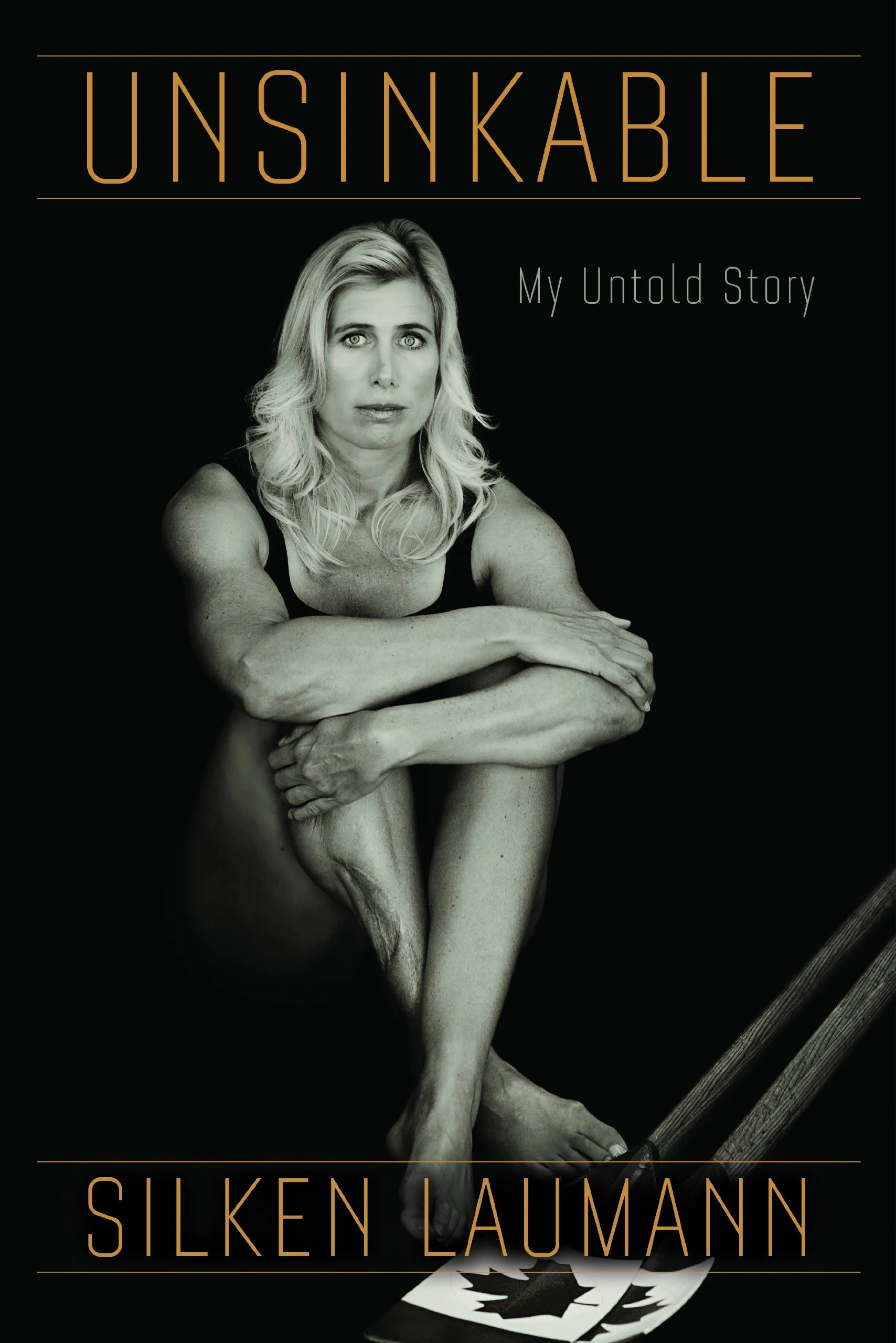
Silken Laumann
Olympic medallist, bestselling author of Unsinkable, and host of the Inflection Time podcast. Keynote speaker on resilience, and founder of the Unsinkable mental health platform.
One story, once a week, from someone who has been through it.
A short letter about a moment that changed someone’s life, what it taught them, and a question you might carry into your own week. No course launches, no countdown timers.