Sharon and Bram: Nose to Nose With Kids
They got together to make one record. Then, Sharon says, they spent the first two years running to keep up.
“It doesn’t always pay off to make you rich, but if you get to do what you’re loving, that’s a richness too.”
Transcript
Speaker names are being checked and will appear here soon.
00:00 Meet Sharon and Bram
Welcome to Inflection Time. I'm Silken Laumann. Every life has turning points, those moments that change everything. In this podcast, I sit down with remarkable people to explore the challenges, choices, and unexpected events that shape who we are. From heartbreak to triumph, fear to clarity, these are the stories that remind us that growth isn't linear and meaning is often found in the moments we least expect. Inflection Time. I'm covering the moments that make us.
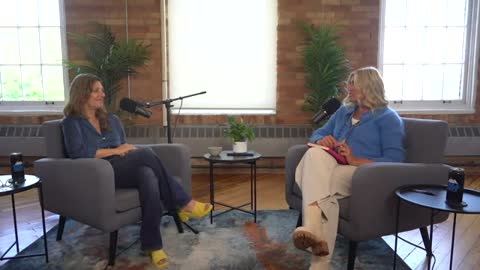
In this episode of Inflection Time, I sit down with Sharon and Bram, two of the iconic voices behind Sharon, Lois, and Bram, the beloved trio whose music became the soundtrack to childhood for so many of us. Their joyful, inclusive songs and shows like The Elephant Show and Skinnamarink TV reach families across Canada and far beyond. I first really understood the power and magic of Skinnamarink through a story my husband told me about his profoundly autistic child, Keely, and my stepdaughter when she was young. This song brought her joy and calm. And when I got a chance to sing along with them here in the studio, I couldn't help but think, wow, Keely would love this. And what struck me so much about them is how authentic they are. When they sing to kids and play their music, it comes naturally. Bram connects with kids like it's instinct. And Sharon followed her heart. Bram's gentle, playful spirit make children feel truly seen.
They didn't just sing to kids. They were right there with them. Learning, laughing, and growing together. It reminded me how powerful it is to meet people exactly where they are, especially the youngest amongst us. This is Inflection Time, uncovering the moments that make us. Thank you for joining me. Sharon and Bram, welcome. And I've got Sharon and Bram here from Sharon, Lois, and Bram. And I got to tell you, I am so excited. Well, so are we.
Yeah. And it was interesting because I didn't know that much about you. And so I am very excited to learn more as we talk. But when I told people that I was interviewing Bram and Sharon, people would just start singing, you know, and gesturing. And I'm like, what is going on, right? Isn't that lovely? Yes. And that Skinnamarink song has been just iconic, not just in Canada, but really. Throughout North America and maybe even worldwide. If worldwide.
And we have no idea that that would be the case. Oh, of course. Not a clue.
03:04 A grade six teacher and a teenage folksinger
Well, let's start there because you have been doing this for a long time. And Sharon, you are still performing today. How did you start? Because what I've read is, I mean, you're both from Toronto. Bram, you were a teacher. I was a sixth grade teacher for a couple of years. A music teacher. Well, that's a really good question because I taught everything. And it was a big school. So there were four grade six classes. And I traded music for physical education. However, I did it backwards. I did it backwards. The woman that I traded with, she took my kids for phys ed and I took her kids for music.
So, you know, you also were, he also was an itinerant music teacher. So he traveled around the school, the system, singing to kids in different schools, including my daughter, to my daughter, who came home one day and said, I think a friend of yours sang to us today. Yeah, because you were already friends. Now, I'm a little bit alarmed that you were missing phys ed as an Olympic athlete, you know, but I'll give you that. It worked out for you. It worked out. Yeah, it worked out really. It worked out really. I've had permanent.
Yeah, but Sharon, you, you had this path. I mean, you both obviously were musicians right from the beginning, but you had a pretty linear path in terms of you knew this is what you wanted to do right from out of the gates, it seems. Pretty young. I didn't know. I mean, I knew I loved music and I grew up in an environment where there was a lot of music, a lot of people singing together, and I loved that. But I started playing the guitar when I was about 16, and in Toronto, the coffee house scene was thriving. It was great. And Bram was part of that at that time as well, in the early 50s. And I got involved singing a little bit, and then I had an opportunity to perform, and I kind of liked that. And when I was in grade 13, I was hooked by then. And in a math class, I turned to my friend and said, should I quit school? And she said, it was in a math class, so I understood that.
I was a student, and I love math, and I do still, but I said, should I quit school? And she said, you should, you haven't been doing your homework.
I have to correct you on one thing. Yes. You said in the early 50s. You meant the early 60s, because in the early 50s, you were in. I was too. Yeah, you're right. The late 50s. I have to say, Bram, that caught me too. I'm like, the 50s. The 60s was really the birth of folk music, and you were saying it was really fun. I mean, when you describe, you know, the coffee houses and that music scene in Toronto, it sounds fun. It was fabulous.
Yeah. And we knew each other only in a kind of superficial way. On passant. Exactly. We weren't pals, and we just knew about each other then.
06:16 Mariposa in the Schools brings them together
So how did you come together then? Mariposa in the schools. Okay. We had both, and Lois as well, performed at the Mariposa Folk Festival, and I had. And a lot of people got together who had performed there and formed Mariposa in the schools, which was a group of folkies who went into schools. And it lasted for a long time.
A number of years. And we were in that together, and we got to know each other. And ultimately, there was, in Mariposa in the schools, there was the decision that we should make a Mariposa in the schools recording. And there were many good performers in that group. And it got delayed because it was, the overseer was the Mariposa Folk Festival and the organization. It was a board.
It was a board. And one of the things that a board does is they talk. Yeah. And talk. Yeah. And we weren't patient enough for that.
Well, we thought, what, our producer was Bill Usher. And he said, well, why don't we do a recording? So the three of us got together, and it's most unusual what we did. Generally, people get together. They sing together. They work together.
They get used to each other and put on repertoire. We didn't do that. We got together and said, okay, let's make a record. What songs do we want to put on the record? And let's start singing them together. So there was a, and I mean, I think I can relate to this to a degree,
because I spent a lot of time in my sort of 20s and early 30s talking to youth and kids in schools. And I was very drawn to talking to young people because I always felt, you know, between especially like the ages from 9 to 13 or so, that's a time that young people are developing their dreams of like what they want to become, who they want to be. And I always felt like that was an opportunity and it was a privilege to inspire and to maybe open people's minds
about what could happen in their life and the power of actually dreaming and believing things. And can happen. And keeping those things where possible.
08:38 Why they chose children’s music
Exactly. So what pulled you towards children and children's music? Not the same dream as yours. I think, I mean, for me, the dream was that we knew the joy of people making music together, taking music into their lives, making it their own, singing together. That's what we wanted to pass along.
I think that's there, the notion of people making music together. Well, one of the things that I did before all this happened was I was the guitar accompanist for the famous, at the time, folk singer Alan Mills. And he had a radio show on CBC and he did lots of concerts and he needed a guitar player. And I became his guitar player for a number of years. I didn't sing, I was his accompanist, but I saw how he worked with adults and children.
And I thought, working with kids is great. They really, they're free. If they like you, you know it. If they don't like you, you know it. There's an honesty there, right? There's a deep honesty there.
And I thought, working with kids is terrific. And that was part of my kick in that direction. And one of the things he said, he talked about Alan Mills singing with children and adults. And that was at the center of what we did and what we do. What we do, we believe that family singing together is the way it should be. And the way it's been for us in our career.
The adults have been devoted. That's true. That's beautiful. And you're right. It's so intergenerational. The appeal of Sharon, Lois, and Bram, and now Sharon and Bram.
It's very much crossing generations, which I didn't know.
10:35 How they chose the name
I was at the rowing club yesterday shooting another podcast. And I said to somebody offhandedly, yeah, tomorrow I'm interviewing Bram, Sharon and Bram. Sharon always comes before Bram. Is that like okay with you? It just comes out of my mouth. That way.
We, when we decided that if we, we couldn't decide on a name for the group originally. Yeah. And we thought, oh, the Balladeers. No, that's stupid. And that, you know, that. Crispy.
All Bram and the Krispies. Yeah. Yeah. It just got better. That it got more absurd as to us. Yeah.
And then, and then we thought if Peter, Paul, and Mary can do it. Yeah. We can do it. We can do it. We can do it. Yeah.
Yeah. So we took all the three names and we put them in every order possible and we spoke them. And we went by euphony that what sounded better, what was easiest to say. Okay. So, Lois Sharon. No, that does the work.
But you're on the end of that. How, you know, how does that feel? Are you, are you okay with that? What? That you're the last name. He's not.
I'm better than that. Yeah, yeah, yeah. Because it lands, it lands squarely. It is not a problem. I can be sitting with Bram next to Bram on an airplane. This has happened.
I'm in the aisle and he's in the middle seat. And one of the workers comes over and says, are you Bram? Leans across me. Hello, I'm chopped liver here. Yeah. You know, everybody loves Bram.
Everybody loves all of you. I hope so. And joy.
12:15 One record that became a career
I think I want to talk about that for a minute because you bring a lot of joy to people. People have heard you, you know, 30 years ago and people who hear you today with their grandchildren, like you said, there's this sort of intergenerational, I know you sing with your daughter, Randi. Yes. Did you think about that in the beginning?
Like, did you feel that when you were in the schools? Did you feel that sort of exchange of energy? I did. I did. I didn't know it was going to last as long as it did. We felt for one record.
One record. That was the vision when we made the record. Yeah. And I leave me alone. That a career was going to emerge in front of us, right? Right.
Well, as a matter of fact, I know that Sharon and Lois, when things started happening, you turned off the rest of it, the performing. You mean the mariposa? Yeah. The mitts? Yeah.
No, I think you stopped first. But I kept performing for a year or two. We all left mariposa in the schools eventually, one at a time, when it became clear that there was too much happening with the trio for us to carry on with the other. Yeah. But it was all a surprise.
And I used to say that for the first two years, we were simply running to keep up with all that was happening. We knew nothing about the industry, about the recording industry, about touring. We knew nothing. Isn't it interesting how something that at first appears, I don't want to say random, but you don't actually know it's going to be your path.
And like, I think young people today, I have four children, two stepchildren and two that I gave birth to. And I know they all worried a lot about what they were going to do when they grew up. And I would always say to them, like, follow what you're really interested in and opportunities will unfold and you'll pursue opportunities. It sounds like this is what happened to you.
It's that you reached this almost inflection point where, you know, you decided to go full in with music. I think not just music, but you know, there are people who just have no idea and they continue to have no idea. As an Olympic athlete and the founder of Unsinkable Mental Health Charity, I know the power of a supportive community in reaching your physical and mental fitness goals.
That's why I love GoodLife Fitness. It's more than a gym. It's a place where you can really thrive and find connection. As a special thanks for joining today, you can experience it yourself with an exclusive seven day pass to any GoodLife Fitness location across Canada. Visit the link in this podcast description for access.
All of my podcast guests have shared the importance of physical activity in their lives. Together, let's build a healthier and happier Canada. I always feel like I feel very fortunate that I fell in love with something, like really fell in love with it. And, you know, it's not like music, but it was something that excited me every single day that I was doing it.
Of course. You know, and that passion for me has really translated into life outside of sport, you know, because I look for something and things that I'm genuinely interested in. Right. And I think one of the very interesting things about the two of you is that you've continued to be genuinely interested in what you do.
It never sounds when I listen to interviews, when I listen to you sing, it never sounds to me that, oh yeah, we've done this and we've done this. So now you're always kind of reinventing yourselves too.
16:10 What you see on TV is what you get
People have asked us or people have said to people who know us, what are they really like having only seen us on the elephant show on television for a second? Or Skinnamarink TV or interviews. Mm-hmm. Yeah. Oh, Skinnamarink.
Yeah. Go ahead. And the answer has inevitably been what you see on TV is what you get. And it is strongest from the first series because it was much more natural. It was less scripted. Like Skinnamarink or Elephant Show?
Yeah. Elephant Show was much more natural and it was us. Yeah. It was just us and we were being ourselves.
People today, there's this really kind of movement towards being more authentically who you are, especially in the workplace. And we see that a lot in the area of mental health, which I'm involved in through starting Unsinkable. And, you know, there's conversations around how exhausting it is to show up at work in your suit as a totally different person than you really are.
But in your work, one of your greatest strengths is that you showed up as you really are, you know, quirky and funny and playful. And this has been... And nice. And nice. Oh, and nice.
Yeah, let's talk about that.
17:39 Kindness, and following a passion
Let's talk about kindness. Because kindness seems to be like a core value. Yeah. The thing is, it's so easy to be nice. It doesn't take any effort. It doesn't take any effort to smile.
I smile a lot. But I wanted to say, if I can just go back to your conversation about following your passion. I have believed that always. And we are very lucky because we got to follow our passion. In today's society, our young people are struggling to follow anything, let alone their passion, because there is not the right kind of opportunity.
So, I'm grateful that we had that opportunity. And I recognize that it was a gift to us at that time. And the same gifts are not necessarily available now.
The whole music is different now. Totally. Well, yeah, because you can download things. You know, how are musicians making a living? They're not selling records anymore. Don't know how.
It's everything's being streamed. But even when you first started, I mean, being in the arts in Canada, it's amazing how many people who we think of as really well-known, it's still been a struggle. They're still doing a lot. They have a lot of side hustles as well as their music or they're doing like commercial music or whatever in art in order to support their real focus and passion, which is performance. We were lucky.
Yeah. We were lucky. We offered the right thing at the right time and people embraced us. I don't think it would happen today. Although you're still relevant today.
19:18 Touring with families at home
And I just wanted to talk about, because you were talking about being nice and how that's a core value. And at the peak of your fame, and I think in everybody's professional career, there is that peak, right? Where there's a lot of demands for your time. You're traveling all the time. How hard was that in terms of just staying joyful? Because I know with me, you know, when I was raising my children and I was traveling and you're on planes and you're in airports and you're missing a birthday party because your plane didn't arrive in time.
It's exhausting. Yeah. Once you're on stage. It all goes. It all opens wide open. Yeah.
And the thing is that we were three grownups when we started. We were all three in happy marriages with families. I had the youngest family. When we started, my son was 10. I had a very devoted husband who did a lot of work with us on our music. But he was able to...
That was Joe, right? That was Joe. And he was able to be home with our son. But the fact is that the three of us were really clear about when we toured, the maximum time we would stay away was two and a half weeks. Even if we were two and a half weeks and we ended up in Alberta, we came home even if we were going to Vancouver, you know, a week later. Yeah.
So we shared that. And if there was something really important coming up, a wedding or something, we allowed for that. We made it happen. We were on the same page with all of that. Right? Yeah.
So the fact that you were friends and still are friends.
Yes. And I feel in some way Lois is still here because you talk about her. Oh, yeah. You're singing the music that you created together. For sure. So all of you were very tight.
I think before we started the interview, we were talking about the fact that you're actually genuinely friends outside of performing together. Yeah. I had dinner with them a couple of weeks ago at another friend's place. I mean, we see each other socially unrelated to Sharon, Lois and Bram. We see each other for Sharon, Lois and Bram things. But we like each other.
We know each other's kids. We, you know, grandkids. We know all of that.
21:40 Nose to nose with kids on the floor
Creatively, you came up with something very unique. And it really started to speak to children. You know, we talked about how honest young people are. They'll tell you exactly what they think. So how did you kind of come up with that, both in the elephant show and with some of your pieces that came after that? What was like the creative inspiration?
The creative inspiration for me was what entertains me. And I was lucky because what entertains me entertains the kids, too. Yes. Yeah. So in a sense, I'm a kid, too. Everything we do.
That helps, right? Being a kid at heart. Yes. Having that kind of playful. Bram, you know, just say, because when we were doing Mariposa in the schools, performances in the schools where you'd go from class to class. And we'd sit down, you know, the kids would be on the floor and we'd sit on lower stools or whatever.
And Bram would say something like, we learned so much from these kids when we were nose to nose together with them on the floor. And it's true. I mean, we learned about how to be with children, but we were natural. And, you know, I think we just kind of evolved that way. It was natural for us. We never said, okay, how can we get to these children?
No, because you were naturally connected in that you were playful and joyful. And really, that's what kids are naturally.
Years and years ago, when my kids were really little, like they were, you know, two, four years old, I started something called Silken's Active Kids Movement. And it was kind of a national movement around getting kids into the parks and playing in a really organic way in a time where it seemed like sport, movement, fun was becoming more and more prescriptive. And that was very natural for me because I'm very playful. And it's just a natural thing, right? To be on the ground and making up games and running around, you know, always a bit physical for me, not musical. But I think you either have that or you don't.
And if you don't have it, you've got to be much more kind of conscious of developing your playfulness. Because that's what I found in Active Kids Movement was that some people would say to me, I don't know how to play with my kids. Like, I actually don't. Like, it wasn't part of my culture or it wasn't part of something that I learned from my parents.
24:12 “I learned to be a parent from you”
And do you find that your music has helped people learn to sing with their kids? We have heard from people who say, I learned to be a parent from you, a better parent. And also, I've learned to be a better person myself because what I experienced with you when I was a child. Wow. That's really powerful. That's not uncommon.
We get wonderful gifts from our audiences. You know, as Bram said, when you get on stage, everything else goes away. The love that comes at us is, you can't put a measure on that. It's too wonderful.
24:55 The five-year-old who hated it
And yet, sometimes. Tell your story. The one. The one from Halifax. When you had to sing Candyman after Che Che Kule.
Oh, Che Che Kule. Che Che Kule is a very loud African echo song.
Candyman, Salty Dog starts out very quiet. And it's his solo. And it's my solo. Can you just sing the very beginning of that so I could kind of. Candyman, Salty Dog. Salty Dog.
Candyman, like that. And so it was my job to bring the audience from the African big dude to the quiet one. So I said, that was a great song. I loved it. The previous one, the African one. A voice from the back.
Five-year-old voice from the back said, I hated it. Oh, nice. Yeah. How do you respond to a kid like that? Love that. We love that.
I mean, I've asked him to tell that story for a million years because I think it's a delight. That's fine. I mean, that's really beautiful that people also share. So you are getting this stream of appreciation and love. I mean, because you're giving it out too, right? You're putting it out there and it's coming back.
And it's sterling your cup, obviously. And you've passed it on to Randi, too. So she's becoming part of this next generation. Randi knows everything that Bram and I have forgotten. Well, that's good. She was there in the early days and she has been a participant forever and she runs everything for us.
She's our manager. Okay. Oh, so she's your boss. She tells you what to do. Okay. That's a little more problematic for you probably, right, Jared?
She is terrific. She is terrific. I agree. Thank you. So your music has always had a message of kindness, of taking care of each other, taking care of oneself. Without ever speaking that message.
Yeah, right. It's not didactic. The way we treated the children as well. Exactly. So much respect, so much love, but also intelligence. You knew that they were intelligent.
Today, children's entertainment is a lot different. Do you think it's capturing that joy and that message that's important for kids? I don't think so. I think people who are in the business of entertaining children now are doing it as work. I don't think it ever felt like work to us. No, it doesn't.
It just felt like us being lucky enough to be able to do what we were doing and loving it at the same time. Well, just looking at you, I'm just imagining. I see the sparkle in your eyes, and I'm just imagining you talking to a room, a stage full of young children. And I can just see how they would connect with you and with both of you. I'm excited to share that Ventum Financial, a sponsor of Inflection Time, has launched their new podcast called Relevant. At Ventum, they believe that sharing someone's story is a privilege, and Relevant brings those stories to life.
It's where leaders, creators, changemakers share ideas, shaping business, culture, and the world, one conversation at a time. I'll be joining Relevant for an episode to talk about resilience, optimism, strength, and how these qualities help us grow through change. I hope you enjoy that episode. Check out Relevant by Ventum Financial, where people are discovered.
28:35 Advice for young musicians today
Young musicians, people that are in the industry today, people are dreaming about, you know, making a life in music, and particularly children's music. Do you have any advice that you might give to those young people? I hate to say what my advice is. I don't think it's possible to do what we did. When we did it. Yeah, there's a time and place.
I think it's possible to do it now. The environment is so different. I mean, we could make records and go from town to town or city to city and sell our records after the show, and people wanted them. There's none of that now. When we made a record, we spent days figuring out what order the songs should be in on the record. Now, people want, they like a song, they download the song.
The industry is a lot different. Wait a minute. I don't know how it, I mean, we were so lucky. Yeah, and it's tough for now. But, I mean, generally, if you were to give more general advice to a young person today who really has something they want to do in life, you know, they've created the vision in their head, you know, whether it's athletics, it's music, or something else. Is there a piece of advice do you think that you could give reflecting on your journey and things that you had to do, maybe the things you had to sacrifice that might be helpful?
Well, I think, as you spoke before, follow your passion is the advice. It doesn't always pay off to make you rich, but if you get to do what you're loving, that's a richness too. I see people who are as talented as I am. They're better singers. They're better guitar players. They're better performers.
Never.
It's an opinion. And they really work at it. And they don't know what they're going to eat next week.
And that's a terrible thing. It's an awful thing.
And I don't know how they do it. How they do it is that that's all they know how to do well. And they do it well, and it doesn't pay the way it should. Yeah, well, there's no question being in the arts. And even in sport, you know, it's hard. You do it for the love, unless you're in professional sport.
You do it for the love. You know, you live like a student for a long time. But you wake up every morning doing what you love. Should it pay more? Absolutely. Shouldn't you be able to make a living doing something so well?
Yeah. Absolutely. Exactly. The benefit is you're going to wake up every single day with a lot more joy than most people. Absolutely. You know, I just turned 60.
And a lot of my friends are retiring. You know, my husband's 72. He's still not retired. He owns GoodLife Fitness. And he's still, that's his passion, right? He started it.
Is he ever with you? Yes. Yeah. He still runs the business. And he's got great people behind him. But he owns it.
He started it with one club. Then it's two. And now it's like, I don't know, 400 clubs in Canada. Yeah. Wow. I go to the club.
Because you went to music instead of fitness, you know. And I do. I know you're a day. Right. It's a week I go for fitness. Okay.
I know. I know you're still really active. And you're in your 80s now. Yeah. And that is in itself an inspiration to keep moving, to keep, because you look healthy. You've got great energy.
What I wondered with that is, like, I'm already getting questions from my friends. So when are you going to retire? And I'm like, wow. Like, I think that when you're myself, I could see wanting to retire. If you're going to a job every day, you have no flexibility. To me, it's not the work.
It's a lack of flexibility a lot of time that keeps people or encourages people to retire.
32:29 Still the same with today’s kids
But I wonder, as you age, because I do think about this, how have you been able to maintain or adapt in order to stay relevant to today's kids and the environment they're living in? Or has it even been an issue? It hasn't been an issue. Once you get them in, you're the same room that you're in. And you do what you do. You've got them.
It's not like you have to design it to be like what they see on the screen. Yeah, people say, you know, these kids are devoted to their screens. How are they with you? And as Bram says, they're exactly the way they were before. The trick now is getting the audience. Well, I was going to say, because when we're, you know, and also, like, when you're at your absolute peak and everybody knows who you are and, like, it's just a lot easier.
But as we get further on in our career, sometimes it's less top of mind. For sure. It's getting people in the door, isn't it? Yeah. And is a school still a place that you show up in? Or is it more concerts?
It's concerts. We don't go to schools. That's too hard. I don't think we ever went to a school. We went a couple of times, probably. You know, to, I remember we did, I have a vision of one school.
We went a couple of times to schools, but mostly we did not. Once we started being a trio, we started doing concerts. And that was the career path.
33:56 Candles, Snow and Mistletoe
You're having a television special coming up soon. So, like, relevancy, you're still going, man. Like, you're recreating yourself. You're bringing back some footage from the past and bringing it into the present. Can you tell me just a little bit about that? Candles, Snow and Mistletoe.
Okay. So, um... Candles, Snow and Mistletoe. It was, it's a production that we did for CBC many years ago. I think it was 25 years ago. And it was a TV special.
And it was, it's a delightful special. Is it? It really is. They spent a lot of money. And we had a choreographer, Sergei, Sergei Kochit. What's his last name?
Sergei... Yes.
Sergio Trujillo. He is world renowned. He was from here. He wasn't world renowned when he worked with us. But he did a great job. And there's wonderful dancing in the show.
But the main point of the show is it's full of music, of course, because everything we do is full of music. But it had a very lovely holiday message without having any religious overtones. And the message was really about how when people treat each other well, things work out. And that is a universal message.
So it's a lovely show. It ran a couple of years on CBC and it hasn't run since, although some people have saved it and watch it regularly. Premise of this show, I mean, I can't imagine something more relevant today. You know, being kind. And I think, you know, we're so overwhelmed with bad news.
We're so inundated. And also, it is, it's very dark times out there. And I think people do feel powerless. And need this. Yeah, and they need this. And they need to know that what you're...
I beg your pardon. That wasn't... That was a sneeze, yeah. They need to know that what I do can affect you, and what you do can affect you. And sometimes it sort of starts like that. In my life, that's something that I've really seen.
How, you know, I'll take an action on something. It'll inspire the next person. And then it becomes bigger. And that's really how I see what you've been doing. Is that you've taken something that you've loved and you're good at. And you just put yourself out there so creatively, so beautifully.
And you're remarkable Canadians. Oh, that's lovely. No, you really are. And you're alive. And you're alive. But you're also...
Your energy is alive. And I think you're alive in the hearts and the minds of so many Canadians.
36:39 Singing Skinnamarink with Silken
And I wondered... I did not grow up with your song for some reason. I think because we didn't watch television in our house. I wondered if you could do a little rendition. And if I could join you, guess what? Skinnamarink.
Of course. You think? Yeah. I just want to say one thing. When you described kindness. And I think kindness is contagious.
I agree. I totally agree. I think that's what you said. Okay, we'll do... Shall we do a short one? Yeah.
We'll do one round with the ending. There are many, many versions. Skinnamarink. Dinky dink. Skinnamarink. Do.
I love you. Skinnamarink. Dinky dink. Skinnamarink. Skinnamarink. I love you.
I love you. Put up the sun. I love you in the morning and in the afternoon. I love you in the evening and underneath the moon. Skinnamarink. Dinky dinky dink.
Skinnamarink. Kee doo. I love you too. Boop, boop, be doo. Mwah. Woo.
Wow. What a pleasure it is to have you in the studio today. Thank you. Lovely. So much for coming in.
Thank you for joining us on Inflection Time. We hope you enjoyed the episode and we'd love for you to follow us by subscribing and sharing our podcast on Apple, Spotify, and YouTube. Inflection Time is an Archer & Co production sponsored by GoodLife Fitness and Ventum Financial. A special thank you to our incredible in-kind partners Carter Wiley and Tallboy Water. Executive producers and directors Michelle Archer and Phil Kluba.
Producer Christine Bays. Creative development Sarah Carter. I'm grateful for Smythe for helping me look good. Thank you for listening.
Key takeaways
- One record, then a career. The three got together to make a single record, choosing the songs first and learning to sing them together after. For the first two years, Sharon says, they were running to keep up.
- Kids tell you the truth. Playing guitar for Alan Mills, Bram saw that children are free: if they like you, you know it, and if they don’t, you know that too.
- Learning on the floor. In Mariposa in the Schools they sat nose to nose with kids on the floor. How to be with children, they found, was something the children taught them.
- Never too long away. All three had families when they started. They agreed never to tour longer than two and a half weeks, and to make room for the moments that mattered at home.
- What you see is them. Asked what they are really like, the answer has always been what you see on TV, most of all on The Elephant Show, which was less scripted and simply them.
Sharon Hampson
Singer and founding member of Sharon, Lois & Bram
Sharon Hampson is a Toronto-born singer and one third of Sharon, Lois & Bram, the children's music trio she formed with Lois Lilienstein and Bram Morrison in 1978. She helped found Mariposa in the Schools, the program that brought the three of them together. With the trio she starred in The Elephant Show and Skinnamarink TV, won three Juno Awards for children's albums, and was appointed to the Order of Canada in 2002. She is also one of the founders of Willow Breast Cancer Support Canada.
- Governor General of Canada: Member of the Order of Canada, 2002
- JUNO Awards: Sharon & Bram, Children's Album of the Year nominee, 2020
- The Canadian Encyclopedia: Sharon, Lois & Bram
- Sharon, Lois & Bram: awards
-
Sharon, Lois and Bram's Skinnamarink
A picture book of the trio's signature song, written by Sharon, Lois and Bram with Randi Hampson and illustrated by Qin Leng, about a community coming together in love and friendship.
Get the book -
Sharon, Lois and Bram's One Elephant Went Out to Play
A counting song picture book, illustrated by Qin Leng, in which jungle animals and kids join an elephant on a spider's web.
Get the book
Bram Morrison
Singer and founding member of Sharon, Lois & Bram
Bram Morrison is a Toronto-born folksinger and the Bram of Sharon, Lois & Bram. He played coffeehouses in the early 1960s and taught music until 1975, when he began performing with Mariposa in the Schools, where he met Sharon and Lois. With the trio he starred in The Elephant Show and Skinnamarink TV and was appointed to the Order of Canada in 2002. He and Sharon later released Sharon & Bram and Friends, a 2020 Juno nominee for Children's Album of the Year.
Resources 10
Research and sources behind what was said in this conversation.
- Mariposa Folk Festival The Canadian Encyclopedia The festival’s foundation set up Mariposa in the Schools in 1970, the program that brought Sharon, Lois and Bram together.
- Mariposa Folk Festival mariposafolk.com The festival where all three had performed before Mariposa in the Schools.
- Interpersonal Synchrony Increases Prosocial Behavior in Infants (Cirelli, Einarson and Trainor, 2014) Developmental Science Babies bounced to music in time with an adult were more likely to help that adult afterwards, one sign of what making music together does.
- Alan Mills The Canadian Encyclopedia The folksinger Bram accompanied on guitar. From 1963 to 1967 the two toured Canada and the US together.
- Peter, Paul and Mary peterpaulandmary.com The folk trio whose name showed them that three first names could work.
- Sharon, Lois & Bram The Canadian Encyclopedia The trio’s history, from Mariposa in the Schools to The Elephant Show (1984 to 1989) and the 1993 Christmas special Candles, Snow and Mistletoe.
- Unsinkable weareunsinkable.com The youth mental health charity Silken founded, which she mentions when talking about being yourself at work.
- The Power of Play: A Pediatric Role in Enhancing Development in Young Children (Yogman et al., 2018) Pediatrics The American Academy of Pediatrics on why play with parents matters, close to Silken’s Active Kids Movement and the parents who said they did not know how to play.
- Sergio Trujillo sergiotrujillo.com The choreographer of Candles, Snow and Mistletoe, who went on to win the 2019 Tony Award for Best Choreography.
- Cooperative Behavior Cascades in Human Social Networks (Fowler and Christakis, 2010) PNAS People treated generously went on to be more generous to others, evidence for the point near the end that kindness is contagious.
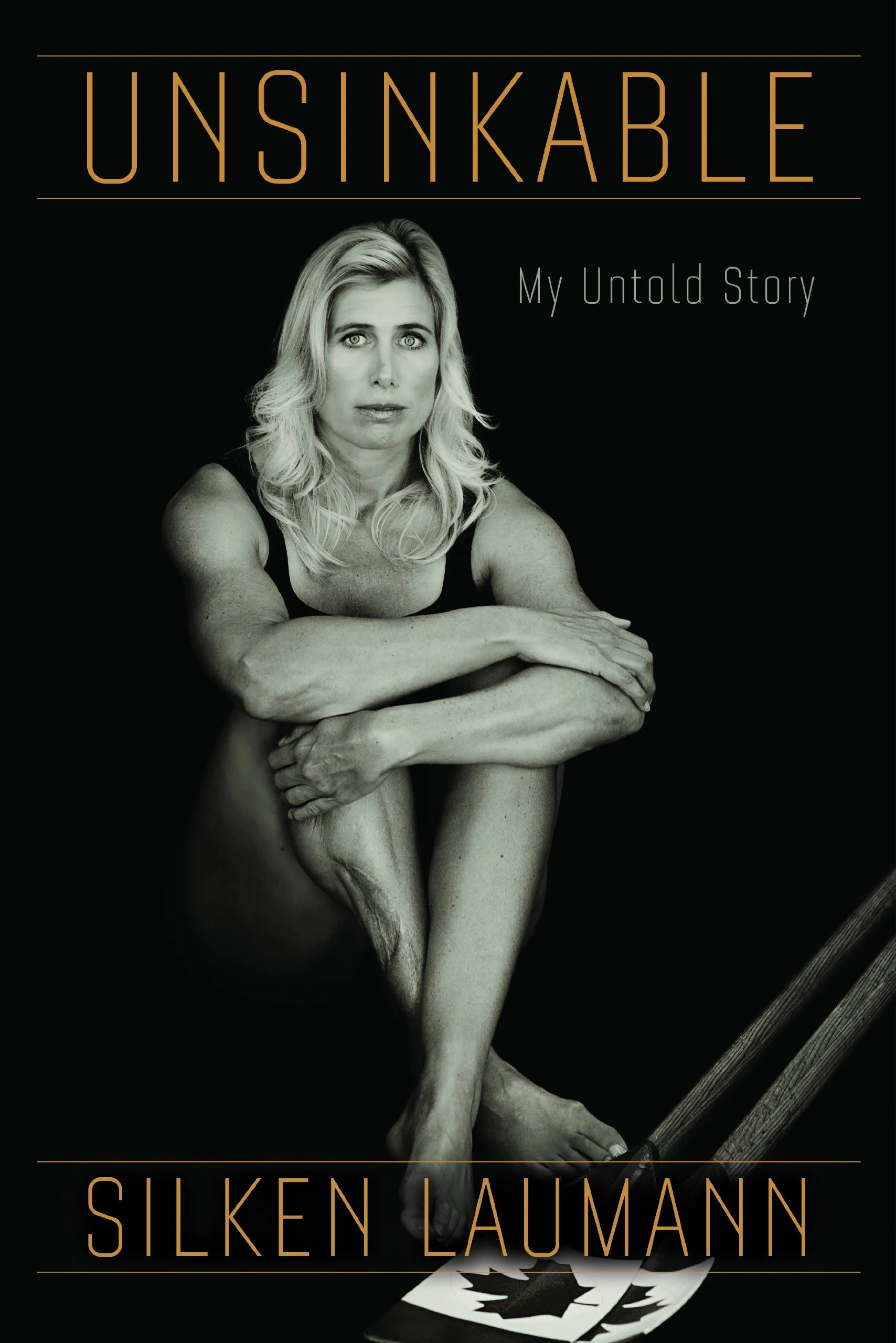
Silken Laumann
Olympic medallist, bestselling author of Unsinkable, and host of the Inflection Time podcast. Keynote speaker on resilience, and founder of the Unsinkable mental health platform.
This episode is supported by GoodLife Fitness and Ventum Financial .
One story, once a week, from someone who has been through it.
A short letter about a moment that changed someone’s life, what it taught them, and a question you might carry into your own week. No course launches, no countdown timers.