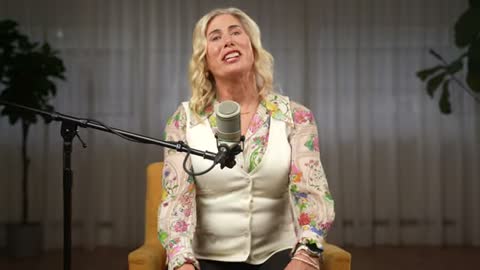
Hayley Wickenheiser: The Only Girl in the Rink
She was about nine, changing in a makeshift room in a rink lobby, when a hockey mom walked in and told her she didn’t belong on the ice.
“When I look back, I think I did a lot of hard things so that it’s not so hard now.”
Transcript
Speaker names are being checked and will appear here soon.
00:00 Meet Hayley Wickenheiser
Hayley, thank you so much for being here. Thanks for having me. You worked a shift in Emerge this morning. You drove into the city. You've probably already been to the Leafs. You're just go, go, go.
And for you to be here in person, it warms my heart. Thank you so much. Well, thanks. Clearly, I didn't get the memo about dressing up. I thought we were just going to be on audio. So here I am.
You live forever and always an athlete. Did you not know that? I know. Athletes can always get away with being in their athletic gear. I mean, if it's like if the chef comes, I just interviewed Chef Joe Friday not long ago. And he came up in his, you know, white little chef thing.
Perfect. Yeah. So it's all good. Yeah. If I'm not in scrubs, I'm kind of in something like this most days. So it makes for a very, probably very efficient wardrobe.
You don't have to spend gobs of money on designer clothes. It's actually the tracksuit to the scrubs. It's great. Yeah. So one benefit of going into medicine, you still have a uniform. You still have a uniform.
Thank God. Yeah. I have this really beautiful memory of you. And I, you won't remember because it was so long ago, but 2010 Olympics, such a great Olympics. Canada won the gold on Canadian soil.
And my little girl was there. I remember that. Do you remember this? Yeah. With her braces and her glasses, you know. I remember I was so excited to meet Silken Laumann when it was so cool for me.
So I remember that moment, like very vividly. That was a great Olympics. Was that the first moment that we met? I think like actually saying hello. I mean, I had always admired you from afar. And, but I don't think we had really met before then.
I remember you came up and said hi and had your daughter. Well, I mean, she has that. She still has that photo. She's now, you know, 24 years old, rode. We were talking about our kids earlier. Yeah.
Before we got on air here and we were talking about how, you know, sometimes when you have parents that were such athletes, you go the other way. But both my kids actually did row for a little while. And my daughter ended up being very strong in academics and went to Harvard. And that was kind of her dream come true. But she really held that as a special memory.
And I held it as a really special memory.
02:15 Over the Boards, and an intensity they share
And you probably know that when you do what you did in sport for the reasons that you did, for the love of the sport, for the desire, for the passion. And that came through so clearly when I read your book. And I was reading and I was like, oh my God, this, this girl, when you were a girl, had so much drive. Like you were on fire.
Yeah. Yeah. I was pretty, it was never a problem. No, no, it's called Over the Boards. And I'm thinking, yeah, and overboard, you know, like she just, and another thing that just, so, so that like, that was probably my number one thing for the book was like,
oh my gosh, like this woman is at least as intense as I was in the sport. And like, even in rowing, I was intense, like even on the national team.
I know. So it's like, you take your intensity. And that's not always easy, right? It's not always easy on it. And even in a team environment when, when you're almost more intense than anybody else on your team.
Did, was that ever a thing for you? Like on the women's team? Yeah. Well, it was, it's funny because you talk about your intensity, but I remember like watching you row with my dad and my dad would be like, look at how she could suffer. And, you know, we would know, but it was just like an admirable thing about like the, the
pain and the intensity and the drive that it takes to be the best at what you're doing. It's not a normal thing, but I don't think you can be normal in those circumstances to, to, and then try to be the best in what you're doing. So for me, I don't know, it was like individual sport, but in a team sport, you had to really check that at times. So I was always driven and intense and I could take it too far at times, you know, where I
would either take a dumb penalty or my team is to like calm down or whatever it would be. And at a younger age, I was not as good at channeling that energy. And as I became an older athlete, I became much better at like channeling that into productive energy. And then also learning how to like relax at the same time that I could actually help performance. You didn't have to be like 10 out of 10 fired up all the time.
10 out of 10. That's exactly like, yeah. I just remember never wanting to be beaten in anything. And I just got that sense like you were not going to let anybody beat you kind of ever. Is that true? It's true.
Yeah. I didn't want to lose pretty much anything.
04:40 Proving them wrong, with a target on her back
Yeah. Yeah. I think that part of it was as a female and male dominated sport, it was always like, I have to prove you wrong. Like someone's always telling you, you don't belong here, go somewhere else, do something else.
And it's like, well, I'll show you, I'll prove you. So when I'm not in my playing field, I'm actually a very calm person pretty late back. As soon as I stepped into that world, it was like, look out. You know, I'm not a hockey person. I've admitted this to you a couple of times. It's not that I don't love hockey.
I just haven't been exposed to it that much. I don't know that much about the game. And but your your fire, your excellence was so apparent.
But I don't think I knew when I was reading your book, I didn't know how physical hockey was. But also when you played with the boys, like it seemed like you became a target. Oh, yeah. Oh, yeah. And I gotta tell you that that surprised me.
I guess I just assumed that there would be more respect, not let's nail Hayley. Yeah. Well, yeah. No, at that time, like as a little girl. So between like five and 12 years old, you were sort of a body to fill a team in a small town.
Yes. Shaunavon, where I came from in Saskatchewan. And then as I got older, things got. But you were the only girl. I was most of the time the only girl. Yes.
Yeah. And then I remember I was mid to triple A. So 15 years old. And I I made the team and then partway into the season, the coach kept me just because I was a girl. And he said, you know, I'm not I can't handle having a girl on the team.
He was very honest. But as I got older than I played professional men's hockey in Europe, I started to realize every time I stepped on the ice, I was going to have a target on my back. And so many times my coaches would say, OK, watch out for number 10 and number 12. They're going to try and get you today. Or you always knew it was one or two players from the other team that were sort of out to
out to get you. So I definitely I definitely played with a bit of a chip on my shoulder and a target on my back. Yeah. And I knew that that came with the territory. And yeah, I think that's just you know, it felt like you know it intellectually.
But like like how did it feel? Like did you I mean, did you cry? Like did you yell? Did you like something hits you? That would be my reaction. I think I would hit back.
Yeah. So I definitely wasn't going to wither and cry. That that was not me. My my reaction was my dad would always say show them on the scoreboard. So put the puck in the net. That's what I could do.
Well, score, prove them wrong that way. And then I could take it for so long. And then I remember one time I was playing professional men's hockey in Sweden. I was taking hit after hit and I had finally had enough. There was a final game this season and I just I lost it on the sky. I got kicked out of the game and I went and I went and I went and I got to the room.
Yeah. I ripped all my equipment off. I threw it across the room. I was like I just had had enough of that type of abuse that I had to take. But but for the most part, it was it was I'll show you by putting the puck in the net. I mean, part of obviously the physicality I rode, we had our lanes.
We didn't hit each other. I mean, I actually did manage to make rowing a physical sport by being hit by another boat. But generally, we already stayed in our lanes. But I mean, hockey obviously is physical. You get used to being hit. I mean, I hear hockey players talking about it all the time.
But I think it's like that idea that you're a target. And so not only are you a woman doing something totally new, you're you're you're playing in a professional league. You're, you know, paving a way. And is that why you were a target, do you think? Because guys didn't want you there.
They didn't want you to see that, you know, a woman could play their game and on their level. Yeah, for sure. And at the time that I played, no one had ever done it before at the level that I was doing it at. And then for a woman to play professional men's hockey in Finland, where I started in Sweden, and I was playing at, you know, the second highest level there. Or they thought that that looked bad on the guys.
But this guy should be so much better than women, like miles and miles better. Right. And it was implausible to them that a woman of your ability who would be a world champion, Olympic champion, could play in their, you know, B League. Yeah. Yeah.
Yeah. Pretty much. Yeah. Pretty much. Yeah. And, you know, I think even could have played at the higher levels.
There was always a given you that opportunity, but the opportunity wasn't there for you. Yeah.
09:08 Training with the men, and the teammates who minded
Yeah. I can't help but reflecting. I mean, we were active. You said you watched me when you were younger. So you're obviously younger than me, but I was active at the Olympic level till 1996. And I did train with the men.
I knew that to get to that next level, I had to go with people that were faster than me. Yeah. And I also was coached by the men's coach. And I had a very opposite experience than you. I feel like, I mean, yeah, they told me to where to go a few times, you know, there was a bit of that. But mostly they were very accepting.
But I think there are two things. I wasn't in the boat with them. Oh, okay. Yeah. So I was a single sculler. I was trying to beat them.
Right. And I did beat some of the guys in the single, you know, that weren't as capable as me and not as skilled as me. Physically, they were stronger, but they weren't as skilled. Mm-hmm. But I also think that my coach set the tone. You know, you got to respect this woman.
You got to give her some space and all those things. But I had a hard time with the woman. Yes. I felt a lot of resentment on their behalf towards the fact that I made the decision to row with the men. And that automatically meant that I didn't respect them in their mind. Oh, I had the same thing.
I totally understand that. I had the same thing when I went overseas. You know, a lot of my teammates, they did not like them at all, you know, that I did that. And they were quite vocal about it. But for me, it was like, well, I'm going to do whatever it takes to get out of my comfort zone and push myself to the next level. Professional hockey doesn't exist.
We don't play enough games for what I would like to do. And this is the path that I think will make me better. So when I come back to the national team, I'll push everyone else. Yeah. But yes, very similar, very similar reaction. Well, and then you have to come back.
I never had to come back and play with them, right? Because like, I was in the single. But I think we share that kind of pursuit of getting better, whatever it takes, even if it's unconventional. For you, it was going to a team in Sweden, playing with the guys at a time where, I mean, I remember, you know, in grade school, a girl, Wendy, who I went to school with in grade three, and she played hockey. And I was like, why would a girl play hockey? Like, like, it was just such, you know, and I'm not much older than you, right?
And it was just like, that is so odd. That's so different, you know?
11:38 A girl with a bag and a stick
And now to think of where the women's game has come, you've been such a big part of that, that, you know, the girls, little girls in Canada now dream of being you, and they dream of making the national team. Like, do you feel some, do you feel a little bit of pride about that? I do. I always say to people that the thing that I'm most proud of when I look back is that, like, a little girl can go into any rink in this country with a bag and a stick, and nobody's looking twice. They're just like, oh, yeah, there's a girl playing hockey, like we've seen hundreds today. And when I, back when I play, or when I started, and the women that played before me, it was a little different experience.
You'd hide in the bathroom or the boiler room, put your feet up on the stall. Hopefully no one would know who the girl was. I cut my hair really short so I looked like a boy, so they couldn't figure it out. Yeah, it wouldn't work, but okay.
And, you know, run through the lobby quickly so I could avoid the harassment of the barren until I got to the dressing room with the boys because I'd have to change.
12:34 Harassed by hockey parents as a child
Stop. Stop for a second. The harassment of the parents. Mm-hmm. Yeah. So you're a little girl. Mm-hmm.
You're like a little girl. Yeah, I'm little. And you got parents harassing you. Oh, yeah. Yeah. Holy shit.
Yeah, when I look like that, yeah, it was crazy. How do you deal with that? I remember one small town in Saskatchewan, East End Saskatchewan, we were playing. I was about nine and the dressing room renovations were going on. So they had a mock room in the lobby and they had no roof on them, just the walls. And they put me in there to change because it was the only place.
Got to put her somewhere. Yep. And one of the moms knocked on the door, walked right in and said, you stay away from my son on the ice. You don't belong out there. And I just, I don't know, something came over me and I just turned and deadpan said to her, like, well, if he could skate, then maybe he could actually keep up. And that was sort of my way of, like, coping.
It'd put the wall up. It'd be all tough. But I faced that quite a bit. And it was always parents from the other teens. It was never, rarely, like, the boys wouldn't yak. They'd just try to come after you.
But as I got older, then it transitioned more on the ice. But, yeah, if I, when I look back, I'm like, oh, like, no child should have had to go through what I did to play. Yeah, I'm actually, yeah, I'm really sorry you had to go through that. Like, I know you're a full grown adult now and, you know, but that is really hard. It's hard. Yeah.
You know, it is. It sucks. But at the same time, I wouldn't, I don't know if I'd change it. Maybe I would. But, like, I feel like I really developed, like, a lot of resiliency and the ability to cope and get through hard things. Yeah, because actually that was abusive, what happened to you.
Oh, for sure. And, well, like, that changes you. I mean, that was, like, today we have memes for it, right? We call, we say abuse. We say trauma. We say PTSD.
We have all these different ways of describing what an experience in childhood that does that difficult is. But in those days, well, it sounds like you just put your head down and you just kept going because you had an idea of what you wanted to do.
14:36 Two dreams, and women’s hockey in the Olympics
Yeah. No one was going to stop me. I'm going to. Initially, that time was I'm playing for the Edmonton Oilers and winning a Stanley Cup. And simultaneously, I was trying to go to Harvard Medical School. Those are my two dreams, you know.
Yeah. Okay. Okay. And then, obviously, it changed. But I did have. Well, because there was no women's national team playing at the Olympics at that time when you first started, right?
Like, that was something that you helped create. Yeah. It came, like, I remember when they announced that I was 12 years old at a hockey school in Osoyoos, BC. My mom came running in and said, you'll never believe women's hockey is finally in the Olympics. And I was like, oh, I have a place to go, you know. That was like, okay, I'm 12, but I'm going there.
And I find that extraordinary that you had such a strong vision of where you wanted to go before there was a place for you. I mean, that is a true trailblazer. Like, literally, the definition of a trailblazer. You're creating a path that has not been walked before. Wow. I would say that's probably fair, yeah.
When I look back, I think I did a lot of hard things so that it's not so hard now. But I didn't do it with the intention of doing that. I just did it because I wanted to do it. And I totally get that, too. Like, I think, in a way, as athletes, you know, we're somewhat selfish in our pursuit, right? Like, you want to do this.
And you had that fire and you were going to do it. It's more like when you look back, right? And you think, wow.
16:04 The women who came before her
True. And I also think, because you were the first generation, I think a lot about the women that came before me. Me, too. Yeah. Yeah, who made it? So who were the women who came before you who kind of made it a little, I wouldn't say there was anything easy about your path, but a little bit easier?
Yeah, like I think about the Edmonton Chimos back in the day. So Shirley Cameron, Don McGuire, Angela James was my first centerman. My first year, I was 15 years old. She was the star player on the national team at the time. So she was sort of that second generation that came. And then I was sort of mentored by players like Stacey Wilson and France St-Louis, Margot Page, that really helped me.
These were women at that time that they had, they also had full-time jobs. And so, yeah, France was a teacher. Yeah. Stacey was a teacher. And, you know, they're doing their own things. And then they were training at night.
Well, there were no professional women's coaches back then, right? Yeah. I mean, that's really, really recent. Yeah. Women got paid, or men, to coach women's teams, women's hockey. And rowing's not much further ahead.
Right. Yeah. So I think all of our amateur sports in Canada were in the same boat. And, you know, whether it was coaching or as players, too. Like these women, they'd be playing, they'd be working a full-time job training at night. And then with the national team, I remember France St-Louis, they gave her an ultimatum in the 98 Olympics.
You either quit your teaching job or go to the Olympics. There was no, like, leave of absence. It was. Yeah. So you had to get it. It was very high stakes.
They had to either give their career that was actually going to pay the bills for longer term than two years or whatever. That's right. The Olympic thing was. Yeah.
17:39 Sixteen years to a degree, then medical school
You had some consecutive, like you talk about, you wanted to go to Harvard Medical School. Yeah. So you always had more than one dream at the same time. Now that's been a long. Yeah. And congratulations.
You became a doctor. I mean, like, oh, my God. Like, what a journey. That's like 16 years to finish your undergraduate. Is that true? That's true.
Yeah. Was it your undergraduate or did you do your master's in there? You know, 16 years to get my undergrad. And then I did my master's and went into med school kind of right after that. But you didn't get into med school right away. No.
I applied a couple of two times. Yeah. And my second time I got in. Can you imagine? They did not let Hayley Wickenheiser into med school the first time. Yeah.
Yeah. It was kind of funny. It was a, but I'll say just technicality. But anyways, I did not get in. And I tell people all the time, just don't give up. Like, you know, really on anything.
Like, I knew I was going to get in somewhere. And I just kept applying. Yeah. You know, it wasn't my grade. Everybody has great grades. It's just on a rapture, right?
Yeah. But it's a huge accomplishment. Yeah. And not only just getting into med school, but like, you know, in your book, you talk about because you couldn't sleep very well. You had a, I almost sound like you had a sleep disorder for a while when you were playing hockey.
And so you go into the emergency room because one of your friends was a doc there and just watch the surgeries. Yeah. I kind of like learn by watching. I did. Yeah.
I could. Well, after games, I could never sleep for a couple hours because you're just so wired and the games don't finish till 1030 at night. Right. So it's like one o'clock in the morning before I'm able to relax enough to sleep. So my friend worked at the Foothills Hospital in Calgary and she says, you know, why don't
you come in and start shadowing? Because I was finishing my master's degree. So I went in many, many nights and I would just be like a fly on the wall in the trauma bay when traumas would come in or watch cases. And I did it for several years, actually, towards the end of my career. And I was like, OK, this is this is what I want to do.
I really like emergency medicine. And and I do. I, you know, was in there today. I worked a half a shift this morning and I worked all weekend. And I still say to myself, like, I really enjoy it. OK, so do people just like pee themselves when Dr.
Hayley Wickenheiser comes over to treat their broken ankle? Like, are they just like, you know, not even able to do they recognize you? I mean, you got your scrubs on, you know. Well, in COVID, it was OK because, you know, you've got the gown, you've got everything on. You're not recognizable, the mask and everything.
And now I don't really wear a mask unless it's indicated. You have a lot of lapses with patients if they recognize you. And I find it mostly works in my favor because I can build a rapport with people about something they know about me. Yeah. Yeah.
You know, initially, I would always say, don't worry, you're going to see a better doctor than me when I was a resident or a med student. You know, you're really like insecure about what you're doing. And I still am. There's still so much to learn. But I feel like as days go by, I feel more confident that I can, you know, manage most
things or know what I need help for.
20:41 Doubt, an ulcer at 15 and a night off
There was a time in my rowing career, very clear to me, in 1993 and going into 1994, where I had a lot of losses. So I double false started at the World Championships. I pretty well, in 94, was kind of favored to win. Then I went to the World Championships. So I double false started, got eliminated from the competition.
Totally was devastating. Yeah. Then I decided to go to the Pan American Games to have like a positive, fun experience. And then I had a cold. I took Benadryl. Benadryl was like the wrong kind of Benadryl.
I mean, I think I really helped a lot of athletes after that because I remember drug testing totally changing. We even got cold medicine off the endless and everything. But I and my teammates lost a gold medal and I lost all my confidence. And I wanted, you know, I wanted to quit. I just felt like I couldn't get on top of the doubt.
You know, and finally. At the World Championships, like almost a year later, I just got so pissed off with myself. I got so pissed off with feeling sorry for myself that I read that I raced, I think, out of anger and frustration. And and then I like won a silver medal and I was back in the game. And I tell you, that was that was probably my life's strongest lesson.
And then I would never, ever feed fear the way that I did in that year.
So I'm wondering. Hayley Wickenheiser. Was there ever a time like that for you where you just thought, I don't know, I just don't know if I want to keep doing this?
Um, I have to say no in terms of like keep doing it. But there was lots and lots of highs and lows through through my career. I remember when I was 15, I was playing Midget AAA in Calgary or Bantam AAA actually. And my I was it was really a hard season because I was a target. And my mom and came to me one day and said, are you sure you want to keep doing this? Like it's getting really hard.
And I was like, no, no, no, no, no. And then I actually were getting hard for them to watch. It was hard for getting hit and hit again. Yeah. And just the struggle. But I actually developed like an ulcer during that year.
I remember one night. At 15. Yeah. When I turned to my dad and I said, I just can't. I can't go to the rink tonight. I just I just can't do it.
Like I physically can't go. And my dad is like, that's OK. Let's just stay home and watch movies. So I actually missed the game. And I just remember like the relief of just being able to lay on the couch and not do anything of just because of how much it took, the energy it took just to get there and get through the games. And it was the buildup was never when I was on the ice.
It was everything around it. Yeah. So I had lots of moments like that, but never to the point of of quitting. I think it was just like it was always this prove you wrong that I had inside of me that that I was like, no, I'll just prove you wrong. I'll get through it. But there was lots of times like training when it got hard and you're just like, you know, I shouldn't you know, am I going to keep playing?
Should I go another season? That kind of thing. But I never really hit like a wall like like you did. I probably hit it more inside medicine, to be quite honest. Yeah. Where I was I'd wake up in the middle.
I remember waking up in the middle of night of a 26 hour OB shift and pagers going off for the 10th time at three in the morning. And I just threw the pager across the room and I was like, deliver your own damn baby. Like I can't I can't do it anymore. You know, I did. I would have like moments of just physical exhaustion. Sleeped up.
Yeah. And just like constant fatigue and thinking like, what the hell did I get myself into? Like, why am I doing this? I don't have to do this. Yeah. So that kind of thing.
But yeah. Yeah. I mean, I think doubt, you know, it is a natural thing. But I think a lot of people think Olympic athletes, people who achieve the best in the world, like don't have those moments. So thank you for reminding us that we do. Yeah.
It's a it's a struggle. You need to get a pager across the room. There's no end to it when you're a doctor. And yeah, like the thing that really stood out to me as I, you know, I obviously know you and I know a little bit about your hockey, not as much as every other Canadian. But it was just like your willingness to do things that other people wouldn't do. Right.
Like like obviously starting from when you're young, playing with the boys, not only because you had the ability, but you also have the guts to say this is, you know, this is what I want to do. This is what I need to do. Going to a men's team. And also, you know, staying up all night to, you know, to watch emergency surgeries.
I wonder, you know, would that be advice that you'd give to other people like in terms or do you think that's just like, like, would you tell other people to do that kind of stuff? Or are you hoping it's going to be a little easier for other people?
Do not do what I did or do. I read your book, you know, and it does seem like, oh, yeah, I do this. And I'm thinking, I don't think many people are going to do that, but they might not give up on their dreams. Yeah. You know, I think the thing with me is that I was always willing to do hard things to get to where I wanted to go. I'm very comfortable with being uncomfortable.
So that's something like in medicine, for example, I come across a lot of younger students that I went through med school with and they'd get put into uncomfortable positions and they'd just shy away. Whereas I would tell myself, like, anytime someone asks me if I want to do it, I would say, no, but if you show me, I'll try. And because I was so comfortable as an athlete just failing all the time. You're very coachable. Yeah, exactly. Yeah, you're totally coachable.
So I think from that regard, you know, I suppose as I've gotten older, like, not everything needs to be a struggle. Not everything needs to be like, and I'm done, like, striving for things. These were things that I legitimately and genuinely wanted to do since I was a kid and I've lived my dream of doing it. And now I'm just doing, you know.
26:31 Life outside the pressure cooker
I think that's a very powerful point because life transitions, right? Yeah. And the intensity that we have as an athlete, of course, that's always going to be part of our DNA and our character and maybe our chemistry. I don't know how it all goes down, but right. But in order to be happy, right? Yeah.
So you've got to draw from different stuff for trade and, like, taking that kind of intensity and that excellence and that drive. Yeah, sure. Applying it to medicine, of course. But how were you able to make that transition to, like, dialing it down a little bit in terms of maybe finding a bit more about something? You had a baby, by the way. I'm going to just throw this in.
You adopted this beautiful little boy, Noah. Yeah. When he was only a few months old. You were 21 years old. So that's a whole other conversation. But, I mean, I think it speaks to your willingness to not shy away from hard things.
Yeah. To be learning and growing while doing a whole bunch of things at once. But, like, back to this idea of intensity. Now you're shifting. So where do you find some balance now? Well, I just enjoy that life doesn't have to be not living in the pressure cooker.
Like, the pressure. So I always say to people, you probably feel this way. Maybe you don't. But nothing will ever be as much pressure as trying to win in total. Total. Right.
Totally. Like nothing. Yeah. Like a code blue, a traumatic something in the emerg. It just doesn't. It could be more important.
Some things are more important. But not as pressure. Yeah. Yeah. But it's, you know, there's a different, yeah, reality and importance to things. But the pressure that you carry every day.
And I see this a lot in the players I work with in the NHL. They're solely and entirely miserable when they're competing. And it's because the anxiety they feel every single day that they have to show up and be absolutely at their best. And when they retire, they change and become a completely different person. And they go, oh my gosh, I'm so happy it's over.
And I remember someone telling me, like, you're going to be so relaxed when you retire. It's going to be great. You're, you know, like life's going to get so much better for you. And, and I was like, and I can say it's true. I mean, I love to compete and I miss the big stage and I always will. But on the other side, like I train because I want to.
I do things now because I want to, not because I had that pressure to perform. And yes, medicine and it's intense, but it's not intense the way it was for me. So I did it a little differently. It's something I enjoy. I do things because I enjoyed them. Yeah, I think I, first of all, I do feel exactly like you in terms of the pressure of sitting
in an Olympic starting gates, knowing that you got seven minutes and you've trained for, I don't know, five, 10, 15 years and you could screw up or you could win an Olympic gold medal. Like it's, it's just, there's just nothing like it. And being able to breathe, manage, get yourself just amped up enough, but not too amped up and all the, all of those things. You know, I can speak in front of 5,000 people.
Of course I'm nervous, but nothing's going to kind of compare, you know, hosting this podcast. I've never hosted a podcast before, but somehow I just think, you know, it'll just unfold. It'll, it'll work out. I'll be prepared, you know, you know, I'll do what I can, but I don't have to. Also, I think there's this, there's this transition for me that happened where I started to realize that my perfectionism was starting to limit my output.
Yeah. Where my need to be so good at something right out of the gates was making me not do stuff. And I, and I think I still struggle a little bit with that. Like I should have done this podcast a couple of years ago, but I wanted to, I don't know. I just had to wait until I got so pissed off with myself. Right.
Like I finally did it. Right. And I, maybe, I mean, we're all sorts of different personalities and there's all sorts of reasons, but I think this idea of like, that life can get better. Yeah. Um, I'm turning 60 this year.
And you look amazing. Thank you. I was waiting for that compliment. Did you hear that bus? God, I don't know. Yeah.
No, I didn't like you. And I, and I think, gosh, this, this could be the most incredible decade in a way, because a lot of the insecurities, um, and I don't sense that you had the same kind of insecurities I had. I think I had a lot of insecurities about being enough, being good enough, being capable, imposter, you know, yeah.
Stuff, especially in my professional career. But a lot of that just is behind me now. And now I feel like you're younger than me, but I do feel like we're kind of in the same place where it's like, I just want to do stuff that matters to me. Yeah. Yeah.
That I, that I'm excited about. I'm interested in and what a beautiful place to be. And you deserve it. Like you, you deserve it. You have worked so hard for so long. You've represented Canada and, and you've changed the lives of like millions of people,
really. And so, I mean, you're still being ambitious. You still work the emergency room, but you also deserve some peace and some contentment. Oh, for sure. Yeah.
31:46 Suck less every day
You know, my motto now, it's funny in medicine is suck less every day, you know, because really, you know, I went from being this veteran and this perfection as an athlete, you know, chasing perfection as an athlete, which never exists, right. Two complete neophyte, a rookie in medicine. And what I like about medicine is you can't possibly know it all. And, and you're constantly learning every day.
So I actually, for the first time in my life was so okay to be just average. Just let me be good enough to just get through it and be average because I know every day I'll figure it out. I'll suck a little bit less the next day, but it's going to be, it's, it's enough. It's okay. I don't mean that would be in a great approach in medicine, not to suck less.
Yeah. I mean, I hope you don't suck suck, but like, you know, but you're generally not in business. You're learning, but also that that's, that's, you're going to be the kind of doctor who says, oh, I need another opinion. You're going to be in the kind of doctor who says like, can somebody help me? And I, and I think ego, yeah.
Ego gets in the way, not just for doctors, but for all of us, right. Where like the power of the question, the power of asking for help, you know, it, it is so transforming and it's, it's something that a lot of people have a hard time doing. They do. And you know what I would say is the thing that I appreciate from my athletic career is that I failed and so much, right?
Like you're never, someone skate faster, shoot harder, lift more weights. Like you never can do enough or be perfect. Like, but I was okay with failure because that was how I was going to get better. And what I noticed sort of in the real world outside of the bubble is that a lot of people are afraid to do that. And I'm, I'm just not like, I'm not afraid to like mess up because now in medicine, for
example, like number one, I'm going to be safe. Number two, I'm going to call for help. Number three, I don't know anything or much. So that is what it is. And I think a lot of people get in trouble when they try to put on that persona. But I think athletes, you just get comfortable with just, well, I'll pick myself.
You can ask the stupid question, right? Like you can say, actually, how many times have I sat around a board meeting and asked a stupid question and then three other people say, oh my God, I had the same question, right? Like there isn't a stupid question because literally this idea that so many of us, and I see it too in the working world a lot and on boards where people are faking it rather than just asking questions or saying, this doesn't make sense to me.
I don't understand. I think if more of us were doing that, it would be a better world. But you know, it would be, yeah, you'd have more real dialogue and you'd probably get to the answer faster, you know.
34:22 The hit in Sweden, and a dark few weeks
There's this one part of your book that really stood out to me when you were talking about you came into playing in Sweden and you had a smaller injury. I think it was your knee. My knee. Yeah, your knee. Yes.
And so, but you decided you were going to give your knee 10 days to heal. Me? You have 10 days to heal. That is such an athlete thing to do. Okay. 10 days, not a day more.
Okay. And so after 10 days was over, you got on the ring. You were not ready. Yeah. And you got hit. Yeah.
And it was an asshole of a hit, if you don't mind me saying, like, he nailed you. Killed me. Yes, he did. Yeah. I can't remember it. You went into your change room and you threw up.
Yeah. I had my head turned. I turned like this. It's called a suicide pass. I got from my defenseman, which I should have just let the puck go and look. But I didn't because I wasn't ready.
I hadn't played in several weeks. And then he was huge and he killed me. He just ran me over. And I didn't get knocked out, but I didn't know where I was for a second. I remember the trainer grabbing the back of my pants because it happened right at the boards. And he lifted me into the bench and sat me on the bench.
And then all the guys on the team just looked at me like, oh, my God. Like, they knew it was bad. And I'm like, nope, I'm fine. You know, I'm really. It's okay because it needs, you know, really, I did not want to. I was just injured.
I just missed a bunch of time. I am not going to be injured again. Because they're going to say she can't handle it or whatever. And I got injured actually playing with the women's national team, not even with women. That's how I hurt. Yeah.
So anyway, yeah, I went into the room. I threw up. I was concussed for sure. And then I played through it. I trained through it, which is not something I'm proud of. But I had, I was the only breadwinner at the time.
I had a contract. I felt like I didn't have a choice. I was already injured. Yeah. And the breadwinner is that you were feeling to prove yourself because you were the only woman. And then you talk about, and of course, I'm interested in this because I'm interested in mental health.
And you talk about having an experience with depression for the first time, I think, after the concussion. Is that correct? Well, I went into like a bit of like what we call like an Olympic hangover. After the 98 Olympics funk. Yeah, we lost because we lost in 98. Got into silver.
I don't know if I was like clinically depressed, but I was certainly in a funk. And so I think that was the first time I ever, because I had no perspective. What I was, was who I was as an athlete, was who I was as a person. I couldn't separate the two. Yeah. 19 year old.
And that was 98, did you say? Yeah. Yeah. I mean, you're younger. Younger. But, but after that hit, that was a different, that was like, I couldn't sleep.
I dropped my son off at school in the morning. I'd come home. I would sit in the dark, drink a lot of coffee to get myself going. Practice was later in the afternoon. I would go to practice, train, pick my son up from school, get him, take it to get him sort of organized to bed.
And then I would just sort of like, you know, the, we call it the holy shit handles on the car. Or just hold on to the, yeah, for several weeks and, and hoping that it would get better day after day. And so it was a dark place to be at that time. And that, like, because not everybody experiences mental illness, you know, we all have mental
health. That's what my philosophy is. I mean, sometimes we're on different parts of the spectrum and then sometimes we slip into mental illness. It can be an injury. It can be life circumstances.
It can be chemistry. Who knows, right? We, we, we know it's really complex. Yes. But I think if you haven't experienced some of that, it is sometimes hard to really empathize with how, how crappy it can feel.
And do you think having that concussion, having, you know, the, the post Olympic stuff has, has made you understand mental illness more profoundly? I think so. I think, you know, my younger athlete self would have said, you know, you got to suck it up, get up, keep going. But I think the combination of what I experienced as an athlete, you're always in hockey, you're
often banged up. But I had a lot of teammates who went through concussions and struggled. I was going to ask about that. Yeah.
38:35 Losing Steve Montador, and checking in
And you lost a really good friend, Marty? Yeah. Steve Montador. Yeah. So Steve Montador was, played in the NHL for 12 years and the research on his brain after showed CTE, but the lead up to his death was concussions, substance abuse and personality
change. And he was literally one of my best friends. I trained with him for many years and it was a tragic ending to like a great human that we, we all kind of saw. And my, literally there was sort of an intervention plan for Steve, like five, five days after he passed, passed away.
That was sort of, we were right there, but I regret not stepping in sooner. I just didn't have the tools and the knowledge to what to do. Yeah. But now I think with my medical training, if I go through that, if I went through that scenario again, I would have been much more confident to step in sooner, but you just don't know what you don't know.
Some, you don't know what you don't know. And I think, you know, for some of our listeners who might have somebody in their life, who's in a deep depression, who may be having suicidal thoughts, you know, how can you help? Like, how can a person help? Not a medical doctor, but a friend. And the best thing is, is to reach out.
I think that, you know, we often wonder with, with friends or family that are, that are struggling in the withdrawal, like, oh, maybe we should leave them be. But I mind it's the complete opposite, you know, often just checking in on someone. And I think if you're really worried, like seriously worried, you're, no one is ever going to fault you for over-calling it. Yeah.
You know, if it's, if it's, you know, calling 911 or reaching out to someone in the community and mental health, welfare check, whatever it is, there's lots of different ways.
That person, when they feel better again, I don't think would ever fault you for doing it in that moment. Yeah. It's hard. And we need to do more of that anyhow, don't we? Like checking in with each other.
And it's, it's easy to assume it's all going to be okay. Or especially with high functioning humans. And we know that a lot of high functioning humans, the flip side of that is they might experience mental health issues as well. And yeah. And we don't always think like we might have a feeling.
Yeah. Like I know I've felt that before where I just feel something's not right with somebody and then I don't act on it, you know, and yeah, that, you know, it ended with, you know, their death. But like, yeah. Afterwards I thought like, oh, I should have had the guts to just say, are you okay?
But even more though, can I drop by? Can I, you know, let's have a cup of tea together? Because one of the things I experienced, depression, it's mostly super well managed. But I would say once, maybe every 18 months, I, you know, something happens and I just start going the wrong way. I start going south.
And it's taken me years to know and to be disciplined really about reaching out. Like now I know, tell my doctor, right? You know, like I'll tell my doctor I'm struggling. Yeah. I'll call a friend and say I'm struggling and I'll tell my partner. I used to not tell my partner.
Yeah. They just all of a sudden be like, what's going on? You know, where's this coming from? Right. Yeah. So just, but I also think as our, as, as we talk more about it and I think now in hockey,
we're talking more about that correlation between all the hits and not, even if it's not concussions, but the, the, the physicality of the game sometimes and how that can be actually a trauma. And I know that we don't like using that word when it comes to sport, but you know, it's true, right? Yeah.
And you know, the more we talk about and normalize the conversation in my mind, I mean, that's one of the reasons I started Unsinkable. Yeah. Is to normalize the conversation around mental health, to talk more about it, to, to, to open people's eyes that some of the highest achievers in this country also have experienced mental illness.
For sure. Yeah. Well, it's, it's like in hockey, we call it the micro hits. It's the micro, it's not the big hit that it can often lead to concussion symptoms. It's the little ones that you don't see where players will report symptoms. So it's the same thing in life.
It's, it's the micro traumas of the everyday that people can experience. And you just don't know sometimes which one is going to set someone over the edge. And so, you know, to your point of being able to reach out and check in on, on friends and family and loved ones, it's, it's a hard thing, but we know that, you know, we're talking about it more in, in, in sport and in the NHL, which is this tough male dominated world. What I see quite often is players aren't afraid to say, like, I think I'm, I've, I've got a
concussion. I don't feel well. I see it all the time. And when they're afraid or they're not, they're not afraid. They're not, they're not, they're less afraid to step up and say, Hey, something's going on.
So it's much more open environment than it was 20 years ago. Yeah. The new, the new generation has tuned in.
43:32 Caring for players’ mental health
Like, yeah, I'm thinking about your story and your journey and like, how did you ever like shift gears from, you know, the woman, the young girl really, who was being, uh, taunted by the parents and having to have that thick skin and like to then getting to the place. Now you're working with these, really these young athletes, right. As the AGM of the Maple Leafs. I mean, these guys are pretty young.
Yeah. And you know, how do you show up and how did you make that transition to being more open and vulnerable? Well, I think as an athlete, I was crazy. I like, I just, I was so intense. I can't imagine other people training and, you know, going about their life the way that
I did in the, like just the intensity, the way that I trained and prepared. And, and now I think I've almost gone the other way where I think I'm, I'm at times too, too soft because I'm like, no one would ever suffer. You know, they shouldn't suffer the way that I did in, in that sense. So, you know, I have a 24 year old son. Most of these players are between 19 and, you know, late twenties that I deal with.
And so I'm looking at my son, I'll like looking at them seeing my son. And, and so it's just a different lens where I think, and I'm older now and I see things a little bit different. So I sometimes have to find myself actually pushing them because I've gone a little bit the other way. But I'm really careful about their mental health and I want to make it a safe space where they
feel. And I have had players come and say, I need help, A, B, C, D, E. And that's always, that's like the greatest compliment because you've created an environment where they feel comfortable that they could say it in an environment where that's not always the case. So here's a question.
Do you think you can win? Do you think you can be the best in the world? And still pay attention to athletes' mental health, still keep them safe, still nurture a positive mental health environment? Yes, you can. I think you can.
It's good to hear. Yeah. I think you, I, you know, there's a quote that I use all the time is, it's one thing to be the best in the world. It's another thing to be the best for the world, but the best teams and the most highest functioning people that I know can do both.
Yeah. And I think that's what you should strive for. It does not make us soft or less intense to care about people's mental health and their wellbeing and who they are and ask how you're doing and still say, get your ass in the weight room, run faster, lift more. I'm going to push you to be your best.
It's a fine line, but you can still do both. And I think you have to, right. You have to be able to, if you create the environment and the conditions where it's people feel open to express themselves. And I think you're in a good place where you can now demand them to be at their best. I had a special relationship with my last coach, Mike Spracklen, and he was a coach of the men's
team. So, you know, to my story earlier on about joining the men's team, training with the men. And I think he was different with me. I was, because I was a single sculler. And he was, I think he was harder on the men's eight and the other teams. But I remember him telling me one day, he said to me, I'm sitting in his rental car at the San
Diego crew classic, you know, and we're, there's a rain delay and we're, you know, sitting in this like little tiny compact rental car and watching the rain sheeting down. And he's only been coaching me for a month and he, he's looks up from his coaching notes. He likes to me, he says like, are you, are you afraid? Are you, are you nervous? And I'm like, okay, what do I say?
Like, like, what's the right answer? This is like one of the greatest coaches in the world. Like, what's the right answer? So I kind of croaked a little.
And then he says to me, oh yeah, that's good. That's really good. That means that you care. Yeah. You know? And then he's like, the Romanian scared.
Yeah. You know, the German's afraid. And it's the first time I'd been rowing 10 years at this point. The first time that somebody told me it was okay to be afraid. And it was such a liberating moment because it was affirming that all of these feelings that I had, that I thought I was kind of ashamed of, you know, that I could get so nervous before a race,
that I'd be so afraid before a race. And he's telling me it's totally normal. Yeah. Yeah. And that, to me, in a way, was like the soft approach. He wasn't just telling me to suck it up, to not be afraid, to not feel my feelings.
He was saying, you can feel your feelings. You can be so terrified you can hardly swallow, which was like, I had like dry mouth, like, so I got to hardly swallow it. But you can also go out there and kick ass. Yeah. And I think he wrote that line really, really well.
And I really benefited from that softness as well as this killer, you know, training program that we were on where we were training 20 times a week. You know, I had really a lot of volume. If you were to look back, and I mean, again, I think we're in a stage of our life where there is some looking back and you think, you know, I mean, I know I do. I think, how could things have been different?
Could I have like, you know, I think sometimes about the women's team, for instance.
Could I have been more connected to the women's team? Could I have been softer in some way? You know, and I, like, the answer's kind of like, no, like, like, I could be now. But, but, you know, I know, right? I could, I could be now, right? But you, you, you're kind of like, to do what you had to do, what to do what I had to
do, you had to be who you were then. But now you're, now you're different. But if you were to look back, look at that 13 year old Hayley, who was already frick, you were already like, almost a world champion at that age. But what would you say? What would you say to her?
What advice would you give her?
People ask this.
I mean, other than like, sometimes you need to calm down, be more patient. I wouldn't give her any advice. That's good though. That's good. Sometimes you need to calm down. Yeah.
Chill out for a second. You know, take a breath. Smell the roses. Yeah, exactly. Just chill and, you know. It would have been more enjoyable, right?
Yes, probably it would have been. But I don't know. I don't know if I would have given myself any advice. Because if I, I think sometimes if I hadn't have, like you say, if I hadn't have done or been who I was, like would I have been able to get through all the crap to get to where I had to go?
Had to go. So there probably is something. I think that would be it if I gave myself any advice. But yeah. I mean, I certainly did a lot of dumb things. But it was, you know, I kind of believe in like no regrets.
You just, you know. I, I, I'm with you on that one. I think I would have told my 13 year old self. I would have just let her know it was going to be okay. Yeah, true. You know?
Yeah. Like it was all going to work out. I think I kind of knew that. I believed it in my deep unconscious self. Yeah. But like, I didn't know it.
It wasn't too much on the surface. Yeah. The last question I have for you is when I'm asking all my guests. It's, it's really about like reading for me has played a pretty fundamental role in opening up worlds for me. And, you know, I grew up in Mississauga.
I'm first generation Canadian. My parents are both German. And I remember the experience of reading my first book, which was a book about Annie Sullivan and Helen Keller. Annie Sullivan taught Helen Keller how to communicate, who was deaf and couldn't speak. And I remember that because that was really like the first book I read.
And it opened up a whole world to me. And that's what I really think about books is like a world that I might never live, that I couldn't live, whether it's, you know, 100 Years of Solitude by Gabriel Garcia Marquez, whatever it is, it's like, oh, I didn't even know this stuff. What's happening?
51:33 Man’s Search for Meaning and WickFest
So I just wonder if there's a book that you could think of that, I don't know, somehow really affected you. Yeah. Well, the one that popped in my head instantly was Viktor Frankl, Man's Search for Meaning. Oh, yeah. Yeah.
That was a pretty impactful book for me. It's still like about resilience. Yeah. Oh, just simply, you know, we can get through hard things, right? We can do hard things in life. If he could do that.
I mean, okay, so that's like totally next level thinking about living in a concentration camp with your wife. Every day, you know, you could die. Yeah. And you're seeing the absolute worst of humanity. And he would focus on the little things, right?
He would focus on his breath. He would focus on the wind. Yeah. Is this right? Is this the right book? It is the right book.
It is. You're 100%. Yeah. It's about, you know, just being present in every moment. And that no matter what happens to us on the outside, we can always control how we feel on the inside.
So it's not the circumstances that are the trajectory for our life. It's how we choose to react to them, really. And just the way like that story is just like what they survived and went through. But I think about that a lot. I think about that inside medicine, how, you know, someone's, you might look at someone and think, God's sakes, get over yourself.
It's not that bad. But to them, the biggest drama or the worst day of their life, and so you have to need everyone kind of where they're at. So I think, you know, that book is quite a, was quite a profound book that I read many years ago and right now to be very, I don't read that much because I read so much in medicine. I'm so tired of it.
But I do a lot of podcasts. I listen to a lot of podcasts. Yeah. Yeah. It's like a story. Yeah.
You know, I just want to thank you for being on. And I got to tell you, you have led such an impactful life. You really have made such a difference in the past. But you're still making a difference and you're still having such positive impact. WickFest, which is women's hockey camps that, you know, occur all over Canada, different times of the year.
That's one of the many ways that you continue to give back and kind of, you know, reach your hand out to the young hockey players and say, hey, I got, I got some stuff that might be of value for you. You bring in all sorts of people that talk to them because you're looking for the whole person, aren't you? And that's what I really saw when I read the material on WickFest is like, yeah, you're
looking at the hockey player, but you know that life, hockey ends. Yeah. And you got to develop a whole human. Yeah. And I think the best athletes, the holistic development of the athlete, the person, it all adds together, right?
You know, we know that the best athletes, not the best roar, you're the best athlete. And I think we develop, you know, in this country, we're hockey crazy, but we have to develop athletes and people and that's going to be a better hockey player. So that's my whole theory around, around WickFest. And you can check it out at WickFest. Well, I'm good to check it out.
And I've offered to come and speak to these young girls and young women and just keep doing what you're doing. It's so inspiring. I look forward to following you. And I also hope to get out for a bike ride with you. We have that same passion.
You probably take my ass, but you know, I'm not afraid. Should it be a fruit? I think I should. Oh, you're tough. I know you're tough as nails. One of my Olympic heroes.
So it's an honor to do this with you, Silken. And thank you. Thank you, Hayley. Yeah. Thanks for tuning into Inflection Time. I hope our conversation inspired you to think about inflection points in your own life.
If you enjoyed our chat, be sure to subscribe, rate, and leave a review. It really helps. Remember, every challenge is an opportunity to grow. So keep embracing those turning points. Until next time, I'm Silken Laumann, and this is Inflection Time. I'd like to thank my sponsor, Good Life Fitness, and Tall Boy Water.
A big thank you to our incredible guests for sharing their stories with us. I'd also like to thank our fabulous production team, our executive producer, Michelle Archer, our producer, Phil Kluba, and our communications director, Christine Bays. Inflection Time was created by Archer Co., acronym, and me.
As an Olympic athlete, it's not surprising. I love working out, and I love going to the gym. Strength training is so important for bone health, for metabolism. And our partner is Good Life Fitness. They are offering a seven-day pass to all of our listeners. Visit our description to access your seven-day pass.
Please meet us.
Key takeaways
- Show them on the scoreboard. When players and parents told her she didn’t belong, her dad’s advice was to answer by putting the puck in the net. Most of the time, that is what she did.
- No child should go through that. Parents from other teams harassed her when she was a little girl. She built resilience from it, and she still says no child should have to face that to play.
- Comfortable being uncomfortable. Years of failing as an athlete made her coachable in medicine. When someone asked if she wanted to try something new, her answer was: if you show me, I’ll try.
- Allowed to be average. After chasing perfection in hockey, medicine let her be a rookie. Her motto became suck less every day: be safe, call for help, keep learning.
- Reaching out sooner. After losing her friend Steve Montador, she wishes she had stepped in sooner. Check in, she says. No one will fault you for being worried.
Hayley Wickenheiser
Four-time Olympic hockey champion, Hockey Hall of Famer and emergency medicine doctor
Hayley Wickenheiser, from Shaunavon, Saskatchewan, played for Canada’s national women’s hockey team from 1994 to 2017, winning four Olympic gold medals, one silver and seven world championships. She was named an Officer of the Order of Canada in 2011 and inducted into the Hockey Hall of Fame in 2019. After hockey she completed medical school and works as an emergency medicine doctor. She founded WickFest for girls’ hockey and spent eight seasons in the Toronto Maple Leafs front office.
- Hockey Hall of Fame: 2019 inductee
- The Canadian Encyclopedia: Hayley Wickenheiser
- NHL.com: Maple Leafs name Dr. Hayley Wickenheiser senior director of player development, 2021
- The Hockey News: Maple Leafs part with Hayley Wickenheiser, 2026
-
Over the Boards
Lessons from the Ice
Lessons from her hockey career and life, organized like the three zones of a rink, covering her Olympic wins and setbacks, motherhood, and her move into medicine.
Get the book -
Gold Medal Diary
Inside the World’s Greatest Sports Event
A day-by-day account of the Vancouver 2010 Winter Olympics from the captain of Canada’s women’s hockey team, from the six-month lead-up to life in the Athletes’ Village.
Get the book
Resources 10
Research and sources behind what was said in this conversation.
- Prevalence of Maltreatment Among Canadian National Team Athletes (Willson et al., 2022) Journal of Interpersonal Violence A survey of 995 Canadian national team athletes: psychological harm and neglect were reported most, and female athletes reported more of every form of harm.
- Ice Hockey at the 1998 Winter Olympics Olympedia Nagano 1998, the first Olympics with women’s hockey. The United States won gold and Canada silver.
- Angela James, 2010 inductee Hockey Hall of Fame Hayley’s first centre on the national team. In 2010 she and Cammi Granato became the first women in the Hockey Hall of Fame.
- Canadian Guideline on Concussion in Sport Parachute Canada’s guideline for recognising a concussion and returning to sport only after medical clearance.
- Depression and neurocognitive performance after concussion among male and female high school and collegiate athletes (Kontos et al., 2012) Archives of Physical Medicine and Rehabilitation Athletes’ depression scores rose after a concussion and stayed higher through the two weeks they were followed.
- Analysis shows former NHL defenceman Steve Montador had CTE The Globe and Mail, 2015 The Canadian Sports Concussion Project in Toronto confirmed CTE in the brain of Hayley’s friend, who died at 35.
- I’m worried about someone else 9-8-8: Suicide Crisis Helpline Signs to watch for and how to start the conversation. It is always better to ask. Call or text 9-8-8.
- Role of subconcussion in repetitive mild traumatic brain injury (Bailes et al., 2013) Journal of Neurosurgery Repeated head impacts too small to cause symptoms can still change the brain, close to the “micro hits” Hayley describes.
- Man’s Search for Meaning (Viktor E. Frankl) Beacon Press The book Hayley names: Frankl’s account of the Nazi concentration camps and the will to find meaning in the worst adversity.
- WickFest wickfest.com Hayley’s girls’ hockey festival, which Silken describes as developing the whole person, not only the player.
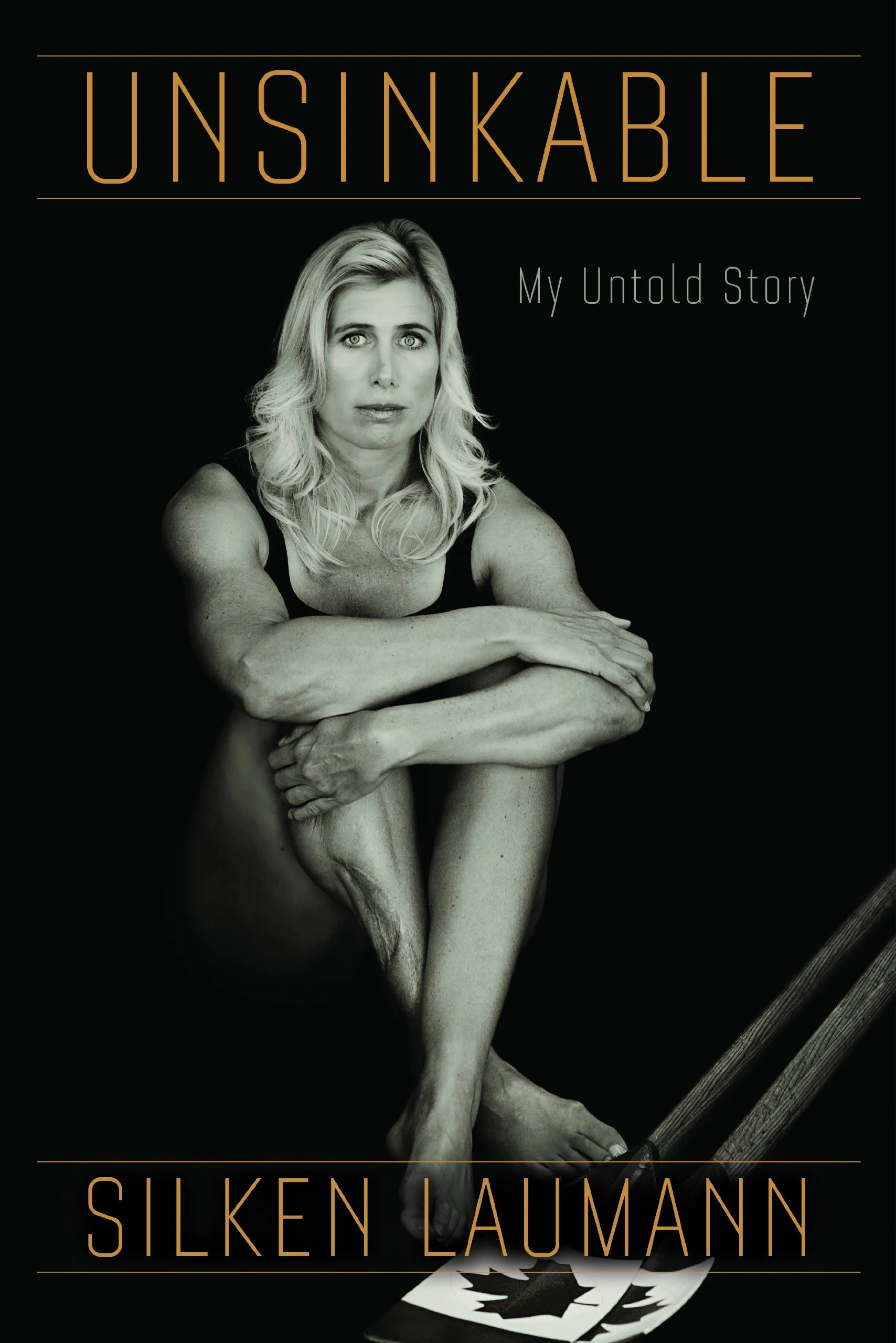
Silken Laumann
Olympic medallist, bestselling author of Unsinkable, and host of the Inflection Time podcast. Keynote speaker on resilience, and founder of the Unsinkable mental health platform.
This episode is supported by GoodLife Fitness and Tall Boy Water .
One story, once a week, from someone who has been through it.
A short letter about a moment that changed someone’s life, what it taught them, and a question you might carry into your own week. No course launches, no countdown timers.