Taylor Elgersma: After Green Bay
Taylor Elgersma went from Laurier to a contract with the Green Bay Packers, then was released. He took one night to be upset, and the next morning he went back to work.
“You have to fall in love with the process rather than the results of things.”
Transcript
Speaker names are being checked and will appear here soon.
00:00 Meet Taylor Elgersma
Welcome to Inflection Time. I'm Silken Laumann. Every life has turning points, those moments that change everything. In this podcast, I sit down with remarkable people to explore the challenges, choices, and unexpected events that shape who we are. From heartbreak to triumph, fear to clarity, these are the stories that remind us that growth isn't linear and meaning is often found in the moments we least expect. Inflection Time, uncovering the moments that make us.
In this episode of Inflection Time, I sit down with Taylor Elgersma, Vanier Cup Champion, two-time OUA Champion, MVP, and 2023 U Sports Offensive Player of the Year. After an extraordinary university football career, Taylor earned a spot at the Green Bay Packers minicamp, and he continues to chase his dream with quiet tenacity. But, you know, what stands out most isn't just his athletic talent. It's his belief in himself, in leadership, growth, and I think the power of failing. Taylor Elgersma, who's a great coach, and he's in love with the process, not the outcome. Taylor reminded me that the path to greatness rarely unfolds in a straight line. It takes humility, resilience, and the courage to keep showing up.
It's a powerful reminder that the best results often follow when we stop chasing them and start trusting the process. This is Inflection Time, uncovering the moments that make us. Thank you for joining me. Taylor Elgersma, it is so nice to have you here, and it's really nice to be interviewing an athlete. I have a lot of musicians this season, and I always feel like athletes, when they talk together, there's just an affinity. I mean, you're football.
I don't know much about football. You were just admitting you don't know that much about Roy. So let's talk, and you can tell me a little bit about, I mean, first of all, you've had an incredibly exciting year and a half. You are an amazing football player. It wasn't your first sport, right? You were first hockey player, I think, right?
That was your first sport, like every other Canadian boy? Yes, exactly.
02:36 From hockey to quarterback
So how did you find football? Yeah, I found football pretty organically. Like you said, I was a hockey player. And growing up, my goal was always to make the OHL and pursue hockey. And then when I got into high school, our high school football team needed a quarterback. And I just kind of came out there in grade 10, and I knew I could throw the football, because I always threw the football with my grandpa in the backyard.
And I started throwing it, and they fell in love with it right away. And I realized the different aspects of the quarterback position. I always enjoyed the physical nature of hockey. And football is obviously a very physical sport. But being like a quarterback, you get to really use your mind and your leadership abilities. And I fell in love with that aspect of the position.
And ever since then, I just switched over and been pursuing football. Wow. And football, it's a thinking sport. And the quarterback especially, right? Like I always say rowing. And maybe other rowers were different, but I mean, you usually don't have great hand eye coordination.
Yeah. And we like to go in a straight line. And you know, you got your race strategy. You have your... It's a physical sport, so you have to be in the pain zone a lot. Yes.
Football is both, right? Like you've got to be able to run. You've got to be able to jump. You've got to be able to hit. You've got to be able to throw, of course. Yeah.
And then there's this tactical aspect. So how do you do all of that at once?
04:06 As much film study as practice
Like how can you be thinking and then also pushing yourself so well? Okay.
You're so right. I mean, football is a huge balance of the physical and the mental. And you see that in the way that we train as well. Like we spend more time watching film and installing plays and watching defenses or just as much time doing that as we do actually practicing on the field throughout the week. And so that's one of the biggest things about football that maybe people who aren't involved
in the game don't realize is how much time goes in to studying. And, you know, especially when you get to higher up levels. I mean, when I was with the Packers, we were installing 100 and 120 plays a night in training camp. How would you break that down? Like physical versus like video and, you know, half and half? Yeah.
I think that my position specifically, football, it's very position specific sport. And so some of the, you know, O-line and D-line, those guys, they have to spend more time on the physical because, you know, there's only so many things schematically that they can do. And so it ultimately relies on, you know, who's bigger, stronger, faster and winning your matchups. But the quarterback position, you know, you have to understand what all, you know, the guys on your side of the ball are doing, but also what every single guy on the defensive side of the ball is doing
so that you understand how to best attack it. And so most of the time the quarterback position is spent trying to understand defenses, learn what we're going to go up against that week, and then try and figure out what our best plans of attacks are to kind of beat that defense. As an Olympic athlete and the founder of Unsinkable, a mental health charity, I know the power of a supportive community in reaching your physical and mental fitness goals.
That's why I love GoodLife Fitness. It's more than a gym. It's a place where you can really thrive and find connection. As a special thanks for joining today, you can experience it yourself with an exclusive seven-day pass to any GoodLife Fitness location across Canada. Visit the link in this podcast description for access.
All of my podcast guests have shared the importance of physical activity in their lives. Together, let's build a healthier and happier Canada.
06:27 The call from Green Bay
It hits me as kind of funny that we're sitting here and you're telling me about, but you're also telling our audience about football because like this would never happen in this country if we were talking about hockey, right? Yeah. Everybody understands hockey with a possible exception to me. Like, you know, and you are in some ways, well, you are.
You're a trailblazer in Canadian football in that you were invited by the Packers to play with them to try to make the team. And I mean, that was a really seminal moment, not only in your career, but in Canadian football. Can you tell me about that moment when you found out, you know, you were invited? Yeah. I think that the entire draft process was, you know, very big for me.
And I put a lot of time and effort into, you know, as soon as our, my senior season ended at Laurier attacking the draft process and putting my best foot forward. And you don't really ever know how those things are going to turn out, especially being from Canada and playing Canadian college football and knowing that. Which is totally different, right? Completely different.
And knowing that there hadn't really been guys from Canada who had gotten legitimate opportunities in the NFL many times before. And obviously there's a few exceptions here and there, but I knew it was going to be tough. And so as the draft process kind of unfolded, and then at the end of it, being able to get signed to Green Bay and know that I was going to go there and compete in training camp and get to play in the preseason.
I mean, when it happened, there was a lot of excitement. But I think as you know, like high level athletes and people who are chasing big things immediately as one thing happens, you kind of turn your eyes to the next thing. And so I didn't necessarily take a lot of time to enjoy and be super excited because I was taking my eyes on how can I make this football team and what's the next step for my career and how can I go represent myself in Canada well in the preseason.
And so, you know, I think that it will be a thing that when the journey is done and when I'm done playing football, maybe 10 years after I'm done playing football, when my career is done, I'll be able to look back and kind of reflect on it a little bit more. But still being in it right now, my mind kind of shifts to the next.
08:39 Why the big moments don’t sink in
Yeah, I mean, you're so right. And I don't know if that mindset ever, you ever totally drop it as an athlete. And I've looked back at my career and thought the same thing. Like, why didn't I savor, you know, that bronze medal? Why didn't I savor winning the world championships? And I mean, I won the world championships in 1991 in the single sculls.
And it was really like, for me, the pinnacle of, you know, what I ended up doing in sport. But I just remember like I crossed the finish line. You have that moment of elation and like, oh my God, I'm the world champion. And you party that night. And then like the next day, literally the next day, you're thinking, oh my God, I'm going into the Olympics as world champion.
And I got a target on my back, you know, and you're immediately thinking what's going to happen. And it sounds like that, even though that was such a big event for Canadian football, in your life, it was like the next step. I mean, it was almost like, I don't think you expected it, but that's what you were planning for. This was part of the progression. That's a good way to explain it.
I mean, I don't think that it's an expectation out of a place of, you know, cockiness or thinking that you deserve anything. But I think that if you're going to achieve anything in athletics, you have to expect that you're going to be able to do it. Otherwise, why should you expect that other people think that you can do it? And so that was something that it was for me.
Like I always believed I could play in the NFL and I still believe that. And, you know, if I don't believe that, how am I to expect that people in the NFL are going to believe that? And so I agree. I think it's a part of the plan. It's part of the progression.
And for me, it's all about like the process. And I think that you probably understand that because especially in a sport like rowing, when, like you said, you have to be in like the pain zone and you have to learn how to train day in and day out. You have to fall in love with the process rather than the results of things. And so I think that that's kind of what, you know, I learned throughout my university career
and during draft process and something that I'm trying to continue to take into my professional career is just about, um, it's not necessarily about, um, the results, about just continuing to have be process oriented day in and day out. Yeah. Thanks for actually reminding us of that because I think for sports fans, they forget that, you know, they, they, they, their, their, their team is getting closer and closer, closer
to winning the world series and suddenly winning becomes the important thing rather than going, wow, we're, you know, we're in the world series. Like that's amazing. And every game should be amazing. And of course there's disappointment if you don't win, but how you win is focusing every day on showing up and competing with your, in, in your environment by putting it all out
there so that on race day, on play day, you've got it.
11:37 Seeing the plays before they happen
And it really strikes me that you're visualizing this stuff. Like you're visualizing playing in the NFL, you're visualizing playing in the Canadian football league. Like it's, it's like those things are very tangible and tacked out for you. Like, do you actually do formal visualization or is this just something like, it's just so in front of mind, you don't even have to visualize it.
It's a good question. I think that naturally it's in the front of mind, so I don't have to visualize it, but I will say like being around high level sport for a little bit and, um, getting to experience some of the stuff that, you know, pro training camps visualization is something that's, you know, very important to practice. Um, and I don't think I necessarily do it in my daily life as much as I maybe should, but
pre game days or, um, before a big race, like what you had, what you said, but for me, it's really comes like the night before games. I'll take, you know, a walk and I'll walk for like an hour and I'll just visualize plays in my head. Um, or, um, on game day, I'll take our call sheet and I'll go out on the field and I'll run through every single one of the plays that we have and I'll visualize the defense moving
and I'll visualize what our offense is doing. Um, or I'll just go and take time and just practice calling the plays and seeing the plays in my mind play out. And I think that like, those are big things so that when, um, it may only be one time on that whole time that I visualize that the exact movement of the defense happens to our exact play that I was thinking of.
But that one time that it happens, I've, I've already seen it. And so, you know what's happening. And so I think that it's like super important and it gives you confidence too, when you practice seeing yourself succeed. Um, when you see yourself succeed in your mind and then it kind of calms you when you're out there on the game.
Um, the fact that you're planning and you're visualizing it and it just sounds like you're one of those people that are visualizing organically all the time as you're thinking about a play or, you know, you're going for a walk. It's just sort of happening without you ever calling it visualization, right? It's like you're daydreaming. Yeah.
And I think that's a lot of people don't realize, like actually visualization is not that different than daydreaming. You know, when your kid and the teacher tells you not to look out the window, you know, because your head is in the clouds, like for me, that's when I was coming up with my plan. Mm-hmm . You know, I was coming up with what I was going to do with my life.
So actually, you know, daydreaming was a real thing. And, and I've heard that, you know, the, the, the body and the brain can't really distinguish between an imagined experience and a real experience. When I've been injured, uh, visualization has been incredibly powerful for me. When I, when I can't play the game, when I can't get in the boat and row, I've spent a lot of time visualizing the movements, visualizing how my body would feel.
And, you know, I, I, I can tell you it's, it's profound, the effect it can have. And it's also something you can do when you're injured and you feel kind of powerless.
14:38 Playing through injuries
Have you had a lot of injuries? So I've had, um, some injuries I've played through, uh, most of them. Um, but injuries are definitely tough. I haven't had to miss significant time for an injury yet. Um, which I'm very thankful for. Um, but I've been around many guys who have football as a sport where injuries are very
prevalent and I've had my share of tough ones, but, um, I'm lucky enough that I've been able to be around people who have helped me, you know, wrap it up or cast it up or do what I had to do to keep rolling. You're strong enough. You're flexible enough. Does that help?
I think, uh, the way that you train prepares you for injuries a lot and prepares your body, um, to get hit in, in football, it's about being prepared to get hit at my position. Um, but I also think it's a big mental thing. Um, you know, I, like mentally getting through an injury. Yeah. And, and mentally, you know, teaching yourself how to play when you're hurt and, you know,
I played through, you know, broken bones in my foot or my hand and, you know, that's not fun, but I think the more you condition yourself to do hard things, the easier it is to play through stuff, um, when injured. But I can relate to that. Um, you know, in 1992, um, going into the Olympics, I was hit by another boat and I, as I said, I was world champion and shredded my leg, broke my ankle.
Um, I was actually told I wouldn't row again. And the mindset of I'm going to do this combined with the fact that as athletes, we're just in great shape. We have, you know, great circulation, you know, we have, um, great musculature, which really can also protect the bone. You know, so my bone was broken technically when I was on the Olympic games, but you know,
I had a lot of muscle, um, that, that kind of holds it all together. Right. There is a mentality of I'm not going to give up. I'm going to keep going. This is, this is an obstacle. And, and, and my, in my mind, and I think I still am like this, I think it really doesn't
matter what obstacles are there. It's just like, okay, here's another obstacle, but I'm going to get where I'm going. Um, you very much have that attitude of, you know, I've got something in my mind and I'm going to go for it. No, no, no Canadians ever done it, but you're going to do it.
17:02 Being released
Can we talk about disappointment for a minute? Um, you know, everybody's excited. You know, you're, you're, you're going to go to the green, um, they Packers, right? This is a big thing. You know, it's a dream come true. Like you said, it's a dream come true for you, but you're actually thinking the next step
and you're thinking of the step after, but like people around you are like celebrating, like you just won the lottery. Right. Um, when it didn't happen this year, how did you, how did you recover? How did you, you know, keep going for it and go and put it in perspective? I think the same way you do when things go good, the same way that you said, you know,
you know, the night that you won the world championships, you enjoyed it. And the next morning you wake up and you have to get back at it. It's the same thing when you're disappointed, you know, you take the night to be upset, to be disappointed, to grieve the fact that, you know, your hard work didn't work out for this exact opportunity. But for me, one thing that kind of centers me and keeps me, you know, in perspective is
that I trust that God has a plan for me. Um, and that's something that I've always kind of trusted. I mean, um, disappointment in sports is bound to happen. Like when I wasn't a good enough hockey player to go to the OHL and I had to transition to football or when in my university career, we lost in our first Yates Cup and then we were able to respond and get the next one.
Or at the end of my university career and we lost the national championship, you know, that that's always going to happen in sports. You know, um, the, one of my coaches always said, you know, football is a great game because, you know, as soon as you start feeling good about yourself, football humble you very fast. Yeah. And that's consistent among high level sports.
And so I think it's the same mindset is when things go good is when things go bad, you take a moment to, you know, appreciate, you know, your emotions for the situation, but then you get back up and you start going the next day. And so, um, that's kind of how that was for me. Um, I was obviously disappointed day of, but the next morning, then, you know, this is still what I'm trying to do and I have to get back on the process and doing what I can to build
myself back to get to this next opportunity, whatever that is. So, um, and I love the, um, the faith you have in everything happening for a reason. Mm-hmm. And, um, it sounds like in your life, that's very concrete and in your belief in God and, you know, um, there being a plan for, you know, our life and your life. And I think I've always had that too.
Not, um, for me, it wasn't God. It was just whatever energy is out there, whatever is guiding my life. Um, I always believed that whatever was happening and I still believe whatever is happening is happening for a reason. Mm-hmm. It's that kind of mindset is very powerful, isn't it?
Mm-hmm. Because it allows you to accept and to understand that there's lessons in all these things that are happening and ultimately they are going to lead you to be in, in that next path in your life that much more, uh, able and that, that much more complete, whether it's a coach or you continue to be an athlete. Mm-hmm.
Um, so that's pretty cool. And, and yeah, I'm sorry that that opportunity didn't work out for you, but it sounds like already, you know, in not that long a period of time, you have a really mature perspective. And I, and to say just talking to you, you have just generally a really mature perspective on life being pretty young.
20:32 What matters most at 23
How old are you? 23. Oh my God. Yeah. So you're youngest and my youngest. And, and you know, I'm, I'm hearing it that you've got that ability to sort of step
back and realize that this is important, but it's not the most important thing. Mm-hmm. What is the most important thing for you? It's a good question. I mean, I think we kind of touch a little bit, um, to me, the most important thing the other day is my faith.
And that's kind of where I think I have to start, you know, rooted in. Um, and I think without that, it would be harder for me to navigate some of this stuff, because I would, you know, maybe think that making the NFL is the most important thing in my life. Um, it's not, it's one of the most important things. Um, I care a lot about, you know, how I perform and chasing to make my career the best that
it possibly can be. But I also think that, um, being a good man, future father, future husband, um, that is the most important thing. And, you know, following the Lord's plan for my life. Um, football teaches you those things. It teaches you how to go through hard things.
It teaches you, um, how you're going to handle things when they go really well. And people are telling you you're so good. And can you still, you know, be the same person in that as you are when things don't go good. And people are questioning, you know, your what's next for you. And so I think, you know, that's something that sports does a really good job about. So that's what I would say is the most important thing for me.
And then second would be, you know, chasing my dreams and, um, having the long career that I've always envisioned for myself, you know, whether it's NFL, CFL, um, I've always envisioned being a professional football player and being one of the few Canadians that's lucky enough to make a living, um, playing a game that I love. And so that's kind of what I'm always been chasing and what I continue to chase. I'm excited to share that Ventum Financial, a sponsor of Inflection Time, has launched their new
podcast called Relevant. At Ventum, they believe that sharing someone's story is a privilege and Relevant brings those stories to life. It's where leaders, creators, change makers share ideas, shaping business, culture, and the world, one conversation at a time. I'll be joining Relevant for an episode to talk about resilience, optimism, strength,
and how these qualities help us grow through change. I hope you enjoy that episode. Check out Relevant by Ventum Financial, where people are discovered.
23:06 More than a quarterback
And that really brings this idea of how we're defined by others, right? And you're obviously a very complex person, you know, and you at 23, you've been a leader, you are a leader, uh, partially that's role of quarterback, but, um, it's, it's been your role, right? Since you started football and you've, you've really, um, taken that on right from the get-go. You're already thinking about coaching. So you're, you're thinking also about how you can lead other people, um, which, which is pretty exciting.
When you are a star, which you are in this game, uh, it's easy to be defined in a very limited way, um, by the public. And I think most, uh, high profile athletes have experienced that. Probably everybody's experienced that in some way in their life that, you know, you see what a person is by that public person. You bring a lot of vulnerability, uh, when you talk, when we're talking here today. Uh, I've read some of, you know, the things that have been said about you, how down to earth you are, how open you are. How do you balance that? Like, you know, being open and being open hearted and, um, you know, I guess vulnerable out in that public space.
And being sort of like this tough football player. And how do you push against that kind of, um, image of what a football player is? It's a good question. It's interesting. I think, um, one thing I'll say is like mindset wise, I'm a very different person when I'm playing football. And when I'm not playing football. And I think you have to be, um, the way that I lead when I'm on the field and the way that I lead a group of, you know, 20 year old, uh, college football players is different than the way that I talk when, um, I'm at home and with family or with friends. Um, but that's because I think in order to be an elite level athlete, you have to be able to turn that, you know, next mindset on. And so, um, I love leading in those spaces where I can flip that switch. Um, that's really where I feel like, um, myself excelling.
But I also, like you said, I think it's important to not have my identity wrapped up in that. And that I view myself as only a quarterback or only, um, the person that I am when I'm playing football. And that, that, you know, that's not what the Lord intended for me. He didn't intend me to make football an idol and for me to only view myself, um, as worthy or as, um, have value because I'm good at playing football. I mean, that, that, that's like an existential crisis that athletes have, you know, you hear about athletes who, and, and it's not an ego thing necessarily. I think it's just like, you spend so much time as this person, like you said, And people tell you it all the time.
People tell you it, but you're also like, it's, it's like every single day, it's the first thing you think of when in the morning, it's the last thing you think of when you go to sleep. You know, you're, you're almost, I don't want to say obsessed, but maybe that is somewhat accurate, right? It's very difficult. I mean, it's something that I, I have a hard time with. And I, when I say this stuff, it's also because I like to say it out loud and remind myself of these things because it's really easy to not remember that and to put all my worth in football. And then that's really where it's harder when something difficult happens and you start to feel like, oh, I'm disappointed or I'm losing my value because something didn't happen good in sports.
Like it reflects something about you as a person versus this happened and this is in that sport field. Yeah. But I mean, I, I think a lot of athletes, I think a lot of people, you know, when things don't work out, when you make a mistake, you know, you go back to, oh my gosh, I'm not a good person or I'm not the athlete I thought I was, or I'm not tough enough or I don't handle pressure. Like there's all this like internal dialogue and actually is like incredibly limiting. Uh, when you hear that stuff coming up for you, you know, what's your counterpoint? Is there a discipline that you have in terms of saying, you know, like how you handle that inner voice when it's negative?
It's a good question. Um, I have a lot of, you know, inner confidence. And so a lot of the times the way that I kind of handle if I have a negative thought is I just, just go back and keep going. Um, I, I don't necessarily think I have something where it's like, when I hear that, I kind of can think of and take me out of that. But I think naturally I was born with a good ability to like respond well in like negative situations or difficult situations. And that's what has helped me, you know, on my athletics journey.
It's not necessarily because, you know, I was always the best athlete, but it's because when other people would have wanted to give up, I didn't want to give up or I wanted to keep pushing or I wanted to work harder. And so I think that that's kind of where it's always come down for, for me is like when things are not going well, that's when it's easier for me to want to dig in and work harder to, you know, get to what your daydream about and what your kind of goals are.
28:16 A dad who worked the overtime
And does any of that come back to your family and their values and like maybe their work ethic? Yeah. Um, my dad definitely taught me work ethic from a very young age. I always admired how, um, he would go, my dad's police officer and he would go and work lots of overtime, um, you know, overnight shifts, early in the morning shifts, just to be able to support me playing, you know, competitive AAA hockey. And he always, you know, um, taught me about working hard. Even when I remember when I was playing hockey, like shooting pucks till really, really late in the morning and, um, you know, working really hard, um, in the backyard when I started playing football and just running hills and even at a young age doing what I could.
And like, my dad always taught me that. And so, um, Because as parents, it's really, I always think this, you know, we, we read books about being parents. We're like trying to be the best parents we can be and really it's how we are as people. It's our values. It's how we show up that teaches our kids the most, right?
Like if you're seeing one thing and you're doing another, I mean, the kids only watch what you do. They only understand that perspective. Yeah. So it sounds like your parents were, they were kind of modeling what you became and they must be incredibly proud of you. They do. They are. Um, my mom, my dad told me all the time how proud they are of me.
And you're, you're right. It's modeling is, I mean, not only with parents, but coaches or whoever's like a leadership figure for someone else. Like someone that comes to you and says something, it's can have some impact, but watching someone every single day, repeatedly, be the same person, Dan and day out that really can ingrain something in you. And I think, um, playing for Coach Faulds at Laurier football, he's someone who I watched every single day work tirelessly, um, to set a center and to set a culture there. And that's something that inspired the rest of that.
Yeah. And that's something that inspired the rest of us to, you know, go with that mindset, be a process oriented group, try and build culture, um, and work ethic. And that's because the guy that we're all looking to, um, models that for us every single day. He doesn't just say it. He's the first guy in there at 4am every single day. He lifts with the team.
He holds everyone to that standard and you know, he's working, you know, just as hard as every single player on that team, if not harder. Um, and so that's really impactful when you see someone that you're looking up to.
30:46 What goes wrong in youth sport
He sounds like he's had a huge impact in your, in your life and your approach to the game and the fact that you want to coach. And we'll talk about that in a second, but I just wondered, a lot of, a lot of people listening are, are interested in sports. And I think we're all as, as, as, as, uh, parents to really thinking like, what do you think, uh, can go wrong in coaching, um, so that it's not a positive experience for kids. Um, so it's not, I always think that sport is not about becoming an athlete. It's about becoming a human. It's about becoming a better human.
And, you know, hopefully you love it, but ultimately why kids should play sport is not just to be healthy, but to learn about teamwork and to learn about respect and to learn about rules. And there's so many kids that quit sport. And I just wonder if you have any idea, any ideas on what might be going wrong. I think one of the things is, and it's a very fine line, but to me, um, the reason you play sports is to win, but the reason you try and win is because it's hard not just to win. And so I guess the difference for me there is like when people coach the game, especially, you know, youth athletics and, uh, even college athletics, obviously when you get to the pros, it's a little bit different. But, um, the reason why everyone puts so much emphasis on winning is because winning is a very difficult thing to do.
And so if you teach kids how to win and how to do difficult things, that's going to make them better people, more resilient, um, be able to deal with adversity in their life when they're done playing sports. Um, and you have to push kids and challenge them in order to do that. But you're not just doing that to get a win. If that's what, to me, that's kind of where I see the, see the line is you're, you're playing to win, but you're doing that because it's something that's difficult and it's something that you can chase. And it's something that, you know, you're putting your kids' minds that we want to go do this. And in order to do this, we're going to have to do all these difficult things and all, you know, deal with this adversity and have a process and have a plan.
And then when you achieve that, or if you don't achieve that, you still became better along the way. Yeah. I mean, you're using the word win in a very holistic way, right? It's not because you said it before, like, like when you're playing, you're in the game, you're, you're in the process. You're, I mean, this mindfulness thing, you're actually like so mindful, it's unbelievable because nothing else exists. And that's really the definition of mindfulness is being in the moment, right? And in playing sport, you're in the moment.
So, I mean, people are always surprised, you know, when you, when you compete, you're not thinking about winning. Of course you're, of course, that's kind of what driving you, but in that moment, you're playing football. The next thing that you need to do, what's the next technique I need to use? What's the next step along this journey, along this process? And like we were talking earlier, it never ends. Like it's a never ending thing. You're, if, when you teach kids how to win, you're not just teaching them how to win a game, you're teaching how to win every single day.
And that's something that Coach Faulds says is win every day in everything you do. And, you know, how, what's the next step along this process that I have to do to win that step of the journey? Yeah. And when it's in the game, it's what's the next play? And what's the next play after that? And whether it's a bad play or a good play, what's the next play after that? Yeah. And I'm thinking of some of the great coaches that I've worked with and their commitment, because they show up, they're competitive.
They know how much it hurts. They know how much you suffer, you know, out there. But they also know that their job is not just winning in the literal sense. It's teaching the people that are coaching to be the best that they can in sport and in life, because there's so much, there is so much, you're so young. So I'll tell you, there is so much connection between what you learn in sport and what you end up doing in life after sport. You know, whether I'm writing a book or watching this podcast or speaking or raising my kids, I come back to some pretty basic lessons, right? Mm-hmm. Put in the prep. Got to put in the preparation. I'm always with this podcast. I'm always like, get me more information. You know, I want to know. I want to know what's going on in this guy's head. Mm-hmm.
And that's just part of being an athlete, I think, that need to prep, but also that resilience. Mm-hmm. And resilience, I think, the ability to get up after you fall, after you fail, even though maybe other people aren't calling a failure, you perceive it as a failure, that is such a remarkable quality. You have it. I see it in you just listening and watching you, that getting up. And I'm married to an entrepreneur. He owns GoodLife Fitness. And he started with one club, two clubs, eight clubs, you know, got bigger. And he, what I find remarkable about him, and I'm seeing this in you, is how little time he takes recovering from a setback. Mm-hmm. I go into doubt. I go into fear. I go into, like, oh my gosh, maybe I'm not good at it. You know, I've had to fight that demon my whole life, that, I guess, insecurity.
Mm-hmm. I don't see that in you. I see, like, you're a guy who's like, oh, okay, so that didn't work out. Of course you feel it. Of course it's emotional. But you're just getting up for that next thing that's happening in life. Mm-hmm. And it's so cool. And I want to talk just a little bit about your sort of plan about coaching, eventually.
36:36 Coaching while he waits
Mm-hmm. Because I'm really hearing it in you. And maybe it's a natural progression from a quarterback position, is that you're already thinking about the game in a very complex way. Mm-hmm. So what do you see after this wonderful football career that you're going to have? Yeah. Hopefully playing in the NFL, if not the CFL, maybe something, who knows, right?
Yes. There's twists and turns. Where's the seat of coaching? It sounds like it's planted by this coach, but where do you see it going? Yeah. So ever since I started kind of playing football, and like I said, I fell in love of the leadership part of the game and the schematic part of the game. And I really felt like playing the quarterback position, it allowed me to use all three of those skill sets, physical, mental, and kind of that, like, leadership skill set. And ever since then, I knew that I wanted my job to be, you know, in football and in coaching. And so I want to have a long career. I want to play for 10 plus years in these pro leagues.
And hopefully coaching is a little bit down the road. But for me, like, for example, in this kind of waiting period for me of when is the next contract going to be? It's like, okay, let's get started on, you know, building coaching and helping out with Laurier and giving what I can to them and starting kind of coaching some local kids in the area, some high school kids and training kids. And I enjoy doing that. And it's good for me to kind of put the different hat on because I'm used to being the quarterback. And then now being able to put like a coach and hat on and develop that while I'm still playing has been has been pretty cool. And so that's definitely the plan for me is when I'm done playing, either get into full time coaching of a team or starting my own, you know, training business, I'm still kind of feeling out which one. You got time. Yeah, I got time. But I do know that I enjoy, you know, being around the game, being around young players and kind of being able to talk to them about some of these things that I've experienced in my journey.
And I know there's a lot more to say, right, you are young players. I'm like, you are young. You're 23 years old. No, no. Tell me about being a football player. Tell me about how hard it is. It is one of the most demanding, if not the most demanding sport, in my opinion, because we have to train for eight months for a three month season. So football is all about preparation and process. You know, we're not fortunate enough to play a game where you can play 162 games here like you can in the MLB or 82 games like you can in hockey. You know, you can only play one game a week for, you know, 16 to 20 weeks and then your body's done because it's such a physically demanding sport when you're out there and you get hit so much that we practice all off season.
You practice five times a week for one opportunity on game day. And so being a football player is a lot about process. And that's partly partly why I've learned this, because if you want to be a successful football player, you have to be, you know, committed to that. It comes with like a lot of which I, you know, very important lifting schedule, very, you know, regimented and, you know, something that you have to develop what works for you and your body and your position, both in season and out of season. But a lot of film study, a lot of, you know, watching tape of your own self, but also of other people in preparation. And then. Is there a lot of running too? Like you run. And a lot of running. Yes, yes. And then at practice, you get run. You have to condition your legs and you have to condition your lungs and your mind. And also you have to be able to physically handle the load of, you know, 250, 300 plus pound men coming to try and take your head off every single play. And so there's a lot of different kind of aspects of it.
40:36 Wanting to get hit early
Do you ever feel angry when somebody slams into you? No, I, when I'm playing, I'm in a different headspace and I always actually like to get hit early in the game. It makes me feel into the game. When, when I was, whenever I'm playing, I would tell. That's just weird. You like, you like to be hit. Okay. I would, I would tell my coach, like, I'm, I'm good if you run me once early or if I get, you know, smoked once early or if I get to put my pads down, you know, early. And I think that partially is for me from the hockey background. And that's how I played the game of hockey is how I would get in the game was trying to get a big hit or, you know, get in a mix up with someone. And so obviously, you know, the quarterback position is very different from that. But I still like when I get hit once early in the game, it gets me into the game and gets me ready to roll. Yeah. And you, and you've got your, um, any athlete when you're competing, there's this aggressive energy. I mean, to, to row at the Olympics, you've got to, it's an aggressive energy. And you said like, yeah, there's Taylor the player, right? And then, you know, you got to turn it off. Sometimes it's hard, right? And then you got to turn it off. And then you got to turn it off. And I guess that helps though in taking the hits too, right? Cause you're like, you're in that energy already. Yeah. The switch is flipped.
41:54 Watching his interceptions, not his touchdowns
Yeah. But then coming off, it's gotta be hard too, right? Like when you got to change gears and you're done and like, you've been hit a lot, um, just letting that adrenaline drop. Do you have any, do you have any sort of like techniques, rituals? Like we, you know, now we call it mindfulness, but you know, ways of just like grounding yourself, switching gears. I think that's somewhere that I think I can take steps in my life, but I'm a guy like when we would finish playing the game, I would have to watch the film like three to four times that night. Like I wouldn't be able to sleep unless I'd go and watch through all the tape. Yeah. And saw all the film and watch my mistakes. And, you know, I don't, you know, obviously you watch the good plays, but the plays that I watched hundreds of times. You get debriefed right away. And, um, I would need to kind of get through that in order to let myself let it go. Like right after the game, the adrenaline's still going. I'm still in that mindset, take the shower, get home. And then hopefully the film's loaded up and you can get through it. And once I would get through the film a couple of times, then I could kind of let it go for the night and kind of have that night to, to celebrate and to enjoy the win and then wake up the next one and then get after it again.
Wow. So like the emotion of the game didn't affect your ability to analyze it. Like you could still be objective in the analysis, you know, cause there's emotion, right? You lose, you win, you played well, you didn't play well. So you were able to kind of step back and go like, no, I'm just looking at what happened. Yeah. I think that if anything, the emotion can sometimes make you even more critical of yourself. Like people who, you know, want to hold themselves to high standard. Um, I think there's a couple of different types of athletes, but I think the type of athlete you want to be is the person who's over critical of themselves, not over inflating themselves. You know, some guys after the games, they only want to watch their good place and they just want to watch, you know, my touchdown or my big, my big run and my celebration, which all that's fun, you know, in the game. And of course that's fun to want to look at as well. But for me, it was always like, if I threw an interception, that's the clip I'm watching a bunch of times. What did we have a missed opportunity? What are the areas of this game that I can get better at and where can I improve at?
44:09 Believing it first
Yeah. So you're just always looking for what's the next edge you can gain. So how do you talk to that young person who's coming up with the dream? Mm-hmm. What would you say to them, um, about how they can keep going, how they can, what they need in order to play? Um, one of the things that I talked to the guys I train with a lot about is, um, kind of what we talked about at the start, which was like, you have to believe this for yourself first and foremost. Mm-hmm. You can't expect to go out there and have other people believe that you're going to achieve the things that you want to achieve if you first don't expect that you're going to do it.
Mm-hmm. And you have to be confident enough to put yourself in that mindset. I don't think that's cockiness. I don't think that's, um, arrogance. I think that is, you know, a healthy self-confidence in yourself that like, I'm going to go do these things and I'm going to put my mind to that. And once I believe it, then you can start convincing other people that they should believe it as well. Um, but a lot of people are too afraid to give themselves the permission to say that this is what I want to do, or this is my goal, or this is what I want to chase. Um, even in your own head, cause they're afraid of failure or they're afraid of disappointment or they're afraid that, you know, if I fail, what's that going to mean for me? But you have to be able to get over that hump before you can even start convincing other people that they should. That's great advice. And, and it, you know, for some people, it's harder than others to come up with that confidence, right?
Mm-hmm. So helping them figure out what are their blocks to that confidence got to be really important. Mm-hmm. So Taylor, not just as a football player, but as a human, if you had a superpower, which you do, um, what is that?
Um, let's see. I think the thing that you kind of mentioned earlier, what I, about your husband, and you were, we were talking about how, like, responsibility or, like, how, how do you react to adverse situations? Mm-hmm. Um, I think that's something that I do well at in my life is, um, making what I want to do happen or, um, putting the actionable choices in place in my life that are actually going to make change. You know, a lot of people, a lot of people want to do great things. A lot of people want to chase big things, but they don't necessarily want to put in the actionable, things daily to do that. And that's a hard thing that you have to train your mind to do. And I'll go through seasons of my life where I'll feel like I'm not giving enough.
Um, and I'll take a step back and remember that, you know, I'm still pushing harder than I even necessarily realize because my mind is always thinking, I'm like, what do I need to do more? What's the next step? And I think that's the thing that has helped me the most is, you know, always having that mindset of, like, looking forward and pushing forward. I can see that it's been such a pleasure speaking to you and I love talking about sport and it's so cool to hear and listen to a totally different sport. And thank you too, for kind of educating Canadians a little bit about like what this actually means, um, to be at this level, um, where you're being considered by the NFL that you, you know, you're looking at a professional career, you're not doing NFL or the CFL, um, but also your humanness and, and the kind of human being you are.
You're really a good person and, uh, really appreciate you and appreciate being on the show. Thank you. I appreciate the time. Thank you for joining us on Inflection Time. We hope you enjoyed the episode and we'd love for you to follow us by subscribing and sharing our podcast on Apple, Spotify, and YouTube. Inflection Time is an Archer & Co. production sponsored by GoodLife Fitness and Ventum Financial. A special thank you to our incredible in-kind partners, Carter Wiley and Tall Boy Water.
Executive producers and directors, Michelle Archer and Phil Kluba. Producer, Christine Bays. Creative development, Sarah Carter. I'm grateful for Smythe for helping me look good. Thank you for listening.
Key takeaways
- The next step, always. When the Packers signed him, Taylor barely stopped to celebrate. His mind went straight to making the team. He thinks he may only take it in years after he stops playing.
- One night to grieve. Being released hurt. He gave himself the night to be disappointed, then woke up and went back to the process, the same way he handles a win.
- Worth beyond the game. It would be easy to put all his worth in football. He says these things out loud to remind himself: faith first, then being a good man, then the career.
- He saw it before. The night before a game he walks for an hour and runs the plays in his head. When one of them happens on the field, he has already seen it.
- Believe it before others do. Many people are afraid to say out loud what they want. Taylor found that he had to believe it himself before anyone else could.
Taylor Elgersma
Quarterback, Winnipeg Blue Bombers, and 2024 Hec Crighton Trophy winner
Taylor Elgersma is a quarterback from London, Ontario, who started playing football in Grade 10. At Wilfrid Laurier University he won the 2024 Hec Crighton Trophy as the top player in Canadian university football and helped the Golden Hawks reach the Vanier Cup. In May 2025 he earned a contract with the Green Bay Packers after a rookie minicamp tryout and was released in final roster cuts that August. In April 2026 he signed with the Winnipeg Blue Bombers, who had drafted him in 2025.
- Green Bay Packers: Packers sign QB Taylor Elgersma, May 2025
- TSN: Elgersma says it was time to come home after signing with Blue Bombers, April 2026
- Global News (Canadian Press): Elgersma turns focus to Bombers after U.S. pursuit, April 2026
- CBS Sports: Packers sign Canadian QB who only started playing football in 10th grade
Resources 9
Research and sources behind what was said in this conversation.
- Golden Hawks honoured with two major U SPORTS football awards and five All-Canadians Laurier Athletics Taylor’s 2024 Hec Crighton Trophy as the top player in U SPORTS football, in the same year his coach Michael Faulds was named coach of the year.
- Packers sign Canadian QB Taylor Elgersma, who only started playing football in 10th grade CBS Sports How a hockey player who began football in Grade 10 reached an NFL contract.
- Does mental practice still enhance performance? A 24 year follow-up and meta-analytic replication and extension (Toth et al., 2020) Psychology of Sport and Exercise Across 37 studies, rehearsing a skill in the mind improved performance, the practice Taylor uses the night before a game.
- A meta-analysis of mental imagery effects on post-injury functional mobility, perceived pain, and self-efficacy (Zach et al., 2018) Psychology of Sport and Exercise Imagery is likely to help athletes recovering from injury, though the authors call for more research. Silken used it when she could not row.
- Could motor imagery training provide a novel load management solution for athletes? PubMed Central Practical guidance for sports medicine on using imagery with injured athletes.
- Golden Hawks extend football head coach Michael Faulds with five-year contract Laurier Athletics Laurier’s Yates Cup wins in 2016 and 2024 under Faulds, the coach Taylor watched at 4 a.m. every day.
- Laval wins Vanier Cup with victory over Laurier TSN The 2024 national final Laurier lost 22 to 17, at the end of Taylor’s university career.
- Adaptation to life after sport for retired athletes: a scoping review of existing reviews and programs PubMed Central Why an identity built only on sport can make the end of a career harder, the risk Taylor names for himself.
- Predictors of persistent participation in youth sport: a systematic review and meta-analysis (Zhang, Wang and Shao, 2022) Frontiers in Psychology Enjoyment, and support from coaches, parents and peers, are linked to young people staying in sport, the question Silken asks about why so many kids quit.
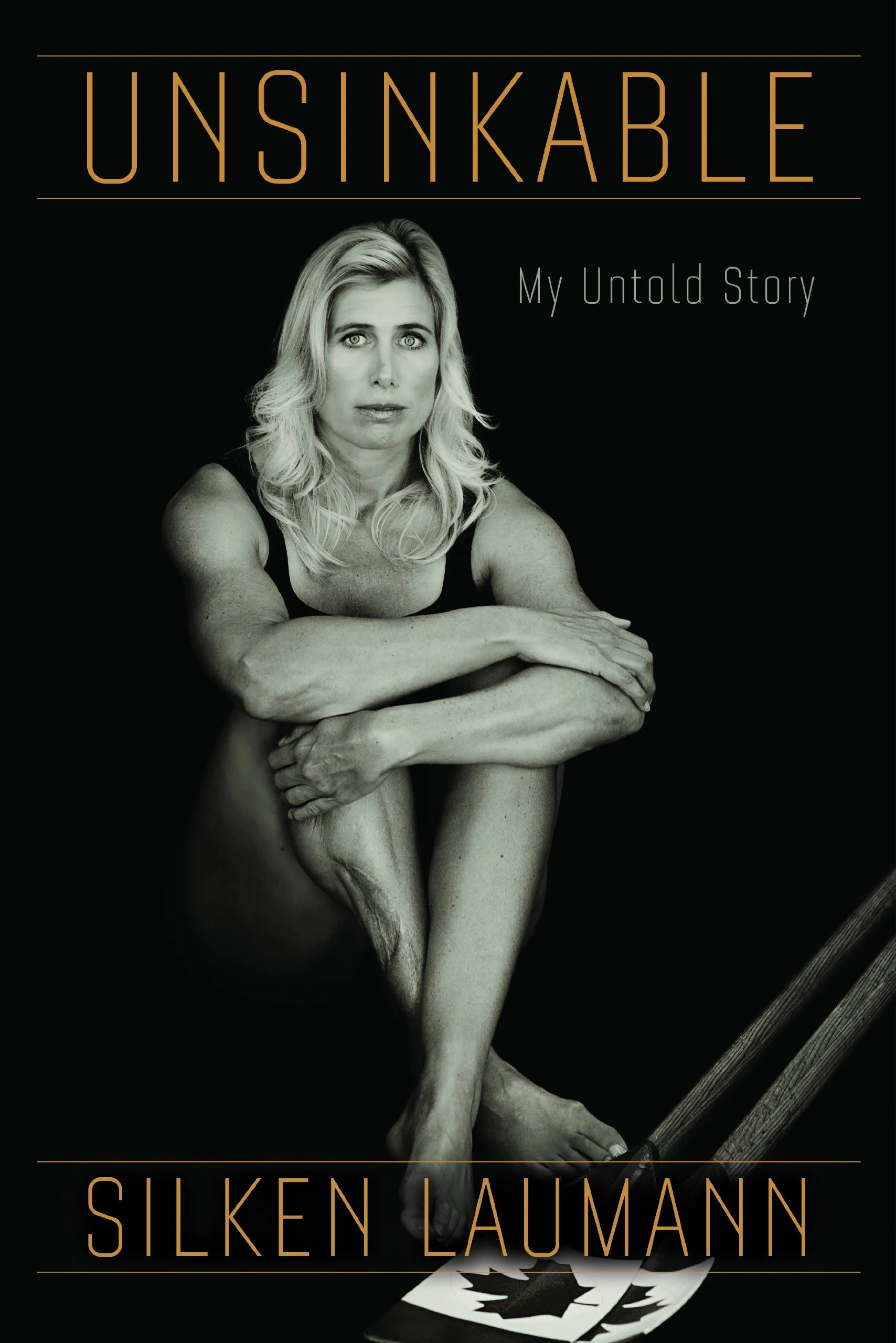
Silken Laumann
Olympic medallist, bestselling author of Unsinkable, and host of the Inflection Time podcast. Keynote speaker on resilience, and founder of the Unsinkable mental health platform.
This episode is supported by GoodLife Fitness and Ventum Financial .
One story, once a week, from someone who has been through it.
A short letter about a moment that changed someone’s life, what it taught them, and a question you might carry into your own week. No course launches, no countdown timers.