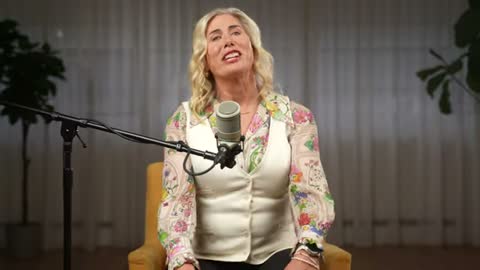
Julian LeBlanc: The Boy Who Chose Dance
At 12 or 13, his closest friends told him they could not be his friends anymore because he took dance classes. He chose the dance classes.
“So, you know, sometimes what we see as a failure actually is transformation on its way.”
Transcript
Speaker names are being checked and will appear here soon.
00:00 Meet Julian LeBlanc
Welcome to Inflection Time. I'm Silken Laumann. Every life has turning points, those moments that change everything. In this podcast, I sit down with remarkable people to explore the challenges, choices, and unexpected events that shape who we are. From heartbreak to triumph, fear to clarity, these are the stories that remind us that growth isn't linear and meaning is often found in the moments we least expect. Inflection Time, uncovering the moments that make us.
In this episode of Inflection Time, I sit down with Julian LeBlanc, an actor, director, author, and entrepreneur whose story is all about courage, creativity, and self-belief. Julian's journey is one of transformation. From small-town beginnings to building his own path in the entertainment industry, he's learned to embrace both the spotlight and the silence, finding power in authenticity and purpose in perseverance. His story reminds us that the most defining moments in life often come when we stop waiting for permission and start creating our own opportunities. This is Inflection Time, uncovering the moments that make us. Thank you for joining me. I'm here with Julian LeBlanc, and I'm so happy to be here with you today. You've got such great energy, and I kind of jumped in on the conversation we're having with my producer. You've got the LeBlanc School of Acting there all over the world, but you guys were talking about confetti, and just give me some context to what you were talking about.
Well, I was saying, you know, I think sometimes it can be really fun to do random acts of kindness for ourself. So, I'm like, you know what, why not throw confetti and have your own face, and maybe the faces of your friends on every individual piece. So, you know, we're kind of celebrating everybody. You're celebrating everybody. And then people, like, on the sidewalk are looking at these little pieces of confetti, and they're picking it up and, like, going, who is that? Exactly. Exactly. I love it. You have a lot to celebrate. I mean, you know, you're an actor, you're a coach, you're a mentor, and increasingly, you are an entrepreneur, and really, you know, getting it out of the park there in terms of the number of schools you have, and probably more importantly, the number of wonderful young actors that you have produced through your school. So, let's start there. Like, how did this all happen? How did you get to wanting to start coaching and leading young people in this field? Well, first of all, thank you so much. It's an honor to be on this show. I'm still speechless. I'm like, is this real? This is not AI. This is not a robot. Like, this is actually really happening.
Yeah, yeah. It's happening. And I've got, like, smears of lipstick on my face, so it can't be AI, you know, and the white lights are hot, and I'm sweating.
03:12 Foster care, and an anchor in Heather and Paul
It's very real. Well, thank you for asking that question. I think for me, I grew up in Moncton, New Brunswick, and in the Maritimes, and I was placed in foster care around age three, and I stayed in foster care until 18 years old. So, I was really lucky to have Heather and Paul, my foster parents, who I consider mom and dad. You know, every time I went back to my biological mom at five and seven years old, it wouldn't really work. It would maybe be a few months, and then I would go back to Heather and Paul. So, I was so lucky to kind of have that anchor. You know, I didn't hop from family to family, so going to Heather and Paul and having that sense of normalcy, and it was amazing. And we had, I had 11 siblings growing up, so my foster parents have fostered over 30, 40 kids. Wow. Wow. And, you know, I don't hear lots of people talk about being lucky when they're in the foster care system, and that is pretty cool that you had Heather and Paul as kind of that constant in your life. Although it sounds like there was some back and forth with your mom, which must have been pretty emotional and potentially a little destabilizing, too.
It was, yeah. You know, my mom, she, you know, she did what she can, and she just didn't have the means, right, to take care of my dad. I'd never met him to this day, so I don't really know what happened to him. So, you know, sometimes when you have to accept the unknown and when you have a different path, it definitely can shape you.
04:58 A first dance class at 12
And I know when I first took my first dance class at 12 years old, I was 12 years old. I was watching my foster sister, Holly, doing dance steps in the living room, and then I started copying her. Yeah, and then my foster mom kind of had like a light bulb that went off. She's like, we're putting him in dance classes right now. And I was starting to act out. Like, I remember a meeting with a social worker and my foster parents, and they were saying that if, you know, my behavior wasn't going to improve, that maybe there would be an aide that would follow me at school. And like, I remember that really scaring me. Yeah. Kind of like, I don't need that. Like, that doesn't feel like me. Yeah. Right? And do you think that, was that acting out, do you think, I mean, you probably only could see it in kind of retrospect, but was that you needing an outlet, you needing a creative outlet potentially, or a sport outlet? You're exactly, no, you're exactly right. You're exactly right. So I think for me, when I first took my first dance class, and I did everything, I did chat, you know, I did jazz, tap, acro, ballet, hip hop. I just wanted to learn everything in dance. I even did baton twirling. And I ranked in the nationals at 16 years old.
Wow. Is that in your resume? Baton twirling. And like, that's a real thing. Like, it's competitive. It really is. Yeah, yeah. It's not in the Olympics yet, but we're really like, we've been pushing, they've been pushing for it. Yeah. And so it was the first time I had an emotional outlet. It was the first time that I was, you know, I was really able to process all these difficult things that had kind of happened to me. It was almost like a way for me to finally truly just be myself and embrace who I am and feel all the different emotions, whether through song, dance, expression, you know, so it was a life saviour for me. It really, really changed, like the course of my life. And I became really, really passionate. I became obsessed, really obsessed.
Yeah, yeah, yeah. And then I went to the Canadian College of Performing Arts at 18 years old. I auditioned in Halifax at 17, in Victoria, in Oak Bay. I was like the youngest of that year. They pick about 35 to 40 people. Yeah, I'm familiar with the College of Performing Arts because one of my friends sat on the board for years and we, you know, once in a while we'd go to their productions that they had every year. I might have even seen you in one of the productions here that was younger than me. It's interesting. So, you know, you had this outlet and it, you know, happened in those teen years or the early teen years, I guess tweens, I call them. And like, did you know that you had all this emotion and stuff that needed to be processed or like, how were you feeling before you started that?
07:46 Figuring out who he was
Yeah, you know, I think there was a lot of things kind of happening. Like, you know, why was I not like the other children? Like, why did I not have a mom and dad that were taking care of me like a lot of my friends did? Also, there was stuff with, you know, my identity, starting to realize, you know, that, oh, I, you know, I don't think, you know, I may not be like the other boys, you know, like there's different things I was starting to figure out about myself. And it's just so scary to kind of navigate all of that alone. So I kind of feel like I found my people, I found creative, wonderful rebels, I call it rebels, that not afraid to just blaze a path trailblazers like yourself. Yeah. Although, you know, it's funny, because, you know, in sport, you know, there's this hyper discipline and, and that you think of you think of athletes, and artists, really differently, like artists are like this, you know, there's this idea that they're just kind of like, right or do things when they feel like it. And, you know, when the more I speak to musicians, and songwriters, and I mean, it is a very disciplined existence. The creativity, of course, comes and you know, you can be lit up by creativity. But actually, like, the more I talked to people in the arts, the more I realized there's actually so much similarity, because athletes are driven by passion. You know, they have a passion, I always had a passion for sport. And, you know, specifically for for rowing, I fell in love with the sport. In my in my teen years, but it's also, just like you said, it's this incredible outlet. And in sport, it's kind of physical, right? So you're pushing your body. And in a way, like, I always think you're cleaning out the emotions, because you're putting them out there on the water, you're running
as fast as you can, and you're getting the anger and the frustration or, or whatever it is. But one of the things that I think was really important to me in the beginning of my sport career is that I came in contact with adults who were healthy. And they cared about me. And it is such an astounding thing. Because when you're growing up, you've got this little, you know, family unit that you're part of this, this, yours sounds like not so little, pretty big. But it's still your family, it's still your sample size. And when I had a coach that cared about me and cared about my well being and my sister's well being, because she also wrote, it was just like this epiphany, like, wow, like, other people can care about me and my path.
10:46 Chosen family and growing your own luck
Oh, absolutely. And I think that's what really woke me up to wanting to work with so many different people and families is that, for me, you know, chosen family really became an important thing. Because I was finding people in the LGBTQ community that I could connect with, I was finding people in the creative community that I could connect with. Also, you know, being a foster kid, you know, my parents weren't love related. So you really start to realize chosen family, the people in your life that spark you that motivate you that inspire you that uplift you that are there that have your back, like that's important, too. And it can be blood for a lot of people, family can be blood for many, but I also think chosen family is so important. And so at LeBlanc, at my school, that's a really huge part of it, is we also mentor and guide our students along. Whether they're new, developing actors, very advanced actors, because rejection is a huge part of it. You know, like, you're right, there is so much rejection. And I always say, you can grow your own luck. So if you're just sitting on the couch, not doing anything, not taking classes, not reading books, not getting out there, well, your luck will be this, throw a ball between this, Silken, throw a ball between that, you're not going to land it in. No, I probably wouldn't land it in if it was that big. But you know, that's maybe my ball skills. Exactly, jumping in, get messy, you know, like jumping blood. Then that will be your luck, the ball will land.
It's not, you know, it's great message because athletes fail way more than they succeed. Actors fail way more than they succeed. It's not the failure, right? And I think about, and I don't even like using the word failure. But I mean, there are times that you have a terrible race and you know that you could have had a different strategy or, you know, you got too nervous or whatever it is. And not only that, that are they teaching moments, but it's what you, it's what you make them mean. And I think if you make a setback mean that you're a failure and that you didn't try hard enough and that you're head case. And in my early career, I had a lot of that. I had a lot of just this heaviness about everything that I did. If it wasn't perfect, I would just turn that around, that energy around and direct it at myself, almost in the form of hatred, you know, like it was so intense. And I wonder if you see that quite a bit working with young people, especially young people who are really wrestling with that time in their life or their situations.
As an Olympic athlete and the founder of Unsinkable Mental Health Charity, I know the power of a supportive community in reaching your physical and mental fitness goals. That's why I love GoodLife Fitness. It's more than a gym. It's a place where you can really thrive and find connection. As a special thanks for joining today, you can experience it yourself with an exclusive seven day pass to any GoodLife Fitness location across Canada. Visit the link in this podcast description for access. All of my podcast guests have shared the importance of physical activity in their lives. Together, let's build a healthier and happier Canada.
14:23 Comparison, and why perfectionism can kill art
Oh, absolutely. Because some people, they hit success really quickly. You know, they might book that big role six months into it. And then there's some actors where it takes two, three, four years, right? And so sometimes, you know, what we see is, you know, they can make that mean something about themselves, right? And so it almost becomes, like I said earlier, with your producer in the pre-chat, it can become like a limited belief where it's like, oh, does that mean I'm not good? Because this person over here, she landed a role, you know, within six months to a year.
So there's a lot of comparison. I find something that can really take you out of your own journey. We have to remember, no one has the same journey. We're all uniquely unique. There's never going to be another carbon copy of Silken, of me, of anybody. I even have twins that have come to the school.
I work with the Fuller House twins, you know, and even the twins, I see differences, you know. Yeah. And the parents go, really? You do? Like you notice and I'm like, yeah, no, this one's like this. This one's like that.
So I always say when it comes to perfectionism, sometimes it's good intention because you're wanting to hold on so rigidly to get the results that you want. But one of our quotes at LeBlanc is, perfectionism can kill art. So, you know, remember to make mistakes. We actually say, okay, everybody, welcome to class. Don't forget, make as many mistakes as you can today. Because if you tumble, fumble, and you crumble, that's actually going to be a good thing because you gain more perspective.
And you learn more about the choices that you're going to want to make for your character. Where did you learn that? I think I learned that because, you know, I've seen some of my biggest failures lead me down a different path that brought either bigger success or more understanding or more enrichment for myself. So, you know, sometimes what we see as a failure actually is transformation on its way.
For sure. The difficulty, of course, is when you're young. It is so easy to make that failure. And just give me an example.
16:39 Saying no to a second year at CCPA
Give me an example of a failure as something that really set you back in your life and how you got through it. You know, I think for me, something that really, you know, something that really kind of hits me is I remember when I graduated from CCPA, there was a second optional year. And I auditioned for the optional year where they kind of cut the 40 in half and there's 20 people that are asked back. And I was accepted in. And, you know, I chose to not go in the end. I kind of deferred it.
And I remember wrestling with so much of that. Like, did I make the right move? Did I make a mistake?
You know, should I have gone? And, you know, I really felt the pressure of was that just the biggest mistake maybe that I made in my life, not going for the, you know, for the optional second year. But after a few months, I landed my first, you know, I landed my first talent agent. I moved into Vancouver. I booked my first role in Kyle XY. I'm an actor myself.
And then I booked a role in Fair Illegal. And then I was in Hellcats with Ashley Tisdale from High School Musical. So I saw that what I thought was such a big failure in not doing that second optional year opened up doors to me to get my first agent to train as an actor and to start kind of leading the path in a completely different avenue than I ever expected. Like, completely different. Yeah, and you were following, it sounds like you were following your gut, even though it seemed like not a logical thing to do. Like, your peers were doing this second year, all the ones who got accepted, and you were like, for some reason.
And it wasn't, it doesn't sound like it was like a parent. And I think that's true for a lot of people where they just, you know, they pause on something or it just doesn't feel right. And I find in my life, when I'm paying attention and when I'm really listening to that voice, it's always leading me in the right direction. But like, in the beginning, it's kind of terrifying, isn't it? Because you're like, why am I doing this? Yeah, exactly.
And it kind of just felt like if I did it, it was betraying something in me. I kind of felt like it was sort of betraying something in me. And it kind of felt like I'd be blending in. And I don't want to blend in. I want to break through. You know, so I just, if something said, this is the right thing to do.
But for a few months, I did wrestle with possibly making the biggest mistake. Yeah. And it happened to not be a mistake. And it led to so, you know, so many new friendships, so many connections. Plus your whole new path, right? A whole new path opened up, right?
19:37 The boy with a chalkboard in his room
And then, you know, through the acting, you kind of connected with the coaching and the teaching. How did that happen? Yeah. And I think, so that kind of happened after a few years of auditioning and getting out there and booking a few roles. I did Wayward Pines, season two. I've done quite a few little Hallmark movies.
And we do a lot of those in Vancouver. Yeah. Yeah, it's true. Yeah. I think our neighbors was a Hallmark house at one point. Yeah.
So definitely, definitely. So I think for me, I remember being, you're going to laugh. I remember being six or seven. I was that little boy who had a chalkboard in his room. I'm not even kidding you. I had a little chalkboard in my room.
And I would pretend that I was teaching and grading tests. So like, even at six, seven, eight, I'm not even kidding you. I was obsessed with wanting to be a teacher and grading tests. So I thought early, early on, maybe I would be a school teacher. And as I said, I went a different path. But I think, I think I was always meant to work with kids, to work with youth.
For me, I was so lucky in foster care to have amazing parents who supported me. They even paid for my post-secondary education. Like that is so rare. At 18, normally, you know, the government isn't giving them money anymore. Right. You're out of care.
Exactly. And my foster mom, Heather, made sure that my CCPA tuition was paid.
21:08 Ageing out of foster care
It's a huge gap in the foster system, right? You're deemed an adult when you're 18. You leave the foster care system. And, you know, most or many, many young people, of course, get the benefit of not only their parents assisting them with, you know, post-secondary tuition, but also like the help in filling out the needed forms and putting the idea in your head and maybe going to different schools and seeing what's available. And when you're a foster, when you've been in the foster care system, you just don't have that.
And I just kind of, a bit of an aside, is that changing? Have people identified that as a real gap? You know, I think there's still a ways to go. I'm so glad that you said that because the truth is not everybody has a good experience in foster care. That still is a reality. You know, I do know that there's a lot of people that are, you know, that are in it for the right reasons.
They really do care.
And I think that's kind of why I wanted to start an acting school that was really about building young people out, but also supporting the families. So we don't just let the experts and the guardians, you know, go. Like, we're in it with them. They're the dream facilitators. You know, one of my good folks, one of my good friends, Dream, said that to me once. You know, parents, they're not stage moms.
They're not stage dads. They're dream facilitators. Like, the kid can't do it without them. Like, they're on the journey with them, right? So the heartbreak, the wins, the losses, they're sharing that. So for me, I think it's important for me to give back because I was so lucky.
I was one of the lucky ones in foster care where there's so many that are not. So if I can touch and reach out to so many people and help them reach their dreams, I'm going to do it. I'm absolutely going to do it. I think when I also love children and I particularly love teenagers and that sort of tween, teen, early 20s time, I just find it's very transformational. And even though the challenges are big, the wins are big too. And I think some of, for me, some of that connection and ability to be with tough problems with teenagers is that I had my own path in a very dysfunctional family, in a mom who had a severe mental illness and there was a lot of instability.
And when I see a child suffering or somebody that doesn't have a place or a way of expressing who they are and having that heard, there's just part of me that just feels so connected to that young person. And when I look at why we started Unsinkable, our charity that focuses on mental health and very particularly youth mental health. I see that really that genesis of that. Yes, it was COVID when we launched the charity during just before COVID and then COVID happened and all these kids were struggling in their homeschool environments. But I think a lot of it was, I know what it feels like to feel alone, to not understand what the next step is, to not have that proper guidance in the next step. And having that, it's just like, I can hear it in your voice.
You know, you're on purpose, like, you know what you're doing with your life. And it's very obvious that it has a lot of meaning for you. Thank you.
24:57 Standing with kids who are bullied
Yeah. Sometimes I call it wonderful chaos. I'm like, which direction am I going in today? But yeah, no, totally. I never give up. I am a fighter.
I always have been. And, you know, one of the most rewarding things is when I can help students and families that may be going through, you know, something difficult. Sometimes parents will reach out when their kid is being bullied at school. I can't tell you how many Zooms, how many meetings I've done or meetups to, you know, empower young people because, you know, they're being bullied at school. They're being called all these different names because they're creative. They're not doing what everybody else does, you know, they're following their own path.
And sometimes one of the things I say is, you know, anytime someone bullies you or targets you, it's because they can see, you know, this amazing, creative, artistic glow and spark that you have. And so sometimes people like to dim that light because it makes them feel better about themselves if they don't have a lot going on, right? So. Yeah, it's kind of the, it's kind of the motivation too of a bully, isn't it? To make themselves feel better by making somebody or trying to make somebody feel less. I mean, it's happening south of the border and it's just, it's a terrible thing when it happens to young people.
So I see that, that so much in what you do. And, and I'm curious though, because, you know, you're, you're spending, it sounds like you spend quite a bit of time, you know, coaching these young people one-on-one, but then you're also, you're also building a business and you're, you're an entrepreneur. You're in a bunch of different cities and, you know, it's not a small operation.
26:49 Going online and growing worldwide
So, I mean, how do you balance that? Well, you know, it started a little bit smaller. We were in Vancouver.
We started, you know, in person in Vancouver. And then during COVID, it really took just a different, it really just kind of grew into something different because all of a sudden, a lot of people from other cities, states, provinces, countries that wanted to try LeBlanc because we were starting to get out. We were starting to get a lot of student successes. We had kids on Riverdale at that time. We had kids on BH90210 on Fox. We had Elle McKinnon on Wonder with Julia Roberts and Owen Wilson.
So there was like quite a few things that were happening. People were hearing about LeBlanc, but they couldn't always travel in person to Vancouver to take our classes. So when we went virtual, it was like it just kind of blew up. And it's, you know, it's grown to having we have a United Kingdom division. We have so many students in Australia now. We have working actors everywhere.
Just recently, I'll share with you, we had Scarlett Spears, Ariana Grande, the pop star herself. Berg Ryd, Scarlett Spears playing young Linda in the new Wicked 2 that's coming out. And I coached her for that. Also mentored her a little bit for that. Yeah. And then we also have Sofia Galasso in Toronto, who's in the new Frankenstein by Guillermo del Toro with Mia Goss and Jacob Elordi.
So she just went to the Toronto International Film Festival. I coached her for that as well. That was incredible. We just found out too that we have a main cast member in the new Camp Rock 3 with the Jonas Brothers. Oh, the Camp Rock. I love it.
I love it. But I'm astounded you can remember all these names, what they're in. You know, I mean, obviously, the kids that you're like one-on-one coaching, but you're producing a lot of successful actors. Do you say actors and actresses or do you say actors? I kind of say it all. I'll say actors, actresses, alumni.
You know, like we, so this year, something that's really cool, a really cool accolade. I just found out that I had a LeBlanc alumni in one of the number one movies worldwide this year and a number two movie worldwide this year where each actor was a lead. So Kaitlyn Santa Juana was in Final Destination Bloodlines, which she was the lead. It went number one worldwide. She is an alumni of our school. And then Alfie Williams was in 28 Years Later.
And he was, you know, a big substantial role in that. And that went number two worldwide. So to have a number one worldwide movie and a number two worldwide movie where we have two students doing their thing like that. I mean, I just, I'm always in awe. But if I lost everything tomorrow, I always say this, I would be okay. Because I just want to remain humble, grateful.
I take everything one day at a time. You know, I try not to be too defined by the success part because I still feel like there's so much work to go. Yeah. But if I lost everything, I would be okay. Yeah. And a lot of our guests actually, you know, they defocus.
I mean, the podcast is called Inflection Time, right? And so we're reflecting on life and some of the messages. And I just hear that over and over again about how it really is the process. It's every day and every opportunity. And I mean, I certainly felt that way about my rowing career. It was driven by a love.
And of course, I wanted to win. But I love the process too. You know, today I'm running a not-for-profit. I'm doing this podcast.
I'm writing a book. And all of those things feel very aligned to who I am. And I get a lot of joy whether the book becomes a bestseller, nobody reads it. But it's like, yeah, of course, I want it to be successful because I worked hard on it. And I want it to go into the world and be read and it be meaningful. Nice.
I'm applauding you right now. Thank you. So I'm applauding you. And guess what? Confetti in my hands with your face on it. Yay!
I love that. Like you're doing it. And, you know, I always say, you know, believing in what you do is not for others to decide. Exactly. Yeah. And it's about reinvention too, isn't it?
Like, you know, you were an actor. You are an actor. You had a path in high school being at the performing arts. Now, yes, you're still acting, but you've got that role of coach and now entrepreneur. And who knows what the next step is. But one of the challenges I've had, and it's probably internal more than anything, is that
when you are recognized for one thing, like literally for one moment in time, when, you know, another boat crashed into you, you know, you became a national storyline. Sometimes it's hard to change other people's definition of who you are. And you can't. You can't. You can only really focus on your own journey in this world and follow what you want and not be limited by what other people think you are or what you can and can't do. And, of course, it's augmented, I think, when you're a public person.
But I think we actually all have that version of that, like stay in your lane, whatever that means.
Oh, absolutely. It's almost like, oh, you know, how dare you if you step out of those lines? It's like, no, you're an Olympian. That's what you did. You can't go over here and write a book. You can't go over here and play a part in a movie or, you know, host a podcast, which, guess what?
You did. Yes, you did. Yeah. And it's going really well. I mean, we were nominated for, well, we entered in the Webby Awards last year. We were given special mention, and it was our first season.
And that was so, I didn't actually know what the Webby Awards were at first. But when I understood why we were being recognized, yeah, it was very affirming. This path has felt very right for me. I've been in the public eye. I've done lots of interviews. I speak.
But it's this curiosity of having a conversation human to human that I just feel like, no, this is the lane I'm actually supposed to be in. This feels really right. And I wonder, you know, you get actors, especially actors that become well-known as children.
If that's something that you have to help your young people navigate through is that change of identity. Because not every child actor, as they say, you know, can transition into a successful adult actor. That's right.
33:49 Not a backup plan, a sidekick
I always say to guardians and parents who say, do you really think my kid can do this long term? Or, you know, are we wasting our time? And I always go, no, because in acting, they're gaining so many amazing things and tools to help them in life. So even if one becomes a lawyer, if one becomes a doctor, if one becomes a politician, they're learning public speaking. They're learning how to collaborate. They're learning so many different things.
That's just going to help them in life, you know, generally help them in life. And so I always say, give it a go. If you really want to be an actor, I always believe anybody can do it. I'm really big on don't have a backup plan. Have a sidekick. Things that I say is back plans.
You're kind of quitting before. I always say, don't have a backup plan, but have a sidekick. Something that works side to side with your dream where you can always act, but you also have either a little business or a little practice or a little something that helps you have a family. If you choose to have one or, you know, something that's helping you make money so that you can survive, you know, in life, but you can still keep acting in your life. So I always say, those that are worried about stuff like that, I say, not a backup plan, get a sidekick, actually. Yeah, my friend used to call it a side hustle.
And when you're an athlete, and I'm sure when you're a musician, an actor, you do have to kind of put all your eggs in one basket. Like there's a period of time that if you're going to make it, you got to go for it. And there is no hobby, there is no, like, you know, going to other people's weddings and birthday parties and whatever it is. It's like, you know, your world gets really small when you're preparing for an Olympic Games, for instance. You know, that three years before, two years before, one year before, you know, your world's like that big. But it is super, super intense and focused.
And I see that again and again with, you know, high performers in any field, whether it's, you know, entrepreneur. My husband is an entrepreneur as well. And, you know, at some point, you have to take risks. And those, what kind of risks have you had to take in order to grow your business?
Oh, my goodness. I think one of the first risks was moving online, right, with so many more Zoom classes. A lot of people said that it would never work. But I actually saw that differently. I saw that when you're on Zoom, you're behind the lens the whole time. It's not like theater.
I teach TV screen training. So for me, when you're on Zoom, you're behind the lens the entire time. I can make corrections to their physicality, their body language, their facial expressions, three to four times faster than an in-person class. Because a lot of in-person classes, they only bring out the camera at the end or every couple weeks. So I kind of saw, well, no, actually Zoom classes is even better for screen training.
You're on camera the whole time. That's what screen training is. Yeah, because that's your medium. It's the screen, right? Yeah, exactly. That was the first big one.
37:03 The friends who walked away over dance
If I think back to, like, you actually unlocked something I hadn't even thought about when you said, like, what was, you know, the first big thing that kind of happened? And then when you said that again, I remember, I don't even think I've ever shared this. I was 12 or 13. I had started taking dance classes. And I came to school one day and I had a group of guy friends, like four or five guy friends that I was super tight with for many, many, many years. And I'll never forget this.
I walked up to the group and they said to me, the leader of the group said to me, we can't be your friend anymore. Sorry, like, you're in dance classes. Like, that's, like, they found out that I was taking dance classes and they kind of insinuated that it was, like, too feminine for a guy to do. Like, they weren't going to be associated with someone that, you know, was taking dance classes. I mean, it was a little bit homophobic, too. But, like, that's, like, the very first thing that I remember going through where I went, where I kind of took it.
It was really devastating. But I kind of went, you know what? I'd actually rather take the dance classes. Yeah. You know what I mean? Yeah, yeah.
You're not my people. Yeah, you're not my people. I was kind of, like, there was a bit of a, like, you know, for sure it was really awful what happened. And I'll say this. When I was 18, almost 19, I was living in New West. And the leader of the group was a police officer.
And he reached out to me to have lunch. And he had heard that I had booked maybe a role or two. And I had the lunch with him. And he never apologized in the lunch. It was just like he was asking about, you know, asking me about my life. And he wanted to reconnect.
And I kind of thought, no, you know, I closed the door. If people can't hold accountability, that's a huge thing for me. And so, you know, at our school, I think every time. I'm just going to interrupt this for a second because I don't want to lose this thought. Like, that is really powerful because it's so easy. Like, I could see you being kind of, oh, excited.
This person, you know, that kind of rejected you in high school and, like, turned their back. And, you know, oh, you're in dance classes. And this many years later, he's coming. I would have thought he was going to apologize, right? And for you to be consciously saying, no, why would I hurt myself again? You know, why would I let this person that actually doesn't deserve to hang out with me?
Because he obviously doesn't have the same values as me. But we, people do it over and over again. They hang out with people that hurt them. And that somehow, I find when you have a big personality, when you have big energy, when you have big dreams, there are lots of people that, I don't know, they just don't want to be competing with you or they feel like they're competing with you.
And I just think, like, no, we all, gosh, we all want to just uplift each other. But somehow, it doesn't work for everyone.
Exactly. You know, we have kids that are young, that get success, older. You know, Emily Mitchell, who's one of my students from Ontario, she's playing John Burnett Ramsey in the upcoming Paramount Plus series with Melissa McCarthy and Clive Owen. Wow. You know, and she's taking Zoom classes with us as a toddler. She was six, I think, when she started taking classes with us on Zoom.
Wow. Wow. So, you know, and I agree. I think, you know, anytime I've had a big change or I've taken a risk or there's been a transformation that I wasn't really sure where it was going to lead to, I always think of acceptance and accountability. So, I accept where it's going and then whatever happens, I take accountability. I made that choice.
And if the other person that may or may not be involved can't do that, it's just not my cup of tea. I want to be with people that can say sorry. I'm really big on that. I want to be friends with people that can say sorry and mean it. Oh, my gosh. I got to tell you, that is hitting me to the core.
I've been way too much of a people pleaser in my life. And I think I've carried a lot of weight of failed relationships, which were so often people that just, you know, they were moving in a different direction than I was. And, you know, feeling somehow guilty and somehow, you know, responsible. And I just love that you're like, nope, I'm moving this way and, you know, come on with me or not. And I don't know if that's like a difference to you between men and women. I just feel like male friendships I've had in my life have been a little easier than the female friendships.
Mostly because they just tell me exactly what they're feeling or thinking or not liking. And I get it, you know, it's like, oh, okay.
42:10 Unlearning people pleasing
Yeah, no, exactly. And it's, I have to say, this is still a bit of a newer me. I have wrestled with people pleasing. I have wrestled with, you know, with not wanting to disappoint. You know, I have been a validation seeker, you know, wanting validation from here, there and everywhere. So it's kind of nice when you kind of slow down on that and you go, you know what?
But let's work on what's going on here. Like what's going on in my core, in my body. And I've been meditating a lot more. I never meditated before. I do gratitude lists. And it's really helped me just kind of stop those unhealthy behaviors that I sometimes can still do.
So trust me, I get the people pleasing thing because it's like, if you have people liking you, well, that means, you know, you're doing a good job or that means you're good or that means you're amazing. And the truth is, we have to, we actually have to be the one to view that. You know, Silken has to go, I am amazing. I have gone through a lot. Silken has, you know, then that little trailblazer, like I said earlier.
And you know what? We're allowed to make mistakes too. We're allowed. Yeah. And I wonder if you have a memory or an example, I certainly do in my life, of how that pleasing and that kind of looking for affirmation, all that, like has actually been,
you know, a weight and a heaviness rather than, you know, something that potentially uplifts you.
Yeah. I mean, I have one with this year for me. You know, I think sometimes even at work or with friendships that were kind of acquaintances the whole time, and they really never really, they never reached a certain level of depth that maybe I was hoping for. And I was kind of continuing that friendship. I think sometimes the people pleasing makes me hold on to relationships that start to give me anxiety,
start to, right, where I'm, you know, I'm second guessing what I said, and I'm kind of nervous about what they're going to say back. And I'm kind of going, friendship should be way easier than that. I'm sorry. Like it should be way easier than that. So I, I've kind of learned that people pleasing can really make you not make decisions with consent.
It's almost like these friendships don't have my consent. You know what I mean? Oh my gosh. That's, that's just hitting me. So it's just hitting me hard because. Right.
Yeah. That way it's like, hmm. Yeah. You're just going along and you know, it's not fitting. You know, that every time you see that person, you feel totally drained, but you know, all your friends are friends with us. Like, you know, it's just, it's just like, it gets so complicated.
And then at some point you just make the decision. You're like, I've got one, one life when, you know, and this person is not bringing me energy. It's not their fault. They're just not bringing me energy. I'm not feeling anymore. And I need to have the courage to move on.
And that we think of, you know, people think of us a little thing. Oh, just, you know, just keep going to the dinners or like, why do you have to make a big deal of it? Well, why you have to make a big deal of it is taking your energy. It's taking your time. It's actually taking your life. And, you know, you, I feel that we all have some sort of calling, you know, and that can be being a parent.
That could be, you know, running a business. That could be, you know, mentoring. It's such a range of things that we get called to do. But it's actually, I feel I have a responsibility to use my talents and my abilities and bring them into the world, whatever they are. And if I'm not doing that, I'm actually being inauthentic. Like, I'm not in my light, I guess.
And so anything that takes me away from that, I'm getting more and more aware of. And it sounds like you're younger than me and you're there, which is so cool. It's such a great message for the young people in your school and that you mentor. Oh, thank you. And what? We're not still teenagers?
Deep down? Square? Oh, I so don't want to be a teenager again, honestly. I know. It's so true. You know, when people are like, you missed your 20s, I'm kind of like, no, like, I'll be honest with you.
Like, when I turned 30, I started to just really not care what people thought. And, you know, there's certain parts of my 20s that were fine, for sure. But I wouldn't really want to go back. No, you don't want to go back. And I think, I mean, I was rowing about in my 20s and my early 30s. And then I was a mom.
And there was, like, all this, you know, the pressure and the discipline. And, I mean, I don't regret any of it. But I have to say, I probably started really having fun in my 40s. I hit my 40s and I'm like, I just felt so much freer. And then there's the 50s. And now I've turned 60, which is just like, ah!
Want it? Well, you didn't want it. Yeah, I did. Thank you.
Yes, I did. And the camera is hiding some of the gray hair and the wrinkles.
Oh, my goodness. Okay. I am like, no, like, I didn't expect that. That was like, wow. Okay. I need your topical regimen.
Like, I don't know what ends up you think. Yeah, well, my dad's 89 and he's still doing push-ups. So, I think there's, like, a little bit of genetics in here. But, you know, there's this beauty, I think, in aging, though, that's all about if you're doing work, if you're actually consciously doing the kind of things you're doing, which is, you know, letting go of people or things that don't serve you anymore, like moving forward. Having courage. You have, like, tremendous courage.
And then your life is going to change, right? My life is changing. And as we get older, I think there is a greater acceptance that time is finite, that every, you know, every minute you have, every day you have, there's just a greater preciousness. And also, I think, for me, turning into this decade, it's like, I actually don't have that much more time in terms of, I'll probably work till my dying day. But, you know, I really want to do some significant things in these next 10 years. And I don't know if it's a little positive pressure on me.
Yeah, exactly. And I think when you do that, you're also keeping your mind, your body, your soul young. And, you know, I always think to Betty White, who was acting in her 90s, you know, like, she kept it going. And I think it just, it's just so good for the mind, body, and soul. Well, and there's more and more of those actors. I mean, Clint Eastwood, you know, Jane Fonda, Lily Tomlin.
Like, it just goes on and on, the people who had late careers. And, I mean, you're a different person and you're a different actor, I would think, through every stage. Yeah. I don't think we have to, you know, stop. In fact, we probably shouldn't, you know. I think people stop in their careers a lot of the time because of lack of flexibility, not because they don't love what they're doing.
Well, you see that a lot with people who retire. A lot of people get so excited for retirement. You know, they've had that number, 55, or it's 60, or it's 65. And then they retire and they're actually not the same for a few years or they have a bit of a crash. Like, it's just not what they thought it would be. And I think sometimes it's because they're not doing anything, right?
They were doing something so purposeful before. And now they're just not doing anything. Like, I had a really, really close friend who retired, I believe, at 55. And, you know, she's never been the same since she retired. Like, it's a huge change. She just got, you know, sadly.
It's sort of flat. Down about everything. And, yeah, so it's like, no, keep doing all those things. I mean, if you retire, have other things ready to go. Like, other things that you have lined up that you want to do and explore.
50:52 Grief as the receipt of love
So when you're facing a really big obstacle in your life, and, you know, we all have them.
You know, what is the source of your strength?
Oof. Well, I'm going through one right now. So I have a loved one who was hospitalized 20 nights ago with bilateral pneumonia. Yeah, this is like somebody who's super, super important to me. My partner of 19 years. So, yeah.
And we found out that the pneumonia is gone, but there may be cancer now in the lung, liver, spleen, possibly in parts of the bone, too. So I've actually been going through anticipatory grief, which has been almost falling. Yeah, it's been very, very difficult. But, you know, what really helps me is that this person showed me that I did love. I always say grief is the receipt that shows you that you actually loved. So I'm trying to remember that even though I don't think, sometimes I don't think I'll be able to go on if something happens to this person.
You know, I really do. I'm like, I just don't think I'll be able to. Yeah, this is your partner. This is the most intimate relationship in your life. I'm 18 to 37, right? So it was some of the most formative years in my life.
And, you know, he's a trooper. He's still, you know, he recovered from the pneumonia. I was going to ask, how is he doing? You know, he's actually doing better. I mean, he got rid of the pneumonia with COPD. He already has compromised lungs and he cleared out the bilateral pneumonia.
He's, the catheter's out. He's starting to eat more meals. He was smiling the other day. So like there is some beautiful, I'm trying to remember not to act like he's dead now, right? So that's an important part of it. Anticipatory grief can almost convince you that the person's dead now.
And that's what's really tough. So it's just reminding me to be present. I could still have a few years. I could still have six months. But what helps me through it is that this man showed me that I can love. Showed me the depths of the love that I never knew I possessed.
And he's still going to be showing you, you know, I've shared quite a few times in this season that I had a near-death experience in February. And I did almost die because I was stung by an insect while hiking and went into anaphylactic shock and was very, very close to not being here. And afterwards, you know, you get to go through, you know, a shock period and you come out of it. And I think when I realized, and I'm going to share this with you in hope that it's helpful, is that actually none of us really know. Like, my husband's older than me. He's been really, had a lot of really life-threatening experiences in the last few years.
And in my head, it was like, okay, I need to get ready for him not being here. And then suddenly, I was the one who might not have been here. And I guess what I started thinking was like, yeah, but it's every day that matters. It's like, I have today. And it's just so, it sounds so cliche, but I really feel it viscerally now, how it's like, I get to have this experience and I get to have that experience. And most people go through life like half asleep.
They're not even really experiencing life. They're in their heads. They're rushing. And sometimes something like this, although it's so tragic and so hard, but you do have this time with your partner right now. You have it. You have today when you go visit him.
You have tomorrow.
And that's really beautiful. You can have some beautiful experiences together.
So I just wanted to share that. That is so meaningful. So sweet. Yeah.
You have no idea how much that means that you would say that. And, you know, I always say like, we really obsess about what we think other people are thinking about us. But the truth is, almost nobody's thinking about us. Most people are thinking about themselves. Yeah. Most people are doing what we're doing.
They're thinking about themselves. And so when I kind of learned that and when I started to see that, I was like, oh, you know, I'm obsessing about what everybody thinks. And those people aren't even really doing that, actually. That also helps me stay present. Yeah. And kind of regret today.
And you can't row a boat that way. You absolutely can't race at the Olympics that way. All of your time. You can't act that way either. All your attention has to be in the moment, in what you're doing, in balancing that boat, in, you know, increasing your stroke rate, whatever it is. And so if you're looking, like, at the lane beside you, guess what?
That person's going to go right by you. So it's like, then the greatest analogy for me about how important it is to be in whatever moment you're in right now and not thinking about, yeah, what is that person thinking? Are they looking at me? Am I rowing properly? Do I look good? Like, whatever it is that, you know, you make up in your own head, it's just taking away your energy and it's taking away your focus.
On what it's supposed to be on, right? Which is whatever is in front of you.
Absolutely. So you're going to, you can't wait to get older because this stuff starts to become clearer, clearer, clearer. I'm excited to share that Ventum Financial, a sponsor of Inflection Time, has launched their new podcast called Relevant. At Ventum, they believe that sharing someone's story is a privilege and relevant brings those stories to life. It's where leaders, creators, change makers share ideas, shaping business, culture, and the world, one conversation at a time. I'll be joining Relevant for an episode to talk about resilience, optimism, strength, and how these qualities help us grow through change.
I hope you enjoy that episode. Check out Relevant by Ventum Financial where people are discovered.
57:48 A book club and a dream of writing thrillers
In terms of the future, I just, you know, do you have some other big projects in the works? Are you, I mean, we just talked about being in the moment. I'm like, what's happening in the future? Do you have anything exciting you want to share with us or something that's just brewing in your mind? Yeah, you know, of course, I'm so proud of everything I've done entrepreneurially with LeBlanc School of Acting. And I want to see that continue to grow and reach more people.
But honestly, I've gotten really, really, really into reading. I actually run a book club, LeBlanc's Legendary Book Club on Facebook. We have almost 300 people in it right now. I only started really reading at 34 years old. I read scripts and stuff, but like I was not a novel reader. Sure.
I, that's kind of new and I'm obsessed. I love reading so much that I have decided that I want to, I want to write, I want to write thrillers. I want to be, I want to write books kind of like Freida McFadden a little bit. So yeah, my goal is to be an author and maybe, you know, kind of sell the rights to production companies to make stuff. You know, because I have directed, I have produced, you know. Yeah, you've been telling, you've been a storyteller already.
And, you know, it's one form of storytelling leads to another. And I mean, I'm going through that right now, writing a book and I'm honing my skills as a writer. It takes a long time and I've been working on it for the last few years. And I can tell that my writing is getting stronger and stronger. And then, yeah, at some point I just need to stand up and say, I'm a writer. So it is super rewarding.
And that's an exclusive, everybody. That is an inflection point exclusive. Okay. So pretty much Michelle. Yeah. Phil.
Yeah. She's got it. She's got it tagging. That is an exclusive.
Yeah. No one knows that I want to be a writer. I haven't told many people and I love that. When is your, you kind of roughly know when your book's going to come out? Yeah. Well, so I'm in what I call the first edit stage.
So there'll be some, you know, probably fairly substantial rewriting in the next couple months. Then it's going to go, you know, it's already in my agent's hand, but then it'll, you know, get a publisher. And then I think it's a little bit of a process to go from, it has been in previous books from, you know, actually getting your publisher to figuring out what catalog you're going to come in, blah, blah, blah. So I'm hoping by the fall of next year, so 2026, and then I'm already working on my second book. So LeBlanc's Legendary Book Club, we could feature your book. That'd be great.
Well, we'll already have one. I already have one, Unsinkable, which is somewhere you're going to get a copy. So that would be great. And I can come on and talk about it. Yeah, exactly. And by then I think the book club could be close to a thousand people by that point.
So it's growing. Yeah. Book clubs are cool. I'm going to start one as well. It's kind of a nice way. I've always been a passionate reader, actually.
And my strategy is to have books beside every single chair. Every single corner of my house has a book somewhere within reaching distance. And you can actually get through a lot of books that way. And, you know, I always feel like a book I'm reading like water for chocolate right now. I'm rereading it. It's a beautiful, beautiful story that's kind of that kind of magical South American writing where you're not quite sure what's really
happening or is it a dream? Is it really? And the language is so beautiful. And that matters to me how language is used. And yeah, it just takes you on a journey, doesn't it? And probably like acting did early in your career where, you know, you've got this outlet,
but you're also opening up a whole new world. So speaking of that, I just, you know, whatever is ahead for you. And it sounds like, you know, there's some challenges ahead, but there's also a lot of opportunity. And I'm just wishing you the very best. It's been delightful having this conversation with you. Thank you so much.
And if you're ever reacting to class, Silken, if you're ready to be an actress in your 60s, you want an acting class? Yeah. Just contact us. We'll be ready. Michelle, Phil, same for you, producers.
You're making me want to take acting lessons. Thank you so much. It was a real pleasure. You take care. Thank you for joining us on Inflection Time. We hope you enjoyed the episode and we'd love for you to follow us by subscribing and sharing
our podcast on Apple, Spotify, and YouTube.
Inflection Time is an Archer & Co. production sponsored by GoodLife Fitness and Ventum Financial. A special thank you to our incredible in-kind partners, Carter Wiley and Tallboy Water, Executive Producers and Directors, Michelle Archer and Phil Kluba, Producer Christine Bays, Creative Development Sarah Carter. I'm grateful for Smythe for helping me look good. Thank you for listening.
Key takeaways
- Dance as a first outlet. At 12, after copying his foster sister’s dance steps in the living room, Julian took his first class. It was the first place he could process what had happened to him and be himself.
- An anchor in foster care. From about age three to 18 he lived with Heather and Paul, whom he calls mom and dad. When he aged out of care, Heather made sure his tuition was paid, help he knows many youth never get.
- The year he said no. He was accepted into CCPA’s optional second year and turned it down. He wrestled with that for months, then found his first agent and his first roles.
- Friends who can say sorry. Years after a friend dropped him for taking dance classes, the same friend asked him to lunch and never apologised. Julian closed the door. He wants people in his life who can say sorry and mean it.
- Letting go of people pleasing. Julian has been a validation seeker. Meditation and gratitude lists help him notice the friendships that bring him anxiety, ones he had kept without really giving his consent.
Julian LeBlanc
Actor and CEO of LeBlanc School of Acting
Julian LeBlanc is an actor and the CEO and president of LeBlanc School of Acting, a Vancouver-based film and television school for kids and teens. He grew up in foster care in Moncton, New Brunswick, found a way to express himself through dance, and discovered acting at the Canadian College of Performing Arts in Victoria. His screen credits include Supernatural, Wayward Pines, Kyle XY and Hellcats. The school he co-created now has more than 1,200 students in 16 countries.
Resources 11
Research and sources behind what was said in this conversation.
- LeBlanc School of Acting leblancschool.com Julian’s school, offering online acting classes for kids and teens.
- Canadian College of Performing Arts ccpacanada.com The Victoria college where Julian trained after auditioning at 17.
- Perfectionism Is Increasing Over Time: A Meta-Analysis of Birth Cohort Differences From 1989 to 2016 (Curran and Hill, 2019) Psychological Bulletin Young people today report more perfectionism than earlier generations, the pressure Julian sees in his students.
- Youth Leaving Care: How Do They Fare? (Tweddle, 2007) New Directions for Youth Development Canadian and international research on youth ageing out of care at 18, often with no family support or money for school, the gap Silken asks about.
- Unsinkable weareunsinkable.com The youth mental health charity Silken founded, which she tells Julian about.
- PREVNet PREVNet A Canadian network with information and resources on bullying for youth, parents and educators.
- Meditation Programs for Psychological Stress and Well-being: A Systematic Review and Meta-analysis (Goyal et al., 2014) JAMA Internal Medicine Evidence that meditation programs can ease anxiety and depression. Julian says meditating has helped him.
- Counting Blessings Versus Burdens (Emmons and McCullough, 2003) Journal of Personality and Social Psychology The classic study of keeping a gratitude list, a practice Julian describes.
- What Is Anticipatory Grief Alberta Health Services Grief that begins while a loved one is still living, and the swings between hope and fear that can come with it.
- The Spotlight Effect in Social Judgment (Gilovich, Medvec and Savitsky, 2000) Journal of Personality and Social Psychology People overestimate how much others notice them, the point Julian makes about almost nobody thinking about us.
- Freida McFadden freidamcfadden.com The thriller author whose books Julian names as the kind he wants to write.
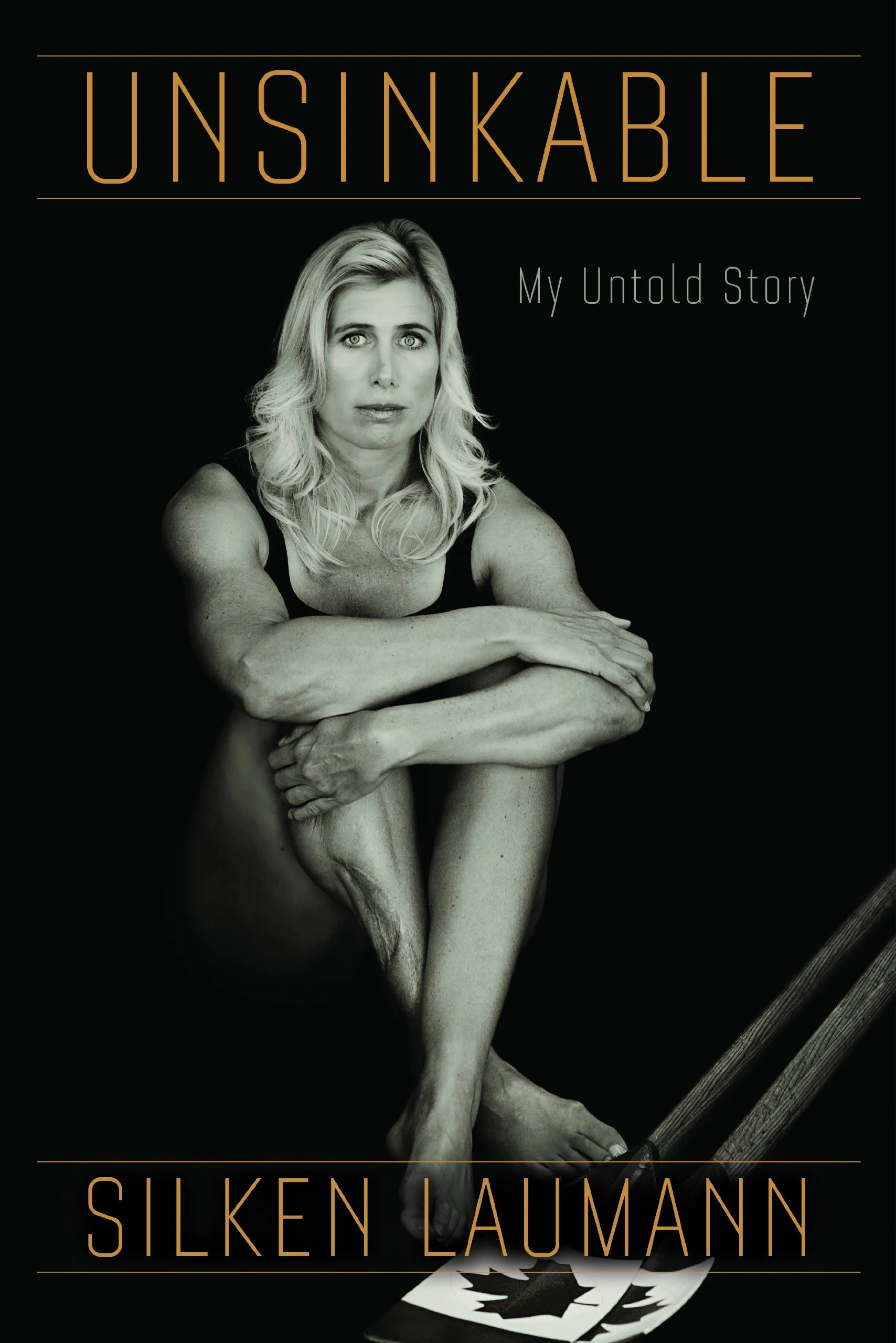
Silken Laumann
Olympic medallist, bestselling author of Unsinkable, and host of the Inflection Time podcast. Keynote speaker on resilience, and founder of the Unsinkable mental health platform.
This episode is supported by GoodLife Fitness and Ventum Financial .
One story, once a week, from someone who has been through it.
A short letter about a moment that changed someone’s life, what it taught them, and a question you might carry into your own week. No course launches, no countdown timers.