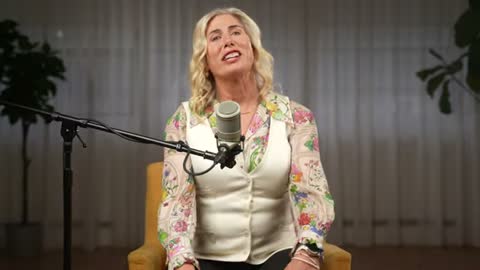
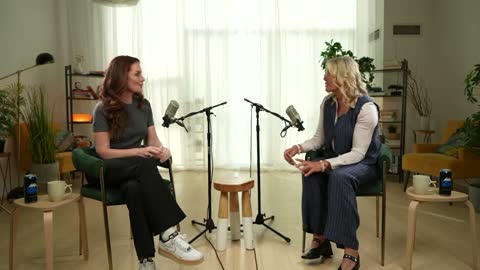
Stephan Moccio: Back to the Piano
He co-wrote songs the whole world sang. Then Stephan Moccio had a breakdown in Los Angeles, and went back to the one instrument that had always been his own.
“I’ve learned to walk through the fire and just take the heat as opposed to try to resist it.”
Transcript
Speaker names are being checked and will appear here soon.
00:00 Meet Stephan Moccio
Welcome to Inflection Time. I'm Silken Laumann. Every life has turning points, those moments that change everything. In this podcast, I sit down with remarkable people to explore the challenges, choices, and unexpected events that shape who we are. From heartbreak to triumph, fear to clarity, these are the stories that remind us that growth isn't linear, and meaning is often found in the moments we least expect. Inflection Time, uncovering the moments that make us.
In this episode of Inflection Time, I sit down with Stephan Moccio, a Grammy and Oscar nominated composer, producer, and pianist, whose music has shaped some of the most memorable moments in modern music. Stephan's journey is one of evolution, from writing chart-topping hits for global superstars, to returning to the piano to create music rooted in stillness, emotion, and truth. He opens up about ambition, vulnerability, and what it means to find peace after years of chasing perfection. His story reminds us that sometimes our greatest success comes when we slow down, when we listen, reflect, and rediscover who we are beyond the noise. This is Inflection Time, uncovering the moments that make us. Thank you for joining me.
Stephan Moccio is a Canadian. He's an award-winning songwriter, musician, composer, and I'm here with him today. And you're in L.A., and I'm here in Toronto. And it's just so great to be with you today and be kind of in your studio, too. You are not kind of. You are in my creative space here, which is great.
And you're in the middle of creating.
02:04 Long days in the studio
Yeah, thank you. I love creative spaces.
Yes, so do I. I think they're so important. Aesthetic and all, I think, you know, because I live more in my creative space than I live anywhere else in this world, other than possibly an airplane. It's, yeah. It's 14 hours a day right now, I guess. And, you know, just the entire day into the evening.
Correct. I typically arrive around 9, 930. I'm in the saddle. The thing is with my career now is I have a lot of international Zooms. So those Zooms start anywhere between, they go from 7 a.m. to 10 a.m. Because I'm Zooming oftentimes from L.A. to Toronto or L.A. to London and Paris.
And then I try to sort of guard my creative time. It's so sacred to me to having long hours, at least, say, from 10 to 6, take a break, come back for another few hours and repeat again the next day. And so on and so on. Is that just when you're working on an album, like that you get into that, like, super long days and focus? Or is that, you know, every day, all day?
I think, you know, I mean, listen, you're an athlete as well. You get the discipline is such a big part of, I mean, of being a musician as well. You know, it's taken me 40 years to play the way that I play. And that sort of breathes into everything that I do and to my life and the way I approach life. And I sometimes have been criticized as being too much of a perfectionist. And I certainly have.
I struggle with that because, you know, letting go is certainly something I still work at. But I'm a bit extremist that way. Sometimes I can wabi-sabi and keep things extremely raw just for the sake of trying to just deflect the fact that, you know, because as a piano player, if, you know, for my training, I would have to practice 8, 10 hours a day. My scales, Mozart, you know, Beethoven. And now as a musician and a composer of my own music in an environment, I strive to move people with music. And to do that and to create that simplicity and that elegance that I hope that I achieve requires so much energy.
So much energy. I mean, it sounds, it sounds like, uh, you find a lot of purpose in your music. So yeah. Yeah. Piano and classical music. I played for five years and I was slightly obsessive about it, you know, three hours a day, very short period of time in my life.
But, but I've certainly loved it. And I can, I can understand at some level how you can just dive in and be transformed and it's a discipline, but it's an art as well. And it can be completely consuming. What I'm hearing from you is that making music, you're, you, you, it's very purpose-driven for you to bring that emotion, that art into the world for others.
05:16 Coming back to why he makes music
It's, it's very purpose-driven now more than ever. I mean, I, for, for three decades, I was behind a lot of hit songs. I was behind a lot of other artists, um, helping them, uh, bring their music and their art to the world. And I finally, you know, something just kind of shifted in me. Uh, I'd say about eight to 10 years ago where I felt like I needed to kind of come back to the essence and why I came to music. I mean, listen, I've had some exciting success with some of the songs that I've written and, and, um, but I never came into music to be successful.
I came into music as a form of expression as a, as it's, it's another language for me. And, and it's become very cathartic and I was missing a certain elegance in, in my art, in my life. And so I said, the only way that I'm going to be able to control that and to sort of have, and to have, and to make myself, to satiate my appetite for elegance was to kind of do it myself again. And to take full on reins of everything, because when you're at the mercy of producing other artists, ultimately you don't have the final say creatively. And, and I didn't always agree with those decisions. So now I'm at a place where you'll take, for example, I've come back to solo piano music and people ask me why, why after working with The Weeknd or why after working with Celine Dion, it's not like I haven't stopped doing those things.
But I've said, I really want to come back to making music where I feel, um, that I'm contributing something. I have something to say. Um, you know, I'm 53 years old now. I've lived life. I've had a beautiful life. I've had, you know, my own versions of tragedies as well.
And, and I use music as a form of therapy and I lean into it. I lean into it for help. And, and by virtue of doing that, I believe that others use it as a form of catharsisism as well to, to sort of help them with their, their grief, their sadness, and their euphoria and just sort of manage that.
07:19 Behind the scenes for other artists
Because I mean, we live in that. Wait, wait, when you, when you talk about the creativity and, you know, you're creating something, you know, for Weeknd or Seal or Celine Dion. Right. Uh, and I mean, you're, you know, you're creating the song and you're probably thinking about their voice of course, and, and, you know, their genre of music and all that stuff. But I could imagine it's really frustrating to, at the end of the day, you kind of birth this thing and then creatively it gets changed. That actually could be pretty demoralizing.
It can be, if you don't agree with the decisions, you're a hundred percent right. And sometimes, sometimes they end, it ends up being more glorious than you thought, but more times than not. It doesn't. It doesn't. And because you put in so much work and when you are behind the scenes, you're there to support that artist's vision, what they're going through at the time. And there's nothing wrong with that.
There's a beauty in that as well. It's like being a good friend. But I, I, I did that for, for a couple of decades. And all of a sudden you become, you become a bit of a therapist to that, to those artists, because you have to sit there and listen to their woes, their trials and tribulations, and somehow transform that, metamorphosize that and turn it into art. And to song, into rhythm, and it's something that's going to impact and hopefully move other people around the world. But then, then you add a lot of the BS, you add, you add a lot of the politics, you add a lot of the commerce that comes with the music industry, with the entertainment industry.
And sometimes, again, I, I, again, I have to repeat, I never, I never came into this industry to, to make money, to become famous. I came to it because music was all I knew how to do and it's all I wanted to do. It was, it was a genuine passion. So, and I just wanted to figure out and carve out my own lane to make a living, a decent living doing my passion. Because I, I, I, you know, I had wonderful parents. I had an incredible mom who says, you're going to be miserable.
If you, you can, she always said to me as a young boy, no, one's going to give you what you want in life. You have to go get it. And she, she was started telling me that at the age of six and seven, it always stuck with me. She was so right. As an Olympic athlete and the founder of Unsinkable Mental Health Charity, I know the power of a supportive community in reaching your physical and mental fitness goals. That's why I love GoodLife Fitness.
It's more than a gym. It's a place where you can really thrive and find connection. As a special thanks for joining today, you can experience it yourself with an exclusive seven day pass to any GoodLife Fitness location across Canada. Visit the link in this podcast description for access. All of my podcast guests have shared the importance of physical activity in their lives. Together, let's build a healthier and happier Canada.
Yeah. Yeah. And I mean, I can certainly relate to that, you know, that idea that you don't do what you do, you know, for whatever the outcome is financially, commercially. I mean, if you love music, I mean, I love sport and specifically rowing.
Correct. Rowing is this incredible dance between like strength and power and actually grace. There's a lot of grace in rowing and a lot of rhythm, right? There's a lot of rhythm in rowing. And I fell in love with that sport and the water and, you know, the movement of the oars when you lift the oars off the water. You know, there are moments where you literally feel like you're flying, you know, you're flying on water.
It's a beautiful sport. And I think as an athlete, it's very the same. You know, you get obsessed with something, you go for it, you know, you have dreams of maybe winning battles. But the orientation is always on the process of getting better and faster and stronger. In my case, you know, it's not quite the same as being a musician that way, but like it's just that desire. And then what happens, of course, is that you do it.
And, you know, for me, I had an added sort of layer of competing at the Olympics, winning a medal, but also having an accent before that time that really brought the public attention to me. So suddenly, you know, being famous in Canada is a lot different than being famous elsewhere. But your whole life kind of shifts and then you've got to work your way through that. And that itself, I think, and I'd love to get your opinion on this and your experience in this. When you then become a public person, when your art or your sport goes into the public arena, it can really change it. And you can really lose, yeah, lose track of what you love and, you know, why you started in the first place.
I think every great, that's a beautiful story.
12:32 A boy from Niagara Falls with melodies
First of all, thank you for sharing that. I mean, I loved hearing your description of just being on the water and the element of grace and rhythm. But I think in every great individual who has a passion, who found their passion, we go through, I don't know, five, six, seven different crossroads in our life where we question and we hit a wall. And we have to reinvent the raison d'être why we're in this. I mean, I can go through many, you know, divisions and crossroads in my career. You know, I too was a Canadian boy musician who just felt that I had melodies that the world should sing.
But I was in Niagara Falls, Ontario. I mean, you know, I had to get out of that little town. I had to go to school. Luckily, like I said, I studied and I played a lot of piano since the age of three. But you got accepted into Juilliard, didn't you? Berklee.
Into Berklee. Yeah, Berklee College of Music, which is another prestigious school. And, you know, I received a scholarship to go there as well that I declined, but I had just graduated from Western because David Foster, another notable Canadian, had called me to just, you know, say to me, listen, you have the talent. I don't know how to help you, but just go keep on going. He said to me, keep on trucking, and, you know, if you basically have the tenacity, I believe that, you know, talents, 51% of it, 49% of it is the perspiration. This is how much tenacity you have.
14:06 Writing Canada’s Olympic theme
But, you know, after I wrote the Olympic theme for Canada, that was the plateau for me in Canada. Yay, by the way. Yes. That was great. Thank you. So cool.
And that was a great time. And I remember, speaking of David Foster, that was a big turnaround moment for me when I was in 86, 88, sorry, when he did the Calgary Games. I was 15 years old at that time, 15 or 16. And I promised myself I would write the next theme that came to Canada, and it happened to be Vancouver. And I was prime. I was now in my 30s, and I had the means to do it.
But after I wrote that Olympic theme, I had already had a few big hit songs under my belt, but there was nothing left I could do in Toronto. And I knew that I had to move to Hollywood because I was always in Hollywood, a young family. I had two kids. And I was always on an airplane in L.A. and half the month, you know, every 14 days of the month, I was always here in L.A. So we decided to move here. And then I've had, you know, a lot of places in my career, too, in the pop music, when I said, what the hell am I doing?
I mean, you know, how many pop songs do you want to write? I'm a classical musician.
15:17 A breakdown, and back to the piano
And then finally, in 2018, 2019, I had a breakdown. And, you know, the L.A. system here, it's a tough city. And I had an exorbitant amount of success. I was in it, the Grammys, the Oscars. I was performing. I was up for Academy Award.
All exciting. All exciting. But again, it just, there's something that felt it was missing. And you hear the story over and over and over. So finally, one day I said, I'm going to come back to my piano roots. And I'm just going to do music on a very raw, ethereal level.
And I'm going to write music that's introspective. That's going to be music that's great to accompany you while you read a book, while you cook to, while you chill to, while you want to try to sleep. And I did just that. And it did well. But again, I had to sort of, I had to take a break, like you said, everything in your life, when you had your accident, and everything, like, shifts. And everything, everything shifted as well.
Because. And it shifts really, I mean, it shifts really quickly. And, and you were really young. I mean, you wrote, I mean, Celine's big song in, I think you're 28 or 29. And 28 years old. I mean, in sport, that's actually not young.
I mean, athletes, it's like 10 years before, right? You're peaking at 25 or something. And then you're done at by 30. But you're pretty young. And so those decades, yeah, there must have been a lot of momentum there in terms of, you know, the pressure to write well, to work with these big names. Because I'm sure there were a lot of things happening at once.
And I, do you mind sharing just a little bit about that, like that meltdown and, and like, how that showed up for you?
17:04 Learning to walk through the fire
Well, yes, because I've had, as I was saying, I've had, I don't know, like, four or five significant meltdowns in my life. And, and, and, and I don't look at those meltdowns as something bad. I think, you know, if you, if you're able to, I, you know, I'm sure we're going to have another one. I'll have another one in a few years, right? But they, they become more and more bearable because I've learned to walk through the fire and just take the heat as opposed to try to resist it. So, you know, a classic meltdown for me was, you know, when I realized that I, I couldn't sustain myself much longer in Canada.
I love Canada. I mean, Canada is everything for me. And, and I wanted to stay there and I stood, I stayed there as long as I possibly can. I was 38 years old when I moved my family there, 39. I was, that was late move to move two kids over to Canada. And then I wrote Wrecking Ball.
And, you know, so I went from Celine Dion’s song, A New Day Has Come, to being the biggest song in the world in 2022, 2002, sorry, to in 2013.
Well, in between all that, I had written the Olympic theme as well. But I'm just saying in 2013. Yeah, most importantly was the Olympic theme, of course. The Olympic theme. Yeah, so go on.
And of course. And then I arrived in LA and I had just written Wrecking Ball and my life had changed again. And I had, you know, that was for a minute, that was the biggest song in the world that year. Wow. Wow. And then that put me in the room with Abel, The Weeknd.
And, you know, that led to an Academy Award. And I did that for six years.
I was, you know, I was on a great streak. And I was writing with the biggest of the biggest and everybody was in my studio. And it was exciting for the most part. But, again, it wasn't fulfilling my creative. I said, I'm going to spend all this time away from my family and my children. Because even though they were in LA, you know, to achieve that kind of success.
And when you're at the mercy of producing other artists, you're in the studio 12, 14 hours a day. And when they want you to be in the studio. Correct. Correct. And also, like, there's this momentum, I think. You know, I can speak in my own first person on this, where you get invited to do all of these cool things.
You know, for me, the Canadian version, you know, opening the Royal Winter Fair. You know, meeting Princess Diana when she comes over here. And, you know, you're meeting all these people. I've met Muhammad Ali. And, like, other people would say, you turned down going to have lunch with Queen Elizabeth? When she was in Victoria.
Which I did. Because I actually had a commitment that had been put in paper, you know, a year and a half before that to do a speaking event. But, you know, it can all, at least in my life, it was like, I don't really care about meeting famous people. Like, it's exciting. You know, meeting Muhammad Ali was amazing. I would have, you know, it's not that they're not interesting people.
It's just that all of those opportunities also maybe pull you away from the things that really matter to you. And, yeah. And from the outside, it's like, why wouldn't you do that? But inside you have that conflict, at least I did, between I want to be home with my babies. And I'm working. I'm making a living.
I'm speaking. I'm traveling across the country. I'm doing appearances. And I do that. You know, I pay my mortgage. And I love speaking.
I love, you know, I love being on stage, connecting with people. But I actually didn't care for the celebrity aspect at all. It came as a byproduct of your passion. And that's the beautiful part of it, right? It's just like, you just somehow, there was a lightning bolt. It was like in Back to the Future when they had to, the flux capacitor had to hit the lightning bolt.
And it was going to bring them back to the future, literally at the right time. You were doing what you were doing. You were exceptional. Clearly, our greatest rower in Canada. And your story became so national and so well-known. And you didn't ask for all of that stuff.
And it's the same thing with me. I mean, I was just kind of thrown into that vortex.
I just, as I said to you again, very consistently, just want to be able to get up and just play that instrument and not think about, you know, stressing about bills and stuff like that. And then all of a sudden, it became a business. And I had to go through that catharsisism and just that sort of like anger, that realization and kind of going, I don't do music to make money. It's a byproduct of what I do, but I can't survive in this industry if I'm not making money. Los Angeles is a very expensive place to live. The record industry is a very broken industry.
The business model doesn't work. Yada, yada, yada, yada.
And then you have to kind of refigure and restructure and how you're going to move forward. And, you know, like you said, you're a parent now and you've got children and now I've got... I have adults. I don't have children. I have big, huge adults. You have adults.
Yeah.
My son's like six, seven. Yeah. Oh, I can only imagine. Is your son an athlete? They were all pretty athletic, but, you know, my oldest probably was the most gifted in terms of his physique, but he's kind of a gentle giant, his lovely human. Just didn't have that like aggression that you need.
I mean, you need that to be an athlete and there's a rawness that is part of getting to the top. And my youngest, my daughter, probably had that edge, but she was tall and really slender and kind of between two worlds in rowing. But she ended up going to Harvard and doing really well academically and having a whole different sort of path. But, you know, they do find their way eventually. And it's always, it's a beautiful moment when you realize your kids have actually arrived at a place where they've either found their path or they're well on their way to finding it. I'm excited to share that Ventum Financial, a sponsor of Inflection Time, has launched their new podcast called Relevant.
At Ventum, they believe that sharing someone's story is a privilege and Relevant brings those stories to life. It's where leaders, creators, change makers share ideas, shaping business, culture and the world, one conversation at a time. I'll be joining Relevant for an episode to talk about resilience, optimism, strength and how these qualities help us grow through change. I hope you enjoy that episode. Check out Relevant by Ventum Financial where people are discovered. Well, I mean, listen, I mean, that's a beautiful story.
I mean, just that alone, you know, having children who've grown up, that's a huge accomplishment. I mean, it's really all I'm after right now is protecting them and not protecting them in a helicopter parental kind of way. But, I mean, our world now that we live in is so different than what you and I grew up in, right? I mean, social media, access to stuff. These kids, we made an intentional decision once our daughter got into the prestigious college, university on the East Coast, that we were going to raise our son again back in Toronto because L.A. is a very fast culture. It's very fast.
And it's not that Toronto isn't, but where there's affluence sometimes, there's a lot of just excess of a lot of stuff that's just unnecessary. And my music, my return to the piano is my reaction to the complicated big life that I developed here in Los Angeles. And I just needed to sort of break that down and return back to just good old-fashioned basics. It's so beautiful what you're doing. Thank you. You know, I think the piano is a perfect instrument.
It can do so much and it can stand alone and not all instruments can do that. Correct. Yeah. And I was listening to your music last night, actually. It had a really big day in here. We'd been in here pretty well, 14 hours and came home and I was like, oh, I'm going to listen to some of Stephan’s music.
And I think it was kind of billed as music for meditation or something. I'm like, oh, no, like it's meditative music, which to me is very different than music for meditation, right? Because I don't, music for meditation is like background where meditative music, it just takes you. And there's this effect that happens in the listening, in the journey of listening. And I mean, it seems like this shift for you has been very intentional.
Beyond intentional. I, you know, I don't know, I don't see when, you know, it's not to say I don't want to do big projects again on the pop side, but I'm just paying a lot more attention. And I'm being much more selective because, listen, you can work with an artist for a year, year and a half of your life and that music can go nowhere, nowhere. And that's, that's devastating. You know, if you've like, you know, if you've, no one hears the music and all of a sudden somebody changes their mind, management changes their mind, et cetera, et cetera. Um, I just was lacking, um, the quietude, the solitude in life.
And, uh, I've had the privilege of seeing some extraordinary things like yourself in life. Um, and just also, but more importantly, being at events at soirees where the music that's playing in the background is the wrong music. And there's nothing that annoys me more than just having the wrong music that is not accompanying the conversation. Okay. And, and, and, and, you know, it can be the wrong frequency. And, and I'm saying someone's got to do something about this.
And, um, because some people just don't know. It's just, uh, they just need to be enlightened and they just need to be educated. Oh, I never, ever thought about that. Like, I've never thought about what it's like for a musician. Like it's like being in a gym when somebody is using the rowing machine incorrectly. You're like, Oh, for goodness sake.
Oh my gosh.
But worse because soirees happen all the time. Can you imagine if you watch somebody with improper rowing technique and how like. Absolutely every day. That would just.
So you're giving, you're giving me a sense of what it's like to be inside your head and in your spirit in terms of. You know, what you're paying attention to.
28:06 Hearing chords as colours
I'm, I'm paying it. I'm, I, I think. That I've, uh, I haven't been officially diagnosed with it, but I think I have, I suffer from a sensory processing disorder. Where I'm just hyper aware of, of, uh, people's emotions, colors, sense, smells. I mean, even the piano, for example, I have a thing called synesthesia. So if you play a C major chord, I see the color yellow.
If you play D, I see green. You know, I mean, if you say play G, uh, G major, I see brown, A red. And, and so the senses, um, it's, it's not to, you know, like if you and I were at dinner party and we're, we're, we're sipping on champagne, for example, I, it's not, it's not, I'm not going to be, uh, uninterested in the conversation that we're having. But if I smell that, I'm going to interrupt your thought process. Yeah, correct. Right.
Okay. There you go.
But when, when, when I'm, I'm listening and there's like this frequency of a hi-hat and it's just the wrong frequency rather than just beautiful, elegant music. You know, a good example of this was, um, I, you know, because I fly a lot, I fly on various airlines, but the one airline that I love, uh, entering every time is British Airways and they play beautiful classical music. And when you enter, you're just, you feel different. You feel like calm as opposed to just hectic and everyone's trying to put their bags in and, and get into their, their seat. But on British Airways, for some reason that they often, they, not often, they, they, they are obliged to play classical music. And some, somehow it just brings a level of civilization and, and tempo and, and pace that's much more reasonable and, uh, enjoyable.
And sometimes you don't like the kitchen fan, you know, the kitchen fan can be on and you're sitting, have a car and kitchen fans are not that loud. At least like mine's not that loud, but all of a sudden you'll be like, damn, the fan's on. You go over to turn it off and your whole nervous system just goes. Right. So obviously sound it's, I have quite a bad ADHD. And, um, part of that is that I definitely will start to pay attention to something and I have trouble blocking it out.
I find it like incredibly irritating. And then I go into these periods of like super hyper-focus where like, I can't hear anything. Especially when I'm writing, I'm writing a book right now and yeah, I don't, nothing else exists. Do you think that helps your, your athleticism and even rowing? I mean, being so zoned and focused? Totally.
Yeah, absolutely. I mean, I think, you know, I think everybody's got, you know, a superpower. Um, and I think mine was that incredible ability to just get locked in and, you know, just totally focused and, and then probably my, my second one is just, you know, never quitting.
30:56 Protecting the creative hours
You know, I just kept rowing and rowing until I started winning. It's exactly what I said at the top of this conversation. It's just protecting those hours, those creative hours, creative hours, same thing as an athlete, right? Just locking in. And because the, the constant interruption, we live in a sort of very, very loud world now
more than ever. Right. And, and if you, you don't shut your phone down, if you don't, you know, if you don't shut your emails and stuff like that, you just won't put in the long hours that are required to, to either, to become a great athlete, to become more muscular, to become more fit. Um, and the same thing with, as a musician, I can't, I can't make creative decisions.
Um, if I'm constantly thinking, uh, what's going on around me, I, you know, I have to give it the time that it deserves. And, and I, you know, unfortunately for, for better or for worse, my process is I need to see things from every angle and sometimes only to come back to the original decision. But, you know, just, I'll lift the rock up, but I just, I just want to know, it's like a filmmaker.
I'm watching an extraordinary documentary that I highly recommend on Martin Scorsese right now called Mr. Scorsese. And I mean, it's five, five part series. I'm on the last episode. Um, it just reminds us that, you know, Martin Scorsese, the amount of great films that he's done and the amount of detail that he's put in, I mean, he's 80 something years old right
now, but it gave me permission because sometimes people think I'm absolutely crazy, but I know that the end result is exquisite. That's all that matters. And it's our jobs. It's our job as creators, as, as, as leaders, um, to sort of take a lot of that abuse sometimes from people and, and, and, but to protect and to keep those boundaries in order for the
art and the end product to be exquisite and simple and elegant, because that's the only way it can be is if you lock in. Anyhow, I'm a bit. But also like time, right? So yeah, you're locking in, but also like you said, having that creative time between 10 and six or whatever it is.
And then it sounds like you go back at eight and do it all again. But, um, I think a lot of people don't appreciate, um, how important that is. And in this world where there's so much stimulation, you know, even if you're not an artist, just having time to think and to, I'm a big yoga practitioner. I meditate, I journal, I start my day off peacefully. You have to.
So the first two hours of my day, I get up at six and nothing really happens. That's productive, uh, till eight, because I want to have that quiet time. I want to take the time to just notice and, and empty rather than fill. Well said. Empty rather than fill.
Yeah.
33:49 Producer, reducer
And I mean, it's as a, as a musician, as an artist, there's the saying that's as a producer, we call it producer reducer. You know, our job is just to remove all excess stuff. And, you know, in recording, I will often record so much music. So, so much. And then, and then my job is for, for weeks, months, sometimes it's just to sit there and
remove it. Does it serve the story? There's a saying that I, I put, I, I have like these notebooks there beside my, my computer where I edit. And, um, I, I don't know who came up with this quote, but it's, it's called kill your darlings.
Um, and in literature, for example, you may come up with a plethora of brilliant ideas, all these wonderful phrases that says sound poetic, but if it doesn't serve the function of the story or what you're trying to say or do, you have to kill it. You have to let it go. And, or you have to develop a system that you bank them and you look at them some of their time and see if they're going to serve something else.
But I usually don't do they like, you know, they really thought they were such good ideas. But exactly. They, they go, they fall by the wayside. It's just, you know, you think of Rodin, you think of sculpting anything and, and it's a beautiful analogy, you know, to, to, to come with the thinker or the David, it starts with a block of, of concrete.
And then eventually you start reducing and reducing until it's just right until just the right information's there. Right. Music's the same thing. It's this, it's, it's, you know, when, when I write a piece of music, oftentimes people say, oh, it's beautiful.
I feel like I've heard that before. It's because I've reduced so much from it. I've done, put in all that extra time in, in creating that and taking the excess fat off, if you will. But, um. Wow.
That, that, that's such a beautiful image that I hold of this sculpture and, and, you know, this big, my mom's a sculptor. Right. And this big piece of alabaster or marble, and you just keep chipping away. Until you have something. When we talk about like these inflection points in our lives and, and, you know, for you, you
had meltdowns, I've had meltdowns. And it sounds like to me, it wasn't about how hard you were working or, you know, having too much ambition or drive. It was more about creatively not being fulfilled and how that made you feel. Um, did it make you feel like there was an inauthenticity or was it more just like. 100%.
Okay. I think, I think that's what I, I now, now on the other side of, I don't know, maybe 45. Like, I mean, I'm 53, like I said, but, um, I just, you know, we're both, even though I feel probably the best I've felt, I've, I've been, I'm in the best shape mentally, physically of my life, but I, I have less years left than I have to live.
You know, I'm on the other side of 50. I mean, you know, my mortality is in question. If I'm lucky, I'm blessed to have good, a good health. Then I've got maybe another 25 years of just good productivity. But I mean, you and I. Yeah.
It comes into focus, right?
37:09 Silken’s wasp sting and five months of stillness
Like 53. It does. I turned 60 this year. And it was like a kind of holy shit moment, right? Where you're like. And then I actually had this experience that, um, I've talked about a couple of times publicly
where I was stung by a wasp and almost died in February while I was hiking in a pretty secluded place. Yeah. Yeah. Are you allergic to them? Well, I am now.
Wow. I am. I, I, I know definitely I am now. I'd had a kind of severe reaction a couple of years before that. And for, in abundance of caution, I had an EpiPen with me and anyhow, I was, I was stung. Um, I couldn't get to the trailhead.
We were out of cell reception and then I had a second reaction. So I had an EpiPen administered initially, but I only had one EpiPen and, you know, I was 10, 15 minutes from not being here. Oh my God. And I, I think after that, and I, I guess I'm kind of coming back to some of your experiences with like having a meltdown or having an event in your life.
And I remember afterwards thinking, I need to just be still for a while. Thank you. And I, and I just need to understand, like, if I go back to, you know, running my charity and, you know, finishing my book and, you know, doing, you know, preparing for this podcast, blah, blah, blah. I'm going to miss the message.
I'm going to miss the learning and God, that would be, you know, such a tragedy. And so I actually stopped working, stopped everything. Initially for six weeks, it ended up being about five months.
And it was, well, first of all, to process a little bit of PTSD, but, and you don't know when you're in that space. I mean, the space between projects, the space between like one sort of chapter of life and then the other, you don't know what's ahead. And like, it's easy to think, oh my gosh, you know, I gotta, I gotta get doing something or, or, you know, maybe I should retire.
Like you've got all these different things going on. But I find in that, in this instance in February and many, many times in my life, if you just, if you just wait, you know, and, and just can be with those uncomfortable feelings of lack of productivity or lack of purpose or whatever it is, something really beautiful does emerge. But most of us feel so uncomfortable in that space.
A hundred percent. It's beautiful said. It's like I said, you have to kind of walk through the pain, walk to the fire. Um, it is brutally uncomfortable, but the thing is, you know, I have to go back to the fact that, you know, when you were training, um, when I was training, you never got better. You never grew unless you, you, you consistently went through uncomfortable periods, right?
Stretching your muscles, stretching your brain, stretching your mind. And like, and you know, it's, it's, it's inch by inch. It's, it's not like we don't realize that. Um, is it the Atomic Habits, that book? I'm sure you've read it. Yeah, it is Atomic Habits.
Yeah. Yeah. It's, it's, it's, it's a wonderful read. If, if not the, the spirit of it in that, um, I just equate it to exercise. Um, you know, if you think that only doing 25 pushups a day is not going to do anything. Well, you know, by the end of the week, you have 175 pushups that you never did.
Yeah. And then, and then, and so on and so on. And, um, but that, the, the, you're, you're, you're, what you're, you're hitting on is the, the genesis of where I am now and the sort of the, the new thrust to this chapter for me is the simplicity and the press pause on things, just the slowness of things, um, because it's just too complicated.
Um, there's just too much. We have too much choice. We have too much choice. It's so needed. It's so needed. Like, I mean, just, just in your phone though, for example, we have the ability now to take
what? 50,000 photos. Do you remember when we choose to shoot with a point and shoot at film, you, you had to make a decision on the shots that you were doing and you, you had to really give thought to it. Now we can take 50 selfies until we get one that just works for us.
Same applies to music. Now we work in a digital realm and you know, I can record as many vocals for Celine Dion as I want, but it's dangerous because she's an incredible singer. And you know, then I've got to listen to all 45 takes. If I decided to take 45 takes and then, and that creates more work. So what we thought, what we, that some of the, the, the things that we've invented and
the technologies we've invented in the last 25 years or so have been invented to, to make things easier. And yet the reality is a lot of it has complicated things. I mean, look at the way we've been watching television. We have way too many choices now in terms of, of, you know, we don't have just the three networks on television.
We have. How do you distinguish too? Like when you do 40, so, you know, here we're doing the podcast and you do outtakes, intakes, and I know when it's right. You know, it's like, that's the one. Of course you do.
Of course you do. It's not perfect. And, and, you know, it's not perfect. When you have 45 versions, if you're looking for the perfect one, sometimes like, is it the most authentic? Is it the most, you know, so we go and we go and we go and, and, you know, you've
42:58 Perfectionism and good enough
talked a little bit about perfectionism. I've read a little bit about you talking about perfectionism. And I think a lot of, you know, athletes, musicians, dancers, you know, there is that element to their essential nature. And I always thought I wasn't a perfectionist because I'm messy and I can live in a really messy space unless, uh, yeah, I'll get to a point that I need it all to be clear.
But actually I recognize that it's very different being a perfectionist. And at some point I realized that my perfectionism was really starting to limit my output. Of course. That I couldn't create enough, that I couldn't write enough or, you know, podcast enough or speak enough. Or whatever, because the standard, it, it's not that, cause I know that, you know, you've just been talking about how, how important it is to put in the hours and, and to, to, to, to work it and work it.
But sometimes I find, you know, if you keep in my life, when I've kept pushing it and pulling it and squeezing it, sometimes I just need to step away and let the thing breathe and then come back and go, Ashley. You know, it's good enough. It's good. You have to get, yeah, you have to get out of yourself and, and, and I have to, like I, all the time I have to write it down. Like literally like just, I was having a bit of my own little version of a panic attack yesterday, submitting the album going, did I give enough? And I woke up this morning and started listening to it and was very, very moved.
But because I was so myopic, I was looking at it so up close. I wasn't looking at the greater picture.
That is so critical. It's, it, it, and, you know. I can't wait to hear it. I, so when is it actually coming out, this new album? I mean, so I think probably as a key one, probably end of key one, which is like around March right now. I think we're going to start releasing music as early as January.
I just don't want to get in the way of the holiday Christmas fray. Oh yeah. All that commotion going on. Christmas music and all that stuff. And what is, because I'm, I'm getting that winding up signal here, but I, I am, you know, what is something that's ahead?
And again, like, it sounds like for you, life has been about the unfolding and those, those inflection points. Those times where, whether it's a meltdown or it's something that's happened because, because it can go both ways, right? It can be internally something shifting or it can be a beasting or an end of a marriage or like whatever it is that kind of pushes us. And I, at least for me, I know when it's happening, it's so hard, right? You're, you're, you're in it and it can feel like devastating, like the loss of something. And almost always something really beautiful comes from it.
And I, I'm wondering if you can kind of cast forward, at least with intention about what you would like this next chapter of life to hold.
46:00 Time with his children
I, I, I come back to my children. I, you know, I, I, I think I, my, my, my PTSD has been, I was, I was, I was, we were very close family. We did a lot with the kids, but then that five, six year period of success for me really took me away in some of their primal years of, of development. And, and luckily, you know, I, I've shown that, you know, I'm a, I'm a parent, I'm a father who cares, who wants to be there. But now it's about building something where I can reclaim that time with my children who I've, I was always there for in the beginning, always there. But, um, because you, I'm kind of going now, what was it all about?
That's what I'm asking myself, you know, cause just a blink of an eye go, like, I, I, I remember when my daughter was born. I remember when the son was born. I remember that the pivotal moments moving to LA and going, oh, I've got plenty of time. I'm, I'm, we're past that now. They're, they're, they're, they're in college, they're in university, you know, and, and I'm kind of going now what, like, what, what, what was the point of all of that? And, and, and I have to figure out better ways of, of giving back artistically.
I want to make sure that I'm not doing art for the wrong reasons. I'm doing art because I think that the music that I'm putting out is very relevant, that people need to listen to it. That's going to do good things for your nervous system. That's going to do good things for your mental health. That's it. Yes.
Yes, it, it will. I mean, it did for me last night. It just brought me to that place of, of, of peace again. And, you know, I think our, our world, especially, um, yeah, well, for both women and men that, you know, you can have it all. You can, you can be a mom and you can be a parent and you can, you can have a career, you know, and it's like, not really. Like you can, over time you can, over time you can.
So these are really big, you know, big things that you're working on. But you also talked about boundaries and having to have some boundaries too around what you do and how you help and your creative life. I think that's really important.
48:18 Boundaries that make freedom
Boundaries. I mean, I could talk to you all day about boundaries. It's, it's, you know, coming from, you know, what I've, I've learned in, in my life is at one point I felt like a chronic people pleaser. Um, and, you know, so I would take in a lot of stuff, but, but like, you know, there's, there's, there's boundaries, first of all, in, in, in relationships. Um, there's boundaries in, in when I come to the studio, because people know not to disturb me between these hours and to, you know, unless it's, it's, it's, it's dire and it's urgent. Um, and then, and then there's, there's boundaries in art.
Um, my boundaries in art, um, were a big thing. People like a lot of artists think, uh, I don't need boundaries. It's going to be amazing. It's going to be epic and free. No, you have, I always say, take, for example, it's a hockey game, the great Canadian sport. If there's no baseball game or a baseball game or a baseball game is now becoming, if there are no lines and no rules.
Those are boundaries. There's no game. So, so in, in art, I, my boundary was, I said, you know, for my piano albums, I'm not going to put any other instrument other than the piano. Um, now mind you, this album, I have a little surprise, which I'll, you know, I'll be able to share soon, but there is somebody else who's going to be on this, on this one album. That is a very big deal for me. Um, and, and, you know, a lot of instrumentalists appreciate this.
I'm excited for sharing that. I'm excited. Yeah. Actually, probably the first person I told, but, um, I'll soon announce who that person is. But, uh, but I mean, boundaries is, is, it creates freedom. You know, the more that you can work within, within.
I love that. You have, you are freer within walls than you are without walls. It's, it's, that's, that's the wild and crazy side of things. If people think. No, I get that. I get that.
Um, you know, as we conclude stuff, I, um, you know, first ask you if there's anything else you want to say. Is there anything you can add or want to add to this time we have together?
Uh, I, I don't know. I, I, I, you said something very powerful and now it's just being in the moment. I, I used to come to talk conversations like this with you, uh, people like you. And I, I felt like I had an agenda and just like spill out. I, I think I, if I haven't said it in the talk that we just did, um, then it's probably not worth it. I think, you know, just having the realization that, um, it's important to slow down.
Um, and that, and, and, you know, I have my own show called Feel More Radio, which is Feel More Think Less. You know, that's, it's, it's, it's the battle of my own, my own demons, if you will. Um, and, and overthinking things and rather just being in the moment and responding to the moment and having a very authentic conversation with you. I get it. You know, you have to come here and prepare. You read about me.
I read about you, but we know each other in some capacity. We know that one thing we're passionate people and we know that at one point in our lives, we did something that like just connected, um, and that hit a nerve and, and it became that our thing. And, and, and then, and then, and then a lot came with that and there's a lot of responsibility that came with your success. Um, mine as well, same thing. You know, it's, it's so cool to, you know, sometimes when we're, you know, going back and forth on what guests we can have. And of course, you know, some of it's dictated by people's schedules and things and, you know, a name will come up and I'll be like, oh, I don't know anything about that person or, you know, and you feel that moment of angst, I guess.
And, and, and then you just remember, okay, like, you know, just before you, uh, I spoke to a woman, Leanne Taylor, who was a mountain biker and, you know, at 28 years old is living her life. And then she fell off her bike and it was paralyzed and became a quadriplegic competed at the Paralympics. She's just an amazing human. Uh, such a great story. And then like, Ooh, you know, a few hours later, I'm talking to you and, you know, in terms of course we do, we think out life, don't we? And a great friend of mine said to me, you know, think, think, think on the last think stop.
You're hurting yourself. Oh, that's well said. I was like, and I wondered on that note and, you know, you're allowed to refuse because you have boundaries.
52:52 Stephan plays the piano
Would you consider playing us something to end this episode that you might think reflects, you know, comes up for you? I can. I never even thought of that, but if you, if you, if you, but your piano is right in the background. Right there. Can you, can you, can you hear, can you hear there?
Oh yeah. Can we hear that? I'm asking the producers around. Oh, we can hear.
Can you hear that or no? Yeah. It sounds loud and clear. Oh, it does. Okay. Um, I'll play a little something.
It's, uh. Oh, it does. Oh, it does. Oh, it does. Oh, it does. Oh, it does.
Oh, it does. Oh, it does. Oh, it does. Oh, it does. Oh, it does. Oh, it does.
Oh, it does. Oh, it does. . Voilà. okay i i got a big lump in my throat ah no it's really it's so beautiful and thank you so much the one thing can i say one last thing while i'll let you go and you cut it if you don't want to
keep it but you know when i do these albums to achieve that level of authenticity that's why i feel like i finally it's a coming of age for me i've whatever everything's led up to this moment in terms of doing my piano music and for me to not overthink it i just record myself for hours and then i cut the parts that i think are the most honest and that's how i achieve that authenticity where i'm not overthinking things because in pop music sometimes you have to do take after take after take after take until it's perfect and in this kind of music there's an ebb and flow it's very human
the music breathes there's no click it it slows down it speeds up the way our conversations do and and that is why it is forever going to be in my life until i leave this life and um there you have it so thank you so good that's so beautiful and it almost it's almost like music is your spiritual practice it it moves to the rhythm you know sounds like your your heart your your soul it does that does it's so nice having you on thank you so much for your time especially uh in this protected time as you're finishing your album no of course no no and just thank you for doing what you do it's uh we'll buy
millions of them here well you know have our all our millions of fans yeah and then you can keep doing this gorgeous you know classical music uh take care thank you for joining us on inflection time we hope you enjoyed the episode and we'd love for you to follow us by subscribing and sharing our podcast on apple spotify and youtube inflection time is an archer and co production sponsored by GoodLife Fitness and ventum financial a special thank you to our incredible in-kind partners carter wiley and Tall Boy Water executive producers and directors michelle archer
and Phil Kluba producer Christine Bays creative development sarah carter i'm grateful for smyth for helping me look good thank you
Key takeaways
- Music as another language. Stephan never came into music to be rich or famous. After three decades behind other artists’ hits, he missed the reason he started, and went back to solo piano to say something of his own.
- Walking through the fire. He counts four or five meltdowns in his life. Each one has been easier to bear, he says, because he has learned to feel the heat rather than fight it.
- A C major chord is yellow. Stephan sees colours when he hears notes, and the wrong music at a dinner party gets under his skin. It is part of why he pays such close attention to sound.
- Taking away until it’s right. As a producer, much of his work is removing. He records hours of music, then cuts whatever does not serve the story, until what is left sounds simple.
- Freer within walls. His piano albums use only the piano, and his studio hours are protected. For Stephan, those limits are what give the music room to breathe.
Stephan Moccio
Oscar- and Grammy-nominated composer, producer and pianist
Stephan Moccio is a Canadian composer, producer and pianist from Niagara Falls, Ontario. He co-wrote Celine Dion’s “A New Day Has Come” and Miley Cyrus’s “Wrecking Ball,” and co-wrote and co-produced The Weeknd’s “Earned It,” which brought him an Academy Award nomination for Best Original Song. He also co-wrote “I Believe,” the theme for Canada’s broadcast of the Vancouver 2010 Winter Games, and since signing with Decca Records in 2019 he has released a series of solo piano albums.
Resources 10
Research and sources behind what was said in this conversation.
- David Foster The Canadian Encyclopedia Foster wrote “Winter Games” for Calgary 1988. Stephan was a teenager then, and promised himself he would write Canada’s next Olympic theme.
- Music for insomnia in adults (Jespersen et al., 2022) Cochrane Listening to music probably improves sleep quality for adults with insomnia. Stephan wrote his piano albums to read, cook, rest and sleep to.
- Sensory processing sensitivity in the context of environmental sensitivity: a critical review (Greven et al., 2019) Neuroscience and Biobehavioral Reviews The research on people who take in more from their surroundings, close to the sensitivity Stephan describes. He says he has no formal diagnosis.
- Synaesthesia: frequently asked questions University of Sussex What synaesthesia is, including coloured music, the kind Stephan has.
- Hyperfocus: the forgotten frontier of attention (Ashinoff and Abu-Akel, 2019) Psychological Research The state of total absorption Silken describes in her own ADHD, when nothing else exists.
- Mr. Scorsese Apple TV+ The five-part documentary by Rebecca Miller that Stephan recommends.
- The Thinker Musée Rodin The sculpture Stephan uses to describe his work: start with a block and take away until it is right.
- Atomic Habits (James Clear) jamesclear.com The book Stephan names on small, steady effort adding up over time.
- Perfectionism is increasing over time: a meta-analysis of birth cohort differences from 1989 to 2016 (Curran and Hill, 2019) Psychological Bulletin Perfectionism rose among students in Canada, the U.S. and the U.K. across 164 samples. Stephan and Silken both talk about living with it.
- Effects of music interventions on stress-related outcomes: a systematic review and two meta-analyses (de Witte et al., 2020) Health Psychology Review Across 104 trials, music lowered both physical and felt stress, the effect Stephan hopes his music has on the nervous system.
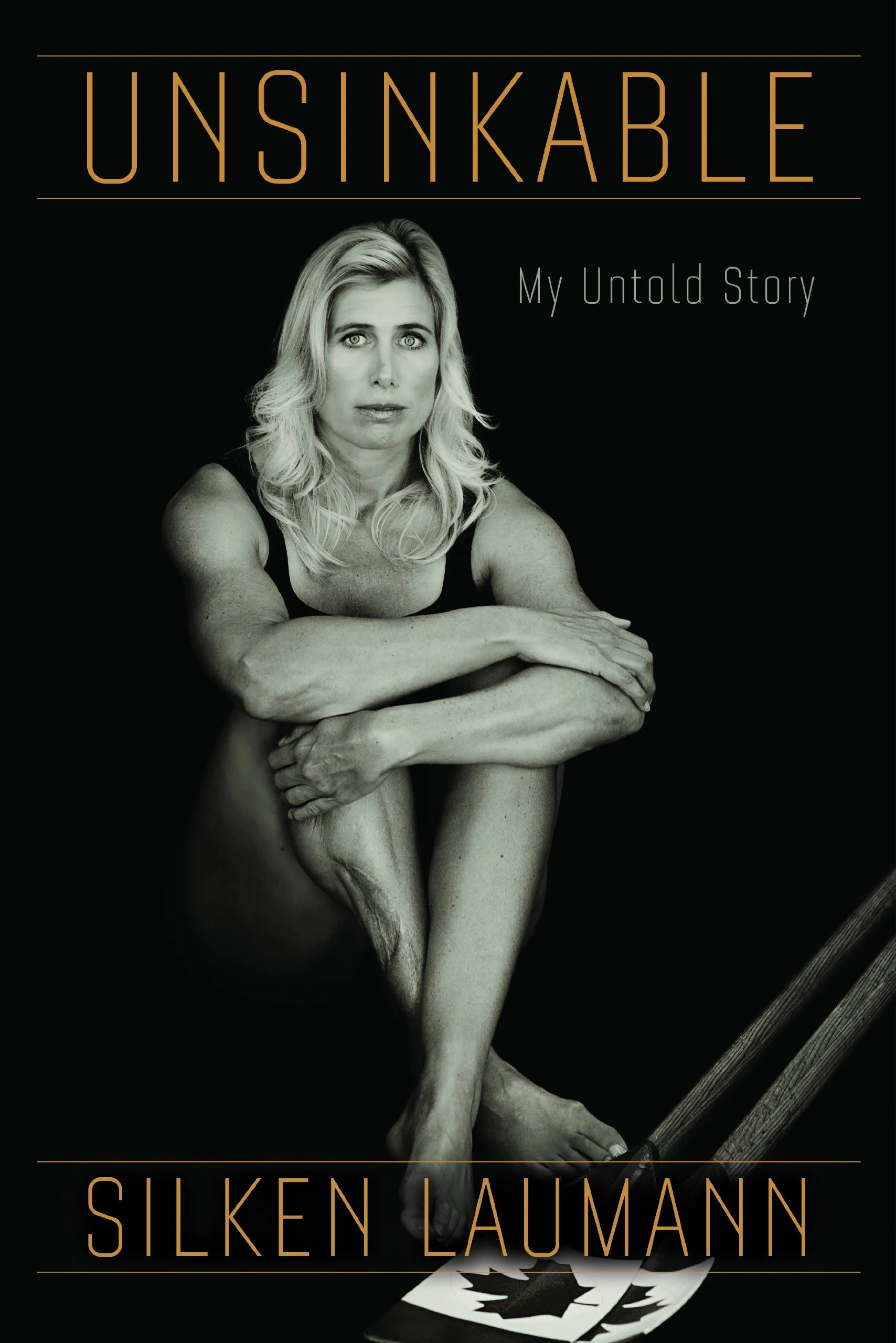
Silken Laumann
Olympic medallist, bestselling author of Unsinkable, and host of the Inflection Time podcast. Keynote speaker on resilience, and founder of the Unsinkable mental health platform.
This episode is supported by GoodLife Fitness and Ventum Financial .
One story, once a week, from someone who has been through it.
A short letter about a moment that changed someone’s life, what it taught them, and a question you might carry into your own week. No course launches, no countdown timers.