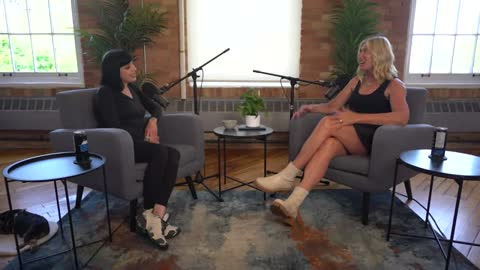
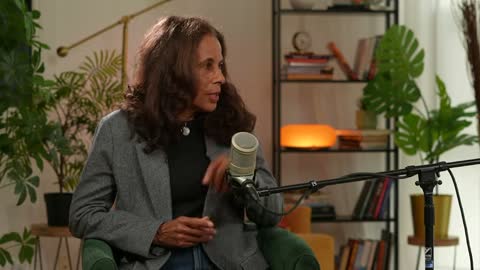
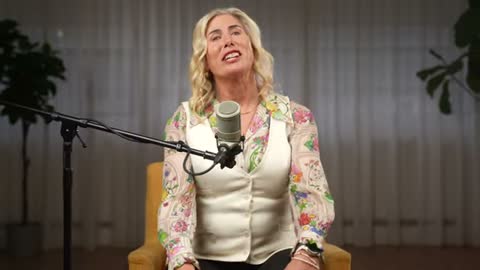
Lacy Hartselle: This Is Temporary
A friend used to tell Lacy Hartselle “this is temporary.” The phrase named her podcast, and it is still the one truth she counts on when a feeling is too much.
“So this is temporary, is that reminder that we can count on change. I don’t know what’s ahead. I don’t know what’s going to happen. But I know it’s going to change.”
Transcript
Speaker names are being checked and will appear here soon.
00:00 Meet Lacy Hartselle
Lacy Hartselle, it is so nice to have you here today. You are an actress. You have an amazing podcast called This is Temporary. You're a mental health advocate. You've just recently become a photographer and opening your own business. And really, you're just a woman who keeps reinventing yourself. So welcome. Thank you. Yeah, I'm so glad you're here. And I think we first met when you helped us at Unsinkable host our university freshman event. Yes. Yes. I was so glad I got linked in with y'all through, I mean, it was through the mental health advocacy work that Michelle and your team, we connected. And with Unsinkable, I was like, I loved everything y'all are doing with Unsinkable, Unsinkable Youth. So that was just a happy overlap. And I can hear that y'all. I can hear the Nashville in you. Is that where you are right now? You're in Nashville? Because you were in Paris for a while. Yes. I moved back to Nashville from Paris nine months ago. So I'm back in my southern roots.
01:09 Love Trip: Paris
Well, let's let's start by talking about the let's start a little bit more recently by talking about the show Love Trip: Paris. It was so fun to see you on that show having, you know, seen you in a more serious mode. Well, not that falling in love was not serious. But, you know, with that, you know, talking about mental health as a mental health advocate, but now seeing you in Love Trip: Paris, finding love along with three other Americans. It was a great premise, I thought, for a show. Everybody living in the same building, all these eligible bachelors and these four remarkable women. And what was the experience like for you?
Gosh. So it was called Love Trip: Paris. And it was, yeah, for us American women. It was Freeform's first reality show. So they really tried to stay in the lane of what they do with their narrative shows, having strong, progressive young women that are bold. And they I mean, the intention was definitely to allow us just to be ourselves. But in Paris, so like the bachelorette meets Emily in Paris. Yeah, yeah. I mean, I think it was super romantic.
Yeah, exactly. And I know a huge part of that was they liked that I was a mental health advocate and that I was so open to talk about my experiences with my mental health. And that I I think there's a new wave with each generation of people being more hungry to talk about it. Whereas before it was kind of what we kept hidden.
02:48 “You can’t use the word mental”
You know, absolutely. My mother in law just recently passed away. She was a hundred and two when she died. Yeah. And she just had a great she's a she's a force of nature, actually. But I remember when I started Unsinkable and I told her it was a mental health charity. She kept saying to me, you can't use the word mental. You can't use the word mental.
And it's like, you know, it was just for her such an obstacle, because obviously that word for her literally a hundred years ago was imbued with a lot of meaning. That was negative. That was a negative connotation. How do you see that changing? You know, particularly I'm noticing like the last five years, more and more actresses and performers and actors coming forward and talking about mental health.
03:39 Going public with a bipolar diagnosis
Yeah. You know, I've been acting while my whole life, but professionally for 13 years. And I remember when I first started talking openly about my mental health and about bipolar diagnoses I had received a decade ago when I started making that public knowledge. Even my own mother, who is so sweet and definitely has my best interest in store. She expressed concern to me about my career and going, maybe people won't want to work with you if they know because of the connotation around
talking about these things. Maybe people will think you're unreliable. People will think that you're a hot. I mean, truly, that was the deepest side of the spectrum of fear. And I remember thinking even 10 years ago, but I have to honor myself above everything. And that's as an actor and as a human in general, what you have to bring to the table is your unique self.
And so I was like, well, this is part of me. But it's interesting to see that now, a decade later, now that I've had a diagnosis, I even talk to my psychiatrist now about reassessment and going, where am I now? Because now I've been fortunate enough to have tons of help in many different forms and in a lot of clinical ways, like trauma therapy specifically, like an intensive outpatient program I went through for four months.
And I just have all these tools that have helped me learn to regulate. So now it's like, I haven't- I still have bipolar too. Yeah, yeah. I know. And it's where I'm like, well, a label is there, I think, to help you.
And if it doesn't serve you anymore, then I don't think it should apply. Or I think that's such an important point. And I think when I first shared my story, I wrote a book called Unsinkable. And I shared my story of growing up with a mom who had undiagnosed mental illness. And then I shared my own struggles with depression and anxiety. And I really felt when I published that book, like I was walking off a cliff.
Like, and that was 10 years ago. And just feeling like I was at peace with it. I was in my truth. I was in my vulnerability. But I actually knew that a lot of people didn't understand mental health. And that they would have assumptions.
They would have ideas about me and my journey that were, yeah, that were actually part of the stigma around mental health. And it's funny because I kind of lay down like, oh, yeah, no, like I just have a little bit of anxiety or I, you know, I sometimes have depression. And as I become more comfortable, you know, as a spokesperson and, you know, running Unsinkable and now this podcast, I find myself being stronger in my voice about mental health and being more
truthful, I think, about my struggles. You know, has that happened to you too? Like, as you have found your voice, I mean, it sounds like you never didn't have your voice, but you've been able to stand in the truth of your experience even more strongly through your advocacy work.
Yeah, I definitely think that experience builds confidence. It's like you said, when you first were kind of going over the cliff, you actually, I think, were going through at least your own, you know, version of it. Obviously, it wasn't a literal cliff, but it felt like it when you're like, this is the unknown. And I am jumping into that territory by allowing myself to be so seen.
And the beginning is the hardest part because you just have no clue. But I do think that there is a strength that is built. And it's like honing in a new muscle of going, okay, vulnerability is a muscle. And the more you lean into it, you learn to trust yourself and lean back and go, oh, I caught myself. I caught myself again and again and again.
And I survived that. Or maybe it was still tough, but I still made it. So I definitely have had sort of that spiraling upwards kind of journey.
07:56 Is there a ranking of mental illness?
Yeah, and you know, there all seems to be, it's funny when it's mental illness and mental health as I think about it, you know, there's almost like a ranking, right? Like, you know, a lot of people can admit that they have anxiety or depression or they have anxiety attacks. But to actually be public and say, I have bipolar 2, you know, oh, that's a serious mental illness.
It is. And I just think that is so, it is so frustrating to me because bipolar disorder, bipolar 2 disorder is a mental illness like all the other mental illnesses. And, you know, when people say, oh, that's so serious. And, you know, I wouldn't want to have that one. And it's like, okay, but isn't all of our mental health a continuum?
And isn't all, you know, all of us have chemistry that sometimes can get unbalanced. Of course, you know, people with bipolar and bipolar 2 struggle a lot more, but it's a continuum we're all. So why are we so afraid? And why do we have like, we seem to have such strong ideas on what it means to be bipolar? Do you feel that?
Oh, absolutely. I think it's, for me, it's linked to like our hunger to understand, our hunger to feel like we're more in control through understanding. And I think that that's been the past decade's journey for me, even with my diagnosis, just thinking that I could prepare myself for anything if I could just understand it all. Whereas I think there's almost like a paralysis by analysis, you know, thing you're setting
yourself up for through just trying to understand everything versus learning to exist and to be and to trust your whole body, mind, soul working together to take care of you. So for me, the label of bipolarity really served me at the beginning because I needed the understanding behind it to help me justify things, to help me, to help me help myself and learn to find what does regulation look like? And it gave me so many pathways.
But for the past decade, I've exhausted those pathways. And I finally, this year, really started leaning back into knowing that we all are quite limitless and we all can become, and I'm an actor, so I'm reminded of this daily. If I can transform before your eyes, if I believe it, you believe it. But I was like, that whole acting journey is to help me see that in my life, in my root life as Lacy and in everyone else's life, we can do the same thing.
You want to be stronger. You want to be the confident person that walks into the room and believes in themselves and can, you know, take action for good and pause good, like all those things to overcome anxiety. We can do those things.
10:56 Playing the part of a label
But I realized that I was kind of suffering over labels in these last few years. Whereas the label served me at first, I think I started almost taking bipolar, the label that I was given, the diagnosis I was given that was, again, put in place to help. I started to turn it into like an acting role that I was assigned. I'll play the part because you've labeled me bipolar. I'm playing the part of bipolar.
I believe I am this, therefore I am this. And I was waking up every day being limited by the fears and stigma that that entails. So I'm, yeah, like I'm really, I'm really hearing you here, Lacy, because I have four children, all who have a label, all who have a diagnosis. My husband and I, one, our oldest is, you know, profoundly affected by autism. You know, she's 28.
She's not living independently. Our youngest, you know, is dyslexic and neurodiverse and ADHD. And, you know, recently I've finally been diagnosed as ADHD. And like, I get it in the beginning. I think it's validating. I know for myself, I felt like I was always dropping balls in my life.
I was always disappointing people. I was always somehow like not doing enough. And, you know, I beat myself up about it. And getting that label was so helpful for me initially, because it's like, yeah, you know, I can't find things. Yeah.
You know, I, I don't know where it is. And like, whether it's a wedding ring or it's a file, it's like, if it's not in front of me, it doesn't exist. So like, I know filing system works unless the filing system is a very long desk with a pink sticky note. That flashes, right?
So, but they also, yeah, it also can be limiting. And sometimes I think it's limiting both because, you know, you absorb it yourself, but also other people have preconceived ideas of what, you know, somebody who's dyslexic, what they can accomplish in the world, what somebody with bipolar 2 can accomplish in the world.
13:20 Sensitivity as a strength
And I want to know if you wouldn't mind speaking to maybe some of the gifts of having bipolar 2. If there's some things that you think of that, you know, I like this part of it, or maybe you don't like this part of it, or, you know, this part allows me to do this. Right. I love that you said all of that because it is about reframing the narrative of the stigma.
We know that side of all these labels we were aware of and have been given. Like you said, it validates us at first, but then we get to a point where it can feel limiting. So how do we take the few things we have control over is, you know, our beliefs and our behavior. So it's like, how do I change and go, okay, so what I'm hearing from the world is that bipolar is, you know, intense and it's disruptive and, you know, it can inhibit me from living the life I want to live.
And I'm going, well, but if I have it, if that's the way I've been assessed and that's the way I know myself to exist, then if I believe that there's nothing wrong with any of us, that we're all different and designed differently for different purposes and in a greater perspective that we can all work together, how do my strengths play a part here? And I definitely think that being bipolar creates this heightened sensitivity. I'm a highly sensitive person.
I am very in tune with all of my environments, with all the energies around me. And I can't not be affected by people. And that's a gift. I, at times, I think the world tried to feed me the idea that that was something that was wrong with me. And now I see I do need my own boundaries.
I do need to take my ownership of how I take care of myself and give myself the space I need to feed into myself. I need a lot of alone time. But when I get that and when I take care of me, then I can go into the world with my strengths of my sensitivities, with my moodiness, which is built into me. I am such a moody person.
But it's pointing me to where things are off so that I can help wake other people up around me who aren't in tune to it. I can go, hey, we're off here. And you need to listen to me because I feel it when y'all aren't aware yet. Yeah, I love the word wake, right? Because you can't help it.
You are awake. You feel everything. When something, when you feel something wrong, actually, it is wrong because what you're doing is you're, you're, you know, you're an empath. You're feeling another person's energy and you can't fake it.
16:07 Acting as a safe place to feel
Like, which is kind of funny because you're an actress, right? So part of me is thinking, well, how did you ever survive? How are you surviving being an actress where, I mean, you're always being coached. You're always being criticized. You're, you know, there's so much about acting that can be really soul destroying. How does somebody who's highly sensitive, you know, excel in that world?
It was at first at a younger age, a therapeutic outlet that I was unaware of. As far as how at a young age, I just knew I was drawn to it. Looking back, I can see I finally received attention and approval for my sensitivity there. Whereas every other area of my life growing up, I was shamed for my sensitivity. So I was being praised for my sensitivity in acting. And because I always had this wealth of so many, not only my own, you know, like overflowing
emotions that just never end, but everyone else's as well. I can tap into it any moment. If someone's in front of me, I feel you. I feel your energy. I feed off of your energy. So it was definitely a lifesaver because acting gave me a safe space.
To be able to explore and express these emotions that hadn't been, I hadn't been allowed to express them, you know, at home and in other areas where, you know, that's, that's how you kind of build up triggers with trauma as you go through something, but you weren't allowed the appropriate response you needed. So it stops and it's stifled and it lives in you. Acting was this therapeutic space where I didn't even realize, but I was just getting rid of,
getting rid of, getting rid of all those emotional responses. Oh, and so now you're perfectly healed. This is, this is beautiful. I think I'm going to get into acting. I mean, I recommend it for everybody, even just for a class or an improv class or because it really, it's not therapy, but it's therapeutic.
And there's always more down there, especially if you're highly sensitive, there's always more to tap into. And I think like what I'm hearing too, it's like, you're working with who you are. You're, you're, you have gotten to a place in your life and you're, you're, you know, he's still very young. I mean, I'm a lot older than you and I'd say I've only really been there for the last 10
years of really accepting and loving who I am. So that when you pick up on other people's energy, you know, you don't own it anymore because you're owning your own space and you're holding yourself in such high regard and such, such, such self-love.
18:54 Learning to love herself first
And it just reminded me of something that you said, um, on Love Trip: Paris. Um, and I think it was to your, your, your now has been Bastien. Is it, how do you say his name Bastien? Uh, well, there's a French pronunciation in the American or like, you know, English. Um, so we, if we were just speaking English, we would just say Bastien, but if we're saying it in French, it's Bastien.
Okay. Well, and he, he said, you were speaking to him, um, at one point and you were talking about, you know, how highly sensitive you are. And you said, I had to learn to love myself before I could love someone else. Oh yeah. That was really powerful.
And I think it's something I've heard over and over again, as I've been recording these podcasts that so many of our high achievers, these people that we have on who, you know, Olympic athletes and actresses and, and musicians that they often started their career without that deep self-love. And there came a moment that their career demanded so much of themselves. And there were so many other people defining who they were, that they had to finally define
who they were to themselves and come at it. And, and I tell you, as the, as somebody who, you know, was quite well known for quite some time in Canada for something that I did 35 years ago, and that was, you know, winning an Olympic bronze medal with a broken leg. Yeah. Which is crazy.
It's crazy, right? It was crazy. And the whole story is just like, even when I tell the story to myself today, I'm like, that is like, I have no idea. Not about the energy and, you know, the universe and everything. There was something magical happening.
Yes. However, I am now, I have 35 years of like marriage and four children and a daughter with autism and a divorce and writing a book. And like, I've had so much in my life and yet people still define me in one way. And that's what I heard from, I was interviewing Madison Tevlin not long ago. And she said, I don't want to be defined by having Down syndrome.
I want people to see me as that person. And I'm hearing that from you, you know, bipolar, the label is helpful. Initially it was helpful, but you want anybody who meets you to see all of you. Yeah.
21:37 Who am I without the label?
Well, I think at some point we all have to look at ourselves and go, okay, here are, and most of us are aware of labels. We either give it ourselves or the world has given us and what good, bad, whatever they are, but we have to go, who am I without that label? And I think that's what I've been confronting for the past few years is I am so much more than any one of these, you know, things that someone might view me as this, they view me as that,
or they know me for this, or I knew myself largely through this bipolar, you know, filter. And it is part of me. It's meant to be a part of my journey, but it's not all of me. None of us, like we are all so limitless that, yeah, I agree. There's this soul that radiates beyond any of these things. And ultimately these labels are there to connect us.
I think they're there as little flags to wave, to go, oh, you too? Oh, you're this too? Oh, and it's a way to connect experience. And that's kind of the way I use things now. So I'm a very fluid person and I'm much more in alignment with, or like you were saying, acceptance and an acceptance more of myself that changes every day.
So I'm like, okay, who am I going to be today? And when anxiety starts to act up, which is most of the time us being too fixated on the future or the past, I'm like, well, I'm A, clearly not being present because if I was present, I would trust who I am right now. And I would trust future me to handle that when I'm her, because I'm not her yet. I don't know her yet.
Every time I speak to you, every time I listen to you, I feel like I learned something. And that was just such a beautiful description of what anxiety is. It is not being in the moment. You were literally in your head with what in the past or the future. And I'm so much older than you. And when I was growing up and into my 20s and 30s, we didn't talk about anything, anything
real that was going on in our lives. We went through postpartum depression and having children and feeling failure and having out-of-control anxiety. And there were no words. It's people like you who've stood up and said, I have bipolar 2 or others that have said, I have anxiety, I have depression.
And in that, for people like me who went to therapy for the first time when I literally had a breakdown and my kids were like, I don't know, like five and six or something like that. And I just couldn't tolerate them anymore. I thought I was going to implode with the pressure of being a mom. And I went to therapy. And I literally thought I'd go like three or four times and get a tool, put it in my toolbox,
and that would be done. And I hated therapy. Don't get me wrong. Like the beginning, I just hated it, digging all this stuff up. And I remember when my therapist asked me about my family of origin, I was like, what? What does that have to do with anything?
I was so naive. But it took me on this beautiful journey of understanding myself. And I think when we can understand, and people in the public eye like yourself and so many of our guests talk openly about mental health and talk about the struggles. And even if they don't perceive themselves of having mental health issues, if they talk about the times that they have been so low, I think it gives all of us, we can all kind
of breathe a sigh of relief and go, oh, like that's perfectly normal in the circumstances. What I think probably one of the most powerful things I learned in therapy is that who I am today really is perfectly understandable, kind of given the circumstances that I grew up with and what I experienced. And that doesn't mean that I'm doomed to always have like a stamp of trauma in my life or, you know, abandonment and some of the other things that occurred when I was the little girl.
But it means that it's a lens to understanding and forgiving my blind spots in my weaknesses. And I think that's the beauty of, you know, yes, labels can be difficult and there's really downsides to labels. But I think one of the upsides is like when I was given the label of ADHD, it really helped me understand a lot about how my brain works and helped me understand how I can help my brain do different.
Oh, yeah. And where to give yourself more grace and compassion. I mean, that's where the labels, because you go, oh, I'm going to stop measuring myself against people that are not designed the way I'm designed. I'm not going to do it the same way. I will do it.
If there's a task to do, I can do it. I'm just going to find my own way. You know, and that's the beauty of understanding and labels that are meant to help. But yeah, then there's got to be a lot of grace and compassion to then be like, now, how do I figure out how to integrate all this new knowledge into my healing? Because I think a lot of us have this expectation that now I know.
So now I'm going to be good. You know, that's like. Mm hmm. Mm hmm. And I love the way you use the word grace. Yeah.
Lacy, I hope you understand how good you are at this about. enlightening and speaking to people. Not not only about mental health, it's really about wellness. It's about living in this world as a highly sensitive person. It's about all of us.
You know, being the best kind of version of ourselves by understanding the things that challenge us and the things that help us shine. So I hope that I first of all, I hope you really absorb that. And I hope that whatever is ahead for you, that you can continue and you will continue
27:57 A friend’s words, and where the podcast got its name
to build on this platform that you've developed for yourself, which kind of leads me to your podcast, which I love the name. This is temporary. This is temporary. It sounds like a mantra. It is, you know, I developed, I completely got this title from my friend Corey. He actually passed away a few years ago, but he was also diagnosed bipolar. And he felt he was an actor, phenomenal actor, but he felt like a big brother energy to me. And we started talking and got connected because like the little flag I raised by admitting to the world I'm bipolar, I have this diagnosis,
he started reaching out to me about his diagnosis. And we really became a lifeline at times for each other of just being able to check in and share and, and be able to talk about things that are heavily stigmatized without the shame or judgment. Because we get it. We're like, you don't have to be scared about me. I'm just telling you, this is what I feel like right now. And we could be so real without it being like a therapy setting, you know, where it's like, oh, I'm paying you to listen. So he would always tell me, this is temporary. This is temporary. So when I was starting the
podcast, I was like, well, Corey, this is what it is. It's, it named itself, you know, before the podcast, before I knew it would exist, it had its legs already. So that's where that came from.
29:22 What “this is temporary” means
What does that phrase mean to you? This is temporary. So, I mean, think about, well, you had mentioned, you know, a lot of people that may not have a mental health diagnosis might still end up talking about mental health. And that's because if you're a human being, you can't avoid your mental health. You know, I don't care if you've ever seen anyone for help in that arena or not, like you're a human being, you have physical health, emotional health, you know, sexual health, mental health. So it's something that exists. So it shouldn't have a
stigma at all. But some of us obviously have more extreme scenarios where we do require professional help. And, but I say I lead with that because there are people, you know, who deal with anxiety or depression, things that have these big, more weighty understandings of what you deal with underneath it, where these moments in life can feel so doomed. And it can be for, sometimes you have all the reasons around you, like it makes sense, it's circumstantial. And then sometimes there's nothing to blame it on. You're just like, why am I losing my shit? Why do I feel unsafe? You know?
And so for me, this is temporary, is a phrase that is the only thing I could count on. It was the only truth I knew when the unknown was too much to swallow. And it was in front of me and scary, whether I was in the middle of a panic attack, or a bipolar depressive, numb spell, because for me being such a feeler, when I feel numb, it's the scariest thing in the world, because I'm like, I have no way of, because I gauge my existence by how I feel. So this is temporary, is that reminder that we can count on change. I don't know what's ahead. I don't know what's going to happen.
But I know it's going to change. I know this feeling will shift into another feeling at some point. Yeah. And it strikes me, you know, as hope. You know, one of the things when I started Unsinkable with this, which is a story sharing platform where people share their stories of struggle, particularly in the areas of mental health. But it's always through a lens of hope and how, because I think it's really important that we share stories, sometimes are tough stories. But that, you know, the person listening who might also be struggling feels a sense of,
like, like, I can get through it. And it's so, you know, we all know that mental illness can be fatal.
We've all lost people to mental illness, or I have at least. And it is so important that we remind others, that this is temporary, whatever you're feeling, whatever you're struggling with, whatever overwhelming number of circumstances in your life may feel like it's crashing down, that it will pass, that you can get through it. And these feelings and these emotions and these situations are temporary.
32:43 Starting a podcast in the pandemic
So I love that. What is your goal in the pot in doing the podcast? What do you see as sort of like the purpose of what you'd like to achieve with it? Yeah, so it's definitely during the pandemic, when I created it, like a month or two into the pandemic, it was my way of feeling overcoming helplessness, you know, like that helplessness feeling that I think we all felt during the pandemic, but I especially my depression started sinking in. And I was like, Oh, no. And I thought about, you know, be the change you want to see in the world. And I love that phrase, that idea.
When I was diagnosed bipolar, when I was 21, back in like, I mean, 10 years ago, I didn't see a bunch of content out there. No, we weren't living in a world of as much content as we have now. But I didn't see people my age, or people at all really openly talking about dealing with bipolar and it having a good story attached to it. I heard a lot of like, you know, and it was just like, the literature that I would read was just like, very intense and dark. And we're very clinical, it can also be very clinical. And you're like, that's not really a reflection of like the people I know or my life.
Exactly. So I had already been making, like use of Instagram stories for years of just sharing, you know, real bits of what I wanted to see on Instagram when I logged. I didn't want to see people whose lives look curated and put together. I wanted to see, Oh, this is a tough Monday.
I'm struggling. Anyone else having a hard time existing today? Like anyone else feel this? And then the more I shared, the more I started to realize that I have, because of my hypersensitivity, I have a real gauge on my collective environment. I have a good feel on when I'm dealing with something, I know that means someone else's too. And it's just our most specific truths and nuanced experiences that we go through in life are what directly connects us to others. It may not look the same on the outside, but internally, it's the same. It's the human experience. And so that was where
I started finding connection. And obviously, during the pandemic, we were suffering connection. So we're a lack of connection and creating the podcast was the only way I could find to catapult information out there. And it's ever since then, I've kept it at something that I don't put pressure
35:28 Ready for love in Paris
on. Well, yeah, because it's, it's interesting, because I started to interrupt, but I'm thinking about Love Trip: Paris. And you know, it's like, it was a very diverse kinds of love. And yeah, you know, I don't know, like, did you go on that show looking for love? I did. I did. You know, it's funny, because we had talked about the beginning of this that I said, I had to love myself before I was ready to let love in. And I have been through many different relationships and experiences where I saw, wow, it doesn't matter what's in front of me.
If I'm not ready to receive something good, I'm going to reject it. And I had experienced that. So that year, my higher self, the universal creator, whatever prepared me to go grow, get your shit together and love yourself. Because what you want, you can't receive yet, because you're not opening yourself up to it. And you have to love yourself first, the way to get to what you want is through yourself. And so I had that the whole year before, and it was very intentional that year leading up. So that it was like, I knew something big was coming,
I could feel it, I could feel myself being prepared. And I actually said, go to the show at first, because I wasn't ready six months before it happened. And I wanted to do it. But I said no, because I was like, I'm not ready in here. And then I went through some more growth. And they reached out to me again. And by the time they reached out again, I was ready. And I also, I like that you pointed out that it was, it was such a beautiful, like the intention behind the show was so great. And obviously, what it ended up becoming,
there's editing, and they cut so much out. There's so much more to all the wonderful humans that were on that show. But it was exciting for me, because I honored myself in my own growth, and said no to it. And then it came back around to meet me where I was. And I was Yeah, that is that is pretty cool. And you know, if somebody said to me, I you want to, you know, do you want it? And I wouldn't. But you know, would you like to go on a reality TV show? I'm definitely in the camp of like, never, ever, ever, right? So I think there really are two kids,
people that sort of think, Oh, that would be so cool. I'll go to Paris. And then there's the absolute opposite, which would be me, which is like, Oh, my God, cameras on 24 seven. I know, we have we have this thing in Canada. It called up. I have to think about it. It's a reality show. The Great Race. Okay. Anyhow, somebody approached my husband and I about it. And I was thinking, like, we will kill each other. Like, you know, that would be the reality TV would be us like,
screaming at each other the whole time, you know. So the fact that you said yes, but like, what an intense experience to have those cameras on you. And one to be looking for love, to have these three other women, you know, really closed environment. I would actually, can you just tell me a little bit about how that experience? I mean, I know, like, you met your life. So I mean, I did. And it's so funny, because so I I'm like I said, I'm fluid in pretty much every way. So sexually as well, I identify as pansexual. And I was excited that I didn't know all the details going
into it. But they were like, kept interviewing me about those things. So in my mind, I was like, I'm gonna get to date all the genders. Like, I was really excited. And that's kind of the funny thing is, I did end up meeting Bastien, who is a male. Yeah, I met him on day one. And I'm like, this soul, whatever gender, he identifies that like, it was just him. It was his soul. I just felt the guidance that was there all along, stayed with me. And like I said, I knew I was being prepared for something big going into it. I had 111 the angel number around me everywhere, leading up to it. I
mean, it was almost annoying how in my face that number was. And so I was like, Okay, I get it. And there's a lot of things I can't explain. But angel numbers and guides and spirits and all that kind of stuff. I don't know how to name it. It changes every day how I refer to it. But there were there was
39:37 What the cameras didn’t show
a bigger force greater than me guiding you. Yeah. And so going on to the show, I didn't know what to expect. I didn't know who I'd be living with. I didn't know. I knew cameras would be all around. And they were and and there was a lot of toxicity and the manipulation behind the scenes of what making a reality show is that I was naive to. However, the three other women that I did share an apartment with who I got to meet that were the three other American women were incredible. I mean, they're just the four of us were clearly like divinely aligned to be in that experience together to learn
and grow together. And it was definitely an imperfect human kind of clusterfuck of an experience at times. But it's kind of like everything in life. It's it's it's everything's a little bittersweet. But again, the story you tell yourself about it is what changes everything. So since that experience, that I will say, the environment was very triggering for me, I came in as the strongest version of myself I had known. And I felt so confident, so capable of whatever it threw at me. And then over the total of seven weeks or whatever that it was, I deteriorated and it kind of robbed me of my sense of self and
and of being because I didn't have the boundaries I needed. I didn't have the protection safety that was kind of communicated to us we would have. We had, you know, nannies around the clock and I started smoking cigarettes so that I could go on the balcony to be outside because I couldn't even go on walks. Well, I mean, by nannies, you mean nanny cams. Okay. Oh, we had. I'm like, why did you have nannies? Are you actually nannies? We had nanny cams and nannies. We had French nannies that babysat us and watched us. And of course, you don't have your phone. You have no connection.
Outside World. They had threatened to like take my journal away from me and said, well, on the other shows, we don't even let people have their journals because they wanted to get all of your external processing on camera and your interviews that you did every other day. And it was just a lot of manipulation of emotion and trying to elicit a response for TV and wanting you to do this or that. So that's the less glamorous side. But I think that maybe I should have expected that. I believed out of my hopeful nature that it would be something different.
And you got to go to Paris and kiss the Eiffel Tower and like be whined. I mean, there must have been some pretty fun things about it. But, you know, it's fun. We're in a culture that's really addicted to this reality TV. And I think there is a huge personal cost for a lot of the people participating. It actually sounds like the four of you were pretty well equipped in many ways to handle that situation. I would hate to think of, you know, what would happen to people who were not mentally as equipped. So, you know, what about what is up next for Lacy? Like, you know, I can hear.
And I, as I said earlier, I hope that you continue to build your voice in mental health. And I think that you have so much to offer and something very special about the way you're able to articulate your experiences where they can make sense to a wide range of people. I think that's a true, it's a true talent. You have a lot of talent. So where do you see yourself in the next few years? Oh, you know, I, it's one of the funniest questions for me, because I love to manifest and visualize. I mean, I manifested my husband. I mean, truly, like, that Paris was just I leaned
into something that I latched on to, and it led me to the greatest love I've ever known. So I am very fluid in the way that I write my plans in pencil, because I'm like, right now, this feels the most true. I'm gonna lean into that. But then maybe another egg pops up. And I, I kind of nurture that for a little bit and see where that goes. And then maybe, you know, so I'm always watering seeds. I mean, I've always been passionate about acting. I think that was the one thing I had known my whole life was like, well, I'm an actor. Like, I decided that at age four. But I also see how acting has
helped helped me as it gets so much bigger than us. I think our inward journey will always be greater than the outward journey. Even though we all are so blessed by all the adventures we get to go on on our outward journey, you know, in career and personal life. Right now, I'm actually about to go film a TV show called Blue Ridge, that is filming in Charlotte, North Carolina. So it's my first guest star, I'm really excited to like dive into some a meaty role for that. I'm very grateful that I it's really hard. It's harder than ever, I feel like to book anything. So as an actor, I just feel really grateful and
aligned with that experience coming up. And in the Yeah, I was just saying your process sounds really similar to mine. Like, you know, like, whatever song is way, way, way back, it was, you know, the Olympics and very focused on that. And yeah, I know you're an actor, I'm an athlete, I'll always be an athlete, you'll always be an actor. But I just find like what I'm hearing, and I and I think I can really that really resonates for me is, like, be in whatever you're in, show up for it. And then from there, other things begin to emerge, like it's actually quite hard to, you know, like, you know,
you'll hear a school of thought is you like, you've got to write down all your goals and know, and it's, and it's true that writing down your goals is incredibly powerful. But there has to be this like openness for what shows up. And what I have found in my life is that often, I reach a goal. And I don't even realize that it was the goal. I'll tell you, doing this podcast is one of those situations I, I have wanted to do radio and be a radio host for 35 years. Like, I really felt this was what I should do. And then you know, life just happened. And so many other things came up for me and
raising kids and blah, blah, blah. And doing this podcast now, there's there's a feeling for me of coming home. Yet this is exactly what I'm supposed to be doing. And yet, I can't say that there was a mapped out plan. It was just something that I held in my heart for that long. Well, it makes sense. It's, we're given an idea of it, but it may not reveal itself the exact way that we see it at first. But it makes sense. The podcast, you're writing your book, your outreach and mental health work, all of that, for me, that overlaps with the radio voice and everything,
you know, because it's reaching the public with your voice, you know, so it's still sharing, it's still connecting. It's just in these different avenues that are kind of adjacent. And I feel kind of similar. I like I know, I'm a writer as well. And I, I know, it's, it's, I know different things that will happen at some point. But I'm just trying to be where I am now. And yeah, take care of what's in front of me and enjoy it. So that okay, when when my energy starts shifting this way, I'll ride that wave. And as your older, wiser sister, I can say to you that life is long.
Yeah, and you will be creating and, you know, putting yourself out there in the world much longer than you might think. You know, I'm approaching my 60th birthday this year.
Happy birthday. Thank you. And just just realizing like, and I'm still creating, I'm still working. So it doesn't all
47:30 Advice to her 13-year-old self
have to happen at once in exactly the way that we sort of think it should. And I, I wonder if you can cast yourself back for a moment. And imagine yourself again, as a little girl, little 13 year old Lacy and having done and experienced so much in the last over 20 years, what would you or not over 20 years over 10 years, I guess is what would you say to that little girl to his 20 closer? Okay. There you go. 18 years.
Okay. Okay. Now we got exact math. What would you say to the 13 year old Lacy? Wow. Oh, um, I just did a month or two ago, um, a hypnosis experience with a therapist, um, right. I did go back, but this was more towards seven year old Lacy. So 13 year old Lacy had a bit more spice to her. Um, I mean, I really think it's a very classic message that will always, I think I'll always need to hear it, but, uh, that what I'm working with and who I am is enough, you know, like there's nothing to prove. I like the phrase, there's nothing to prove. I'm just here
to groove because it keeps you out of the pressure perfectionism zone. And it keeps you in a very present place of play. Um, and I do think life is meant to be enjoyed. And I have, when I'm present, I have a real gift of noticing the details and helping other people pay attention to things we most of the time overlook that adds to like the joy of life. Um, so yeah, I think entrusting my design and trusting everything about me is exactly how I'm supposed to be. There's nothing wrong with me. I'm enough. Um, and I'm already of, you know, infinite worth that, that kind of message. I don't
think I could go wrong with that message. Yeah, that that's, that's beautiful. And, you know, when we know we're enough, when we know just as we are without our accomplishments, without, you know, the, uh, the acting awards, without the Olympic medals that we can stand on who we are as beautiful people. Uh, you know, when your child is born, you're looking at this baby. And when my son was born, I was like this, he's perfect. Yeah, he's perfect. And yet we don't feel that way. Most of us don't feel that way as adults. So thank you for that because I think our listeners, yeah,
that will really resonate with our listeners. You know, I actually have one more thing that you just made me think. So, because I was thinking you're right. When we're born, we see how flawless, uh, whether you're the mother looking at the child or the child is like you're flawless. And then we, the world kind of shapes us into something else away from our integrity and we're supposed to return to it. But, uh, one other thing that popped up that, that I, I've been thinking a lot about lately, um, it was my grandfather's favorite song and he passed away during the pandemic. Um, but was the, um,
happy trail song, um, Dale Evans and like Gene Autry, they sing it. Um, but it, there's a line from it that says, it's the way you ride the trail that counts. And cause some trails are happy ones, others are trails are blue. It's the way you ride the trail that counts. Here's a happy one for you. So for me, it's all about reacting. How do you react? What's the story you tell? So if it's the way you ride the trail that counts, no matter what's happening to you, you get to decide how you ride the trail. You get to decide what you look back on that with. So yeah, I would give that.
That's lovely because I think in Western society, we have this obsession with happiness like that. Yeah. And when it, whenever you're unhappy, somehow that's like a bad thing. And right. When it's just human nature, it's okay. It's just, it's, it truly is, as you said, the waves and the rhythms of life is that, you know, sometimes we're happy and we're joyful and sometimes there's darker places and each of those waves is, is, is part of the ocean. It's part of as we are as humans. So thank you. We need the contrast. We need the depth. We need the pain that connects us to ourselves and to others.
And it's just, we create more with our pain, honestly. So. Thank you, Lacy. Thank you for, thank you for being you. Likewise, Silken. Like so much courage in your authenticity and the way that you show up and bringing light and intelligence to, to the area of mental health. I think you're helping so many people in being in the world, the way that showing up in the world, the way you are. So thank you.
Thank you. I could say all the same to you. I'm so grateful and so excited to see the way that everything has extended, like started with you, but extended out from you and everyone that you've touched by doing and sharing your voice and sharing your truth, everything. So I, I'm, it feels very circle for me to be here right now with you. So I'm just really grateful. Yeah. Thanks. Thanks for taking the time. So appreciate it, Lacy. You take care of yourself. You as well.
Bye. Bye. Bye. Thanks for tuning into Inflection Time. I hope our conversation inspired you to think about inflection points in your own life. If you enjoyed our chat, be sure to subscribe, rate, and leave a review. It really helps. Remember, every challenge is an opportunity to grow. So keep embracing those
turning points. Until next time, I'm Silken Laumann, and this is Inflection Time. I'd like to thank my sponsor, GoodLife Fitness and Tall Boy Water. A big thank you to our incredible guests for sharing their stories with us. I'd also like to thank our fabulous production team, our executive producer, Michelle Archer, our producer, Phil Kluba, and our communications director, Christine Bays. Inflection Time was created by Archer & Co, Akrenim and me. As an Olympic athlete, it's not surprising. I love working out and I love going to the gym. Strength
training is so important for bone health, for metabolism. And our partner is GoodLife Fitness. They are offering a seven-day pass to all of our listeners. Visit our description to access your seven-day pass. remember to learn more as well as if you will see all of our listeners. There are
Key takeaways
- A label can outgrow you. Her bipolar diagnosis gave Lacy understanding and pathways at first. Years later she noticed she was playing the part of the label, and living inside its fears.
- Sensitivity as a gift. Growing up, she was shamed for her sensitivity. Now she sees it as what lets her feel when something in a room is off, before anyone else does.
- Acting gave her room. On stage she was praised for the same emotions she wasn’t allowed to show at home. It was therapeutic long before she knew it.
- Loving herself came first. Lacy said no to Love Trip: Paris the first time because she wasn’t ready. When the show came back, she was, and she met Bastien on day one.
- The one thing she counts on. In a panic attack or a numb, depressive spell, “this is temporary” is the truth she holds on to: this feeling will shift into another one.
Lacy Hartselle
Actor and host of the mental health podcast This Is Temporary
Lacy Hartselle is an American actor from Nashville, Tennessee, who earned a B.F.A. in Acting from Lipscomb University. Her film work includes Novitiate, The Alpha Test and Curse of the Nun. In 2020 she launched This Is Temporary, a mental health podcast she hosts, opening it with an episode about her own journey with bipolar 2 disorder.
Resources 11
Research and sources behind what was said in this conversation.
- Unsinkable weareunsinkable.com Silken’s story-sharing charity. Lacy helped host its university freshman event.
- Love Trip: Paris on Freeform is a fresh new take on reality dating ABC7 Los Angeles The Freeform dating series that brought four American women, Lacy among them, to Paris.
- Bipolar Disorder National Institute of Mental Health What bipolar disorder is, its signs and its treatment. Lacy has spoken publicly about her bipolar 2 diagnosis.
- Bipolar Disorder CAMH A Canadian guide to bipolar disorder and its treatment.
- Self-stigma and the “why try” effect (Corrigan, Larson and Rüsch, 2009) World Psychiatry How people can take on the stereotypes attached to a diagnosis and stop pursuing their goals, close to Lacy’s sense of playing the part she was labelled with.
- Attention-Deficit/Hyperactivity Disorder National Institute of Mental Health ADHD in adults as well as children. Silken was diagnosed recently.
- Sensory-processing sensitivity and its relation to introversion and emotionality (Aron and Aron, 1997) Journal of Personality and Social Psychology The research behind the highly sensitive person, the term Lacy uses for herself.
- North American Drama Therapy Association NADTA Drama therapy as an active, embodied practice. Lacy says acting is not therapy, but it is therapeutic.
- Canadian Down Syndrome Society CDSS Silken recalls Madison Tevlin saying she does not want to be defined by having Down syndrome.
- This Is Temporary, episode 1: Trust Me, I Get It This Is Temporary The first episode of Lacy’s podcast, on her own mental health journey.
- What’s the difference between mental health and mental illness? Canadian Mental Health Association, BC Division Everyone has mental health, as Lacy says: if you are a human being, you can’t avoid it.
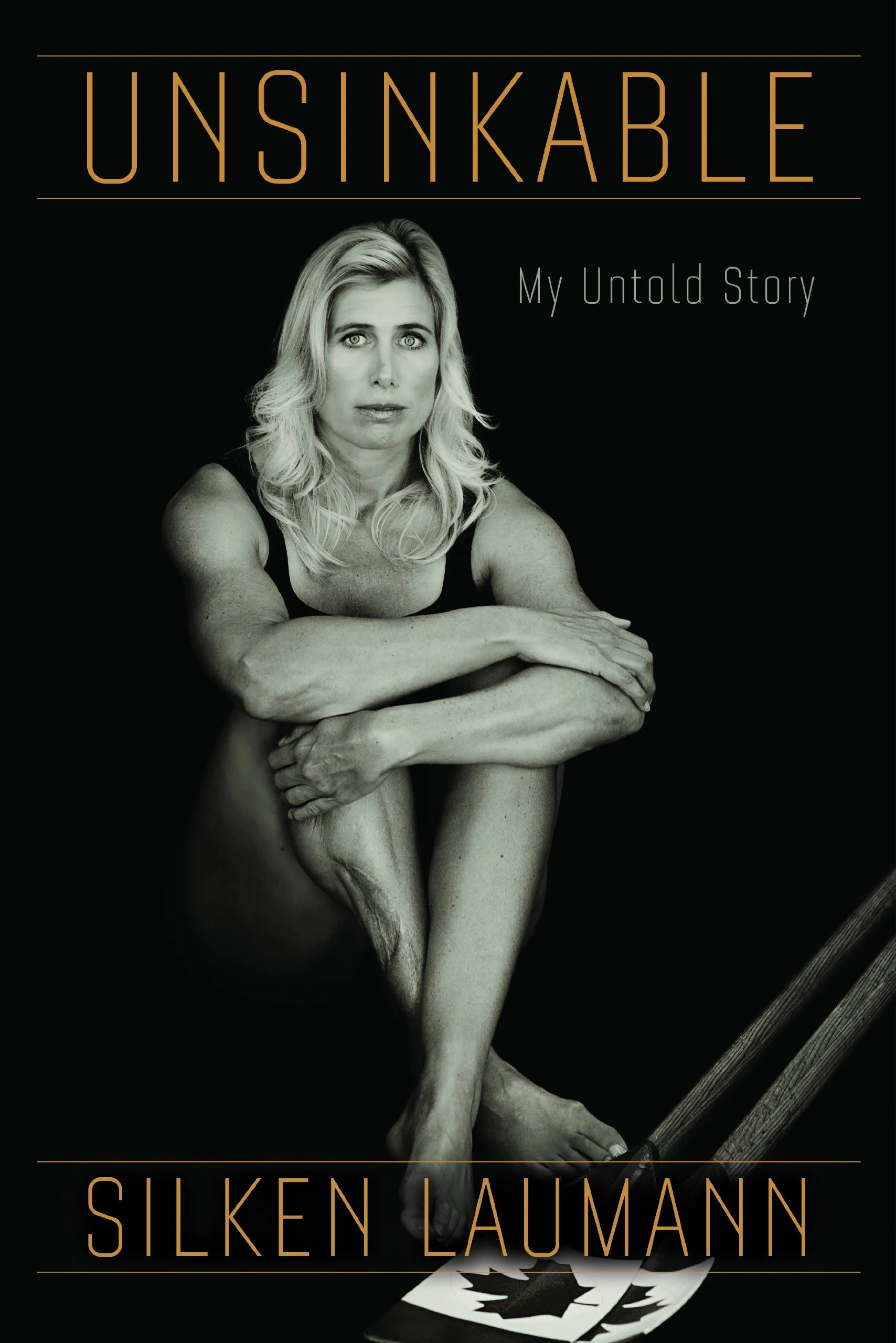
Silken Laumann
Olympic medallist, bestselling author of Unsinkable, and host of the Inflection Time podcast. Keynote speaker on resilience, and founder of the Unsinkable mental health platform.
This episode is supported by GoodLife Fitness and Tall Boy Water .
One story, once a week, from someone who has been through it.
A short letter about a moment that changed someone’s life, what it taught them, and a question you might carry into your own week. No course launches, no countdown timers.