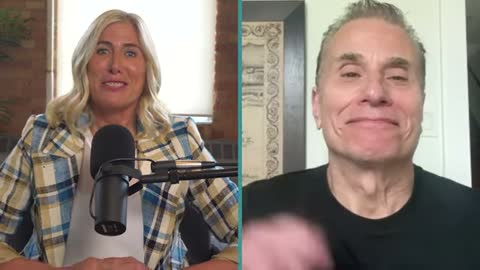
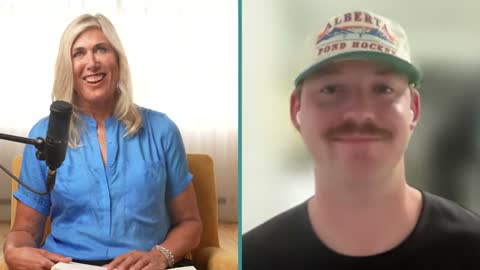
Matt Kenny: The Hockey Player He Kept Hidden
Told over Zoom at his own birthday party that he had MS, Matt Kenny went to the darkest place he had known, and found his way back to the hockey player he had buried.
“Because Matt could be gay and Matt could be hockey player, but those two humans never met.”
Transcript
Speaker names are being checked and will appear here soon.
00:00 Meet Matt Kenny
Welcome to Inflection Time. I'm Silken Laumann. Every life has turning points, those moments that change everything. In this podcast, I sit down with remarkable people to explore the challenges, choices, and unexpected events that shape who we are. From heartbreak to triumph, fear to clarity, these are the stories that remind us that growth isn't linear and meaning is often found in the moments we least expect. Inflection Time, and covering the moments that make us.
This next conversation with Matt Kenny is really important. Matt Kenny is a young man who loved hockey and could not find a place as a gay hockey player in a sport he loved. He's a young man who's struggling with an MS diagnosis and has moved kind of from hopelessness to hope to empowerment to now empowering others. It's an important conversation and I hope you enjoy it on Inflection Time. Matt Kenny, I am so happy to have you on my podcast Inflection Time today. I was listening to how you describe yourself. You know, I think the first thing that stood out is you wear your hat backwards and I'm like, that's an awesome strategy for bad hair days. You are a recovering NHL player and we'll talk about that a little later in the podcast. You're a marathon runner and you live with MS.
So I'm just pleased to dive into this conversation really by starting, if you don't mind, talking about where you kind of were in your life because you're very athletic, you're a very fit person. And of course, I can relate to that. I think those of us who are athletes, movement, you know, it takes a very big space in our life. And I've often thought, not just with my career as a rower, but just in life in general, that I need to move. That's part of how I live in the world. And it's this thing that always is nourishing me. It's, you know, regulating my nervous system and it's a place I find a lot of joy. So here you found yourself kind of, I think it was during COVID, you know, having your active athletic life when suddenly you got a phone call from your doctor.
02:30 A birthday party, and an MS diagnosis over Zoom
Can you tell me about that moment?
Yeah, absolutely. Thank you so much for having me, Silken. It's a pleasure to be here. One thing, I wasn't in the NHL. I wish I'll take that. Feel free to leave that in. Okay, I'll leave that in. Maybe how, you know, details, details. Don't let the details get away of a good story, you know. You were a very high level hockey player. Yeah, I was a competitive player out of Ontario. But yeah, so many facets of the story.
And during COVID, I started to have, you know, some weird side effects happening. And they thought for a long time it was long COVID or maybe a side effect from one of the vaccines. And so I went through probably three months of testing and then at my birthday party, because that's very on brand for me. If it can be like an 11 out of 10 dramatic, it's going to happen to me. So at my birthday party, I got a phone call and it said brain doctor on my phone because that's how I had him saved. And they basically told me via Zoom in a hotel room of a Marriott that I had MS.
And they did not hold back on what that would mean for me. And in retrospect, like super unhelpful conversation in terms of like right off the bat, like MS will almost always end in disability. And we recommend starting treatment immediately. And, you know, none of us were at our best during the pandemic mentally or physically across the board. So it was one of the worst days of my life because it was it it hit me out of nowhere. And I wasn't.
Yeah, I mean, how could you ever expect that? I mean, in particular, during the pandemic, there were all of these weird symptoms going around. So I kept that even crossed your mind. No. So he told me when they were like, hey, you know, you're having some weird nerve things, but none of it presented as standard multiple sclerosis. So they kind of they're like, we're going to test you for MS as just a throwaway comment.
And funnily enough, when he said that and I was sitting in a doctor's office, my body broke out in sweat. And like I could start to see sweat seeping through my shirt just from the word MS. And between you and I, I didn't know what it meant at that time. I knew it. I knew it was a disease. I knew people had it, but I could never, you know, looked into it.
And my body had this visceral reaction to just the word MS. And in retrospect, like I asked him, I was like, I kind of go to the bathroom. I have to go to the bathroom. And I went to the bathroom and started like a little mini panic attack going, oh, God, this isn't just, you know, my arms going a little bit numb. What what does this look like? And this was this point.
But this was even before he gave you the diagnosis. Yeah. Yeah. So. So what happened in the moment? Like, okay, so, you know, this, oh yeah, you might have, it's kind of like when you do a blood test, so we're testing for, you know, um, different sexual diseases and oh, so make sure you don't have AIDS.
And then you hear that word and you're like, what? And all of a sudden, like, you're going through your little file box. Like, you know, you're single at least. And yeah, so that's what you're doing, but you're kind of like, okay, it's going to be fine. And then, then, I don't know, can you, can you articulate how you felt when you actually were on that Zoom call? Oh, yeah.
Yeah. Yeah. Despair. It was, it was a moment of, I can't explain what happens to your brain when you are not in an environment where you're prepared for that. It would be different, right? If you're maybe a cancer diagnosis or a diagnosis where they may have prepared you for, hey, this is what it's looking like and getting you ready for it.
It came out of left field. I've been tested for Lyme's disease and all these other things. So this was just one of the other things that were on the list. And when that word came through, my immediate was, I'm very good at denial. It's one of my top things on my resume. Like, no, that's not me.
No, thanks. You know, you don't know me. And then as I heard him say, we'll always end in disability, it, you just, I just went numb. No, no pun intended. Side effect of MS is numbness. Like, I just, I went numb and you have this moment of it's over.
Like every, and so quickly my brain started to file things away of like, you missed all these opportunities and you're never going to get them again. And you didn't do this and you didn't do this and you didn't do this. And now your future in the second moment, it's all gone. It's gone. And you missed your chance. And, and this is all happening like at super speed.
And I mean, isn't it just tragic really that the doctor that you're talking to, it's the middle COVID you're on a zoom call. You have no idea this is happening. And he says it always ends with disability. Yeah. Like, who is he God? Like, like how?
Well, and it's funny because my brain, and I think I don't know you, but I assume you don't get to the Olympics without a personality kind of like mine, which was, well, now I'd have to show you. Now I have to prove you wrong. Now, you know, you made the mistake of telling me what this was going to look like. And now I will spend every waking moment proving you and your textbooks wrong. And I kid you not sitting in that hotel room, my brain went to, well, now I'm going to be the poster man for MS. Now I'm going to prove you wrong.
And now every single thing I do from here on out will be in, let's be honest, in spite. But, you know, I tried to frame it in a better, in a better way. Yeah. Yeah. Then, oh yeah, this will end this way. It defines.
I mean, that defines, I mean, that's, that's like this really good natural. I mean, I think it's a good natural response. A lot of athletes have of like, you said it, you don't know me because we are used to seeing ourselves as the exception. Cause we've done all these things that are kind of slightly weird and, you know, don't appeal to, it doesn't appeal to the average person to do 200 kilometers a week in your rowing shell. Right. You kind of, kind of used to that mentality and that I can overcome anything.
And, and, and, you know, when you talk about, you know, you just made it your mission, I mean, I can certainly relate that way back to my accident 92. And the doctor said to me, you're not going to the Olympics. Right. And I, I'm thinking, well, that's probably the first thing I thought is like, you don't know me. You don't know my story. You don't know what I've already overcome.
Yeah.
08:30 Alone in the pandemic with fifty bricks in his backpack
But this doctor's words and this diagnosis threw you into despair. Yeah. Oh yeah. Oh, it threw me into the darkest place I've ever been. Um, and the other, you know, let's layer on. I always say it's like, we're all wearing a backpack, right?
In every, every instance of our life, if someone's taking a brick out of that backpack or they're loading a brick in. And, and, you know, part of what I try to do is take bricks out of people's backpacks for them. Like let's lighten people's loads. But this was like 50 bricks were put in my backpack. And then it is, it is the pandemic. I'm living in the U S my visa is expired.
Um, cause they're not processing visas at that time. They were so backlogged. So they're like, yeah, you can say in the U S we're probably fixed. We're six months from doing that. So the borders were closed. I remember that.
Yeah. No, I couldn't get home to my family. I hadn't seen my family in a year and a half. I had to tell my family I was diagnosed with MS over video. Um, you know, watching my mother break down on a video when you can't reach out and hold someone isn't, I do not recommend zero out of five stars. Um, and it, because I was unemployed at the time as well, because it's COVID and I worked in the world of events and marketing and sponsorships that pearl died.
Yeah. I saw, I just sat there by myself in my head the whole time. And I listened to those words and. You know, I'm a huge fan of Maya Angelou. And I always remember that like words are things they get inside of you and they get in the things in your room. So like, you have to be very careful about what words you let in these holes in the side of your head because they can do severe damage.
And, you know, MS will always end in disability or words that did a lot of damage to me. Yeah. And I, I, I too love, um, Maya Angelou and, and, you know, so many of her words, but we, yeah, when she talks about not allowing words of hatred in her house or. Any kind of gossip because those are not words of love, you know, and here it's somebody else's words, you know, I think the carelessness sometimes. Really? And, and, and maybe, I mean, I'm sure it's not intentional, but there is kind of a fine line, I think, between giving somebody some facts that, you know, maybe gets them wrestling with the difficulty of this diagnosis, not living, but also some hope.
And it just sounds like this guy didn't give you any hope. This is going to be your life. It's very defined. It was very defined. And I tried to give some grace to the doctors during that period. Cause I can't imagine what it was to be a doctor during that.
Like this man was also probably fried and at his wits end, but hope is exactly. That's what I live by. Right. Like we're done without hope. And that conversation initially had none that there was no, Hey, this is what we know, but we don't know much. Cause I mean, the more you research on MS, like there, every case is so different and you know, everyone has such different experiences with MS that like that would have been the beneficial way to kind of frame this.
Hey, we believe you have MS. Here's, here's generally what it looks like. We don't know. Everyone's going to be different. You might be okay. And there's people who end up like this.
And even then I don't need to know what people end up with. I had someone tell me shortly after, like, don't worry. I know someone who has MS and they live a completely normal life. They just have to have someone lift them into bed every night. I was like, again, like super not helpful. Super not helpful.
Yeah. We've talked a lot about this in our show, actually, how people could say the most unhelpful. You know, today we were talking earlier about grief and loss. And, you know, my guest had actually lost her son. And she said, people will say things like, God doesn't give you more than you can handle. And she's, she's like, that is not helpful.
At all. At all. I had someone reach out to me shortly after and say, please understand that this was not given to, and this was a beautiful way of framing it. Like you weren't given this to survive it. Sometimes horrible things just happen. And that was, that's what I needed to hear was right.
Like this, this could have just been a, you were, you're just the person who happened to have this. Yeah. And now you're going to find out who you are now with this. Yeah. Now this is a new story. And it's funny when you're just telling me the story about your shoulder.
Do you want to know what I thought when you said nine to 10%? I was like, great. Oh my God. Yeah. Amazing. Right.
That's me. I'm the nine then. Yeah. Get out of my way. Exactly. Right.
Exactly. Right. And so how did you get, cause it seems like you had this part of you right away. That's like, I'm special. I can do this. I've got like the mind power, you know, which I got to say, you know, as, as much as I know
that none of us are separate and especially yet we all are. I know that that thinking of it's going to be different for me is an amazing strength, uh, of athletes and other people that can have that kind of mindset.
13:21 Three months away from treatment
But, but then you're wrestling with this rapid progression of the disease in those first few months after diagnosis. And like, what do you account that kind of progression? Was that just bad luck that you were in this mental state and then all of a sudden things started spiraling physically? Yeah.
I think, I don't know. And I didn't look in enough to the actual disease to understand what was fully happening. It scared me. I couldn't even see the word multiple sclerosis without like, I have a panic attack. Like, so I, I went into the full denial mode of, I knew I had it, but I wanted to know nothing about it.
Um, when I was going to my final, final doctor's appointment to discuss treatments and one of the treatments they laid on the table as very beneficial for me would be chemotherapy. And nobody could explain that to me when I was saying, can you please explain? And they're like, well, because it'll just stop everything. It'll just like stop all that. I was like, well, you have it.
It kills everything too, which is beneficial for like a cancer or something that, but they couldn't explain that part to me. And then I started asking questions on like, how much does this cost? You know, I'm in the U S I'm Canadian by birth. I've still, I've been here 10 years. I still don't understand the healthcare system in the U S it makes no sense.
And they couldn't answer any of those questions. They're like, well, we don't know. You'd have to talk to your insurance company. How much? And I got so scared silken that I, in my brain, this snap happened where I said, this is unsafe.
If I no longer feel that care, this is the place to go to get care. And like, I'm not anti-medicine. I love doctors. I love medicine. I love all of that. But I said in my head, I'm going to give myself three months, me away from all this.
And I'm going to see what I can do on my own. And if in three months I've done nothing, then I will surrender fully whatever they want. I'm going to go back and be like, here I am, you know, give me all the treatments. So you had like a period of time, like you're like, okay, I'm not going to say no to traditional medicine forever, but I'm going to give myself this period of time to see. Yeah.
To see if I could navigate it differently.
Yeah. Well, I just knew I was scared to leave traditional medicine because I kept thinking what if like every day I'm getting away from medicine, I'm getting worse. And I was feeling worse that at what point do I hit the tipping point where I can't go back now? And I missed my point of treatment.
And that's, that was the game where I kept playing in my head was, you're playing Russian roulette here with this. And it was that note on the lamppost. It was, you know, there is people or some things happen in your life that if you are paying attention can shift things in not only your life, but like your body.
15:54 The note on the lamppost
And so on some of the, one of those really, really dark days, um, where I was in my head planning what I would write in the letters to the people in my life to make sure they took no guilt to make sure there was nothing they could have done differently. How can I frame these letters to ensure that, that their lives aren't ruined once I'm gone. And I went outside and I could not run. I could not jog.
I would like walking was painful at this point. And I went outside and I was walking down the street and strapped to a lamppost was that note that said, one day you're going to tell someone about what you went through and it's going to be their survival guide. Wow. Wow.
Talk about the universe giving you a message, right? The two by four. I legitimately, I changed that moment. I was like, it sort of snapped you out of it. It was like, it was my 9%. I was like someone, cause now it wasn't about me.
Someone else needs me. That's perfect. I'm not good at me. I don't want to talk about me. I don't want to fight for me. And did it feel like the sign?
Like, like if I saw that, I'd have been like, woo. You have a thing. The universe is giving me the sign. I got like a Cheshire cat grin. And in my head was like, now I got, now I have something to fight for. Now I have it.
The athlete mind kicks in. You're like, now I'd see the end goal. The end goal. And it's not me. The end goal is someone else needs to hear this. I have to stay now to say, here's how bad it got for me.
And here's how close I got. And look at me now. And I didn't know what it was going to, I didn't know what look at me now was going to me, but in that moment. And I kind of, I looked up to the sky and like, whatever you believe in, believe in it.
I looked up. Yeah. Cause I didn't know at that point. It seems to be up in the sky somewhere though, right? Something is here, right? There's something here.
Yeah. It's the ether. Yeah. Um, and I just kind of looked up for the sky and I was like, I need you. I actually thought I was talking to my grandmother, but I said, I need you. Like, I need you to guide me now.
Like I'm about to do something drastic. I don't know what it is, but this will be for an after point of my life. There will be before Matt and there will be after post Matt. And yeah, I totally get it. And it's, um, yeah, it occurs to me in that moment, you got your power back. Yeah.
You were like, you, you, you went from feeling a victim to this terrible diagnosis, which totally understandable, right? Like you, you, you know, it's a pretty tough thing to, to consider to there's something I can do. And I, I know that moment for a lot of people who have had tough diagnoses, who are struggling with something that makes them feel as hopeless as you were feeling.
It was hard to hear you talk about imagining those notes, you know, uh, it is that sort of feeling of like, I still have agency. Yeah. I still get to do something. I still, I still get to live my life at least partially by my own terms, you know?
19:07 Following the breadcrumbs back
And so then you went on this, this health journey, but you also started, you know, and you started to see some results. You started to see some good response. So, you know, like good for you for taking that risk. Um, I can only imagine how terrifying that is. You have to choose a course.
And I think it's very brave when you choose a course that 80% of people, 90% of people are taking. Mm-hmm. Yeah. I, I don't know why. And I was like, I'm going to, I'm going to become the expert at MS.
And so I just started to read everything I could find. And the sad thing is, is that there's not a ton of really good info on, and again, I'm not fully in the alternative medicine camp either. And so there just wasn't a holistic approach to here's what you're looking at and here's how some people have found really good, you know, benefits. All of it was kind of like, here's the drugs, here's the trials, here's the thing.
And I was like, okay, but if I go this route, how do I support the rest of me? Like there's also a lot of studies showing that like trauma stored in our bodies can, you know, cause a lot of havoc. And so that's kind of where I started was I went down my trauma road and lo and behold, there was a lot of stuff there I didn't know about or hadn't, you know, that I'd packed up very nicely and put away.
And like, it was. What gave you a clue? Sorry, but, um, and you know, it's funny what you're getting, you're getting all this information, you're trying to navigate this. And I'm sort of thinking that was not unusual for your personality that, you know, you are a person who informs yourself and makes educated decisions and all those things.
Right. But this is like, you know, the stakes are up to here, but what was it that made you think I've got to like, you know, not only unpack the emotions I'm having today about the diagnosis, but I got a lot of crap here that I got to look into to see whether that's also part of healing for me. I read a quote that said, um, and I'm going to screw it up.
So I'm going to try, but it was basically like dis ease. Like what is the dis ease in your body? And this like light bulb went off from like, oh, right. I have, there's something not right here and it could be here and it could be. And so I, I went back to like neurological disorders. I went back to, you know, find out all the different building blocks that create the good
and the bad within the human. And some of it was way too out in left field for me. I'm like, that's not for me. Um, and then the stuff, I mean, it made a lot of sense. I had always kind of practice yoga and meditation and I'd noticed meditation for me has always been.
I saw you in downward dog yesterday or some day just recovering in a very, uh, actually strenuous pose. Yeah, right. I was like, I like flipping upside down cause I can feel my body like reverse. I can feel that, you know, I'm a runner, I'm on my feet. So I like to do headstands that you can see, I can actually feel the fluid kind of draining
out of your legs. I've been practicing yoga, uh, uh, Iyengar yoga for 20 plus years. And the inversions are such an, they're such interesting poses because, uh, most people haven't been upside down since they were a kid. And the idea of doing a headstand or handstand or a shoulder stand is like pretty terrifying. Uh, and yet getting upside down is such a reset to your nervous system.
Like, like, like it's like when I'm vibrating high, if I just, you know, do a headstand, which, you know, after 20 years, I'm pretty capable of doing and hold it for, I try to hold it for five minutes and it's just like, everything just changes. And I, I agree with you, you know, and again, like everybody's got to find their own path through here, but I do believe that disease, um, is more, it's a more optimal environment for disease when your body and your mind holds stress, you know, because I always think it's
like you're inviting it in by not releasing, uh, you're not, not releasing the things that are held inside you. And, you know, you can release it by exercising, you can, um, release it by talking. And I think also understanding your own personal narrative. Um, you probably know I have a, uh, you know, charity that's focused on the power of personal narrative, um, in, in terms of our mental health and, and guided, um, personal narrative.
It sounds like that's kind of where you went. It's like, I've got to understand a little bit about how I got to the specific moment in my life. Yeah, absolutely. How did I get here and where did I go wrong? I, I, I, I, I started a book way, way, way long ago because I'm like, I need to write
in this moment because Matt writing it five years later is going to be a different than Matt writing it. That's smart. That he's in. So I have these like random pages that I would write. And one of them was, I feel like Hansel and Gretel trying to follow the breadcrumbs back.
Like I'm trying to follow the breadcrumbs to be like, where did I turn off the path? What was it that sent me down? And of course there's no one thing, right? There's no one thing that was turned us, but I had to, I had to explore all those things going back, the decisions I've made, you know, people that I still, I was very good at holding grudges.
I mean, part of me probably still is, but like, I, I noticed that I would have a feeling when I would think about someone and like that feeling still sitting in your body, of course, has to like create something negative or positive. And so I would try to work through all of that. And the funny thing was, even in all of that exploration, like the hockey closet, hockey thing never came up.
Like that was so packed away that even in my like intense exploration of who I was and the traumas I'd been through in my life, not once did like closeted gay hockey player ever come up because he, he was buried, he was six feet underground. As far as I was concerned, he was never going to see the light of day.
I joined Ventum because I was looking for a firm that was independent, entrepreneurial, and allowed you to be your very best self at work. I was with them previously and came back because it felt like a family to me. And I haven't been able to replicate that culture really anywhere else. It's been amazing energy so far and great camaraderie amongst our team. And there's a real sense of teamwork, which in turn creates a highly collaborative and
intellectually stimulating work environment. I'm excited about working in an organization that has a commitment to a service culture enabled by empowering people, continuous improvement, and process re-engineering. Ventum is a leading independent company with an exciting future. We have a very strong platform. Someone would like to join Ventum because of the firm's commitment to enhancing not only
the experience of their employees, but also the experience of their clients. We distinctly and passionately believe that if we give our investment advisors, our frontline capital markets professionals, the tools and the resources that they need, that they will take care of our mutual end client. Turning up for people, this is Ventum.
26:09 Heated Rivalry and a panic attack that lasted days
Yeah, it's interesting.
Because, you know, this is one of the things that have happened to you recently is, you know, your a couple of your posts have gone viral, whatever that means. But they're out there in a big way in the world, right? Yeah, yeah. So you're like, and things that you've been saying, and I think, you know, there was a show, Heated Rivalry, right?
It's funny, we just had, yeah, Svetlana in our studio yesterday, which is just kind of some really wonderful coincidence. And that show really, really unplugs, like just uncorks something for you. It ruined me. It ruined me in the best way possible. I still haven't watched the show.
I have not got past those first 20 minutes. I ended up with a panic attack for five days. I could not breathe for five days. And that's not being dramatic. It felt like my chest was squeezing the whole time. And I knew as soon as I saw the TV show and I saw what was about to happen, I forgot how
bad that was. And I forgot how hard I had to work to compartmentalize it and jam it away. And that guy came back so quickly. The old hockey player smashed through that wall and he wanted out. This kid wanted his story told. And I'm talking about me in the third person.
And just some of our listeners and viewers won't have watched Heated Rivalry, but I mean, I'll try to summarize it. It's a love story. It's between two queer men who are both high-level hockey players, one from Russia, one from Canada. It's got lots of hockey. And it's got, you know, in the beginning of the story, there's a lot of like passion.
There's a lot of sex really in that first one or two that you ever watched. And I'm like, ooh, the television hasn't seen this much for a long time or if ever. And then you really start to, it really starts to tell the story of love between these two people and the impossibility that both of them feel in honoring and pursuing that love because of a sports environment and a culture of hockey. That cannot accept who they are.
28:54 Twelve years of hockey and a secret relationship
And you talk about that. You talk about, you know, you've loved hockey. Yeah, I grew up in Kingston and I played competitive hockey for, I played, I played for 12 years, probably in total. And 10 of those years I played competitive, like travel hockey on the bus, traveling between cities, traveling to the U.S., to Quebec, getting home at 1 or 2 a.m., getting to school, writing tests, getting back on the bus. Like it was my life. I played five nights a week.
Like I also had a secret relationship with another player that nobody knew about, like not another human being, not my family, not a single friend. And that's what happened when that show came out. I actually thought in those first 20 minutes that this other person sold our story. And so I thought I was about to watch my life play out on the TV. And that's that's what really caused the panic attack was like, this is secret. This is so shameful.
Like, I don't think there's a thing in my life I could carry more shame than being a gay hockey player in a relationship with another hockey player. And like the way that played out, I'm writing a book now. It's going to all come out in the book. It's it's ripping me apart because this poor kid, what he endured, trying to, you know, survive a hyper masculine environment like competitive competitive sports, period. But hockey specifically. I think hockey is at a different level.
Yeah. Hockey has another special layer to it. And trying to navigate who you are within that is one thing. But then trying to navigate who you are with another person, exploring love, exploring young love at a time. You know, I'm not young time before cell phones, before social media, before the Internet, you know, where you had no representation of who you are. I'd never seen a gay person until I was 19 or 20.
So thinking I'm the only person face of the earth. You literally thought you're the only person. Only one. Feeling these things. Never mind in sport. And, you know, I think that's a good reminder is that.
You know, queer stories, you know, stories of gay men loving other gay men or gay women. They just weren't in the mainstream. You know what it was? Even like 10 years ago. Yeah. Philadelphia was the only thing that I had seen.
And I was like, well, he dies of AIDS. So that's fun. That's not good. Yeah. But it was a love story. So it was something.
But I mean, to this day, there's not one single NHL player that's come out. That actually, I did not know that. And I was like, first of all, it's statistically impossible. You know, it's statistically impossible. But I thought, wow, yeah, sport can be a really tough environment. It could be a really tough environment to be your authentic self because it's so competitive and it's relentless and you can't show weakness.
And I think all athletes of my era, you know, have part of that inside themselves, right? Is that sort of ability to compartmentalize, that ability to show up 100% in ridiculously, you know, pressured environments and not show weakness, right? It's inbred into us in the sports.
32:03 Death by a thousand paper cuts in the dressing room
But like you said, hockey is a whole different level. Like, can you just, can you give me an example? You know, here you have a relationship. You're a young man. You're still developing as a human, a young human, I like to call, a young adult. And you are in love with another hockey player, another hockey player.
Yeah. Can you just give me an example of what made you know at that time you couldn't be who you are? Like, what was the environment that made you know for sure you couldn't be openly gay? That's a great question. That's a great question. I have never really contemplated that exact question.
So I was very lucky where I didn't experience direct homophobia. No one said the words to me. It was never directed at Matt, you know, F slur, whatever, whatever. Fuck, people didn't know you were gay. People didn't know I was gay either. But even then, like, I know people they aimed it at because they were weaker or they were more emotional.
Or like you said, like, if you're not a machine, you don't belong in sport. Don't you dare raise your hand and say you're not okay. Because you better be okay. Because you're an athlete. You know, I can't even advise the Olympics. I would just be throwing up the entire time from just, just show up.
Don't ever. Don't ever feel. Don't ever tell me if you're not okay. Get in that boat and row and shut up and win gold. And you're telling yourself that. Nobody's actually telling you that.
You're telling yourself that. I think if you went nowadays, you're going to social media, there's some people that would be telling you that too. Especially where hockey players are concerned. Like, why do you have to, you know, why do you have to bring politics into it or something? It's like, well, they're human. They're allowed to have human emotions.
Anyways, I could go down that avenue all day. No, I think this is important. This is a really important topic. It's a really important subject, you know. Like, being a young man there. Like, where were you getting those messages?
And just, you know, I think it's just spelling it out to people so they make it real. I mean, I saw it in the movie. I'm just wondering if you can kind of recall. I mean, it sounds like you knew there's this sort of uber masculinity culture around you. Yeah. So you're sitting in the dressing rooms and you're hearing the words get thrown around, the slurs.
And most of them are thrown around just generically. Like, you hear it like either something, oh, that's so gay or the F one, the bad one. And you're kind of paying attention. You're not paying, like, look down, look up. Don't look directly at them. Like, are they talking about me?
No, not me. Okay. Keep your head down. Tie your skates. Just, oh, they're looking at me. Laugh.
You know. And then you feel yourself collapse in on yourself as you laugh at something that's killing you slowly. And I said it kind of felt like death by a thousand paper cuts, right? Then you're hearing, oh, well, you have a girlfriend. Or what did you do with that chick the other night? You're hearing those kind of things.
And then you're, I used to go to bed at a certain point in my life in my, like, late teens when that was really ramping up the, like, sexual aspect of being a teenager and what boys are supposed to do. Rehearsing what I was going to say back when I knew those questions were coming. And those questions come from family, friends. Those aren't just hockey questions, right? Like, grandparents. Yeah, who are you seeing?
And who do you like? Who are you seeing? Why don't you have a girlfriend? Why don't you have a girlfriend? Yeah. Because I'm gay.
Like, thanks for asking. Like, and, but every time you hear that, you're, like, I was hiding. Because the thing with me, too, is people don't understand about some people in the closet was, I wasn't looking to come out. Like, I hated myself. I hated being gay. I hated that I couldn't just be normal.
And those listening, I'm using quotation marks. And be a hockey player and like girls and do what I was supposed to do to, like, one, make my parents proud that, you know, I could do what they needed, which was have a successful hockey player's son. And that's not putting that on my parents. That's, I put that on me. But the environment I was raised in was also that, right?
Yeah. And so. And yet, you're, you're, you're, you're, you're, how old are you? I'm in my 40s now. Yeah, because, like, in my mind, oh, you know, you're in your 40s. It's, the, the, the, you know, the, the culture around, um, being gay, but being queer is changing, you know, like, it wasn't as hard as it was, like, 20 years before that.
But then, then I'm sort of like, yeah, but you're in this, like, it's almost like a time capsule of old thinking in, in, in hockey, particularly in sport in general. We also don't have a gay hockey player. So, like, half time's changed, right? Well, I, I think there's a really quick answer to that. They haven't. Yeah.
If there's not people in professional hockey that are willing to come forward and feel safe enough to come forward and say, um, you know, by the way, I'm gay. Like, it, it, why is it, it's this huge conversation? It is because it's real. People, you know. Well, and as you know, that comes with sponsorships too, right? Like, a lot of these players make, like, I know someone who's doing the video of a movie right now and they're, it's focused on these kind of issues and they're having a really hard time to finding sponsors for the movie because they're like, well, gay people don't buy hockey things.
So, like, that's not our demographic. That's so interesting that you say that. I was talking to, um, uh, an actress a few days ago and, um, she was just talking about similar but different, you know, how your identity can be, um, you know, hung on one thing. Right. And, like, oh, how do you be a gay hockey player? Like, you're a hockey player.
You're a human. Well, you know, and you're gay. Like, it should be the least interesting thing about you. But, you know, in certain environments, and she was talking about being black and being an actress and how, like, oh, where's the role for the black actress? Rather than where's the role for this dynamic, you know, intelligent, incredible actress, right? But there's so much of that that goes on sort of in an undercurrent that we don't really, you know, one of the things I try to do in this podcast is, is get people through the conversation to shift their thinking a little bit to maybe consider something they hadn't considered before.
And, you know, um, I, my, my nephew, um, was my niece. And, um, when she was, um, when she was, um, changing identity and changing her name and now she's he and she's now my nephew. Like, I think before I had that really personal experience, I don't know if I could have understood it. Like, like, you know, not enough people were talking about it. Um, I just found it really simple when it was happening to somebody I loved, right? When they were going, and, you know, your thing about choice, like, you know, can we choose who we're attracted to?
Can we choose our biology? Can we choose? And why does it matter? Maybe, like, you can choose. But this is a journey that you are on as a human being. It's a journey that, um, my lovely, lovely nephew's on.
And I think to your point, it's that personal thing is because you, you get rid of that judgment when it's personal and you listen and you talk. Um, if, if more people listen to trans people, you would see, like, no one is choosing to be trans. It is probably right now in today's society, one of the most dangerous, unsafe positions to be in. Who in their right mind is choosing that? Nobody is choosing that. They're, they're having to be there because their identity is so linked to who they are that they have no choice.
Because the other option is death. And that's what people don't understand is, like, we really are talking about life and death for the LGBTQ plus community. And for the people that are like, oh, it's a choice. Well, if it's a choice, then you chose to be straight, meaning you're gay too. You just are choosing not to be gay. So.
Okay. You've slightly terrified me for the future of my nephew. But I know, but you're right. I mean, especially, you know, where you are in living in the U S right now, you know, with rights being repealed and, you know, whole, um, LGBTQ plus sort of pushback. And, you know, um, it seems like rights being lost by the minute. It's a scary, it's a really scary time.
And, and, you know, so it was your response because, because you're gay, it doesn't mean that you have to be an activist for gay people. Right. Like you could keep that. Like, I don't have to tell people what my sexuality is.
40:48 Two glasses of wine and the post that went viral
Right. Like, like that's, that's a choice for me. But when this movie came out and it's not that you were hiding it before, but like you went straight front and center and spoke about your, so what was it? I, I mean, first of all, it must've been terrifying. Yeah. Um, short answer was two glasses of wine.
Um, and I decided after, you know, a night of thinking about it, that if I was having this reaction to this, this was important. This was big and I, I remember this moment coming across my brain where I'm like, this is your chance to let people know that this exists. And maybe we don't have a gay hockey player because those guys, Heated Rivalry, that's fiction. Those are actors. Those are actors playing those roles. Like we do have one professional gay hockey player, Luke, who's in the AHL.
He is signed to the Nashville Predators, but they haven't called him up yet. So if they call him up, he'll be the first, you know, gay NHL player, but also what a horrible position to be in. And again, you don't get to beat an amazing hockey player. He's going to be the first gay hockey player, like all those labels put on him. So for me, it was about, I'm old enough now. I don't have contracts or sponsorships.
I'm not going to lose my job. I'm not going to get kicked out of the NHL. So I just kind of said, screw it. I've stayed, lived quietly. I've been out since I was 24. I've been out publicly my whole life, but I'm going to do this.
And so I put my story on Instagram and told the whole thing, including the secret relationship. And I woke up twice, two or three times in the middle of the night to take it down. Because I'm like this, you made a mistake. Why are you doing that? This is so stupid. But it's shaming over, you know, like oversharing.
Yeah. You've overshared. And this was like, when I say the most shameful part of my life, like I still get worked up about it. Because Matt could be gay and Matt could be hockey player, but those two humans never met. And they're meeting for the first time over the last three months. And they are too very, it's like, like I said, it's like this ghost is walking through the room.
Because Matt, the hockey player, was dead. He was buried. He was, there was nothing left. So I'm watching this ghost walk in the room. And it popped up. I woke up in the morning.
One morning, one night, I had 25,000. I had 360 followers on my account when I posted this. The next morning, I woke up. I had 25,000 likes on the post. The post now, this was December 28th, I think I posted. The post now has over 1.6 million views.
It has 140,000 likes, I think. My Instagram followers are now 75,000. And it's all because people all of a sudden were like, hey, this is interesting. Tell me more about this. And I say, like, Oprah's words, 20 years ago, I heard her say, the only thing the world wants to know about you is the one thing that makes you unique.
The thing you're probably the most afraid of. That's the only thing the world wants to know. Because everything else has been done. And so I tried to do all the things. I tried to be a marathon runner. I tried to be all these other things.
And then this was the thing I was the most afraid of is the thing that has opened the door and set it all free. I don't know. I don't know. How has it felt? How has it felt?
Putting this out here. And in a way, not letting go of it, but like, and here it is. Yeah. I mean, of course, it's freeing. It's freeing. It's terrifying.
It's insert all the adjectives. But I think if you had asked me six months ago what I thought about social media, I would have told you it was the worst place on the face of the earth and that it will be the end of all of us. And I have to say now that it's still a little bit that, but it is the amount they love. I mean, I have, I looked, a company was asking yesterday. I looked, so my account, my Instagram account now has 10 million impressions since December 28th. So 10 million individual accounts have visited mine.
And I've received, I think, five, maybe six horrible messages, two or three that were, you know, death threats. Funnily enough, the death threats only came from the gold medal and Pagaki game. So that wasn't a gay thing. That was a nationalism thing. You know, let's talk, we can talk about that later. So that game is the only thing that brought me the really bad comments.
But other than that, the amount of love and acceptance and when I say support, I mean, people legitimately being, where are you? Do you need help? You know, I'm a therapist. I'd like to, you know, here's my number, call me free, whatever. It's just this outpouring of. Support for you, but also young people saying thank you.
And, you know, I needed to hear this. And like that, that sort of, I mean, I feel like when we tell a story that's authentic about our experiences, our experiences, it's always going to resonate with somebody. And it's often going to recognize, resonate with the person who needed to hear it today, who needed to be. And I mean, this is a beautiful thing about like being who we are and standing in who we are, is that it really does give other people like courage.
It's like, you know, not only is it helping you like to share this, to sort of disseminate it, to try to understand why you're having this like visceral reaction to this like number one for TV, you know, show. But, uh, also that you're giving other people an avenue to think like, for me, think about, think about this. Think about what this would be like. And I, you know, the cost of shame, the cost of, you know, closing that Matt the Hockey Player box, moving on with that, it sounds like relatively functionally in the world,
like doing all sorts of great things, having a great job, all those things. But you've closed that door and you're carrying shame.
Oh, intense.
46:45 The tryout he walked away from at 16
What is the cost of that shame? So someone asked me this the other day and it broke me. It broke me in half because when I was probably 16, I got invited to try out for a really good hockey team. And I went to the tryouts and it would have been like the league that would have fed into the pros. I would have never gone pro. I'm not that good.
But I got invited to this tryout and I was like, wow, this is a big deal. This is validation of my skill set. I got there. They were cutting people. You know, the kids nowadays, there was nothing nice. There was no gold stars.
Like they were cutting people every night. Get out. You suck. Off you go. Like it was just ruthless. You're either good enough or you're not.
You're not. Get out. So every night they cut people. I made it through two rounds of cuts. And the third night I went back and someone made a comment and like the bad one. And I looked around and I didn't have any of my friends.
I was in a whole new league. And my brain did this quick calculation of if you make this team, this is exposure. This means you could go anywhere. This means there could be media. There could be agents. There could be whatever.
And you are not strong enough to keep this hidden and to keep playing this game and what's happening. And I made the cut and I told everyone that I didn't, that I got cut and I didn't go on. And so when people ask me what is the cost, I'll never know. And that's the part that like really hurts my heart the most is because I don't know what the cost was. And I made that choice myself. Anyone listening who, I'm not victimizing myself.
I very consciously made that choice. But you were 16. You were 16. I was 16. And like the environment, the environment wasn't. Hostile environment.
A hundred percent, right? Yeah. So I don't know what it cost me or other players or how many Stanley Cup champions there could have been who got their legs cut off early because the environment made sure they didn't show up. I mean, I think I understand the cost of secrets. You know, the cost of not acknowledging a part of yourself or a part of your experience. I wrote a book about my life.
And a big part of that book was about my own struggles with my mental health. Growing up with a mom, I just never knew what I was going to come home to. You know, the smashing plates, the, you know, women sitting happily on the couch. There was so much lack. There was a lack of safety, a lack of predictability. And when I let that secret out, I was terrified too.
And, you know, in lots of ways, it was less momentum than what you are talking about now. And certainly what you would have been having to face when you were 16 years old. But, you know, in our culture, there is, you know, a narrative around mothers, right? You can never speak about your mother in a way that's not grateful or kind. I mean, look at Mother's Day. Every single card is about, you know, you are the person who always believed in me.
And what if that's not your reality? What if there's not a card that like, this was complicated. I love you, but I don't like you. You know, like there aren't those cards in the card store, right? Are we starting a new conference? Yeah, exactly.
The cards that are, the true cards, the true cards, right? Or the alternative reality cards. And that would make me feel, that would make me feel really ashamed. And I, in a very different way, felt that I could never go here while competing. Yeah. And having, and, you know, Simone Biles, some of these other athletes who've come out and said,
you know, actually, you know, this kind of pressure, this kind of spotlight, this kind of like performance needed, can't do it right now. It's going to push me into a tailspin in my mental health and I'm stopping. Like nobody had done that. Right. So, you know, for me, the cost, I think, was never allowing myself fully to be free.
You know, that, that, that energy of no longer holding secrets and no longer holding shame. And that was a lot of therapy, by the way, to let go of the shame. Yeah, of course. Of course. Because it, it seeps into your bones. But it's like, anything's possible.
It's like, in the way that, you know, for sure, the story has led to some liberation. Like the post, you know, you said you're terrified, you're sweating at night. You're like, should I take it down? Should I take it down? Can I still take it down? Right.
And then you go out there and yeah, it's not like all of a sudden you're a hundred percent free or whatever, but like, you know, the more, the more you talk about it, the more you do these kinds of conversations. Yeah. The more you're able to stand in the truth of what you'd experience. And certainly that has been for me in my life and the renewed creativity, the renewed
energy that comes from giving Gorsoff space and owning the space of how big you are, you know, how big your ideas are, your ambition, whatever it is, without having to play small or contain yourself in any way. And that's what I think these conversations are really powerful because like, not everybody's going to relate to being a gay hockey player. Not everybody's going to relate to like having family trauma, but we're all holding something
inside ourselves. And we all have some sort of narrative about who we're supposed to be. And I think that in itself is limiting us. Like, you know, the narrative, maybe you think it's your own narrative, but maybe it was actually what you learned at hockey camp. Yeah.
You know, maybe it was, you know, what you learned from your parents or school. And for you, it was from a whole bunch of different sources. So like, or what you were allowed to be, right? Like what you were allowed to be. Yeah. Like this environment is allowing you to do this.
Don't you dare be this. And so that grows with you your entire life. You're like, don't. And that's what's so strange for me about this. What I'm going through now is because I have kind of a rule where if I feel vulnerable or shame or about something, I record it.
And that's generally what I put on my Instagram now, because I want people to see like for the first time, I'm going to let you see what's going on inside. And it makes me want to throw up every time I hit post because it goes completely against male hockey player who is who raised me, which was do not talk, stay strong, punch things instead of emote. And, you know, that's how we were raised.
And so that's how you lived your life. And 20 years later, I can still see those characteristics in me. And so this whole journey that I've been on the last three months has been fascinating because people are so intrigued by the soft parts of us, by the broken parts of us, by the parts we're trying to heal. And if you're trying to heal publicly, it's very uncomfortable, but it's mind blowing to
me how much people are engaging with. Because you said, it's like a mirror. They're seeing there's so many people that. Yeah. And you're probably saying and feeling and doing what a lot of people want to say and feel and do, right?
It's like you're going through the process and you are giving people, I'm sure you're giving people courage to, you know, to dive into some of their own things that they lay hidden. And that's really interesting that you're recording yourself when you're having these moments. I certainly try to do some of that on my channels.
Like, you know, people think, oh, you must always be confident. You must always like be, you know, up, blah, blah, blah. And, you know, when you say I'm having a bad day and I really don't know why. I don't know why.
54:15 Finding a way back from the darkness
You know, and there's so many things I want to still talk about. We are going to be running out of time. But we talked a little bit early in our conversation about depression and how deep a depression you fell into after your MS diagnosis. And I think I interrupted you and we went a different way in the conversation. But, you know, there are listeners that experience depression and the depth of depression that you
experience is probably terrifying. And I wondered if you can maybe offer some encouragement for our listeners who may be feeling that. And then, you know, asking you, like, how did you find a path forward? I mean, you talked about that sign. But at some point you wanted to just stop the pain and stop being on this earth.
And, you know, how did you move from one place to another?
Yeah, absolutely. And if anyone's out there listening and is going through this, please know I know this intimately. I'm not just someone talking hypothetically about a situation. I know what it is to be in that darkness and to have no light around you. So please, if you are listening, you are loved.
You are not alone. You are not the only person who is going through this. You're hearing my voice. So, you know, you're not alone because I'm talking directly to you. We need you. We love you.
And the thing that I needed to hear most was you have a community of people. You just haven't met them yet. We're waiting. We want you to be here. You need to stay. You know, reach out.
Find me on Instagram. We'll get you the resources you need. You matter. We cannot lose another person.
That's beautiful. And you are needed. I echo Matt. You're needed. I love that you remind us that you will find your people. You will find the people that love you and see you for who you are.
And however dark a place you're in right now, you won't be there forever. You can move forward. There is help. And I think one of the things that people begin to believe is that they can't get better. And we can get better. And maybe they've tried a lot of different ways.
And they're not seeing the progress. They're still in that downward spiral. But if you can keep going until tomorrow and you can keep going, like maybe it's a matter of taking it one day at a time, right?
You will get out. And reach out. I think the reaching out is so important. You know, we suffer and suffer. And silence is deadly. You know, speak out.
Tell somebody. If the first person you told isn't listening, tell somebody else, you know. And somebody will understand you and hear you. So thank you. There is. And like day by day can be too much, right?
So hour by hour, minute by minute. Okay.
I don't know. I don't know people's stories, right? So just get to the next minute. We'll deal with the next one. Just get to the next minute. Yeah.
Thank you for that. It's a powerful reminder. As an Olympic athlete and the founder of Unsinkable Mental Health Charity, I know the power of a supportive community in reaching your physical and mental fitness goals. That's why I love Good Life Fitness. It's more than a gym.
It's a place where you can really thrive and find connection. As a special thanks for joining today, you can experience it yourself with an exclusive seven-day pass to any Good Life Fitness location across Canada. Visit the link in this podcast description for access. All of my podcast guests have shared the importance of physical activity in their lives. Together, let's build a healthier and happier Canada.
58:07 For players choosing between who they are and the game
When you were playing hockey, Matt, at some point you really had to choose between who you were, who you are, and your love for hockey, love for doing the thing that brought you a tremendous amount of joy. What would you say to that person who may be feeling right now that they have to choose between who they are and something they love?
I can tell you exactly what I would say because there's two players right now that I'm emailing with, both of whom are about to enter a draft of their own and both have reached out from social media to say, hey, I'm about to give up. I don't think I can do this. I don't think I can make it based on who they are in the LGBTQ plus community. And my advice to them was, listen, I made the choices I made.
And I'm going to tell you 20 years later, let's just get you to the draft, make the team, and then we can take it from there. Once you find out how far you can go, then we can decide how we get you further. I'm seeing changes every single day. They are tiny. People have to understand that structural changes in places like hockey are going to
take a very long time, but we are seeing changes day by day. So if you can, if you're strong enough, if you're in harm's way, get out. There's nothing wrong with walking away. But if you're just a little bit worried that people aren't going to accept you, we're going to get you there. Get there, see how far you can go, see how far you can achieve, and then we'll take the
next step. Day by day. And your allies are there. Your allies are there. There's people that you've never met that stand beside you. And until a few people come out in various sports and say, this is who I am, and I play
hockey, and I'm really good at it. Let's get on with it. Right? That, that, it's so brave that these individuals have come this far. And, you know, the fact that you're helping, you're, you're offering to help them over that next threshold.
You know, like I love what you said. It's like, let's just make it to the draft. Let's just make it, you know. Just make it to the draft. And let's see, and you know, the fact that you're connecting with all these resources to psychologists, psychiatrists who, you know, you actually have those resources there.
Like, talk to this person. You know, it might help. And I just find that's one of the hardest things in mental health is just being able to give people like tools in the moment that they need it. Because often by this time, somebody's ready to say, I need help, or, you know, I'm really scared or, you know, connecting them with the right help can be a challenge.
But it sounds like you, you know what the right help is right now. You've got some, you know, tools lined up for these young men or women who are making this next job of, of kind of, what would you call it? Like, just believing that they can do this. Yeah. Yeah, exactly.
Faith in yourself. Of trust. If you're entering the draft, you're good enough. You don't have to worry about your skill. If you're going there, you're good enough. The other part is weighing you down.
So it's my job now. I'll let me take the weight off of you. I'm going to get out there and I'm going to take the arrows. I'm going to make a full-time job out of just going to these kids' games and just being like watching out, being a protector of these kids. To being their champion.
Oh my gosh. Talk about a sense of purpose. Wow. You're focused.
1:01:24 A message for the team owners
If you had a message for the National Hockey League, for hockey, hockey, you know, what would that, what would that message, what do you want to have happen? Yeah. So I, I worked for a NHL team for five years. And so I, I'm intimately, I know it well. And so I think people need to, I know a lot of people have a hate for the NHL and it's
actually, the hate is a little bit misguided. Where we need to put the pressure is actually on the team ownerships. They're actually the ones that have all the voting power to decide what the NHL does. So my message to the team ownerships would simply be, you know, let the best players play. The best players need to play.
If they happen to be gay, great. Let them bring their husbands or their wives, or it gets not wives in the NHL, but like let their husbands come to the team dinner or the holiday party. Like that's all I'm fighting for is we're not looking for special spaces. It is. We're not looking for any special rules.
Like to me, when we've hit equality, it means we have a gay hockey player in the dressing room and his partner's getting chirped the same way someone's wife or girlfriend's getting chirped. That I don't want a sanitized version of anything, you know, you know, sport we're competitive people. I want there to be some like elbow and ribbing and like insults back and forth.
That's what makes it fun. And what it is not fun is when it crosses over into like ignorance and hate. I actually think if, you know, and I'll probably take a lot of heat for this. It's actually more of a fan problem. I think that it is a team problem. I think let's be honest.
There's only one thing that makes the world go around and that's money. And so teams are making decisions based on the money and based on how tickets and merch and what is being sold. And so they're terrified. I think it's very interesting that we always create safe spaces for ignorant people rather than safe spaces.
Oh, that's powerful. That's powerful. So we're creating safe spaces for these people who hate gay people. Why? Why not get rid of that? Because I can tell you my inbox, my inbox on any given day can have 400 messages.
I'd read every single one of them because I'm a masochist. And the majority of them, I have a lot of people who are like, I want to go to an NHL game, but I don't feel safe. These are fans. So like, wow, I've sent these to the NHL because I am connected with them. And I've said like, you guys need a business case study?
There's money here on the table. And, you know, for some reason, some of the teams don't want to do a pride night when you could sell it. Yeah, I love the idea that we're protecting the rights of people who hate and who are ignorant. You know, that's, wow, that one really hit me. Yeah, you know, God help us if we offend people who don't understand or, you know, are living
in a, you know, parallel universe in terms of ignorance and lack of love. That's it. You're asking me to learn? How dare you?
That's what we're doing, right? We're asking people and like, well, we're asking people to learn exactly, you know, because all, I mean, I feel all hate has the origin in ignorance and all ignorance is that, you know, lack of desire to learn and be educated and to see differently. Right. And guaranteed if somebody is taken on a journey of seeing their opinions will change.
Like their idea of what it means to be gay, what it means to be transgender, what it means to be black. Like, it's all like, please take the time to understand. And then, you know, we come across that all the time in mental illness. You know, people have an idea of what it means to be mentally ill. They have an idea of what a diagnosis says.
And, you know, going back to your first part of the conversation with your diagnosis of MS. So you had all this fear based on what you thought MS was or is. And it was an incorrect narrative. It's correct for some people, but it was incorrect in saying this is what's going to happen because nobody could tell you that.
1:05:19 Running the marathon majors with MS
Because look at you're running marathons now. You've got this goal of running six marathons and being the first person with MS to run six marathons that are in like, what's making it special about these six marathons? Indicate me. So they're considered the world. Yeah.
Yeah. So they're considered the world majors. So we have London, Berlin, Chicago, New York, Tokyo, and Boston. And so they're considered, they just added Sydney as well. But I'm not doing a 7-3 now. But those are great places to travel if you weren't doing a marathon in the middle of it.
That's it. So it's like, you go, you run a marathon, you take a week after and you hobble around the city. Yeah, exactly.
And you know, the athlete in me when this diagnosis happened, I was like, all right, not only am I going to learn how to run again, I'm going to run marathons. Yeah. Let's go. Athletes are so weird. Yeah.
So weird. So weird. Like it's, I do have a holiday. I was like, I'll do this. I'll be like, oh, I'm going to go to Hawaii and I'm going to run it. I'm going to like cycle a hundred K a day.
It's going to be awesome. And my son's looking at me. He's like, you know, you're not normal, right? Like, you know this. So I'm like, you know, so my partner is like, I'll be, my partner is like, I'll be at the pool.
Like catch you later. Yeah. Have fun. Good luck. Exactly. But this is giving you a lot of meaning too, in terms of your, I mean, would you call it
advocacy that you're doing with MS or, yeah. Yeah. Yeah. I think it's awareness. I just, like you said, it's about teaching people. It's about saying, you know, Hey, you may not know.
So here's some information that might help you, you know, be more aware and accept more people. Like MS for a lot of people is a hidden disability. So you don't see that. Like a lot of days I can't feel my left leg. Um, I have to have these special shoes that, and they're, they're open toed.
So if I'm going to a work event, I'm not going to wear these sandals. And so then I'm wearing a regular shoe and my left leg is numb and I can't feel it. I don't talk about it. I don't want to talk about it. That's a weakness. I don't talk about weakness.
1:07:03 Everyone wants to know they matter
And so trying to just bring awareness to people to be like, at the end of the day, what I have seen in my short time on earth is like every human being, we're all the same. And everyone is just looking for love and community and to know that they mattered. That's it. It's very simple. And so if we are not working towards our people loved, they have what they need to survive
and have, you know, are we giving them a place where their existence mattered? That's beautiful. I think that's a beautiful way to end today. You know, what do people need? They need love, you know, it's just the most basic of human needs and, and connection and connection only can happen if we seek to understand each other.
And, and acceptance. Like you see me and you're like, I see you and I love you just as you are. I see you as you are and it's okay. And like, I don't even have to like you, but I see you and I respect who you are and off you go. Right?
Like we may not get along. Yeah. That's not what, oh, that's, that's life. People are different. Yeah. You don't have to like me, but you need to see me and you need to respect that we're,
that we're all humans. So, so beautiful talking to you today. And you've made me think of so many things. And I just wish you so much grace in all of this that, you know, however it all unfolds and wherever it leads you, that it, that it brings you lightness and, and, and joy and greater acceptance of yourself, but also helps others.
And you are helping people already. So thank you very much for our conversation today, Matt. Oh, I appreciate it so much. And thank you for doing what you're doing and creating space for these conversations that aren't always, you know, they don't always get heard. They're the, they're the smaller stuff that kind of make this world go around.
So I really appreciate it. Thanks, Matt. It brings me a lot of joy. And I think the conversations I, I like to think of inflection time as it's not just defining moments, but it's conversations that matter because I think it's these conversations that make us less prejudiced, less closed minded and maybe more expansive and ultimately loving
of one another to use your words. So thank you. Thank you.
Thank you for joining us on inflection time. We hope you enjoyed the episode and we'd love for you to follow us by subscribing and sharing our podcast on Apple, Spotify, and YouTube. Inflection time is an Archer and co-production sponsored by Good Life Fitness. A special thank you to our incredible in-kind partners, Carter Wiley and Tall Boy Water. Executive producers and directors, Michelle Archer and Phil Kluba.
Producer, Christine Bays. Creative development, Sarah Carter. Thank you for listening. Thank you.
Key takeaways
- Some words do damage. A doctor told Matt that MS will almost always end in disability, and he went numb. He thinks of Maya Angelou: words get inside you, so be careful which ones you let in.
- A note on a lamppost. On one of his darkest days, a note on a lamppost said his story might one day be someone’s survival guide. Now it wasn’t about him. Someone else needed him to stay.
- Two selves that never met. Matt could be gay and Matt could be a hockey player, but the two had never met. A TV show brought the buried one back, with a panic attack that lasted five days.
- A cost he’ll never know. At 16 he made a team that could have led anywhere, then told everyone he had been cut. He made that choice himself, he says, and he will never know what it cost.
- Everyone wants to matter. He posted his story to 360 followers and woke up to 25,000 likes. Only a handful of messages were cruel; the rest were love. Every person, he has found, is looking for love, community and to know they mattered.
Matt Kenny
Former hockey player, marathoner and You Can Play ambassador
Matt Kenny grew up in Kingston, Ontario, and played competitive hockey there for over a decade as a closeted athlete before stepping away from the game. Diagnosed with multiple sclerosis in 2021, he ran the Toronto Waterfront Marathon in October 2022 and has since completed the Chicago, New York City and London marathons. He is an ambassador and education consultant with You Can Play, and in 2026 he returned to the ice in Kingston for Back on Home Ice, a hockey homecoming and Pride skate.
Resources 10
Research and sources behind what was said in this conversation.
- What is multiple sclerosis? MS Canada MS is a disease of the central nervous system that damages myelin, the coating that protects the nerves in the brain, spinal cord and optic nerves.
- Association between stressful life events and exacerbation in multiple sclerosis: a meta-analysis (Mohr et al., 2004) BMJ Across 14 studies, stressful life events were linked to a higher risk of MS relapse. The authors add that patients are not responsible for their relapses.
- Heated Rivalry (Rachel Reid) Harlequin The novel behind the Crave series that brought Matt’s hockey story back.
- Reviewing evidence of LGBTQ+ discrimination and exclusion in sport (Denison, Bevan and Jeanes, 2021) Sport Management Review A decade of research, including two international studies, shows discriminatory behaviour remains common in sport and harms LGBTQ+ people.
- Predators prospect Prokop comes out as gay, makes NHL history NHL.com Luke Prokop, the player Matt mentions, became the first player under NHL contract to come out as gay, in 2021.
- 9-8-8: Suicide Crisis Helpline 9-8-8 If you are in the darkness Matt describes, call or text 9-8-8 any time in Canada.
- Matt Kenny You Can Play Matt’s profile as a You Can Play ambassador, working for LGBTQ+ inclusion in sport.
- Effects of exercise training on fitness, mobility, fatigue, and health-related quality of life among adults with multiple sclerosis (Latimer-Cheung et al., 2013) Archives of Physical Medicine and Rehabilitation A review of 54 studies: exercise twice a week at moderate intensity builds fitness and strength in people with mild to moderate MS, and may help mobility and fatigue.
- Exercise therapy for fatigue in multiple sclerosis Cochrane Exercise, endurance training in particular, can reduce fatigue in people with MS.
- How to earn a Six Star Medal Abbott World Marathon Majors The six races Matt is working through: Tokyo, Boston, London, Berlin, Chicago and New York.
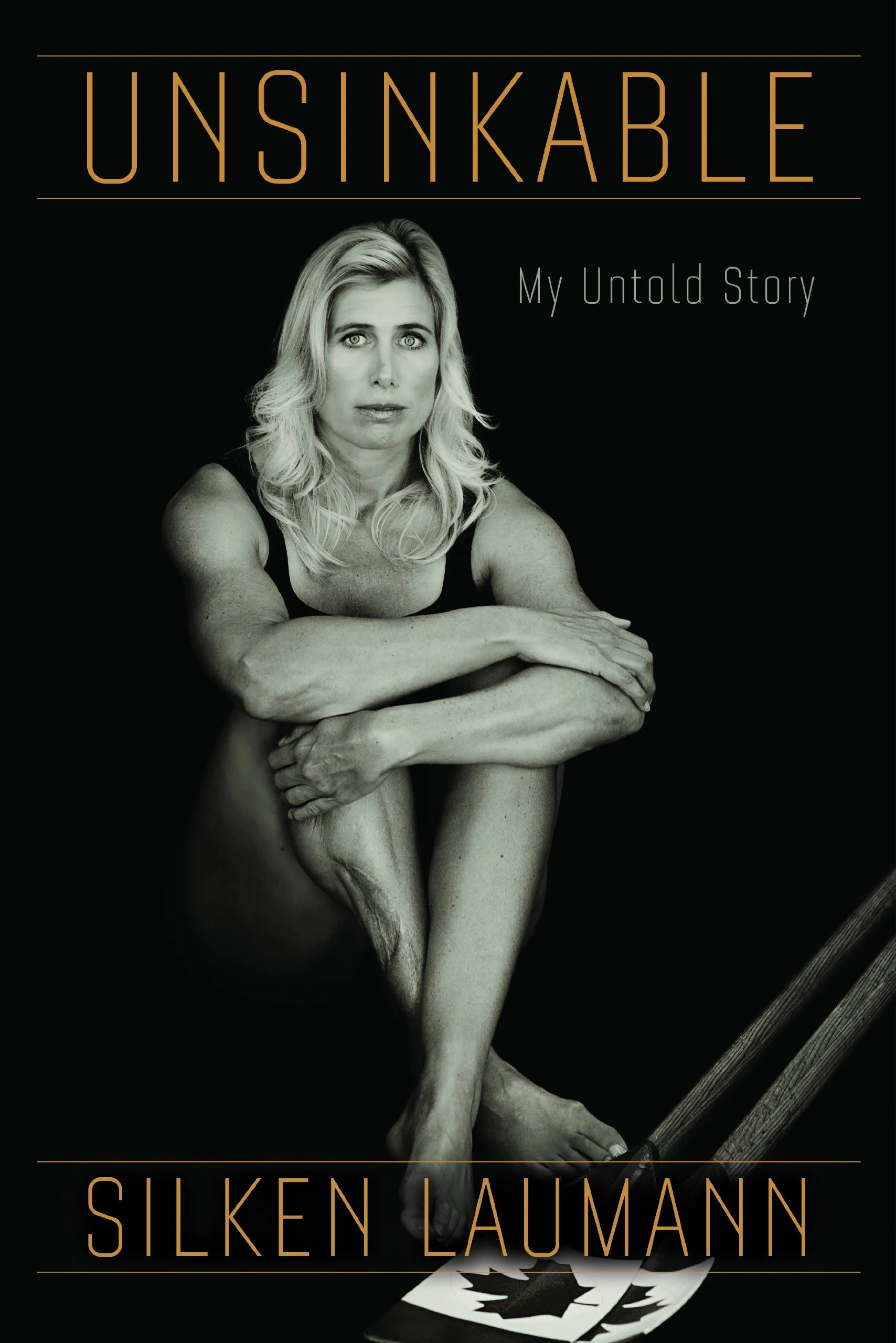
Silken Laumann
Olympic medallist, bestselling author of Unsinkable, and host of the Inflection Time podcast. Keynote speaker on resilience, and founder of the Unsinkable mental health platform.
This episode is supported by GoodLife Fitness .
One story, once a week, from someone who has been through it.
A short letter about a moment that changed someone’s life, what it taught them, and a question you might carry into your own week. No course launches, no countdown timers.