Michael Landsberg: Sick, Not Weak
In 2009, with seconds left on Off the Record, Michael Landsberg told Stéphane Richer that he understood depression too. He says it changed the course of his life.
“But making someone feel understood has huge benefit because it’s a statement of you’re not the only one.”
Transcript
Speaker names are being checked and will appear here soon.
00:00 Meet Michael Landsberg
Michael, thank you so much for coming on to Inflection Time today. And it's so nice to see you. It's been a long time. It's great to see you. I hear about you from time to time doing what you're doing. And that's terrific. I always think it's great when people have different versions of themselves. And when you have different acts on your life, right? Like your first act, everybody knew about. And that's led you to this second act. And I just think that's really cool. So good to see you. Thank you, Michael. And, you know, I've got this like really strong memory and I'm trying to figure out where we were. But it was I think it might have been Sudbury at a very, very long sports awards, which used to be like the most incredibly long winded thing in the world. If you were invited to a sports tour and it went on for hours and hours and hours. And afterwards, we went to the Keg restaurant together.
And I don't know, I guess we must have connected in some way. But I have really strong memory of that. And it was a lot of years ago. Well, I think you only want me to with me to the Keg because Keg were sponsors of the show I hosted Off the Record. And you thought, OK, free dinner for sure. I mean, I was an athlete then, of course, free food. I can't tell you how often I like when I used to. I mean, I don't go to the K very often, but when I do, it's like, oh, this must be free for you. And it's like, no. But I think was that better being Thunder Bay.
I think it was Thunder Bay. OK, Thunder Bay. And I remember it well. Sports dinner that was like a good four hours, good four and a half hours. No, it wasn't a good four and a half. It was a really dull four and a half. And I mean, the only thing worse than going to a four and a half hour award show as I don't know why I was there. But when you're not winning an award, which is typically, you know, my experience at award shows.
So, yes, nice to see you. It's nice to see you, too. And you've made a lot of, you know, you sort of opened up our conversation talking about next chapters. I think this is very apropos for our conversation today, because I do believe our life has all these chapters, depending on whether we're willing to take risks and grow. Right. Because it's no guarantee that we can reinvent ourselves or go in new directions. That actually takes a lot of guts and a lot of hard work.
02:23 Going deeper on Off the Record
And I wanted to talk to you just first about finishing at Off the Record, which was, you know, a pretty special part of your career. I think you started to have those kind of conversations that you wanted to have because I got a sense that as a journalist, you were always looking to go deeper with the athletes. And, you know, because like sports reporting is notoriously bad reporting, isn't it? Like the athletes say, yeah, it was a good race. I'm sort of disappointed. The team says this, but it's all so stayed.
And I think that Off the Record, you were able to go deeper with people and talk about stuff that had really nothing to do with sports, but was about the people themselves. So can you just talk a little bit about that chapter of your life? Well, it was an amazing experience. You know, sometimes when I'm giving a mental health talk, I'll say, hey, if you just want to blurt out a name of someone famous, I bet you I either met them through this or I bet you six degrees of separation, I know someone who met them.
So I got this amazing opportunity to meet this cross section of people, you know, Olympic athletes and obviously all professional athletes and coaches, but also actors and musicians and politicians. And, you know, virtually every aspect of life was represented on our show. And what what a like an amazing experience. What a gift that was for me. Yeah.
So, yeah, Off the Record was was really, I guess, in a lot of ways to sort of define my career. And I'm good with that.
03:57 Representing the viewer
And you mentioned, you know, I always saw my job as being representing the viewer. So. If you represent the viewer, then in theory, if you get an answer, for instance, that you don't think is sufficient, if if somebody is and I talk about Gary Bettman a lot in this context, commissioner of the National Hockey League, you ask him a question. Hey, Gary.
So it's I'm looking out my window right now and it's a little bit cloudy outside. What do you think of cloudy days? And he'll answer, well, you know, when you go to a movie, you have to. It's like, no, I didn't ask you that. Yeah. And if you let him steer it in his direction, you never get the answers that you're asking because you think the viewer wants to know.
So it's got to be no, no, no, no. And you can't be you can't be overly patient because there's a time frame on it. So I would you know, I saw it as my job to go. No, no. I asked you this question. And for that reason, I think a lot of people perceive me as being rude.
Right. But it's it's like, OK, well, a half hour show is tenacious. You're tenacious. I mean, it's interesting that I mean, as an athlete, obviously, our window of when we're good, we're young. I mean, that's when your body is like great and you can do stuff with it. And a lot of athletes, you know, in their early 20s.
I mean, actually rowing for me was a late development sport. I was so lucky that I was able to compete at 30, you know, till till I was 32. However, I often look back at my experiences, Michael, in sport. And I think about what I was learning, but not understanding. And I was absolutely the type of athlete who had tunnel vision. And I mean, that's what made me great at what I did.
But it also cut out a lot of opportunities and made a lot of things happening around me kind of less visible. And it's interesting now to look back and think, well, how how would I have learned differently? Do you find you look back at your experience Off the Record and some of the people that you met and experiences you have? You obviously were interviewing these people, but you you had to be the while you were listening. You were you were waiting right for that next question. And so you're kind of listening, but then you're also hosting.
Your mind's being your mind's being split. It's hard to be fully present. But do you see now not only what an extraordinary opportunity that was, but the things that you learned from the people that came on your show?
06:26 Soaking in the gift of the job
You know, I think that one of the things I've I've done well in my life, and this is not going to end up being a boast when you hear what it is, but I'm just going to pause and let everyone think, oh, there he goes. He thinks he's so great. One of the things I've done really well in my life is appreciate my blessings. And I always thought this and often would say it that, you know, like what a gift this job is. You know, I would phrase it this way. I say, you know, there's lots of people who could do my job, but I'm the only one with my job.
So I always saw that as a real blessing. You know, the best experience I've had professionally was 2010 hosting in Whistler on CTV, which, you know, nobody ever saw me as a mainstream guy, but they gave me this great role to host the Olympics. And every second of that, I thought to myself, soak it in, you know, enjoy it, revel in it because you're never getting it again. And here we are, what, 14 years later, and, you know, I never did it again. So I think I've always appreciated the gifts that I've been given, like hosting the kinds of things I'm talking about. And the number of people that, you know, I got to hear their wisdom or lack of wisdom and the number of people that I got to learn from.
Did I consciously say to myself always, okay, well, you have to file that away. No, but I think I'm a better person. I think I'm a more well-rounded person because of the people I was exposed to.
08:01 Burying the past, and going back
Are you a reflective person? Do you like to look back and, I don't know if analyze is the right word, but sort of unpack the experience of the past to see what you're taking forward? You know, this is going to be a much deeper answer than you would have anticipated. But I'm pretty good at burying the past. A couple of things in my life that were really, really difficult for me. I have been able to try and successfully at times bury them and stop thinking about them.
And if you reflect too much on the past, I think it's hard sometimes to filter. Okay, I'm going to reflect on the good stuff, but I'm not going to reflect on the bad stuff. So I tend not to be much of a reflector. I mean, you're right. There's different ways that we all move forward in our lives. And when it pertains to our mental health, to our wellness, I found there's a very important kind of line, right?
Like, I've had to look at my past, particularly my childhood, growing up with a mom who had a severe mental illness, undiagnosed, not acknowledged in our home. And there were days that were real shit shows.
And honestly, I never knew what I was coming home to. So there's trauma there. And I had to go back because I couldn't go forward until I went back. And it was hard work. And I know you know, you're a mental health advocate. You've lived and breathed this stuff now for many years.
But there is that balance, isn't there? But between like going back and with the perspective and the strength of an adult to your childhood experiences that were so terrifying when you were a little child. And healing as much as you can, you know, and forgiving as much as you can. Because that like, that is part of what has made me, me. However, there's also being fully present to the experiences you have today. And not, of course, spending all your time or energy or, you know, spiritual, emotional energy thinking about the past, but also imagining the future.
So to me, there's always that kind of push and pull. Well, first of all, I'm sorry that your mom went through that. And I mean, mental illness, like many illnesses, but in particular is a family illness, right? It's a household illness. You know, like you can't avoid it. You can't, you know, it just overwhelms.
It overcomes every aspect of our lives.
11:00 A childhood fear he never named
For me, my childhood was idyllic. My parents were totally devoted to my brother and I. We did everything together as a family. My parents would have done anything for me. But one of the things that they didn't do because I never asked them was they never got me help for what was severe anxiety and a phobia called emetophobia. Now, giving mental health talks, I'll throw that out and say, anyone know what I'm talking about?
And it shocks me how often somebody knows what I'm talking about. As a matter of fact, for the series that I'm doing, I was interviewing a singer named Dallas Smith. Dallas Smith is a huge country star. And we were talking about our various experiences with depression and with anxiety. And I said to him, you know, and one of the things that I experienced that would have changed my life if someone else would have said, yeah, me too. But I never talked about it to anyone.
And he said to me, think about this. I'm judging by your face. You have no idea what emetophobia is, right? I mean, most people don't. And, you know, I'm barely living in this world a little bit. He said to me, this was bizarre.
My daughter has that. It was like, what? You know, and what I've come to realize is that we can all think that we're the only ones. And mental illness does that to us, right? You know, we isolate. We hide.
We think we're the only ones because people don't talk about it. Emetophobia is the fear of throwing up. It's the fear of being around someone who throws up. It's like it's all encompassing. And what you hear when you have emetophobia is, well, nobody likes to throw up. But that's not the issue.
The issue is this fear that you have. So I know with my work that we're doing at Unsinkable, that is really, the connection piece is really important to know that somebody else is feeling this way. And you're right. When you're in the throes of depression, and I suffer from depression as well, but you're always feeling alone, or I always feel alone, ashamed. And, like, my experience is so isolating. And I've learned, right?
I've learned, call my doctor, call my therapist, call a friend. And it's just like I make myself do it. But what I actually want to do is not any of those things. So when, you know, we hear from Michael Landsberg, but then we also hear from regular humans who have been on this journey for longer than us. And I just think there's that possibility that you're going to touch someone who hasn't yet recognized that what they're suffering from, what they're experiencing is mental illness. And then there's mental health.
And I think everybody's got mental health. If you're really lucky and you never had anything and maybe the life hasn't messed up your chemistry or giving you a series of events that have pushed you into mental illness, you're really fortunate. And maybe that makes you less able to relate and understand. But I think we all have a responsibility to relate and understand because so many people are affected by mental health. Yeah.
14:34 “For the first time in my life, I feel understood”
I mean, I was in Edmonton. This was really profound. I mean, every time I, I'm sure you find the same thing. But when you go to speak about a subject like mental illness, some of the most significant conversations and some of the best good that you do come afterwards when people will come up to you and not in front of an audience and say things. And I gave this, this talk, my, my usual topic, talking about the experience of depression and anxiety. And a woman came up to me and she was like, she was sobbing uncontrollably.
And I said, look, you know, I'm going to wait here until everybody's finished talking if they want to talk. So just come back when you, when you feel like you can talk. She came back and I said, so what is it? It doesn't seem like sadness. And she said, it's not. She said, for the first time in my life, I feel understood.
And there was this lesson that I learned at that moment that it's one thing to tell people you're never alone. But the truth is, I mean, all of us fight battles in our life alone. I mean, you can go with a friend to have chemotherapy and sit beside them and hold their hand. But still, there's a big part of that battle that they're fighting on their own. But making someone feel understood has huge benefit because it's a statement of you're not the only one. This is not self-inflicted.
A lot of us believe we're the only ones with this illness because we think we created it in our head. Why would anyone else experience the same thing? Which technically might be true. But yes, it's, but it's real. The illness is real and the thoughts are real.
16:06 The trap of a good life
And, and, and also I think a lot of people look at their lives and they're like, what? And I think that's probably the worst response you can ever have with somebody who's suffering is saying, well, what's wrong with your life? Right. And they look at their own lives and they think like, I mean, I'm an Olympic athlete. I have a wonderful supportive husband. I have beautiful children.
I have a career I love. How could I ever feel depressed and anxious? Right. Right. But you see, that's, that's a trap that other people fall into looking and, and acquainting, acquainting success and lifestyle and good things with mental health.
But it's also a trap that we fall into as sufferers, because when we think to ourselves, we're not entitled to say, you know, I just, I know I have a great life and I know, you know, I have everything that other people would say, you know, define a great life. But I still feel like I don't want to get out of bed in the morning. And I still feel like I can experience joy. And I still feel this and that. And a lot of us will think to ourselves, I have no right to do that. How can I complain about something?
I have everything. There's so many other people, right? There's so many other people who have so much less, who don't have the same opportunity. But you're right. It's a trap.
17:24 Hosting TV through depression
I got so many questions to ask you, but I'd love to know what for you. So here you are hosting this incredible show. And, you know, you're, you're on daily, you're interviewing some of the most famous people in the world, all these amazing Canadians. And you are not doing so great. That is, that is a pretty good way to describe it. In a good sort of euphemistic, euphemism, you know, in sort of like, and you're not doing so great.
Because that's how I would talk. I would not, I would not say, oh, you know, I was doing really terribly. Can you just for a second, take me back to a really bad day when you were interviewing somebody and how you were feeling and how you got through it? You know, the answer is to how I got through it is, is the easiest answer. Yeah. I got through it because I had to.
Right. But the biggest, a couple of challenges came from depression when it was most severe with me. And there was two dimensions to it. One is my brain is fogged. So here I kind of hang my hat on and on quickly responding to people and to always having a response and very often always having a smart ass line. And here I am feeling like, oh my God, I can't do that.
I can't be that. But the worst thing is that with depression comes a loss of self-esteem. So I'm looking into the camera. I'm interviewing people about their lives. Keep in mind, like when you talk to an NFL player and you're talking to him about his life and you want to challenge him on something, you're challenging him on his life. So you better be pretty sure.
But when you have depression, you're not sure of anything. So those days that were really difficult for me, I got through them because I had to. I didn't stay home because I had to go to work, but I also didn't stay home because I knew I wouldn't feel better. I would just start to beat myself up over the course of the day going, oh God, you're worse than you ever thought you were because now you just can't pull it together. But I find every day with depression, especially, torturous. And I think that hosting a TV show was no more torturous than any other role that people play in their lives.
Every job would have unique challenges if you have depression. So every job would have something different, but not more difficult. So I kind of always looked at it like, you know, it doesn't matter whether I'm doing this or I'm driving a bus or I'm an accountant. Living with this feeling that I had is just a life and death struggle every second. I'm really sorry to hear that.
20:20 When he knew he needed help
When did you know you had to get help? I knew I had to get help when I turned out an offer to do something that I really wanted to do and used to really enjoy doing. And it was also part of my job. And I turned down this, I was supposed to screen a movie the night before the guest was on the show. And I turned down that opportunity. The producer called me and said, you want to go together?
And I said, no, I'm not going. I can't go or whatever. And when I hung up the phone, I thought to myself, wow, why did I do that? And I started to forensically evaluate my own life the previous nine months. And I looked at all the things that I had stopped doing, all the ways that I had retreated, all of the thoughts that I had about myself, which were totally different than the thoughts I had, say, a year or two before that.
And I came to the conclusion, something is really wrong with me. And I came to the conclusion, I'm gone. And I have been replaced by someone who I hate, who I don't recognize, and who I don't want to be. For me, it was probably always there, like low-grade depression. And I realized now that I kept pushing and driving and accomplishing, I mean, this is after a lot of therapy, Michael, as a way to feel worthy. And then when I would stop, I would feel really crappy.
And I had kids, I had little kids at home, and one of the things that scared the crap out of me was the rage I felt sometimes coping with these young children. My husband left, so I was, you know, alone with the kids. They were like two and a half, five. So you got all this shit layered on top of each other. And I couldn't stand up for myself, but I could stand up for my kids. And I honestly, I think I was too arrogant, proud.
Maybe arrogant is not the right word, proud. I also didn't think there was a way forward. I didn't understand that actually when you talk to someone who has been trained and understands, that you can feel better and that actually you can change your brain a little bit. And also that chemistry, in my case, probably because of early trauma, played a pretty significant role in my road to wellness. Wow.
Wow. You know, it's not my show, but if it was, I'm going to say it anyway. Thank you for sharing that. Because, you know, I think that because the symptoms of an illness like depression are so intangible that, you know, we hear, okay, symptoms of depression, loss of appetite, loss of, you know, can't sleep at night, tired during the day, you know, things like that. That's not really something we relate to. So what frame of reference would you have had to say, okay, well, I think, you know, this rage that I have, I think, you know, that's a symptom of depression.
But I can tell you somebody watching now who's in that kind of position where they're angry and they don't think they should be angry and the situation doesn't call for them to be angry are going, well, I heard Silken Laumann talking about that. And, you know, kind of describes me. That's back to the power of feeling understood. And you do that for people when you give up this really deeply painful aspect of your life. Yeah.
24:12 A night in Montreal, 2008
When did you, thank you, by the way, thank you for listening. Ashley, when did you decide you needed to tell this story publicly? That was, I never, I never spoke about it, even though, as I said, I'd had anxiety when I was, since I was a kid. And this was, you know, this anxiety that I had when I was a kid was, I never spoke about it because I just, you know, I'm not 100% sure why I never did. Part of it is I never lived in anyone else's brain. It was also a different, it was a different environment even 15 years ago, 10 years ago.
People weren't talking about it and people did see it as a weakness. So I never spoke about it when I got hit by depression. I never spoke about it on TV, but everybody in my life knew. So it wasn't like I was showing any signs of being ashamed or embarrassed. I just thought, who would care? To be honest, I thought, okay, well, you know, first of all, why would I do it?
I was so, so stupid not to realize that the stigma can be lessened if you speak about it. Other people will speak about it. And I just never thought about it. I never talked about it. And as a result, when this, this tattoo I have on my arm represents 11-2408-YUL-LMH-521-0400, November 24th, 2008, Montreal, Mariette Hotel, room 521, 4 a.m. in the morning. I understood suicide.
I had been depressed severely for about a year and I had rejected treatment, which had helped me. And I was so deeply in this hole that I understood sitting on the edge of my bed. We were in Montreal to shoot Off the Record at the Grey Cup. I sat on my bed and I thought, wow, this is one of the reasons why people take their lives. I was way more afraid of having to live through the next day than I was of dying. But I'd been through it before.
So I had a measure of hope because I had successfully been treated before. But without that hope, I don't know what would have happened. So that was 2008.
26:21 Telling Stéphane Richer, on air
In 2009, by coincidence, a hockey player, Stéphane Richer, former Montreal Canadian, was a guest on Off the Record. And as I was researching him, I read that he battled depression throughout his hockey career. So I thought, oh, that'll make an interesting question. So I went and greeted him and said, can you just come outside for a second away from the other guests? I said, would it be okay if I asked you how you're doing with depression? Because I think your fans would like to hear.
And he said, it's very painful. I don't like to talk about it. So I said, would it help if I talked about it? And he said, what would you talk about? So I told him a bit of my story. And he said, let's do it.
So we went on the air. And this is the first time I ever shared anything publicly. So I said to him, if you'll talk about it, I'll talk about it. So he talked about it. And he talked about it brilliantly from the standpoint that he shared so much more than I expected. So much more than he had to.
He's kind of throwing the gauntlet down. Yeah. So I'm hearing in my ear, like basically 15 seconds. That's all I have left. And I haven't spoken about it because he's so compelling, right? So I realized, oh my God, I made a promise to him.
So I say, you know what, Stefan? I think a lot of people are going to benefit from hearing you talk about your mental illness. And there's one other person on the set who's going to benefit from that, who understands it. And that's me. I understand depression like you. We have to go to commercial.
And that was it. And that changed the course of my life. I had never really put the two together, but the perception of weakness is so dominant in us. The fear of being perceived as weak is so huge that if we think that our mental illness is a weakness, we're not going to talk about it. So that was my sort of coming out party. And I would say slowly over the next couple of years, I started to talk about it a little bit more.
And people asked me to go give talks. And I think I've talked about it every day since.
28:10 How speaking out changed him
Yeah. Well, we're really kind of reflecting on these moments in your life. And I wonder if you can put it to words how becoming open about your mental health and then leading this movement, #SickNotWeak, has changed you as a person? Has changed your persona, but also your actual personality? My persona changed on that day in October of 2009 when I said, yeah, I understand depression because I battled it too. Because you can't equate the two.
Sort of arrogance and open talk about mental health. You can't. It just like I'm a good person to be this person, to be this advocate. Because, you know, you could look at me and people did and say, oh, you know, he's he's super confident or he's overconfident. And I'm proof that people with mental illness like depression that can be devastating to them can. Can take away every bit of joy in their life.
We can fool you. So if no one saw it in me for the year before the Stéphane Richer show, if no one ever won, not one viewer ever said, you know, wow, you don't seem like yourself or wow, you know, Landsberg is so cocky anymore. That I think in a lot of ways makes me, you know, a good person to be doing this because I kind of don't equate. Yeah. It's it's certainly to answer your question, how it's changed me. I think that it's allowed me to feel more useful.
You know, you host a TV show, you know, you're not doing anything for the world. You're kind of, you know, you just most jobs are neutral. Right. Not doing anything good for mankind, not doing anything bad. But then I find out that I have the ability to make a difference in somebody's life.
But then I'll start with you. You know, it's really important. You know, it's really important. It's really important. It's really important. It's really important.
It's really important. It's really important. It's really important. It's really important. It's really important. It's really important.
It's really important. It's really important. It's really important. It's really important. It's really important. It's really important.
It's really important. It's really important. It's really important. Thank you. Thank you. Thank you.
I mean, I feel like I haven't talked to you for a few years, like at least 10. And I'm feeling a very different person showing up today. Somebody, I mean, I think you've always had a lot of guts and courage. But, you know, to be as vulnerable as you have been in art and also really listening at a different level. I mean, your heart is open. That's what I'm feeling. And I mean, that's a beautiful way to go through life.
You know, it's very useful to say in front of a group of, you know, 500 people in an auditorium in a community center. It's useful to say, hey, you know, I battled depression. It's way more useful to say, I battled depression. And here's what it does to me. And here's how it has really crippled me in certain ways. Because people relate to that. You know, it's the, yeah, that's me. It's your power of, you know, when you're a storyteller, you bring people to places in their heart and in their experiences that where they can connect to. And you are, you know, as a journalist, you, you're a trained storyteller. And now you're bringing the most important story, you know, of your life into the public sphere.
34:01 Why the work isn’t done
I wonder if you feel like there's still stuff you need to do in this, you know, time. I know you've got a lot going on with #SickNotWeak and I, and, you know, you've got a few other projects on the go. What continues to drive you and what do you still think that there is to do? Well, I think it's, it's kind of like, you know, if you're a doctor and you have helped people and maybe you've saved people. I'm not comparing myself to a doctor, but I'm comparing it to the thought process of, okay, well, what else do I want to do? And the truth is, if you're a doctor, there's always more people out there that you are going to need to help. So it's not like your work is done. It's not like you go, okay, you know, I'm done. Everyone is, everyone is better. And the more I do, the more I see this is needed. You know, I think we kind of bury our heads in the sand when it comes to like the stigma, you know, we're doing so much better or it's so much better now that it was. I mean, I don't know. Like people say, ask me that question all the time. What do you think, Michael? Is it stigma? You know, we're doing a lot better, right? It's like, how do I know, right? You know, like I'm, I'm one person. I can't quantify that. But my instinct tells me that there's still a huge stigma when it comes to mental illness and the perception of, of being seen as weak still dominates people and still prevents them from getting the help. I mean, we all know people, right? Who tragically have taken their own lives or have tried to take their own life. And we all know people who the reaction was, oh my God, I had no idea. Nobody knew that they were suffering. I mean, that's, that's the world that we have to aspire to where no one is going to say, okay, well, you know, I'd rather die than reach out and ask for help. And that's, I guess that's what kind of keeps me going.
That's powerful. And you're right. There's still, there's still a lot to be done. And we absolutely know for sure that young people, especially, uh, struggle with reaching out for help a lot of the time because they don't think it works. They don't think anything's going to help because they don't like, they don't have that wisdom and the perspective that maybe somebody a little bit older does.
36:26 Advice to 13-year-old Michael
Um, I'm wondering if you can go back in time and imagine 13 year old Michael Landsberg, not another Michael, you, and whether you can give that person a piece of advice that would help them. Uh, I for sure could, but the question is, would I listen to that advice? Because the, the things that prevented me from, I mean, my number one advice would be, you know, go and share this, you know, tell people that you have this terrible fear. You won't ride on a bus to go to camp because you're afraid the kid beside you is going to throw up. You know, all of the things that I wouldn't do because of it. I would tell the 13 year old Michael, you know, you'll have these amazing parents go and, you know, tell them.
Um, but I'm not sure that I would have listened because my mindset back then was very different than it is now. But that would be the advice to my 13 year old self, you know, like talk about it, you know, find out if anyone else, you think you're the only one, but maybe you're not.
37:33 Dyslexia, and the books he loves
Yeah. The last question is when I'm actually asking all the, all the guests that come on the show and it's, it's about reading, um, something that, uh, was hard for me to do. I didn't learn till later. Uh, I had to slut see, I struggled with it. Um, but it opened up a whole new world to me and it was like the world expanded tenfold. I wonder if there's a book that you can think of that maybe change your perspective, change your life in some way. You know, you, you mentioned, uh, dyslexia. Um, I can't literally can't write for more than 20 seconds. I can't do cursive, but many people can't do cursive anymore because we don't need to. But when I go to a bank and have to fill out a form, I'll say to, um, and I hate going to banks, right? Is there air that moves in banks? It's just like, oh my God, how can you work in this environment? But I'll say, I need three forms.
And they'll say, well, no, you only have to fill out one. I go, I'm going to screw up the first two. And of the, the only thing, Silken, that embarrasses me in life that I know of is people seeing me try to write. So dyslexia was a mystery to me and was, I was never diagnosed with dyslexia or ADHD until my son, Corey showed exactly the same signs. And the only person that's got handwriting as bad as me is Corey. And ironically, dyslexia was always thought of as being, if you're reading two grades behind your level, that's an indication that you have this learning disability. I never had a problem reading. So reading was never it, but tying, uh, tying my shoes, you know, was fine motor skills. Aren't that fine. So I've always read and I guess I can put my hands down now. It's kind of like serving no purpose like this. Oh, Michael, you should put them down. Uh, what I got into, uh, I find I'm at my best and my happiest when I'm engaged. Uh, and I, um, my hobby would be, World War II. Uh, and I read tons of fiction with World War II. Some of the, like, like, I mean, besides the horror of it, it's the most compelling thing that's probably ever happened on the planet Earth, like all the dimensions to it. So I, I would, uh, I would recommend a book by a woman named Jenna Blum called Those Who Save Us. Uh, I, I remember, I mean, I read it probably, I don't know, eight years ago. Uh, and I thought, wow, this is, uh, this is like every word is crafted. And, uh, uh, there's a famous author. Well, if you read these kinds of books named Nelson DeMille, Nelson DeMille was a guest on Off the Record. And when he walked in, it was like, okay, dude, I'm sorry. This is not professional, but I got to do it. Oh my God, you're Nelson DeMille. And it was cool. It was like, I, there's only a couple of people that I was ever like,
Who are you? Yeah. Gobsmacked. Yeah. He wrote a book called Word of Honor. That was one of my favorite books. Uh, and, uh, I followed him out to, uh, to the car. Like he had a car and driver dropped him off and it's like, okay, sorry, man, but this may be getting creepy, but this is my Nelson DeMille time. That's awesome. So, um, I got to wind up now and we could keep talking. Uh, it's just been absolutely such a delightful conversation, such an informative conversation. I, I feel like I just am so grateful that you came on today and that you opened up and you shared so much of yourself today. Thank you so much. Thank you. And, uh, I, whatever benefit you gained from hearing me, I gained the same benefit from hearing you. So thank you for that.
Thanks for tuning into Inflection Time. I hope our conversation inspired you to think about inflection points in your own life. If you enjoyed our chat, be sure to subscribe, rate, and leave a review. It really helps. Remember, every challenge is an opportunity to grow. So keep embracing those turning points. Until next time, I'm Silken Laumann, and this is Inflection Time. I'd like to thank my sponsor, GoodLife Fitness and Tall Boy Water. A big thank you to our incredible guests for sharing their stories with us. I'd also like to thank our fabulous production team, our executive producer, Michelle Archer, our producer, Phil Kluba, and our communications director, Christine Bays. Inflection Time was created by Archer & Co, Akrenim and me. As an Olympic athlete, it's not surprising. I love working out and I love going to the gym. Strength training is so important for bone health, for metabolism.
And our partner is GoodLife Fitness. They are offering a 70 pass to all of our listeners. Visit our description to access your seven day pass.
Key takeaways
- Understood, not only accompanied. After a talk, a woman told him that for the first time in her life she felt understood. Michael learned that we fight many battles alone, but being understood says you are not the only one.
- A fear with a name. From childhood he had emetophobia, a fear of throwing up, and never told his devoted parents. When he names it in his talks now, he is surprised how often someone knows it.
- A good life, still depressed. Depression doesn’t check whether your life looks good from the outside. Michael and Silken both describe the trap of thinking they had no right to feel that way.
- Noticing what he had stopped. He knew he needed help when he turned down a movie screening he used to love. Looking back over nine months, he saw how much he had retreated.
- A promise kept on air. In 2009 he asked Stéphane Richer about depression and promised to share his own. With seconds left before a break, he said, “I understand depression like you.”
Michael Landsberg
Broadcaster, former host of TSN's Off the Record and founder of #SickNotWeak
Michael Landsberg is a Canadian sports broadcaster who was with TSN from its launch in 1984 until 2021, and hosted its sports talk show Off the Record from 1997 to 2015. He has spoken openly about his own depression and founded #SickNotWeak, a non-profit that works to end the stigma around mental illness. His documentary Darkness and Hope: Depression, Sports and Me was nominated for a Canadian Screen Award, and in 2016 he was awarded the Meritorious Service Medal for his mental health advocacy.
- Governor General of Canada: Meritorious Service Medal citation, 2016
- Bell Media: TSN congratulates Michael Landsberg on Meritorious Service Medal, 2017
- Global News: Governor General honours 45 Canadians at London ceremony, 2017
- Ivey Business School: Michael Landsberg is #SickNotWeak, 2018
- Speaking: The Lavin Agency
Resources 13
Research and sources behind what was said in this conversation.
- Emetophobia (fear of vomiting): A meta-analysis (Meule, Seufert and Kolar, 2025) Journal of Anxiety Disorders Across 31 reports, the fear typically began in childhood, at an average age of 10. Michael had it from the time he was a kid.
- Unsinkable weareunsinkable.com Silken’s story-sharing platform, built on the idea that knowing someone else feels this way helps.
- What’s the difference between mental health and mental illness? Canadian Mental Health Association, BC Division Everyone has mental health; not everyone will have a mental illness. The distinction Silken draws.
- Fast Facts about Mental Health and Mental Illness Canadian Mental Health Association In any given year, 1 in 5 people in Canada experience a mental health problem or illness.
- Depression CAMH Symptoms include trouble concentrating, feelings of worthlessness and losing interest in favourite activities, the things Michael describes from the inside.
- Q&A: Michael Landsberg goes on the record about mental health, power of social media CBC News Michael’s own account of November 2008 at the Grey Cup, the 2009 interview with Stéphane Richer, and the start of #SickNotWeak.
- 9-8-8: Suicide Crisis Helpline 988.ca Call or text 9-8-8 any time in Canada. Michael says he held on to hope because treatment had helped him before.
- The role of masculinity in men’s help-seeking for depression: A systematic review (Seidler et al., 2016) Clinical Psychology Review How traditional masculine norms can keep men from seeking help, close to the fear of being seen as weak that Michael names.
- #SickNotWeak sicknotweak.com The non-profit Michael founded to end the stigma around mental illness.
- Opening Minds Mental Health Commission of Canada The Mental Health Commission of Canada’s stigma reduction and mental health training programs. Michael believes the stigma is still huge.
- What Is Dysgraphia? LD OnLine A learning disability that affects writing, including poor handwriting, close to what Michael describes. He names dyslexia and ADHD.
- Those Who Save Us (Jenna Blum) Publishers Weekly The Second World War novel Michael recommends.
- Word of Honor (Nelson DeMille) Hachette Book Group One of Michael’s favourite books, by an author he followed out to the car after Off the Record.
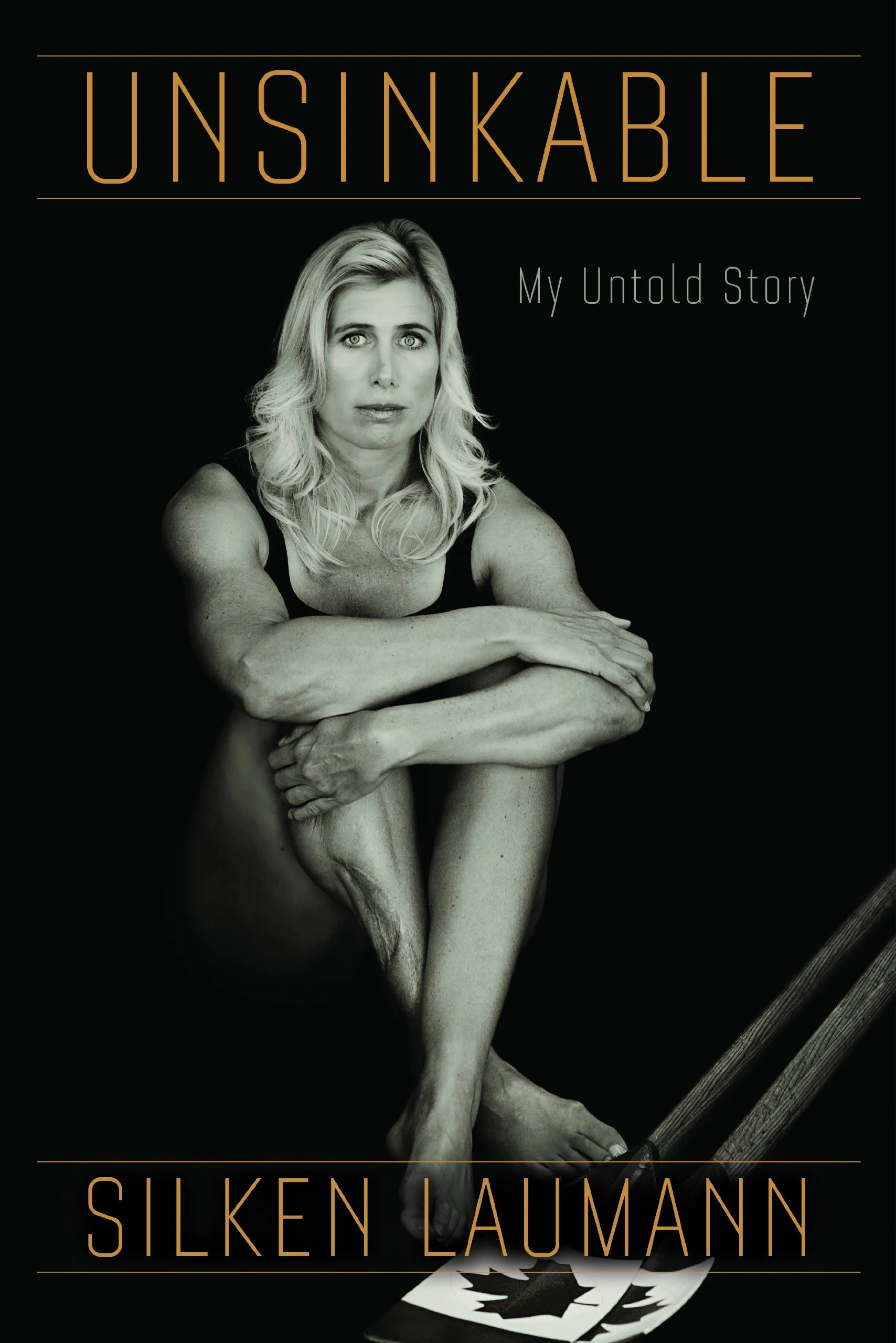
Silken Laumann
Olympic medallist, bestselling author of Unsinkable, and host of the Inflection Time podcast. Keynote speaker on resilience, and founder of the Unsinkable mental health platform.
This episode is supported by GoodLife Fitness and Tall Boy Water .
One story, once a week, from someone who has been through it.
A short letter about a moment that changed someone’s life, what it taught them, and a question you might carry into your own week. No course launches, no countdown timers.